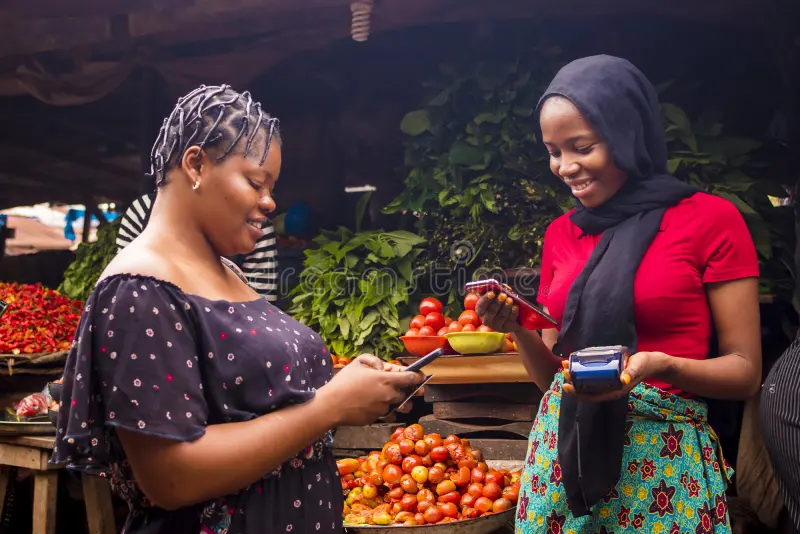
In Eastern Africa, women move the region’s goods. By some estimates, women account for nearly three-quarters of all cross-border traders in the region. For years, they used informal routes to avoid harassment and relied on brokers who took cuts of their profits, and they lacked information about market prices and trade regulations. Businesses remained small, margins thin and potential unrealised.
The ‘Making Trade Work for Women in Eastern Africa’ programme, an initiative implemented by TradeMark Africa aiming to improve the social and economic empowerment of women traders in Eastern Africa, demonstrated what happens when women traders receive targeted support.
After six years of implementation across 20 borders in seven Eastern African countries, the programme reached more than 150,000 women. Their average incomes rose; the vast majority reported greater economic independence and social standing. And the violence and harassment that long defined cross-border trade fell by more than a third.
Yet the final evaluation also identified the persistent barrier that now demands attention – access to finance.
Women constitute an estimated 74% of cross-border traders in East Africa. They handle cereals, fresh produce, fish, and textiles. They pay school fees, hire assistants, and support extended families. But most operate on thin margins and limited working capital.
The programme tested what works. Women who received training saw trade values rise 15% higher than those who did not. Those who joined cooperatives recorded 33% higher sales. Those who formalised their businesses gained 15% in trade value. Access to credit correlated with a 12.5% increase.
But credit remains the missing piece. So why does finance not flow? The reason is simple: banks and lending financial institutions require collateral, which most women traders do not have, as they do not hold title to land or property. Their income cycles follow harvests and not monthly salary schedules. Their trading history, built over years, is not recognised by formal credit scoring systems.
The programme worked to formalise women traders to help them get access to capital. But at the Malaba border, women explained the limitation – formalising little if it does not unlock capital. The gap now is not awareness; it is access to finance.
Across all borders surveyed, 38% of traders using informal routes cited tax avoidance. But 24% cited lack of knowledge about formal procedures, and 13% cited lack of required documentation. Access to capital would address many of these barriers.
The programme tested several approaches that point to solutions.
In Rwanda, partnerships with financial institutions led to reduced interest rates and loan packages tailored for small-scale traders. In addition, the iSOKO digital platform, now operational in five countries, which provides traders with verified transaction histories, helped users track orders, access price information, and connect with service providers. These digital footprints formed the basis for credit assessments. Cooperatives proved effective as vehicles for collective finance. At the Goli-Mahagi border between Uganda and DRC, 100% of surveyed beneficiaries belong to cooperatives.
However, despite these gains, the programme identified persistent challenges. Policy inconsistencies between countries continue to disadvantage traders, deterring banks from lending for cross-border commerce. In addition, access to finance for persons with disabilities remains particularly constrained as financial institutions often perceive them as high-risk, and awareness of available programmes is limited.
And as Africa accelerates the implementation of the African Continental Free Trade Area, for women traders to participate fully, three things must happen.
First, financial products must match traders’ realities. Flexible repayment terms, recognition of cooperative membership as social collateral, and use of digital transaction data for credit scoring must scale across the region.
Second, policies must harmonise across borders. A trader moving goods between Uganda and Tanzania should face the same rules in both directions. Independent country regional bodies have the frameworks; all they require is implementation.
Third, successful interventions must be institutionalised. Cooperatives, resource centres adopted by local governments, and digital platforms hosted by chambers of commerce should become permanent fixtures. They need official stamps of approval for them to be able to support the women who rely on them.
The return on investment from the MTW4W programme was 18.6%, exceeding the 10% threshold that development partners use. As we celebrate International Women’s Day, it is a reminder to us that these gains come from equipping women with skills, safety, and networks. The next step is to add capital. When finance works for women traders, they do not just grow their businesses; they work for communities and the economy at large. That is the future when trade works for women.
By Anataria Uwamariya – Director, TradeMark Africa
