Trade
Arise IIP Named Premier Partner for Intra-African Trade Fair 2025 in Algiers
Arise Integrated Industrial Platforms (Arise IIP) has been announced as an official Premier Partner for the upcoming Intra-African Trade Fair 2025 (IATF2025).
The event, scheduled for September 4-10, 2025, in Algiers, Algeria, is regarded as Africa’s premier trade and investment platform aimed at boosting intra-continental commerce and fostering economic integration.
Organized by Afreximbank in partnership with the African Union Commission and the African Continental Free Trade Area (AFCFTA) Secretariat, IATF2025 is expected to welcome more than 2,000 exhibitors from across the continent and beyond.
The biennial event aims to catalyze over US$44 billion in trade and investment deals, highlighting Africa’s burgeoning market opportunities. This edition will emphasize production and service sectors, complemented by a dedicated forum focused on unlocking continental investment potential.
Arise IIP, a joint venture between Africa Finance Corporation (AFC), Equitane, and the Fund for Export Development in Africa (FEDA) — a subsidiary of Afreximbank — focuses on addressing industrial gaps across Africa.
The enterprise designs and develops large-scale industrial ecosystems, including parks and processing zones, tailored to local needs with the goal of fostering sustainable, value-added transformation of raw materials and boosting exports.
Mrs. Kanayo Awani, Afreximbank’s Executive Vice President for Intra-African Trade and Export Development, expressed enthusiasm about the partnership: “We are pleased to collaborate with Arise IIP as a Premier Partner of IATF2025. Over recent years, we have built a strategic partnership aimed at accelerating industrialization and trade across Africa, promoting intra-continental commerce, and strengthening Africa’s role in global value chains.”
Mr. Amit Agrawal, COO of Arise IIP, highlighted the significance of the partnership: “IATF offers a unique platform to connect key stakeholders committed to advancing Africa’s industrial growth. Our participation in previous fairs, including IATF2023, has demonstrated the continent’s immense manufacturing potential. We see IATF2025 as an invaluable opportunity to forge new collaborations, attract investment, and accelerate the development of sustainable industrial ecosystems across Africa.”
Arise IIP’s presence spans several African countries through flagship projects such as the Gabon Special Economic Zone (GSEZ), Glo-Djigbé Industrial Zone (GDIZ) in Benin, Plateforme Industrielle d’Adétikopé (PIA) in Togo, Bugesera Special Economic Zone (BSEZ) in Rwanda, and the Industrial Platform Remo Free Zone (IPRFZ) in Nigeria.
For more information and to participate in IATF2025, interested stakeholders can visit www.intrafricantradefair.com.
Enhancing professionalism and efficiency in East Africa’s customs clearance through professional certification
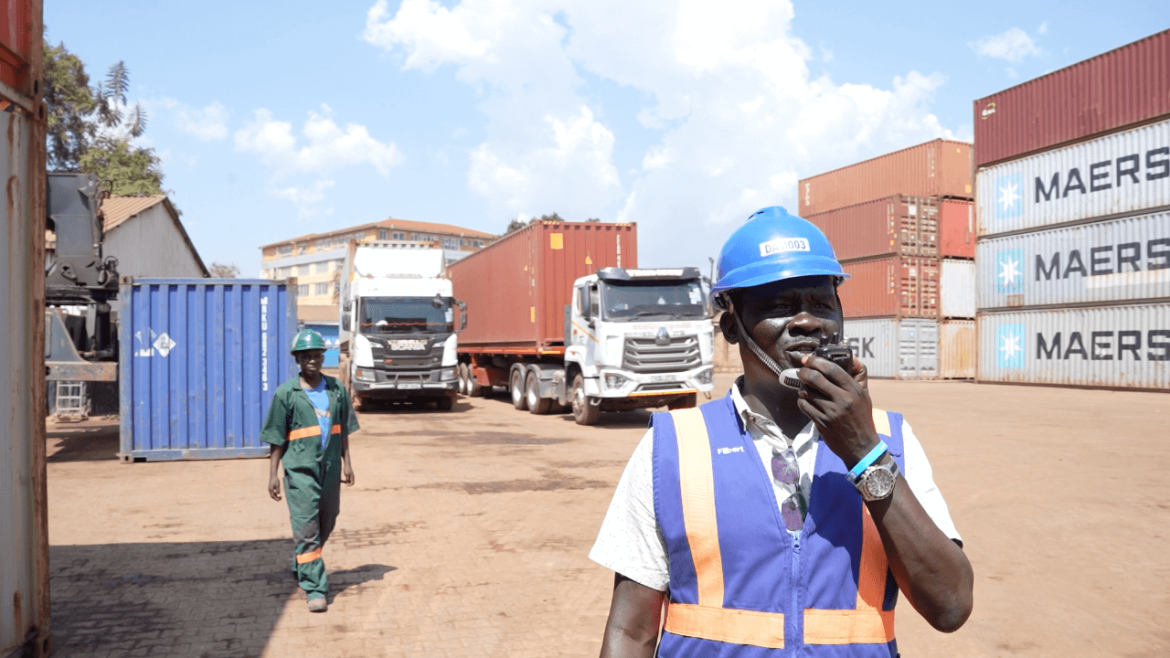
Ondoga Job Filbert, a customs liaison officer at APM Terminals Uganda, stands in front of a Maersk truck. Once a hopeful graduate, Filbert’s journey into logistics was shaped by regional training and certification efforts.
For years, East Africa’s borders were chokepoints. Cargo often sat idle for days, and one of the reasons was the lack of training among customs clearing and forwarding agents.
Many struggled to interpret trade laws, classify goods accurately, or navigate clearance systems. This created friction with customs officials and stalled clearance processes. For traders, the consequences were grim.
They faced lost time, increased storage and demurrage fees, and missed business opportunities. But change has begun, one customs agent at a time, through targeted training and professional certification delivered through a collaboration between the East African Community (EAC) Directorate of Customs, the national and regional associations of customs clearing and forwarding agents, the customs departments, and development partners.
Take Ondoga Job Filbert, who just a decade ago was a hopeful graduate who dreamt of working for a multinational logistics firm. Today, he is a customs liaison officer at APM Terminals Uganda, part of the Maersk Group’s shipping conglomerate.
Dressed in a crisp blue company coat, Filbert speaks with passion about his work managing high-value consignments, ensuring compliance with Uganda Revenue Authority (URA)’s regulations, and responding to complex audit queries, all under tight timelines.
Filbert’s journey to this position started in 2013, when he enrolled in the 11-month Certificate in Customs and Freight Logistics (CCFL), formerly known as the East African Customs and Freight Forwarding Practicing Certificate (EACFFPC).
This is a regional programme implemented across East Africa by the Federation of East African Freight Forwarders Associations (FEAFFA), in partnership with national freight forwarder associations—such as Uganda Freight Forwarders Association (UFFA)—and government agencies such as the Uganda Revenue Authority (URA) and the Directorate of Customs, with support from TradeMark Africa (TMA).
The programme, funded by the Kingdom of the Netherlands and USAID, equipped Filbert with hands-on skills in customs procedures, port operations, rules of origin, and logistics management. “The course is very practical. It teaches one how to manage time, handle clients, and adapt to industry changes,” Filbert explains.
With this training, he secured a job in logistics, moved into freight forwarding and operations management, and ultimately joined Maersk, a company he once thought was out of reach. For him, the programme made a once distant goal achievable. His story reflects a broader effort to raise standards in the freight forwarding industry across East Africa.
For years, a shortage of well-trained agents contributed to customs inefficiencies and costly delays for traders. The CCFL certification programme is helping to address these gaps by equipping professionals with practical, up-to-date knowledge in trade laws, tariff classification, and customs procedures.
Real life learning
The curriculum blends classroom learning with practical exposure to trade hubs, including field visits to ports like Mombasa, Inland Container Depots (ICDs) such as those in Nairobi, and border posts. Trainees gain skills in transport logistics, tariff classification, customs declarations, customs valuation, rules of origin, freight forwarding, warehousing, basic management and ethics and integrity skills that are essential to keep goods moving across borders. In a sector where small errors can cause major delays, this level of professionalism has been transformative.

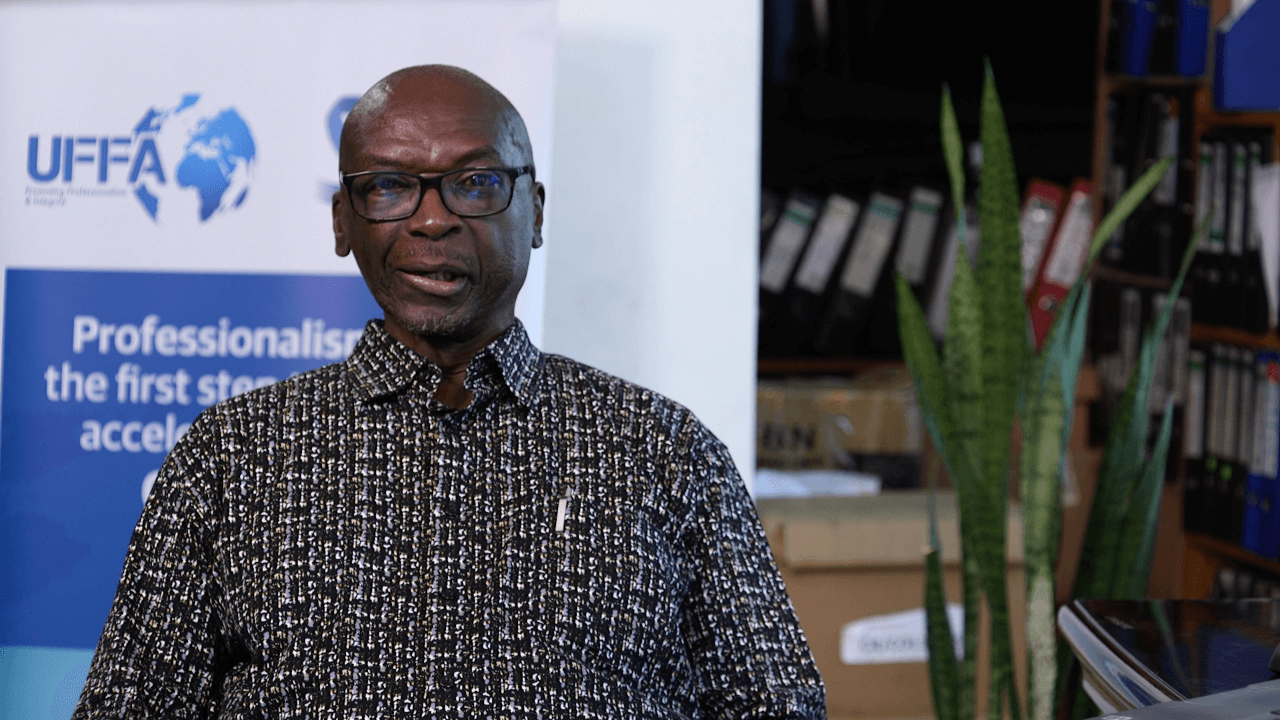
Charles Mwebembezi, Chairman of Uganda Freight Forwarders Association (UFFA), highlights the transformative impact of training customs agents through the CCFL programme, which has certified thousands across East Africa.
Charles Mwebembezi, Chairman of UFFA and the current President of FEAFFA, said, “Uganda was the first to implement the programme before it was rolled in Kenya, Tanzania, Rwanda, Burundi, and South Sudan. We now have over 7,000 trained professionals across East Africa, with Uganda accounting for between 2,000 and 3,000 graduates.” In Burundi, similar progress is underway. With support from FEAFFA, the Association Burundaise des Agences en Douane et Transitaires (ABADT), and TMA, around 400 professionals in Burundi have successfully completed the programme. Philippe Ndikumana, the outgoing president of FEAFFA and a practicing customs agent, notes that the training has strengthened the professionalism and integrity of customs brokers and logisticians in the country.
The roadmap to an efficient trading system
But training is just one part of the equation. For East Africa’s private sector to thrive, freight forwarders and logistics firms need continued investment in practical skills, market-relevant certification, and stronger institutional support from their associations. These businesses form the backbone of cross-border trade, moving goods, advising traders, and keeping regional supply chains running. TradeMark Africa’s support has shown that targeted capacity-building can raise professional standards, reduce trade delays, and open new job opportunities. To sustain and scale this impact, more donor investment is needed, not just in systems, but in the people and firms that keep trade flowing.

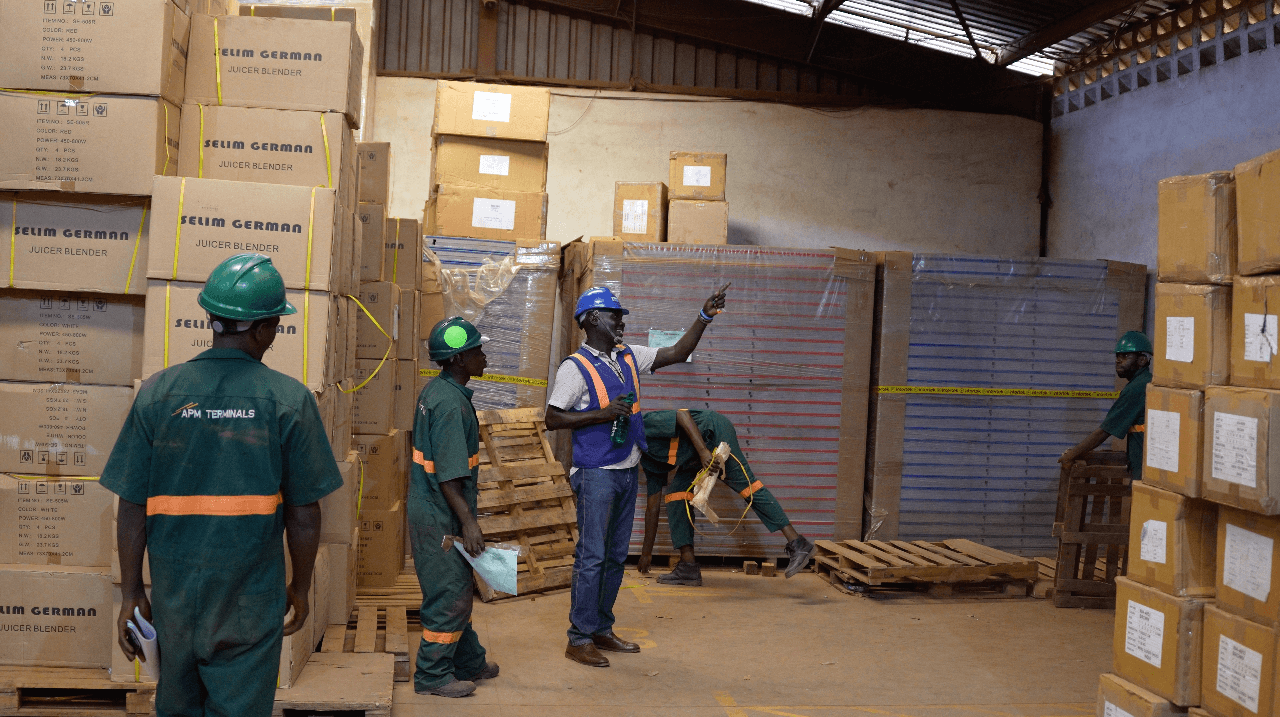
Filbert oversees consignment operations at APM Terminals Uganda. His training equipped him with hands-on skills in customs procedures and port logistics that help move goods efficiently.
How Uganda’s logistics platform improved the trade environment and why it should continue
Kenneth Ayebare, Director of Transport and Logistics at Private Sector Foundation Uganda, speaks on how the National Logistics Platform transformed Uganda’s logistics sector.
“Transport and logistics are the backbone of the economy. Every sector relies on it. Without an efficient logistics system, trade slows, businesses struggle, and economies suffer,” states Kenneth Ayebare, Director, Transport and Logistics, Private Sector Foundation Uganda.
For years, Uganda’s transport and logistics sector operated in silos and was characterised by slow decision-making. “Businesses often had to write to multiple ministries and navigate time-consuming administrative processes just to resolve a clearance issue,” recalls Kenneth Ayebare, Director of Transport and Logistics at the Private Sector Foundation Uganda (PSFU). “There was no central body to champion the sector’s needs.”
That changed in 2018, following the establishment of the National Logistics Platform (NLP) under PSFU with support from Finland and Netherlands through TradeMark Africa.
The NLP brought the public and private sector to the same table to coordinate reforms, solve logistics bottlenecks, and influence high level decisions, faster. And it worked, as the NLP soon became a unified voice for logistics stakeholders. One of its early wins was securing a seat at the top management level in Uganda’s Ministry of Works and Transport giving logistics actors direct engagement and access to influence policy and Government decision making.
“By bringing all stakeholders to one table, decision-making in transport and logistics became much faster,” said Anna Nambooze, TMA Country Director for Uganda and South Sudan. “When the private sector and government sat together, urgent policies were addressed in a timelier manner. Some decisions were made on the spot.”
Ms. Nambooze cites that when COVID-19 broke out, with lock downs instituted globally and borders closed, the NLP was one of Uganda’s best crisis management support tools. Ayebare agrees noting that the platform facilitated meaningful dialogue on cross-border trade issues between ministries – from trade to health to Foreign Affairs – and the private sector to keep trucks moving and essential goods flowing into the land-linked country.
This experience helped shape long term reforms through the development of the National Logistics Masterplan, now a blueprint for streamlining freight, reducing delays, and strengthening competitiveness in Uganda.
For instance in 2021/2022, the NLP engaged the Government of Tanzania to lower road usage fees for Uganda-bound cargo trucks plying the central corridor to about $140 from $500. Furthermore, NLP enabled swift resolution of trade disputes, such as a maize export impasse with South Sudan, by ensuring all the decision-makers were at the table.
But not every challenge was easily resolved. A plan to train 10,000 drivers for Uganda’s growing oil and gas sector stalled during the pandemic.
“The NLP managed to train only 200, but due to administrative hurdles, many could not complete certification,” Ayebare noted. While the platform’s positive impact on Uganda’s logistics sector is still evident, the momentum has slowed following the absence of a central coordinating body and funding, raising the question of sustainability.
“Reviving the Platform would be a big win for the sector. Without a fully operational central coordination body, pushing policies forward takes a long time and Uganda’s freight and logistics reforms risk stalling once again. We need that structure to keep progress moving,” according to Ayebare.
Uganda’s logistics challenges mirror the broader issues affecting this industry across East Africa, including high transport costs, inefficient freight systems, inadequate infrastructure, and persistent bottlenecks such as non-tariff barriers (NTBs).
Border delays, port congestion, and limited coordination between public and private stakeholders remain widespread. The NLP showed what’s possible when coordination dismantles silos.
Cooperatives catalyse safer and more profitable trade for women at the Kenya-Uganda border
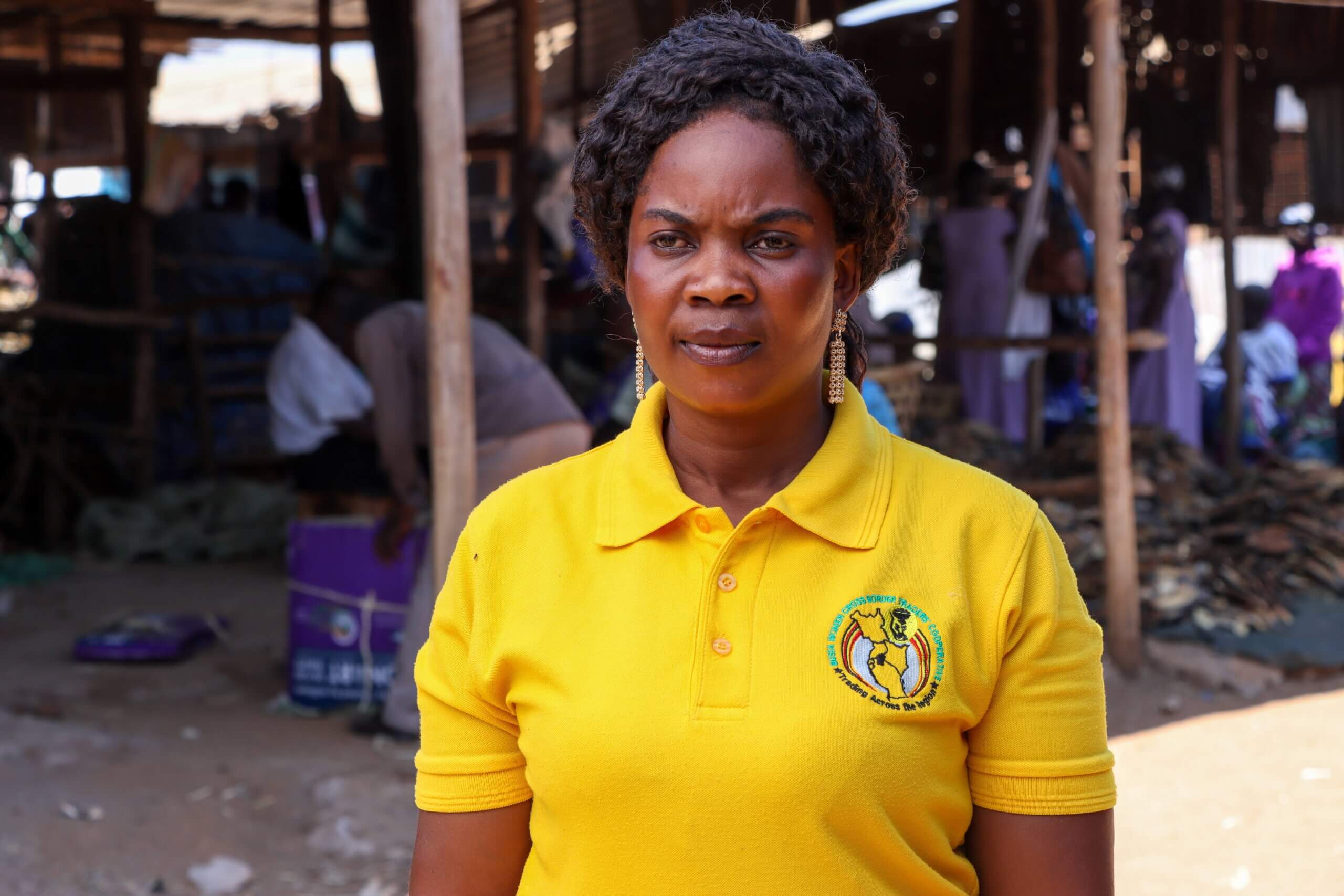
Asmin Abdalla shares a moment with Mariam Mbaabu, chair of Busia Women Cross-Border Traders Cooperative.
As the sun rises over Busia, the bustling border town between Kenya and Uganda comes to life. Traders haggle over prices, trucks roll through customs, and the scent of fresh fish fills the air. Among them is Natocho Susan Charity, a member of the Busia Women Cross-Border Fish Cooperative. For years, cross-border trade was risky and unpredictable.
Women like Susan avoided official border routes to escape high fees and complex regulations, instead using informal paths known as panya routes, which were often dangerous. “Boda boda riders stole from us. We faced harassment, and officials demanded bribes,” Susan recalls. “We lost most of our earnings.”
With funding from Global Affairs Canada, TradeMark Africa (TMA), partnered with the Eastern African Sub-Regional Support Initiative for the Advancement of Women (EASSI), to provide training, legal aid, and support for women to formalise their businesses. “Agriculture is an important source of income for women in East Africa, with high percentages of women working in the sector across the region, including 96% in Burundi, 76% in Kenya, 84% in Rwanda, 71% in Tanzania, and 77% in Uganda,” explains Anna Nambooze, TMA Country Director for Uganda and South Sudan. “The Women in Trade project supported these women to increase their incomes and improve their livelihoods through trade.”

Natocho Susan Charity once forced to use informal routes to trade, now safely crosses using formal border points.
TMA supports the transition of traders to structured and formal trade through associations or cooperatives. Joining a cooperative has made it significantly easier for women traders to network, access information and markets and thus run their businesses successfully. Susan explained that traders first grouped into trading clusters before registering as the Busia Women Cross-Border Fish Cooperative. With legal registration, they could use formal border points, which made the process safer and more efficient. As Susan puts it, “When you cross at the formal border points, it is safe. It saves time and you don’t have to pay the police or others.” Working as a group has also strengthened their business model. They buy fish in bulk, negotiate better prices, and share profits, half of which are reinvested in the cooperative with the other half distributed among members.
Julius Wanyama, another cooperative member, says the group has enabled them to share ideas and make collective decisions. He added that TradeMark Africa’s support enabled them to gain national visibility. “With TMA exposing us to a national platform, we can now access any office, speak, and be heard.” Their united voice even enabled them to recover a shipment of fish that was once confiscated, saving the group from financial loss. Increased profits have translated into improved living standards, with members able to educate their children and improve their homes.

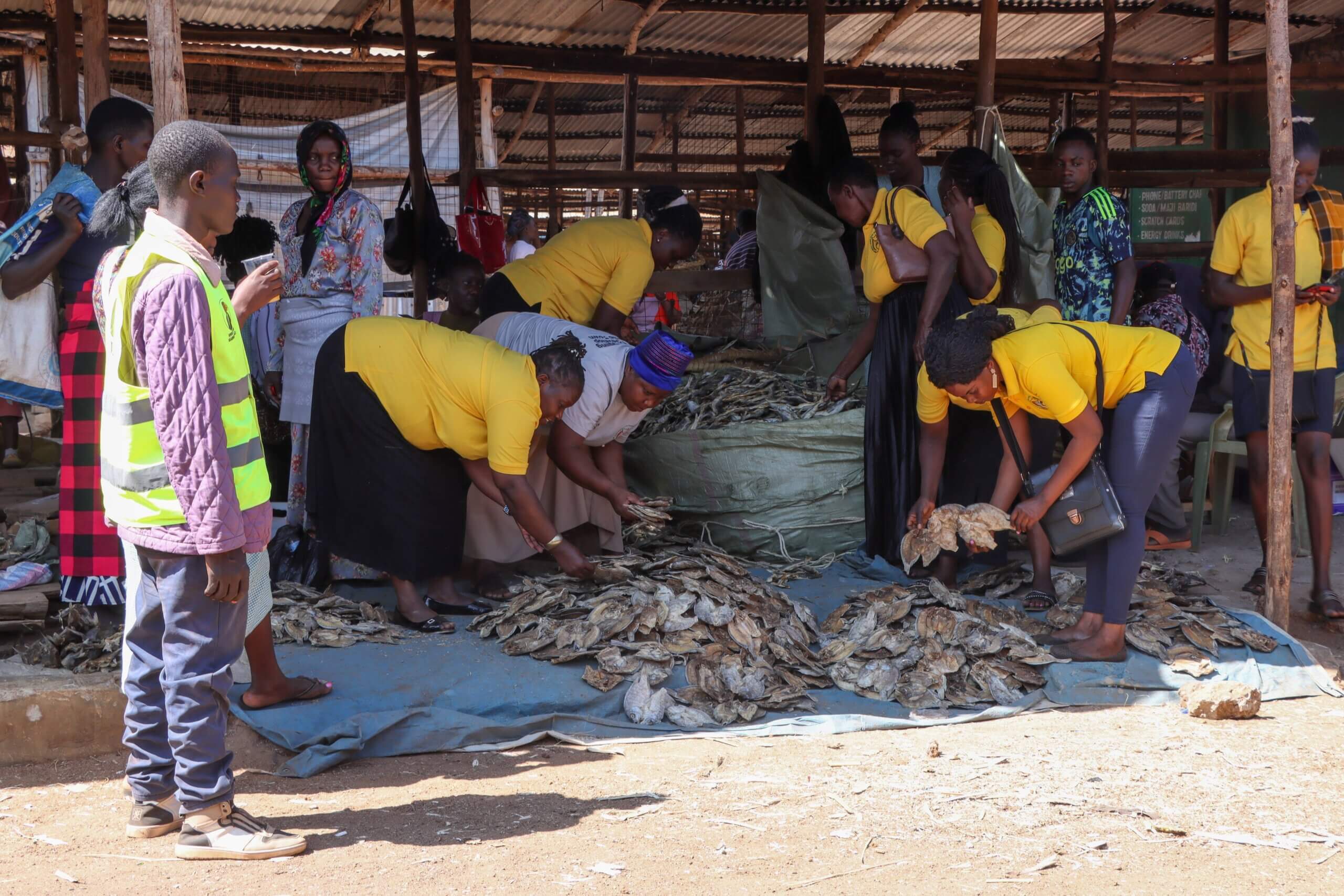
Members of the Busia cooperative inspect fish. Buying in bulk and sharing profits has improved earnings and reduced their exploitation.
In Malaba, another border between Kenya and Uganda, and approximately 29 kms away from Busia, women traders who once endured mistreatment now know their rights and how to report cases of gender-based violence (GBV). Irene, Chairperson of the Produce Cross-Border Women Traders Association, highlighted the transformation. “Before, there was so much violence because women did not know where to seek help. But now, thanks to the awareness by TMA and EASSI, women understand their rights and report abuse. They also have the confidence to speak up,” she said, noting that independent platforms such as Sauti, a mobile-based tool that shares trade procedures and information on how to report gender-based violence and other forms of abuse, are making a real difference.
Mary Oula, a textile trader in Malaba, also spoke of her transformation. Before TMA’s intervention, she felt like she was “gambling” in business. With business training, she quickly learned how to manage finances, improve customer service, and market her goods. Today, she tracks her sales, expenses, and profits. Furthermore, registering her business allowed her to trade confidently across the border. She even made a major sale through WhatsApp, exclaiming: “One client paid me $ 53.85 (KSh7,000) for a business deal. I was so shocked, I said, ‘Wow! This is how we grow in business.’” Mary now feels focused and ambitious in her textile trade. Rose Mchoi, another Malaba trader, pointed to the growing financial independence of women. “Even in cases where a man is not providing at home, a woman can now buy school supplies for her children. We are not just in the kitchen anymore, we are part of the economy,” she said.
TMA and EASSI also recognised the unique challenges traders living with disabilities face. They facilitated the formation of a cooperative in 2023 to amplify their voices and strengthen their support systems. Abitha Joy, who works with the group, noted that while transport remains a challenge, the training has allowed members to grow their businesses and access wider markets. “With the knowledge we have gained, we can now diversify and negotiate better,” Joy said. “We move freely in the market, rely less on others, and this is improving both our earnings and our confidence.” Starting with 30 members in 2020, the cooperative grew to 70 in 2023 and formally registered with the Uganda Revenue Authority, acquiring a Tax Identification Number (TIN). This has enabled them to secure a grant of five million Ugandan shillings (approximately $1,351) to expand their businesses.
As Mariam Mbaabu, Chairperson of the Busia Women Cross-Border Traders Cooperative Union proudly stated, “The women can now put something on the table. In Busia, persons living with disabilities can work, provide for themselves, and not rely on well-wishers.” Asmin Abdalla, a trader living with a disability who sells nutritious flour, added: “With support from our union chairperson, Mrs Mbaabu, we formed a group that was later registered as a cooperative. Now, we are no longer working alone. We support each other, grow together, and take charge of our future.” TMA supported the cooperative to acquire a machine for producing chicken feed. Now, the group plans to purchase another machine for milling maize. They have already secured premises to house their value-addition equipment and are confident in their steady path toward financial independence. “This is just the beginning. With the right support, we can grow even further and create better opportunities for our members,” Asmin said with a confident grin.
Tanzanian women traders find a digital lifeline and expand their businesses through iSOKO
In Tanzania, where informal trade is widespread and access to markets and finance remains patchy, digital tools are beginning to reshape how small businesses operate.
Platforms like iSOKO, a digital platform developed by TMA with support from Global Affairs Canada, help bridge the gap, connecting sellers to buyers, banks, basic market intelligence, and an inventory management system.
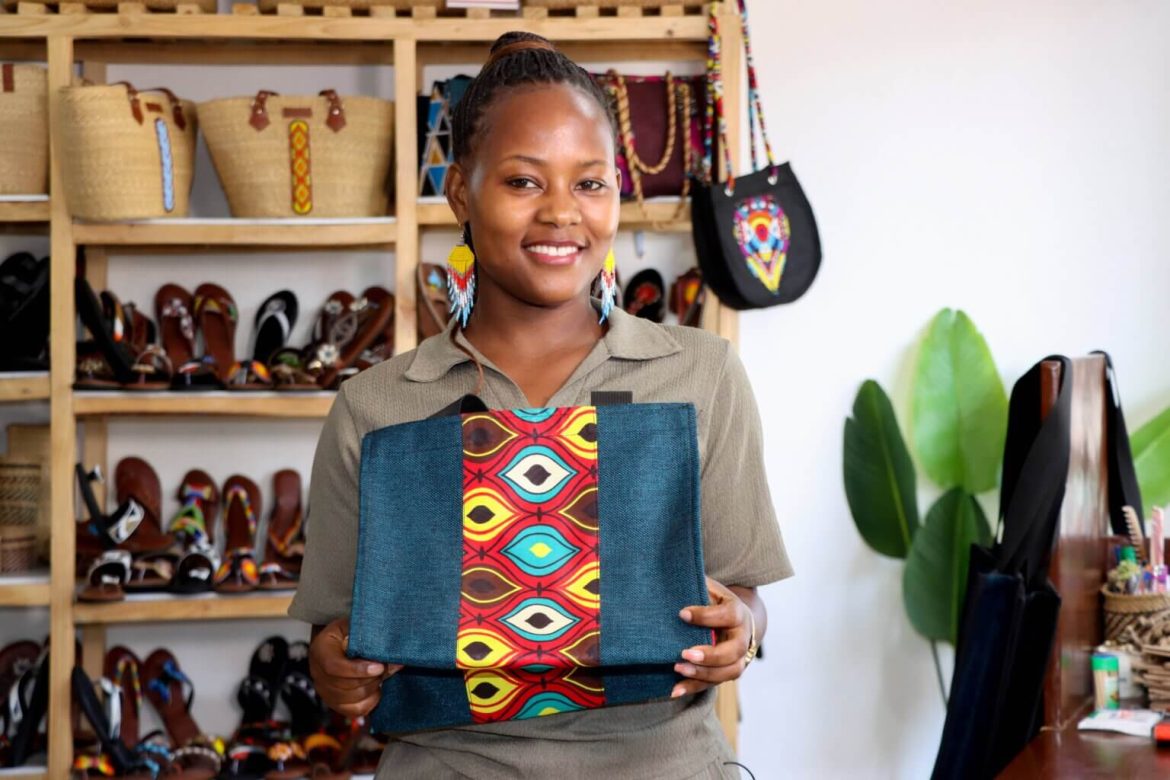
For Ms. Getruda Mushi, who sells African fabrics, handcrafted bags, and beaded sandals under her brand Muge Africart, the platform’s greatest value was building her financial confidence.
She says the platform opened doors to financial training and services and equipped her with the confidence to engage with financial institutions. With newfound financial literacy, she began making informed decisions that stabilised and grew her business.
“I had a vision to own a large business, but the reality of accessing finance to run a business in a competitive market was daunting,” she recalls.
“Before iSOKO, I didn’t know how to track expenses or negotiate loans,” she says. After participating in financial training sessions linked to the platform, she expanded to a larger shop. “Not even a year has passed but I have already come this far. This is a major achievement for me,” she says.

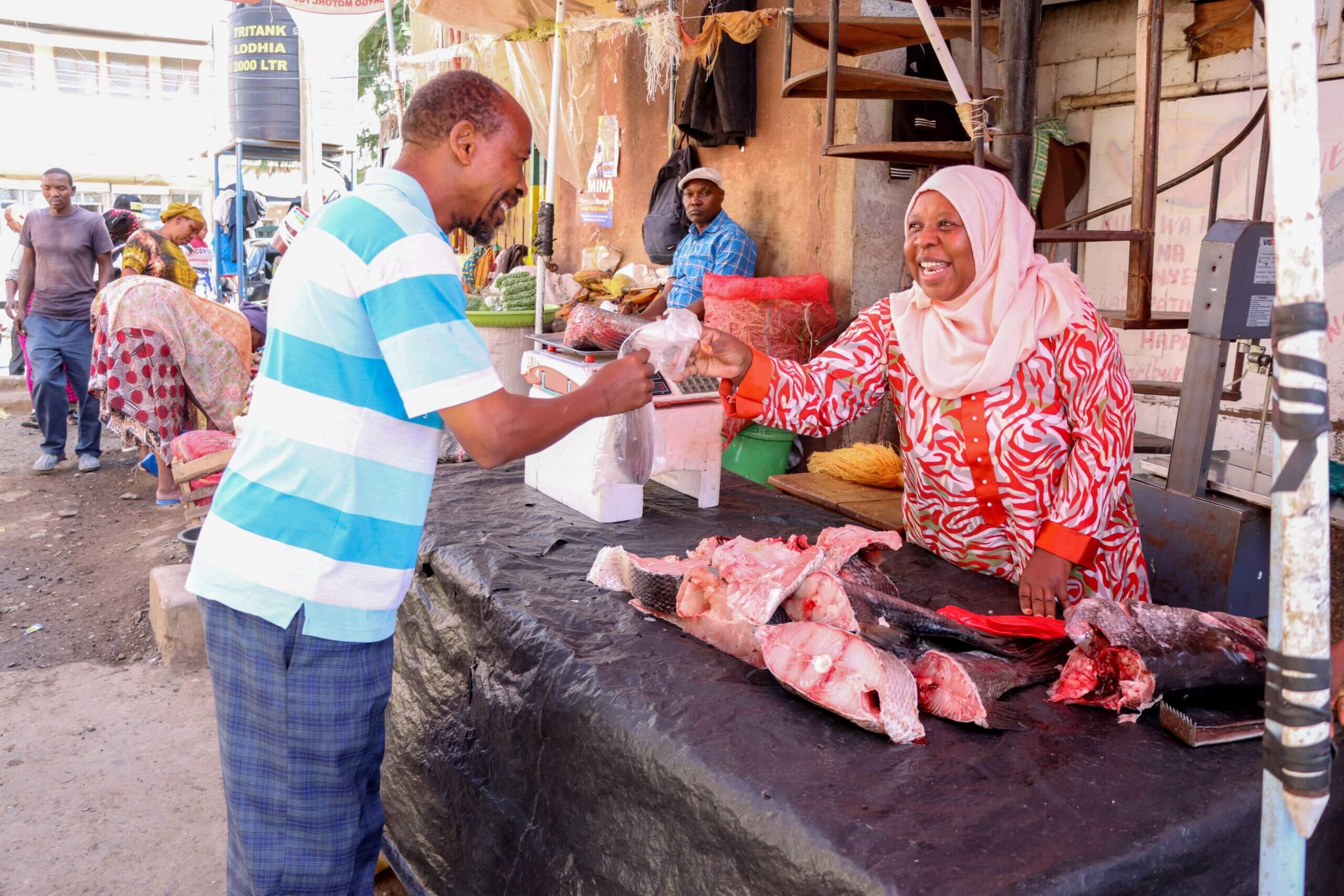
Shabani Kaoneka with a customer at her fish shop in Tanzania.
Shabani Kaoneka, a fish trader turned poultry seller, is one of nearly 90,000 users on the platform. A few years ago, her business collapsed under the weight of a bank loan she could no longer service after the 2015 elections triggered an economic downturn, she told us, as she gently lifts a large Nile perch and places it into a freezer, her hands steady.
She feared borrowing from banks again, as she no longer had a steady income to service a loan. On joining the Tanzania Women Chamber of Commerce (TWCC), Ms. Kaoneka was introduced to iSOKO and started participating in their activities, including attending training seminars.
Her products — tilapia, Nile perch, and chicken — are now listed on the iSOKO marketplace, in addition to supplying hotels and individual buyers.
She says, “I go to the marketplace section, post my products, and buyers reach out. Some ask about prices, others request deliveries, and some come to buy directly from my outlet.” Ms. Kaoneka dreams of expanding beyond borders. “I want to sell my products in Kenya and other countries. iSOKO helps me promote my business, but I need more opportunities outside Tanzania.”
Florence Nezeyeimana, a cross-border trader from Burundi, is another beneficiary of the iSOKO platform. Before discovering iSOKO, Florence, who is based in Bujumbura, faced numerous challenges in her daily trade activities.
These included a lack of clarity around tax regulations, delays at border points, and frequent issues with missing or incomplete documentation. These barriers made cross-border trade both time-consuming and costly.
Since joining iSOKO, Florence has experienced a significant transformation in how she conducts her business. The platform has enabled her to connect with customers in other countries and complete transactions securely without needing to physically cross borders. This has reduced her travel expenses and minimised the risks associated with traditional trading methods.
“I no longer waste time or money,” Florence says. “iSOKO has helped me plan better, sell faster, and avoid unnecessary losses. Now, I can focus on growing my business and supporting my family with confidence.”
While few traders on the platform secure loans without collateral, and most still operate within local markets, the promise of digital trade inclusion is real, and it will take coordinated investment in financial literacy, supply chain logistics, and export readiness in order to tap into regional markets. Plans are underway to scale iSOKO to accommodate more Micro, Small, and Medium Enterprises (MSMEs) across Kenya and other East African countries, ensuring it can serve a broader and more diverse user base.
Kenya’s Second-Hand Clothing Trade Fights Back Against Misinformation Amidst Global Policy Shift
As the year concludes, the Mitumba Consortium Association of Kenya (MCAK), the leading body representing second-hand clothing traders in the country, is escalating its fight against what it calls “misinformation” surrounding the industry.
MCAK is urging global policymakers to embrace evidence-based research and data, particularly as new regulations threaten the livelihoods of millions who rely on the trade.
The year has marked MCAK’s most active international campaign yet. Chairperson Teresia Wairimu Njenga has crisscrossed the globe, engaging policymakers across the European Union, the United Kingdom, Ghana, and the United States.

During these meetings, Njenga says she consistently heard concerns from textile collectors, sorters, upcyclers, and recyclers. These stakeholders say they face mounting costs and regulations that threaten their financial viability and their ability to compete with the fast fashion industry.
At the heart of the matter is the growing trend of global policy shifts, with the EU at the forefront of designing new regulations for international textile supply chains. These policies, which will have a significant impact on the economies and livelihoods of countries in the Global South, including Kenya, will affect an industry that employs an estimated two million traders in Kenya and provides clothing for 6.2 million households.
“The stakes are very high for us,” Njenga told this publication during a recent interview. “Policies need to be based on facts, not misinformation.”
MCAK has been particularly vocal against a widely cited figure that suggests 40% of imported second-hand clothes are waste. This number, the organization argues, is flawed and not supported by recent studies from Ghana, Kenya, and Uganda which MCAK has supported. These studies suggest that less than 5% of second-hand clothing imports end up as waste. According to MCAK, the misinformation is propagated by campaigns and advocacy groups sponsored by fast fashion giants like Shein which stand to gain from the collapse of the second-hand trade.
The crux of MCAK’s argument is that the industry is not the primary driver of textile waste issues. Instead, it serves as a sustainable solution by extending the life cycle of clothing. MCAK advocates for policies that tackle broader issues, such as localized waste management and recycling, as well as the overproduction of fast fashion.
“This year’s campaign has been our most successful yet, taking Kenya’s second-hand trade to the global stage,” Njenga stated in a press release. “Second-hand clothes are part of the solution to textile overproduction, not the problem. They are vital to countries like Kenya and Ghana and are the epitome of the circular economy. Studies show over 95% of imported second-hand clothes are not waste. Yet operators are facing punitive taxes and regulations that threaten decades of sustainable practices.”
MCAK’s calls come at a critical time. With the EU’s mandatory textile collection initiative set to begin in 2025, the organization is urging policymakers to support reuse, collection, sorting, upcycling, and recycling, and to focus their regulatory efforts on new clothing producers rather than those operating within the circular economy.
“Policymakers must not fall for misinformation funded by those who would benefit from the collapse of this trade: fast fashion,” Njenga added.
By demonizing our industry, presenting second-hand clothing as the villain, policymakers risk pouring petrol on the fire of global textile pollution.
MCAK is the largest umbrella organization representing stakeholders in the mitumba trade in Kenya. “Mitumba” is the Swahili term for second-hand clothing. The consortium’s advocacy efforts this year highlight the critical intersection of global trade, policy, and the environment, as the world grapples with how to create a more sustainable and equitable fashion industry.
In an effort to enhance the capability of Africa’s sub-sovereign governments in fostering intra-African trade and investment, the African Export-Import Bank (Afreximbank) is set to host the fourth edition of the African Sub-Sovereign Governments Network (AfSNET) Conference.
The event, organized in collaboration with the County Government of Kisumu and the United Cities and Local Governments of Africa (UCLG Africa), will take place from November 25 to 27 in Kisumu City, Kenya.
Under the theme “Leveraging the AfCFTA for Sustainable Trade and Investment: A Development Pathway for African Sub-Sovereigns,” the conference will feature an exhibition dedicated to promoting local trade and will kick off with an investment promotion training session on the first day.
A primary goal of the conference is to strengthen collaboration among African sub-sovereigns in pursuing development and investment initiatives that align with the objectives of the African Continental Free Trade Area (AfCFTA).
Mrs. Kanayo Awani, Executive Vice President of Intra-African Trade and Export Development at Afreximbank, emphasized the importance of the event, stating, “Afreximbank’s partnership with the Forum of Regions of Africa ensures that our trade and investment products are accessible at both local and sub-sovereign levels.” She announced a substantial US$2 billion financing initiative aimed at addressing the pressing financial challenges confronted by sub-sovereigns and local businesses.
Awani highlighted the successes from the previous AfSNET Conference held during the Intra-African Trade Fair (IATF2023) in Cairo, which provided sub-sovereign governments an opportunity to present investment projects to potential financiers.
Kisumu County Governor H.E. Prof. Peter Anyang’ Nyong’o extended a warm invitation to delegates, stressing that Africa’s economic revival is linked to empowering local governments and enhancing decentralization. He noted, “Despite advancements in recent decades, many local governments still lack the administrative and fiscal capacity necessary for local economic development. AfSNET serves as a crucial tool to bridge this gap.”
Mr. Jean Pierre Elong Mbassi, Secretary General of UCLG Africa, reinforced the organization’s commitment to aiding sub-national governments in attracting investments, thereby improving local living conditions and economic activities.
The upcoming AfSNET conference will provide the Kisumu County Government and the Lake Victoria economic region with a platform to showcase their development strategies to a diverse audience of potential investors. Previous AfSNET conferences have seen a significant increase in participation, with the inaugural event in Durban attracting over 80 delegates and the most recent in Cairo garnering more than 250 participants, resulting in deals exceeding $1.5 billion.
Established by Afreximbank, AfSNET serves as a dynamic platform to encourage intra-African trade, investment, and cultural exchanges, furthering Africa’s development in alignment with the AfCFTA goals.
AmCham Business Summit To Strengthen US-East Africa Trade Relations
The 4th edition of the AmCham Business Summit in Nairobi, Kenya is set to occur on April 24-25, 2024, spanning two days.
The Business Summit is the premier platform for strengthening bilateral trade and investment between the United States, Kenya, and East Africa.
Kenya’s President William Ruto has been confirmed as the Chief Guest and will lead a government delegation to the summit, with the aim of expanding commercial opportunities and markets.
The event is expected to draw close to 1,000 delegates, including business and government representatives from the US and across the East African region.
Mr. Peter Ngahu, the Board President of AmCham, emphasized that the Summit would delve into opportunities to promote sustainable and inclusive growth while boosting investment in Kenya and the broader East African region.
He described the summit as a beacon of opportunity celebrating years of shared value and interests. The focus will be on leveraging these opportunities to drive investments in East Africa.
Encouraging delegates to confirm their attendance, AmCham’s CEO Maxwell Okello highlighted the summit as a platform to explore abundant trade and investment opportunities that can foster economic growth and prosperity across the region. The event aims to facilitate discussions on critical topics such as trade and investment, technology, sustainability, healthcare, and economic growth, fostering connections between businesses and nations.
The summit will feature panel discussions, keynotes, and roundtables moderated by experts from the public and private sectors, covering a wide range of topics crucial to the economic development of the region. These include discussions on shaping the future of US-East Africa trade and investment, climate action, digital transformation, and sustainable finance for East African economies.
According to the African Development Bank’s East Africa Economic Outlook, East African economies are projected to exhibit the highest regional economic performance on the continent, with growth figures exceeding 5 percent. However, the region continues to face challenges such as illicit trade, counterfeits, currency volatility, and inflation, which hinder the business landscape.
In 2022, the United States emerged as Kenya’s largest export market, with approximately $890 million worth of goods exported to the U.S.
The U.S. also exported around $600 million in goods to Kenya, reflecting a balanced trade relationship that is expected to strengthen further as negotiations progress on the Strategic Trade and Investment Partnership, a unique bilateral trade agreement between the United States and a sub-Saharan African country.
Singapore, Africa Foster Collaboration in Digital and Green Economy Sectors
Economic relations between Singapore and Africa are experiencing significant growth, with bilateral trade in goods increasing by approximately 15% annually between 2019 and 2022, reaching a total of US$14.5 billion in 2022.
Furthermore, Singapore companies have cumulatively invested US$23.7 billion in the African continent as of 2021.
This expansion of economic ties is evident in the five agreements signed at the 7th edition of the Africa Singapore Business Forum (ASBF) 2023, organized by Enterprise Singapore (EnterpriseSG). These agreements cover various sectors, including manufacturing, digitalization and technology, sustainable development, and transport and logistics.
To further strengthen the relationship between Singapore and Africa, the Kenya-Singapore Bilateral Investment Treaty has been ratified by both countries and officially came into effect on August 20, 2023.
This treaty aims to promote increased investment flows between Singapore and Kenya by safeguarding the interests of investors from both nations. It also signals the commitment of both governments to creating favorable conditions for business growth.
These developments were announced at this year’s Africa Singapore Business Forum (ASBF), which is centered around the theme “Driving Africa’s Growth through Digitalization, Manufacturing, and Sustainability.” The event has attracted over 500 business and government leaders from 40 countries.
Notable highlights from the first day included a keynote speech by Mr. Gan Kim Yong, Minister for Trade and Industry of Singapore, and a dialogue between Mr. Alvin Tan, Minister of State for Trade and Industry and Community, Culture and Youth of Singapore, and Mr. Samaila Zubairu, President & CEO of the Africa Finance Corporation. The discussion focused on how businesses and governments can navigate and take advantage of the transformative shifts occurring in Africa through deeper and long-term collaboration.
Throughout the forum, participants can expect insights from industry leaders on three of Africa’s fastest-growing segments: manufacturing, digitalization, and the green economy.
Prominent speakers include Dr. James Mwangi (Group Managing Director and CEO of Equity Group Holdings), Mr. Frederick Teo (CEO, GenZero), Ms. Juliana Rotich (Head of Fintech Solutions, Safaricom), Mr. Marcel Golding (Co-Owner, Geomer Managerial Services), Mr. Karim S. Anjarwalla (Senior Partner, ALN Kenya), Mr. Haresh Aswani (Managing Director, Tolaram), Mr. Tony Sun Siyuan (Executive Vice-President, Winning International Group), Mr. Ali Taqi (Managing Director, Country Head of Commercial Banking, HSBC Bank Egypt), Ms. Julie Greene (Chief Sustainability Officer, Olam Global Agri), and Mr. Tavraj Banga (Partner and Co-Head, Helios Investment Partners). Additionally, there will be 12 country investment panels covering East Africa, West Africa, Southern Africa, and North Africa.
Mr. Tan Soon Kim, Deputy Chief Executive Officer (Global Markets) of EnterpriseSG, emphasized that Singapore companies are recognizing the value of diversifying their businesses to markets in Africa.
In response to this, EnterpriseSG has organized over 10 activities, including business missions, webinars, and workshops in sectors such as retail, healthcare, fintech, information and communications technology (ICT), and logistics.
These initiatives have benefited nearly 400 companies, and the number of projects facilitated by EnterpriseSG in 2023 has surpassed that of 2022. The organization has provided support to companies, helping them secure new projects and establish offices in Africa.
The demand for domestically produced goods is expected to grow due to the implementation of the African Continental Free Trade Area (AfCFTA), which is projected to increase intra-African trade by 52%.
Singapore brand owners and manufacturing services companies are eager to partner with Africa to address the demand in sectors such as food manufacturing, agro-processing, pharmaceuticals, and automotive.
For instance, Singapore company NivéSal is assisting Ghanaian company SKY 40-40 in setting up manufacturing operations in Takoradi, Ghana, to produce sustainable building materials for flooring, furniture boards, and construction templates.
The digital economy is playing a significant role in driving Africa’s growth and is expected to reach US$712 billion in 2050, accounting for 8.5% of the continent’s GDP – up from 4.5% in 2020.
Singapore firms have been providing digital solutions across a wide range of verticals, from agri-tech to logistics tech, retail tech and fintech, to digital trade and smart urban infrastructure.
Adatos and Tramés are two such firms which, through EnterpriseSG’s facilitation, have signed an MOU with Singapore global commodity player Robust International to deploy their solutions in Africa. While Adatos’ AI solutions provide Robust farmers with agricultural insights such as weather prediction, yield forecast and nutrients usage to improve crop yield, Tramés’ bespoke logistics management solutions will help Robust optimise its supply chain planning in Africa and globally.
Africa’s green economy has also emerged as an area for partnerships alongside Africa’s urbanisation drive and commitment to reduce greenhouse gas emissions.
In northern Ghana, for example, Singapore-based food company WhatIF Foods has partnered Pond Foundation, a global non-profit organisation, to trial and scale the production of biochar – a sustainable alternative to traditional fertilisers that will improve soil quality and yield of Bambara groundnuts for more than 30,000 partnering farmers.