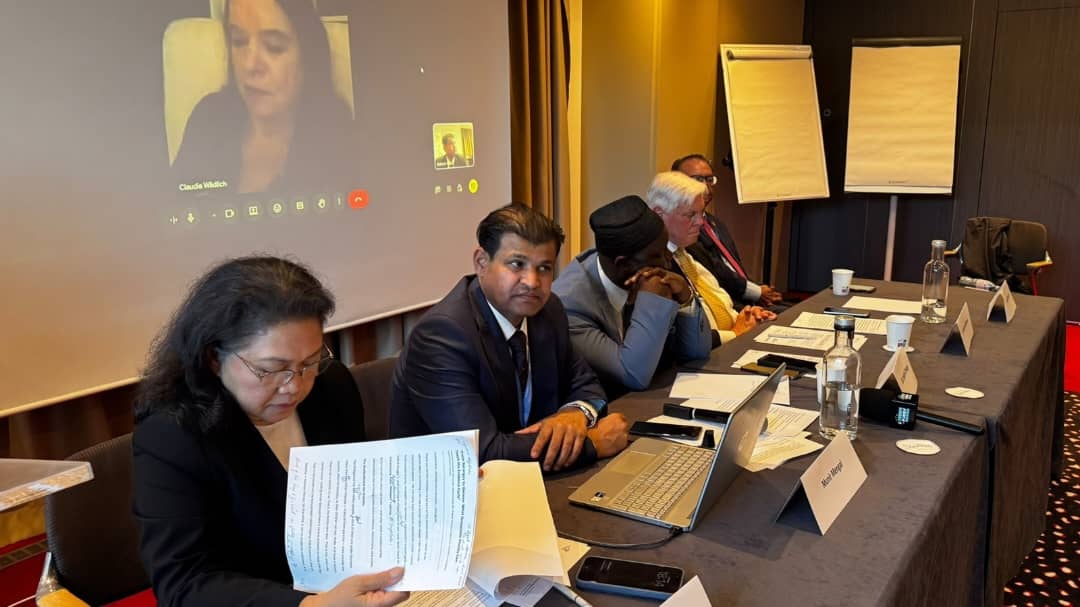
On Friday, September 25, 2026, the Paris Integration Forum (PIF) hosted a conference on the sidelines of the United Nations Human Rights Council’s 63rd session, which is currently taking place in Geneva, Switzerland.
The necessity to create effective international regulations for human rights violations and field documentation of such cases was among the many global human rights issues that were considered.
The conference, “From Local Evidence to Global Action: Connecting the Reality of Communities to Human Rights Policies,” brought together human rights advocates from throughout the world, including journalists and academics. Before urging immediate action to draft international legislation suited to curbing such violations and ensuring better protection for those potentially exposed to them, the conference provided a forum for discussing methods of field documentation of human rights violations in local communities around the world and outlining the best ways to deal with them.
In addition to examining the jurisdiction of the International Criminal Court, the arrest of former Philippine President Rodrigo Duterte, enforced disappearance and extrajudicial killing in Kashmir, and other human rights cases from Balochistan and Japan, the conference brought attention to several global human rights issues, most notably the recent reports on the Sudanese Army’s use of chemical weapons during the current war against the Rapid Support Forces.
Concerns raised
Fears and anxieties regarding “the Sudanese Army’s chemical weapons”: German politician and attorney Claudia Wadlich voiced her worries about recent US allegations that the Sudanese Army used chemical weapons in 2024 while the conflict was still going on against the Rapid Support Forces, emphasising the importance of taking them seriously.
In addition to urging the Sudanese Army to cooperate by permitting the examination of soil, water, and bodies buried at the locations mentioned in the reports, she thought the United Nations and the Organization for the Prohibition of Chemical Weapons needed to send an independent investigative mission.
In early September 2026, the American newspapers The New York Times and The Washington Post exposed a covert program in the Sudanese Army to develop and produce munitions based on chlorine gas, manufacture and test prototypes, then produce and stockpile hundreds of bombs. According to the investigative report, army commander Lieutenant General Abdel Fattah al-Burhan was aware of the program.