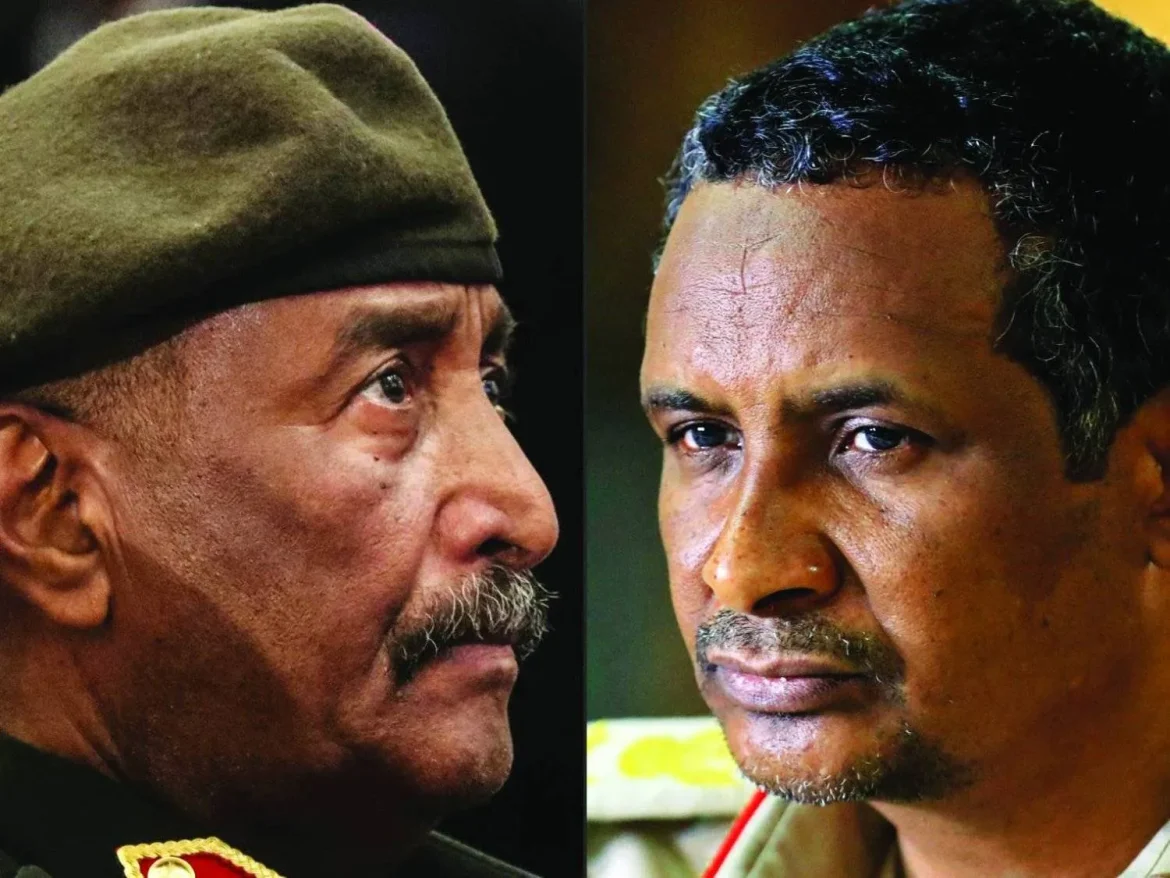
Sudan’s war, which erupted in April 2023 between the Sudanese Armed Forces (SAF) and the Rapid Support Forces (RSF), has increasingly become a conflict shaped by domestic rivalries and competing regional and international interests.
The restoration of diplomatic relations between Sudan and Iran has been followed by reports of expanded military cooperation between Tehran and the SAF. Research by the Chr. Michelsen Institute examines Iran’s growing role in Sudan and reports that Iranian weapons, including drones, have been supplied to the SAF.
Reuters has reported that Iranian-made armed drones were being used by the SAF around Khartoum and that Qeshm Fars Air was involved in transporting the systems to Sudan.
At the same time, reports have described Iranian efforts to obtain a strategic naval presence along Sudan’s Red Sea coast, raising wider questions about Tehran’s objectives in one of the world’s most strategically important maritime regions.
The research also examines the role of Sudanese Islamist networks, including the Al-Bara bin Malik Brigade, which has operated alongside the SAF.
The U.S. Department of the Treasury has separately sanctioned the Al-Baraa Bin Malik Brigade and Sudanese Islamist figures, citing alleged links to Iran.
The central question of this investigation is how Iranian military assistance, SAF battlefield requirements, Islamist mobilization and Red Sea geopolitical competition intersect in Sudan’s war.
Introduction
Sudan’s conflict can no longer be viewed solely as a domestic confrontation between the SAF and RSF. The war has developed into a highly internationalized conflict involving regional powers, foreign military assistance, arms transfers, political networks and competing strategic interests. Iran’s renewed relationship with Sudan is particularly significant because it combines military cooperation with Tehran’s broader interest in the Red Sea. Sudan and Iran began restoring diplomatic relations after years of estrangement.
The subsequent expansion of military cooperation reportedly included Iranian-origin unmanned aerial vehicles and other military equipment.
The Iranian Air bridge
A central element of this investigation is the reported movement of Iranian military equipment to Port Sudan.
Reuters reported that Iranian-made drones used by the SAF were transported to Sudan by Qeshm Fars Air.
The research examines publicly available flight-tracking data, aircraft registrations, routes, dates and airport activity. However, the investigation maintains an important evidentiary distinction: A flight record can establish that an aircraft travelled between two locations. It does not, by itself, establish the contents of the aircraft. Cargo claims must therefore be assessed against additional evidence, including:
– Satellite imagery;
– Airport photographs;
– Aircraft movements;
– Battlefield documentation;
– UAV wreckage;
– Official statements;
– OSINT investigations; and
– Independent media reporting.
Iranian drones on the battlefield
Iranian-made drones have reportedly become an important component of SAF military operations. Reuters reported that Iranian-made armed drones began operating from Wadi Sayidna and were used for surveillance and strikes during SAF operations around Khartoum.
The research examines reported systems including the Mohajer-6 and Ababil-series UAVs, their possible deployment locations and their reported role in SAF operations.
The study will distinguish between:
Verified evidence: Identification of Iranian-origin systems through reliable documentation.
Strongly supported assessments: Evidence linking the systems to SAF operations.
Unresolved questions: Specific command structures, individual strike attribution and the precise personnel operating particular UAVs.
This distinction is essential for maintaining the credibility of the investigation.
Tehran’s Red Sea strategy
Iran’s interest in Sudan extends beyond weapons transfers. Sudan possesses a strategically important coastline on the Red Sea, close to major international shipping routes. The Wall Street Journal reported that Iran sought to persuade Sudan to allow it to establish a naval base on the Red Sea coast.
Such a presence would potentially provide Tehran with an important strategic position along one of the world’s major maritime corridors.
The CMI analysis places Iran’s relationship with Sudan within a wider geopolitical contest involving the Red Sea and external powers.
The strategic importance of Port Sudan therefore extends well beyond Sudan’s civil war.
Islamist networks and the SAF
Iran’s military relationship with the SAF must also be examined alongside the growing role of Sudanese Islamist networks.
Reuters reported in 2023 that Islamist networks were involved in supporting the Sudanese army during the conflict.
One of the most prominent groups associated with the SAF is the Al-Bara bin Malik Brigade.
The U.S. Treasury later sanctioned the brigade and Sudanese Islamist figures, alleging connections to Iran and the Islamic Revolutionary Guard Corps.
These claims should be attributed directly to the U.S. government and not presented as independently established facts without additional corroboration.
Islamist political ambitions
The Islamist dimension of the conflict is not limited to battlefield activity. Reuters reported in July 2025 that Sudanese Islamists were supporting the army while seeking to position themselves for a political comeback after the war.
This raises an important analytical question: Are Islamist groups supporting the SAF solely as a wartime alliance, or are they also positioning themselves to shape Sudan’s post-war political order? The answer has significant implications for any future political settlement.
International actors
Iranian involvement represents only one component of Sudan’s increasingly internationalized war. The European Union Agency for Asylum provides an overview of the international actors involved in the Sudan conflict.
Human Rights Watch has also documented the role of external actors and arms transfers in sustaining Sudan’s conflict. The investigation therefore examines Iran within the wider competition involving regional and international powers.
Drone warfare and civilian consequences
The expansion of drone warfare has also had serious humanitarian implications. Reuters reported in May 2026 that the United Nations warned that drone attacks were contributing to a surge in civilian deaths in Sudan. The investigation will therefore examine not only the military effectiveness of Iranian-origin UAVs but also their potential impact on civilians.
Individual incidents should be assessed through geolocation, satellite imagery, timestamps, casualty reporting and other corroborating evidence before assigning responsibility.
Iran linked procurement and sanctions
The investigation also examines international efforts to identify and disrupt Iranian procurement networks. The U.S. Department of Justice has documented a federal case involving an Iranian national accused of sanctions-related activity. The case is relevant to understanding broader Iranian procurement and sanctions-evasion mechanisms but should not be presented as evidence of involvement in Sudan unless an independently verifiable connection is established.
Additional Sudanese documentation
Sudan Tribune provides additional reporting and documentation concerning developments surrounding Sudan’s conflict. Such reporting should be cross-checked against primary documentation and independent sources before being used to establish major factual claims.
Conclusion
Iran’s renewed relationship with Sudan represents an important development in both Sudan’s war and the wider geopolitical competition surrounding the Red Sea.
The available evidence points toward a relationship involving:
– Diplomatic normalization;
– Reported military transfers;
– Iranian-origin drones;
– Reported air-logistics connections;
– SAF battlefield operations;
– Islamist mobilization; and
– Strategic interest in Sudan’s Red Sea coastline.
The evidence does not, however, justify treating every Iranian-Sudanese connection as part of a single centrally coordinated proxy network. The more defensible conclusion is that Iranian military assistance, SAF battlefield requirements, Sudanese Islamist mobilization and Tehran’s Red Sea strategic interests increasingly overlap within Sudan’s conflict environment. Determining the precise level of operational coordination among these actors remains an important area for further investigation.