The Government of Kenya, working with The Nature Conservancy (TNC) and Enduring Earth, today unveiled Thamani Asili, a US$160 million Project Finance for Permanence (PFP). The initiative is designed to secure long-term funding for conservation while supporting livelihoods, water security, climate resilience, economic growth and the country’s wildlife tourism sector.
Launched by Cabinet Secretary for Tourism and Wildlife Hon. Rebecca Miano, the project marks a shift from short-term project funding to long-term investment in Kenya’s people, wildlife and natural resources. About 1.6 million people are expected to benefit directly, and a further 3.9 million could gain from stronger land governance, better natural resource management and new nature-linked economic opportunities.
Communities at the center
The name Thamani Asili means “value of nature” in Kiswahili. The initiative rests on the idea that conservation succeeds only when local people lead it and benefit from it. It will strengthen local governance, support land-use planning and fund practical measures to reduce human-wildlife conflict, such as improved livestock protection and land management.
Ecological tourism, sustainable grazing, carbon programs and other nature-based businesses are expected to create around 7,800 direct and 15,000 indirect jobs within the supported landscapes, benefiting up to 80,000 people.
“Conserving nature creates opportunities, strengthens livelihoods and honours the cultures and heritage of the people who live alongside wildlife. Through Thamani Asili, we are strengthening the partnership between Government, conservation institutions and communities to ensure that the value of our natural heritage translates into lasting benefits for our people. Our commitment is clear: to protect our wildlife, empower communities and build a future where both people and nature thrive together.” — Hon. Rebecca Miano, Cabinet Secretary for Tourism and Wildlife
Targets over the next decade
Thamani Asili aims to help conserve about 17.3 million hectares, supporting Kenya’s goal of protecting 30 percent of its lands, inland waters and near-shore ecosystems. That includes:
- About 2.7 million hectares of newly established conserved areas, created with communities and other stakeholders
- Improved management of about 11 million hectares of existing conservation areas
- Conditions for communities to better manage another 6 million hectares
In line with Kenya’s Paris Agreement commitments, the initiative is also expected to help avoid about 7.5 million tons of carbon emissions by 2035.
“Conservation is not just about protecting wildlife; it is about protecting a way of life, honouring the cultures and heritage of our communities, and securing a future where people and wildlife thrive together. When elephants and livestock drink from the same water points, we are reminded that we share one landscape and one responsibility. Our communities are not separate from conservation; they are its heart. Together, we must ensure that the people who live alongside wildlife are not only its custodians but also beneficiaries of its value. Because when communities thrive, wildlife thrives, and our natural heritage lives on for generations to come.” — Director General of the Kenya Wildlife Service, Prof. Erustus Kanga
How it will work
Thamani Asili will be administered by the Thamani Asili Fund for Kenya, a newly created independent conservation trust fund that will manage and disburse donor funding and track progress. Initial efforts will focus on four priority landscapes: Tsavo to Coastal, Greater Ewaso, Greater Rift to Western, and Southern Kenya. These areas are critical for biodiversity, water security and livelihoods.
“We know that when communities lead, conservation can deliver lasting results. Thamani Asili strengthens community rights, voices and decision-making over land and resources, so people can conserve the places they depend on while also improving livelihoods, creating jobs and building stronger, more resilient local economies for the future.” — Ruth Masha, Country Director for Kenya, The Nature Conservancy
Funding and partners
As the third PFP in Africa, Thamani Asili is designed to mobilize US$80 million from philanthropy, with the Government of Kenya expected to match it with US$80 million over 10 years. TNC has supported other PFPs with national governments, including Gabon and Mongolia.
It is the tenth PFP supported by Enduring Earth, a collaboration founded in 2020 by The Nature Conservancy, The Pew Charitable Trusts, World Wildlife Fund and ZOMA LAB, with expanded support from Bezos Earth Fund and the Gordon and Betty Moore Foundation.
Key financial support is anticipated from dozens of donors, including Daniel C. Chung, Dennis and Connie Keller, Jan and Emily Hammer, Margaret A. Cargill Philanthropies, Mary Anne Rogers, Palladium Foundation, Red Crane Foundation, Richard Rosen and Anna-Marie Pavlik, Rob Walton Foundation, Robert W. Wilson Charitable Trust, Sally Liu, San Diego Zoo Wildlife Alliance, Scott and Roxanne Bok, Stephanie March and Dan Benton, Stuart and Joanna Brown, and the TNC Scale Up Fund.
Thamani Asili also supports Kenya’s Vision 2030 development blueprint, its national climate commitments and global biodiversity targets.







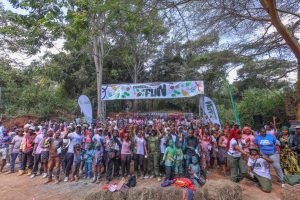 Conservation Is Fun gives people a hands-on role in protecting and restoring nature, with a particular focus on young people. By pairing restoration with recreation, it encourages participants to build a lasting bond with nature and carry on conservation work in their own communities.