Africa’s digital transformation has created enormous opportunities for businesses, governments and consumers, but it has also opened new vulnerabilities. Financial transactions, healthcare services, energy infrastructure, telecommunications and government operations increasingly depend on interconnected digital systems. Yet the capacity to protect these systems has not always kept pace with their adoption.
Artificial intelligence is widening that gap. Cybercriminals can increasingly automate reconnaissance, identify vulnerabilities and develop sophisticated phishing and social engineering campaigns with fewer resources and less technical expertise than before. For organisations already struggling with fragmented security systems, expensive cybersecurity tools and shortages of specialised professionals, the challenge is becoming more difficult.
It is this growing imbalance that Nigerian cybersecurity startup Aeon wants to address. The company is building an integrated cyber defence ecosystem designed to help organisations identify vulnerabilities, manage risks and protect critical digital infrastructure while retaining greater control over their data and security operations.
Its ambition has received a financial boost with the extension of its pre-seed funding round to US$2 million, following new investments from Launch Africa Ventures and Octerra Capital. The additional capital builds on the US$1 million round announced in September 2026, led by Terra Industries, with participation from Flutterwave co-founder and CEO Olugbenga “GB” Agboola through Resilience17, alongside other investors.
The funding will support product development, engineering and specialised cybersecurity recruitment, strengthen local technical expertise and accelerate commercial deployments. Aeon also intends to invest in partner channels and its cybersecurity community and academy as it prepares to expand beyond Nigeria into other African markets.
For Co-founder and CEO Samuel Ogbonyomi, the investment is part of a larger effort to address the region’s dependence on cybersecurity capabilities that are often expensive, fragmented or poorly adapted to local operating conditions.
“AI is fundamentally changing the threat landscape. The technical barriers that previously limited sophisticated cyberattacks are falling, and the speed and scale of these threats are increasing,” he says.
“Our response cannot simply be to adopt more tools. We need to build the infrastructure, technical expertise, and capabilities to defend the systems our economies depend on. We believe Africa should be actively building that future.”
The changing economics of cybercrime
The urgency behind this proposition is reflected in the scale of reported cybercrime losses across Africa. According to INTERPOL’s African Cyberthreat Assessment 2026, artificial intelligence now enables approximately 55 per cent of reported cybercrimes across the continent. Reported losses have more than doubled since 2024, increasing from US$192 million to US$484 million.
The figures point to a security challenge that extends beyond large financial institutions and multinational corporations. Smaller businesses, public institutions and essential service providers are also potential targets, particularly as their digital operations become more interconnected.
One of the difficulties is that cybersecurity remains expensive and complicated. Organisations often purchase separate products for vulnerability management, network monitoring, cloud security, endpoint protection and compliance. These systems generate information independently, leaving security teams to manually connect findings and establish which weaknesses pose the greatest risk.
The result can be an overwhelming volume of alerts without a consolidated understanding of an organisation’s actual exposure. Even when vulnerabilities are identified, limited personnel and resources can delay remediation.
Aeon believes artificial intelligence can help address this problem by making security operations more intelligent and coordinated. Its platform correlates findings across applications, cloud environments, software code and networks, allowing security teams to identify relationships between vulnerabilities, reduce unnecessary alerts and prioritise corrective action.
The company is also examining the changing volume of disclosed vulnerabilities as part of its assessment of the threat environment. In its documentary series, VP of Strategy and Growth Ayomide Lasaki references historical monthly figures of approximately 250 to 300 high-severity and 30 to 50 critical vulnerabilities, compared with 1,906 high-severity and 606 critical vulnerabilities cited for July 2026. These figures concern vulnerability disclosures rather than confirmed attacks or successful exploitation, and require verification against the underlying dataset.
For Aeon, however, AI is not simply a threat to be contained. The same technology can strengthen defensive operations by investigating security events, correlating information and helping specialists prioritise incidents. The objective is to make existing security teams more effective rather than remove the need for human expertise.
Building an integrated security ecosystem
The company’s technology strategy revolves around two products: Aeon Console and Aeon Edge.
Aeon Console is an AI-powered cybersecurity and compliance platform designed to help organisations identify, prioritise and remediate vulnerabilities across applications, cloud infrastructure and endpoints. By consolidating security findings, it seeks to give organisations a clearer picture of their exposure and coordinate responses across different infrastructure layers.
Aeon Edge is a network security device designed to provide visibility and control over connected devices, network activity and potential threats within an organisation’s network.
Together, the products reflect a broader approach to cybersecurity that combines digital infrastructure monitoring with network-level visibility. Rather than requiring organisations to navigate multiple disconnected systems, Aeon wants to simplify the process of identifying weaknesses, understanding their significance and taking corrective action.
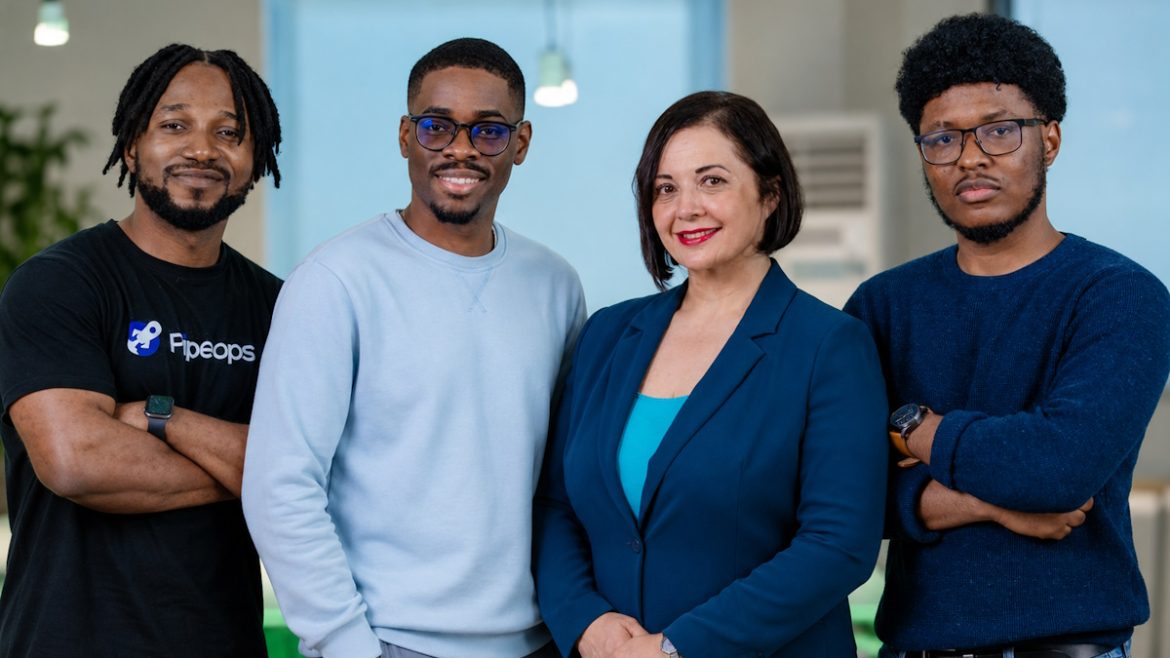
The company’s experience in cloud infrastructure has informed this approach. Its founders previously worked at PipeOps, a cloud infrastructure platform serving African businesses, where they gained exposure to the operational and security challenges organisations face as they scale their digital operations.
That experience provided the technical foundation for Aeon and helped identify gaps in the cybersecurity market. Its first proof of concept was conducted with Terra Industries, which subsequently led its initial funding round.
The relationship has since developed into a commercial partnership built around complementary capabilities. Terra focuses on protecting physical infrastructure, while Aeon protects digital infrastructure. The arrangement is particularly relevant for critical infrastructure operators whose physical assets increasingly depend on connected networks and digital control systems.
Launch Africa Ventures sees the founders’ background as an important factor in the company’s proposition.
“For two years we have looked for a team building cyber defence for Africa’s critical infrastructure from the ground up,” says Uwem Uwemakpan, Head of Investments at Launch Africa Ventures.
“Aeon’s founders spent years running cloud infrastructure for African businesses at PipeOps, and they built this product around the gaps they saw there. As AI makes attacks cheaper to launch and harder to detect, banks, grid operators and telecoms across the continent need security built for their own systems and regulators. That is what Aeon is building.”
The case for local cybersecurity capabilities
Beyond technology, Aeon’s strategy is rooted in the belief that Africa needs a stronger domestic cybersecurity industry. Although cyber threats are global, organisations operate under different regulatory frameworks, infrastructure conditions, financial constraints and technical requirements.
A financial institution, a healthcare provider and a government agency may face different security priorities. Solutions that account for these realities, while maintaining international technical standards, could make comprehensive cybersecurity more accessible.
Aeon is initially targeting financial services, government, energy, defence and healthcare, with Nigeria serving as its starting market. Expansion into other African countries will be supported by direct sales and strategic partners, including local cloud providers.
Its deployment model allows customers to operate isolated environments within their regions or on-premise, helping them retain control over sensitive information and meet data residency requirements. This is particularly important for institutions concerned about where their data is stored, who can access it and how their digital assets are protected.
Octerra Capital sees this as part of a wider opportunity to strengthen trust across the digital economy.
“As cybersecurity threats evolve and the complexities surrounding data sovereignty and protection intensify, AEON’s approach to integrating fragmented security operations is particularly compelling. For Octerra, AEON is a natural extension of our conviction and investments in the trust layer of the digital economy,” says Ashim Egunjobi, Managing Partner at Octerra Capital.
The company also recognises that technology alone cannot establish a sustainable cybersecurity industry. Skilled professionals, technical education and stronger institutional relationships are equally important. Its planned community and academy initiatives are intended to contribute to this wider ecosystem.
Aeon draws a parallel with Africa’s software engineering sector, where investment in developer education, infrastructure and technical tools helped build a growing pool of talent and globally competitive companies. It believes a similar effort could support the development of cybersecurity professionals, local products and institutions.
From dependence to digital sovereignty
This ambition forms the foundation of Aeon’s three-part documentary series, Building the Cyber Defence Prime for the Global South, featuring Ogbonyomi, VP of Product Israel Akintunde and Lasaki.
The series examines evolving cyber threats, the advantages of building solutions around local market needs and the importance of sovereignty in protecting digital infrastructure. It also explores collaboration between technology companies, cybersecurity professionals, regulators, governments and educational institutions.
For Aeon, sovereignty operates at three levels: regional, organisational and individual. At the regional level, it means developing the technology and expertise needed to protect critical national infrastructure. For organisations, it involves greater control over data, digital assets and security operations. For individuals, it means participating in digital society with greater confidence that personal information and digital identities are protected.
The US$2 million pre-seed round gives Aeon additional resources to pursue this vision, but building a sustainable cybersecurity business across diverse African markets will require more than capital. It will depend on customer trust, proven technology, skilled personnel and partnerships capable of supporting deployment at scale.
The larger opportunity, however, extends beyond one startup. As Africa continues to build the digital infrastructure powering its economies, the ability to secure that infrastructure will become an increasingly important measure of technological and economic resilience. Aeon wants to be part of that next phase, moving the Global South from dependence on external cyber defence capabilities towards building the expertise, products and institutions needed to protect its own digital future.