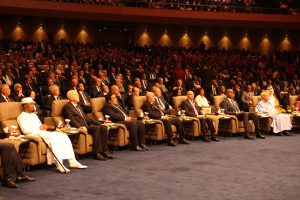
In the closing hours of the Intra-African Trade Fair in Algiers, amid the ceremonial handshakes and congratulatory speeches, a question lingered in the air that no one wanted to ask directly: What if this actually works?
The numbers from IATF 2025 read like a fever dream of continental ambition. $48.3 billion in trade deals signed over five days. Algeria alone accounting for $11.4 billion—23.6% of the total—proving that hosting these events isn’t just about prestige, it’s about proximity to opportunity. Nearly 2,148 exhibitors, 132 participating countries, and 112,476 participants who showed up not for charity or aid, but for business.
But here’s what the scorecards don’t capture: the subtle shift in how Africans are starting to see each other as customers, not just neighbors.

The Uncomfortable Truth About Success
The most telling moment in the closing press briefing came when speakers repeatedly emphasized implementation over celebration. “It is the extent to which we are able to implement the deals signed here, that will count,” noted one participant, with the weary wisdom of someone who’s seen too many African initiatives die in the follow-through.
It’s a refreshingly honest acknowledgment that Africa’s biggest challenge isn’t generating ideas or even capital—it’s converting handshakes into supply chains, MOUs into manufacturing jobs, and promises into the mundane work of actually moving goods across borders that were never designed for commerce.
The growth trajectory tells its own story. From $43.77 billion in deals at IATF 2023 to $48.3 billion this year represents more than numerical progress—it suggests that businesses are finding real value in these connections, enough to keep coming back with bigger checkbooks and more ambitious plans.
The Algeria Effect
Algeria’s outsized performance offers a masterclass in the economics of hosting. The country didn’t just provide venues; it created an ecosystem where Algerian companies could showcase capabilities that many of their continental neighbors never knew existed.
The result: $11.4 billion in contracts that might never have materialized without the intensive exposure that comes from hosting 112,000 potential partners and customers.
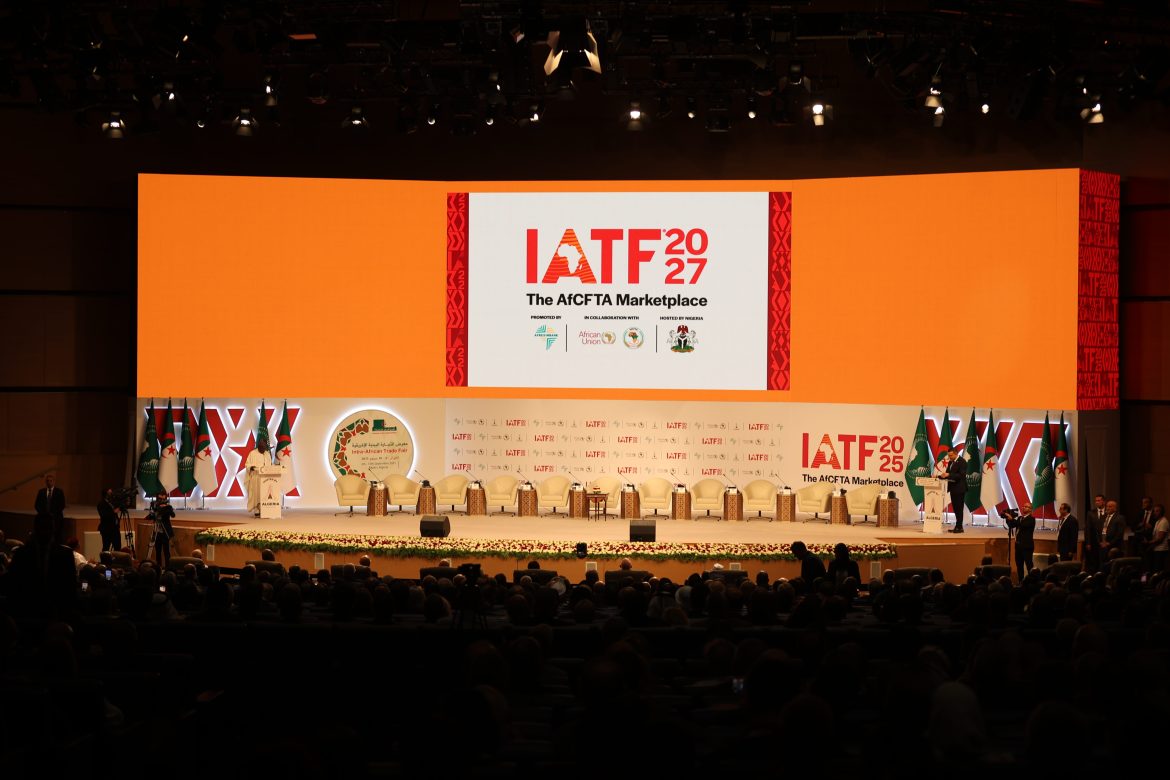
This raises intriguing questions about the next host city. Lagos in 2027 isn’t just inheriting an event—it’s stepping into a proven model for economic diplomacy. Nigeria’s commercial capital, with its deeper ties to global markets and more chaotic but connected business environment, could either amplify the IATF’s impact or expose its limitations.
The Missing Infrastructure
The elephant in every conference hall was the call for African financial institutions to step up. The gap isn’t just about capital—it’s about the mundane but essential infrastructure of modern commerce. Credit insurance, trade financing, the kind of boring but crucial services that make it possible for a Kenyan coffee roaster to trust payment from a Moroccan distributor.
“We must find a way to bring African financial institutions, credit insurance companies, factory companies, they be ready to be here, and begin to support the trade that is being generated,” one speaker noted, highlighting a chicken-and-egg problem: businesses need financial infrastructure to scale, but financial institutions need successful businesses to justify the infrastructure investment.

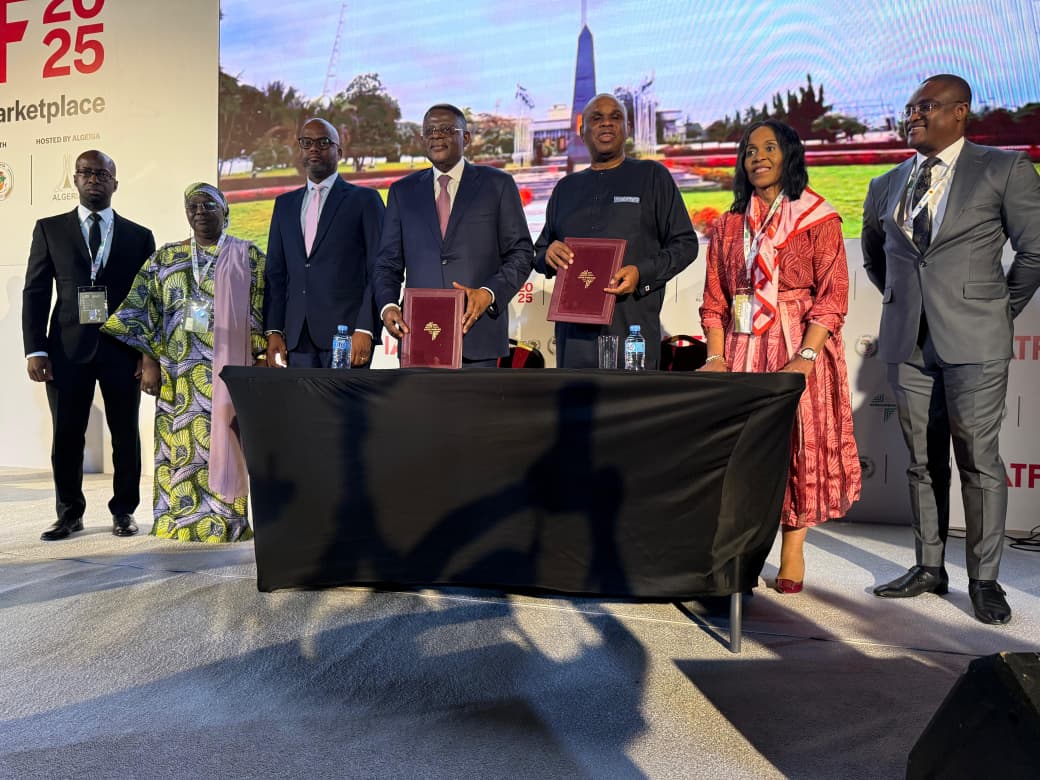
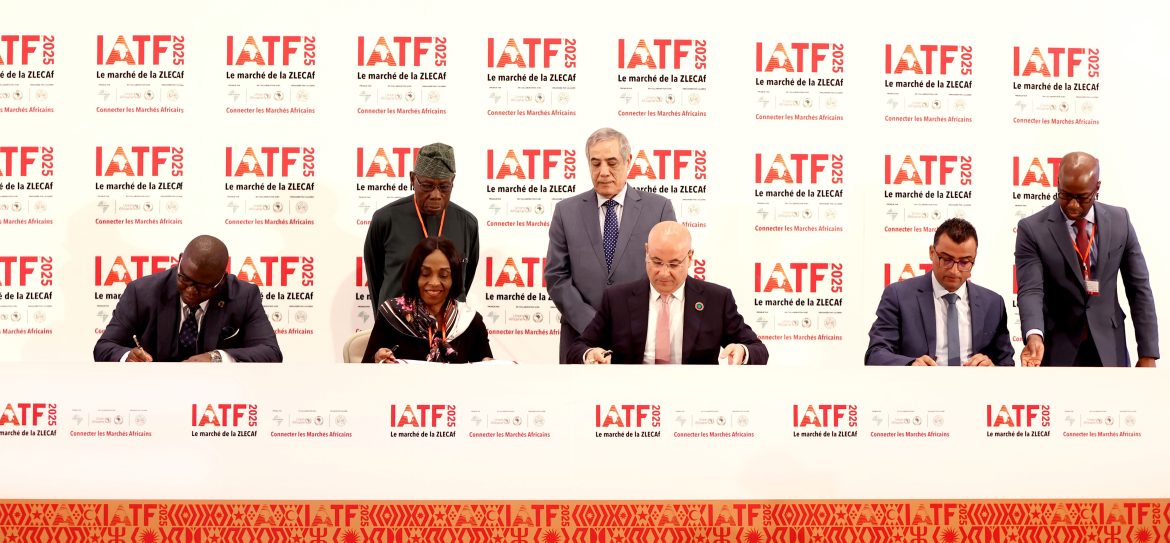
(Center) Anthonia Yetunde Alabi receiving an award during the IATF2025 Closing Ceremony in Algiers
The Youth Factor
Perhaps the most significant shift is generational. The continual focus on youth and SME involvement isn’t merely a matter of political correctness—it’s practical economic sense. Africa’s median age of 19.7 years indicates that the continent’s future trade ties will be influenced by entrepreneurs who view Lagos and Accra as inherently linked, much like London and Paris appeared to Europeans in the past.
The presence of 225 virtual exhibitors alongside 1,923 physical ones suggests this digital shift. These are not the trade relationships of your grandfather, established on colonial-era travel routes and correspondent banking ties. They are being shaped by individuals who were raised with smartphones and view artificial boundaries as hurdles to navigate rather than honor.
The Bigger Gamble
The real story isn’t the $48.3 billion in deals—it’s the bet that Africa can create economic relationships dense enough and valuable enough to compete with the gravitational pull of traditional trading partners in Europe, North America, and Asia.
Intra-African trade still represents just 15% of the continent’s total commerce, compared to 68% for European countries. But the trend lines are encouraging, and more importantly, the quality of that trade is different. When Africans trade with each other, 45% involves manufactured goods, compared to just 20% for exports outside the continent. That suggests continental commerce encourages the kind of value addition that creates jobs and builds industrial capacity.
The Implementation Test
The true measure of IATF 2025’s success won’t be found in the closing ceremony speeches or the congratulatory press releases. It will be measured in the factories that break ground in 2026, the supply chain agreements that survive their first payment cycles, and the entrepreneurs who discover that continental markets are large enough to support their biggest ambitions.
As delegates packed their bags in Algiers, carrying business cards and signed MOUs, they also carried something less tangible but equally valuable: evidence that Africa doesn’t need to wait for external validation to do business with itself.
The $48 billion question remains: Will this momentum survive the transition from conference halls to container ports, from handshakes to hard currency transfers? The answer will determine whether IATF represents a turning point in Africa’s economic story—or just another well-intentioned gathering that generated impressive numbers and inspiring speeches.
Lagos 2027 will provide the next data point in this continental experiment. The rest of the world might want to pay attention.