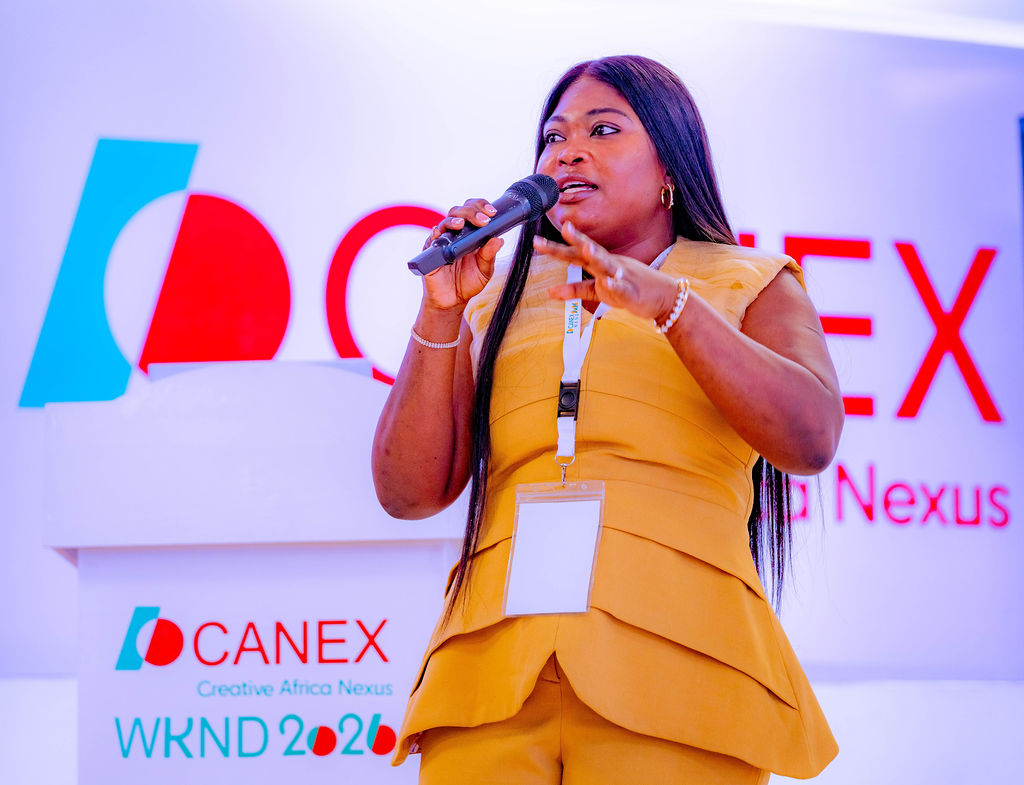
Similoluwa Oyelude has spent about 13 years helping businesses turn their ideas into assets they own and can profit from. A lawyer at G.Elias & Co. in Lagos, she was named to the Top 250 Women in IP List for the second year running. And at CANEX WKND 2026, she led a masterclass on monetising and protecting African IP across borders. Afterwards, we spoke about the mistakes she sees most often, why IP Protection stops at the border, and the one question she wishes more people would ask.
How did you end up in IP Law, and what keeps you in it?
I come from a family of lawyers, but they’ve always done litigation. My dad was a lawyer, and so is my sister. I always knew I wanted to do something different. I found myself in law, but I wanted to do business. My first job was at a business school, where I got to practise IP law firsthand. I’ve been doing it for about 13 years, and it’s been eye-opening. It has taken me around the world, helping clients commercialise their IP. When I see the brands that come to me succeeding in real life, I’m always very happy.
What do you see most often when a creative comes to you after something has gone wrong?
You always find this happening. Over the years, we see issues where people starting businesses, or creatives, don’t take the time to understand the type of IP they have, protect it, or learn how to commercialise it. Recently, we’ve worked with a lot of companies and creatives on obtaining consent for third-party IP they’ve used, and protecting the IP they’ve created. We also explain how they can talk to our finance team about the IP they hold and how to make money from it. That’s the major reason we held a masterclass today. There are lots of creatives out there, but they also have to understand how to make money out of the IP.
Afreximbank has put $2 billion behind the creative industries. Besides the money, what do creatives need in order to benefit?
Awareness. Knowledge is very, very important. If there’s a fund and people don’t know it exists, they can’t access it. So I’d say work more with industry sectors and associations that work around creatives, to help them understand that the fund exists, how to access it, and what is needed. It’s also a good example of why you should put your house in order, put your IP in order, to be able to access the fund.
If you had a free hand, what would you change about how African IP is handled?
The continental architecture of IP is changing, and I’m sure it will change more. We need to find a way to have cross-border collaboration between the regional and national architecture, and more knowledge-building and capacity-building programmes to help creatives understand how to protect their IP. For example, people think once their IP is protected in one jurisdiction, it’s automatically protected in another. That is not the case. IP is jurisdictional, so they have to learn the continental architecture to protect their work across borders.
The world is digital, and it has made IP move across borders faster than you’d imagine. Once your IP starts crossing borders, you have to ask what steps you need to take to protect it.
The legal architecture is different too. In Nigeria, lawyers would probably advise you on common law. In a French-speaking country such as Côte d’Ivoire, they have civil law. Copyright in Nigeria is different from copyright protection in a civil law jurisdiction. You have to learn how to navigate these legal systems.
I am Kenyan and a creative. How do I protect my work in Kenya and beyond?
You have to protect it in each jurisdiction. If you’re running digital content across borders, for copyright you often don’t have to have a registration regime, but you have to learn how the copyright regimes work in the different jurisdictions. You also have to be careful about infringement. You might have readers in Nigeria, Kenya, and Angola, so you have to understand the legal architecture in each. So: registration, protection, and third-party infringement. Those are the things to look at when your IP is crossing borders.
If a creative could remember only one sentence from your session, what would you want it to be?
Behind every business, always have an IP strategy.
What question do you wish people asked you more often?
How can I protect my IP?
