A solar pump can transform a farm. It can also become an expensive piece of equipment sitting idle in a dry field.
The difference lies not in the pump or solar panels installed, but in the productive system surrounding them. Is sufficient water available? How healthy is the soil? What crops are being grown? What about the markets, finance, maintenance, and the farmer’s abilities?
A pump can deliver water, but water alone does not guarantee a profitable harvest. Farmers also need suitable crops, healthy soils, efficient irrigation, reliable inputs, practical knowledge, labor, access to markets, and dependable maintenance services.
Equating access to technology with agricultural transformation is a fundamental mistake, because technology alone cannot overcome the interconnected constraints that farmers face.
For farming households, agriculture, energy, water, natural resources and finance are not separate systems. They are interconnected elements of a single livelihood, and each part must function effectively for the others to deliver lasting benefits.
This interconnectedness is becoming increasingly important as African farmers face mounting pressures from disruptions to global energy, fuel, and fertilizer supply chains. Volatile energy and input prices affect land preparation, irrigation, transport, processing, and the availability and affordability of fertilizers, exposing the vulnerability of agricultural and food systems.
At the same time, renewable energy is opening new possibilities for African agriculture. Beyond powering irrigation pumps, it can support mechanization, cold storage, milling, drying, and processing. Biogas systems can also turn livestock waste into useful energy while generating nutrient-rich digestate that can be used as organic fertilizer.
This is where the concept of Productive Use of Energy (PUE) becomes particularly relevant. Energy access becomes transformative when it powers economic activities that raise productivity, reduce losses, generate income, and strengthen rural enterprises. PUE shifts the question from whether farmers have access to energy to what that energy enables them to achieve: irrigate, process, cool, store, transport, and add value to agricultural products.
Yet development programs still tend to be organized in silos. Agricultural programs focus on production; energy projects prioritize equipment and electric access; water programs concentrate on infrastructure; finance initiatives operate through separate channels. Markets, extension, and natural-resource management are addressed elsewhere. This fragmentation overlooks the reality that farming households operate as integrated systems.
Regenerative agriculture offers an important complementary pathway. It seeks to restore and sustain soil health, conserve water, and enhance biodiversity and improve ecosystem functions while supporting agricultural productivity and resilience. Renewable energy, meanwhile, can provide cleaner and more reliable power for irrigation, mechanization, storage, cooling, and processing.
 When deliberately integrated, the two can reinforce each other. Healthy soils with improved water-holding capacity can increase the effectiveness of irrigation, while appropriately designed renewable-energy systems can support diversified production, efficient resource use and profitable agricultural enterprises .
The lesson is straightforward: technology must be embedded in a functioning, productive and environmentally sustainable agricultural system.
Our experience in Ethiopia offers a useful reminder of why success should not be measured by the installation numbers.
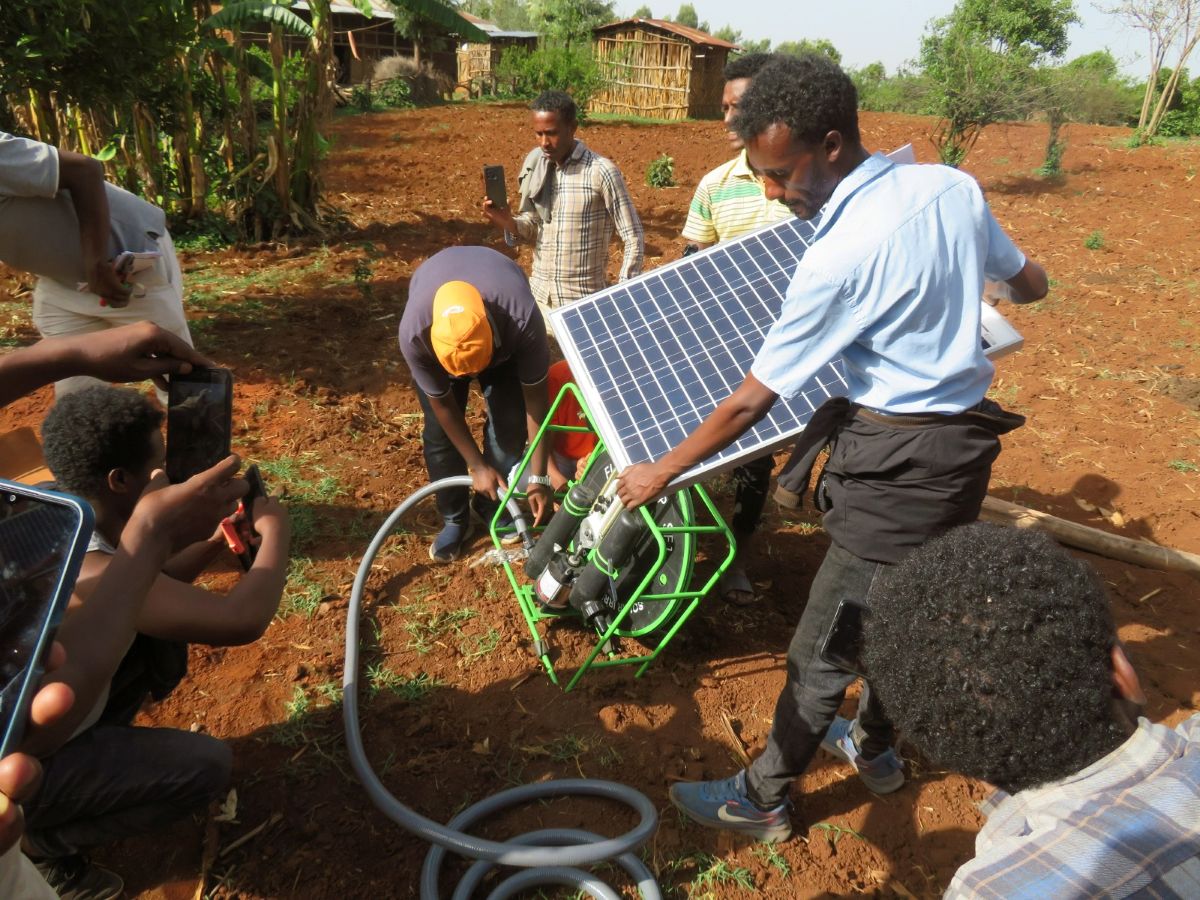
Between 2021 and 2025, the Sasakawa Africa Association (SAA) disseminated 86 solar-powered irrigation pumps across different regions of Ethiopia. These systems supported dry season vegetable production in homegardens and crop–livestock integration. Solar-powered irrigation Systems (SPIS) installed at Farmer Training Centers also enabled practical demonstrations and farmer learning beyond the rainy season.
A recent assessment of SPIS installed at individual farmers’ homesteads in Sidama region illustrated both the opportunities and challenges of productive renewable-energy use.
Farmers extended production into the dry season, expanded vegetable and seedling production, diversified crops, improved household access to nutritious food, generated income from surplus sales, and obtained water for livestock and other household purposes.
But the assessment also demonstrated why hardware is only the beginning.
One-third of the systems were not fully operational or had significant technical problems at the time of assessment. Common problems included corrosion; declining water levels affecting pump performance; damaged cables and connections; frequent movement of solar panels; limited operation and maintenance skills; and, in some cases, inadequate system sizing or component compatibility.
These are not minor technical details. They determine whether a renewable-energy investment continues generating lasting agricultural transformation or becomes another short-lived intervention.
The response therefore cannot be limited to replacing faulty equipment. Sustainable solar-powered irrigation systems require appropriate site assessments, practical farmer training, routine monitoring, reliable access to spare parts, competent local technicians, and dependable after-sales services. Equally important are viable business models, responsible water- resource management, and market-oriented production and access to finance.
This is what productive energy use in agriculture should mean. The objective is not energy consumption; the objective is the productive, profitable, and sustainable use of energy.
Discussions at the Africa Food Systems Forum 2026, held in Kigali in September, reinforced an important message: renewable energy investments can achieve lasting impact at scale when financing, markets, technical services and productive demand develop alongside the technology.
The transition must also be inclusive. An energy transition limited only to farmers who can afford equipment will only deepen existing inequalities. Women, young farmers and remote communities need financing arrangements, technologies, and service-delivery models suited to their circumstances and ability to pay.
Africa has plenty of experience to build on. For generations, farming communities have recycled organic resources, integrated crops and livestock, conserved soil and water, and depended on natural energy flows, from sunlight for crop production to biomass, wind, human labor, and animal power.
The opportunity is not to replace that knowledge with technology but to combine proven local practices with modern innovation, inclusive finance, responsive agricultural extension, and stronger local service systems.
This requires better coordination among institutions responsible for agriculture, energy, water, environment, finance, research and extension.
At the national level, policies, investments, and institutional programs must stop operating in isolation. At the local community level, interventions should converge around farmers’ productive and livelihood needs. The transition Africa needs is therefore much broader than replacing diesel pumps with solar pumps. It is about integrating clean energy, regenerative agricultural practices, efficient water management and viable agricultural enterprises into productive, resilient and economically viable and sustainable agri-food systems.
Africa’s agricultural and energy transitions cannot continue on parallel tracks. Their success should be measured not by the number of pumps installed, technologies distributed or projects launched, but by whether farmers can produce more efficiently, reduce losses, increase incomes and build resilient livelihoods without degrading the natural resources on which agriculture depends.
The imperative is clear: coordinate at the top, integrate on the ground, and measure success by the lasting benefits farmers achieve.
-Dr. Mengistu is Country Director of the Sasakawa Africa Association (SAA) in Ethiopia
