Africa’s critical-minerals opportunity is no longer simply about what lies beneath the continent’s soil. Increasingly, the focus is shifting to whether African economies can secure the capital needed to process those minerals, manufacture products from them and build companies capable of competing in global markets.
That question was at the centre of the Africa Critical Minerals Investor Forum held in New York on September 23, on the margins of the 81st United Nations General Assembly.
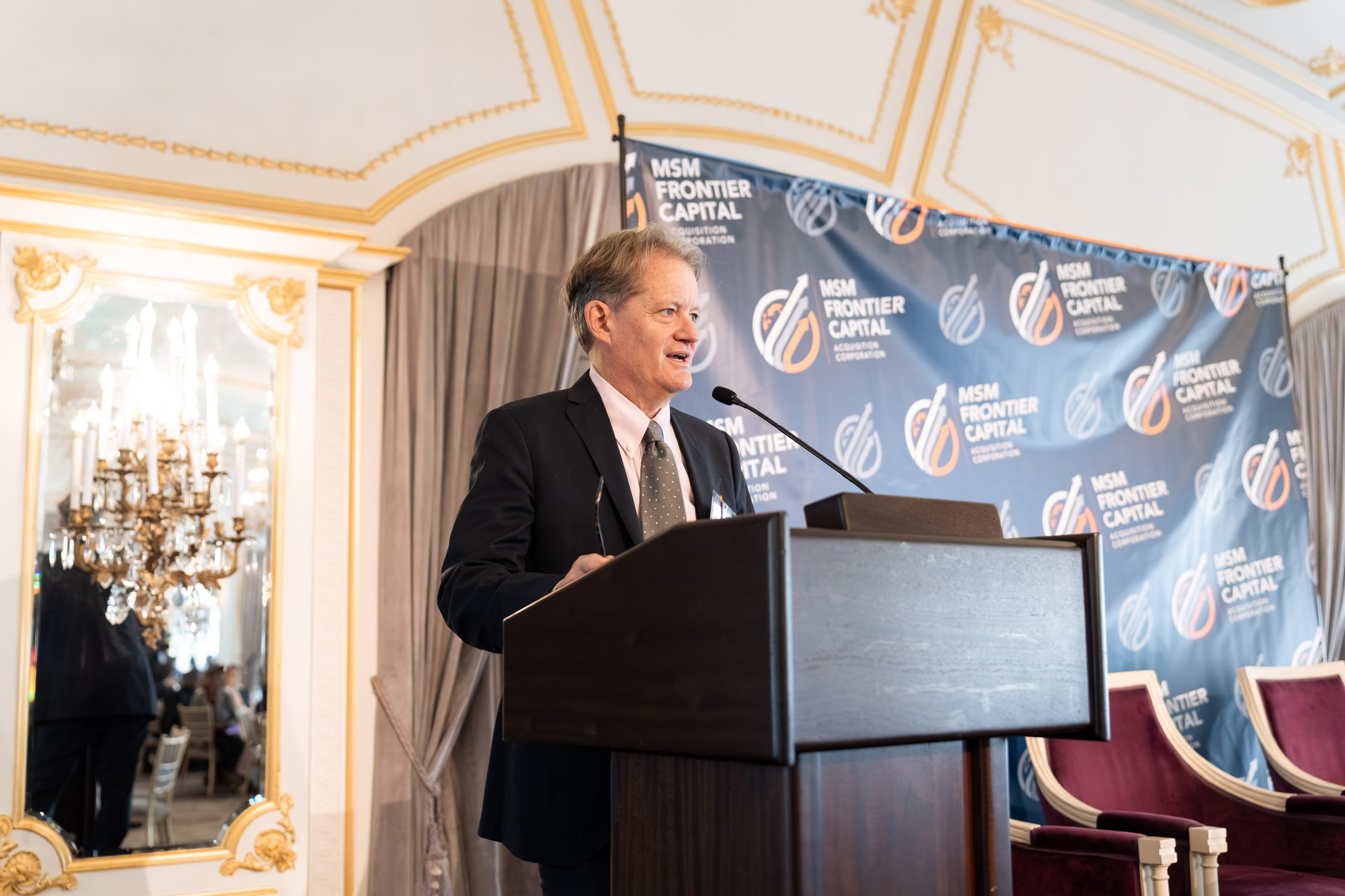
The forum, held at The St. Regis under the theme “From Mine to Markets: Financing Africa’s Critical Minerals Through U.S. Capital,” brought together African political and economic leaders, investors, mining specialists, development-finance representatives and U.S. capital-markets professionals.
Their discussion came at a significant moment for the global minerals industry.
On the same day, United Nations Secretary-General António Guterres announced a new Country Support Mechanism on Critical Energy Transition Minerals, designed to assist resource-rich developing countries in building sustainable, responsible and resilient mineral value chains.
The mechanism initially covers Guinea, Indonesia, Madagascar, Nigeria, Zambia and Zimbabwe.
The UN initiative reflects growing international attention to a central issue in the energy transition: countries that possess critical minerals should be able to capture a meaningful share of the economic benefits generated by those resources.
For Africa, that issue is particularly significant.
The continent supplies approximately 75% of global manganese, 70% of cobalt and nearly 20% of copper, according to International Energy Agency figures cited during the forum.
However, Africa captures less than 1% of the value generated from the manufacturing of clean-energy technologies and their components.
The numbers illustrate the gap between resource ownership and value-chain ownership.
Africa can be a major supplier of raw materials without necessarily becoming a major manufacturer of batteries, energy technologies, industrial equipment or other products that depend on those materials.
Closing that gap requires more than mining investment.
It requires financing for processing plants, refineries, factories, power generation, roads, ports, logistics systems and technology.
It also requires businesses capable of meeting the governance, transparency, due-diligence and reporting requirements expected by international investors.
Muazzam Mairawani, Founder and Group Chairman of MSM Group and Chairman of MSM Frontier Capital Acquisition Corporation, argued that the problem is not the absence of opportunity.
“Africa does not suffer from a shortage of opportunity. Africa suffers from a shortage of capital moving at the speed of opportunity,” he said.
The distinction is important.
Global investors may recognise the long-term importance of African minerals, but large-scale industrial projects require financial structures that can match the size and duration of the opportunity.
Mining projects themselves can require substantial upfront investment. Adding processing and manufacturing capacity increases the financing requirement further.
The forum therefore examined how U.S. capital markets can contribute to financing Africa’s transition from resource extraction to value addition.
Through MSM Frontier Capital, Mairawani outlined an ambition to connect African opportunities with institutional capital, strategic partners and development-finance institutions.
He argued that critical minerals should not be considered separately from the broader development of African economies.
“Africa’s future will not be built by one sector. It will be built by an industrial ecosystem,” he said.
That ecosystem would connect mineral production with energy, manufacturing, agriculture, logistics, infrastructure and global markets.
Such an approach could alter the economic significance of mineral deposits.
Copper, for example, is not simply a commodity that can be extracted and exported. It is also an input into electrical infrastructure and manufacturing.
Cobalt is not simply a mineral to be shipped overseas. Its presence raises questions about the industries that could potentially be developed around batteries and other technologies.
The same principle applies to infrastructure.
Ports can become more than export terminals. Energy systems can become more than utilities. Logistics networks can become the foundation for industrial corridors.
The forum’s underlying proposition was that the value of minerals depends partly on what happens after extraction.
That question is increasingly relevant because critical-minerals supply chains remain highly concentrated.
According to the figures cited at the event, the average share of the top refining country across key energy minerals reached approximately 70% in 2025.
This concentration means that countries seeking secure and diversified supplies have an interest in developing new sources and new processing capacity.
For Africa, this creates a potential opening.
But capturing that opportunity requires investment structures capable of turning geological resources into bankable industrial projects.
The forum therefore devoted attention to investor concerns around African markets.
A session on country risk and the rule of law examined political stability, contract enforceability and governance.
These issues are important to investors considering projects that may require significant amounts of capital over many years.
The programme then moved to the U.S. financial markets.
The panel “Financing the Pathway to U.S. Markets”, moderated by Crocker Coulson of AUM Advisors, brought together Joe Riggio of Jett Capital, Mitch Nussbaum of Loeb & Loeb LLP, Patrick A. Sturgeon of Brookline Capital Markets and Gracelin Baskaran of the Critical Minerals Security Program.
The discussion covered transaction structures, due diligence, governance requirements, legal considerations and the use of U.S. public markets and SPAC structures.
The focus was not simply on bringing money into Africa.
The larger issue was whether African opportunities can be developed to a level where they can absorb capital responsibly and use it to build productive capacity.
That distinction is important because capital without suitable projects may not deliver industrial transformation.
Projects need clear ownership structures, credible governance, viable economics, appropriate infrastructure and access to markets.
They also need to be connected to national and regional development priorities.
This is where the critical-minerals conversation intersects with the wider African industrialisation agenda.
The continent is seeking to expand manufacturing, create jobs, strengthen energy systems and improve its participation in global value chains.
Critical minerals can potentially support those objectives because they are already connected to some of the fastest-growing areas of the global economy.
Batteries, renewable-energy systems, electricity networks and advanced technologies all depend on mineral inputs.
Yet the opportunity will not automatically translate into industrialisation.
The ownership question remains central.
Who owns the refinery? Who controls the industrial park? Who develops the technology? Who owns the companies manufacturing higher-value products?
Those questions determine how much of the value generated by natural resources remains within producing countries.
The UN’s new mechanism reflects the same concern from an international development perspective.
Its objective is to support sustainable and resilient mineral value chains and help ensure that benefits from the energy transition reach countries and communities where critical resources originate.
The investor forum placed capital at the centre of that equation.
Mairawani’s message was that the next stage requires converting investor confidence into actual industrial investment.
“Now we must convert confidence into capital. And capital into industries,” he said.
The challenge now is to create the bridge between Africa’s resources and the financial markets capable of funding their development.
The continent has minerals in demand around the world. International investors have capital seeking opportunities. Governments want greater value addition and industrialisation.
Bringing those elements together will require companies and projects capable of operating at scale.
That is the proposition behind the “From Mine to Markets” concept discussed in New York.
The objective is not to abandon mining.
It is to connect mining to what comes next.
Extraction can feed processing. Processing can feed manufacturing. Manufacturing can create jobs, technology and companies. Infrastructure built to support mining can become part of wider industrial networks.
If those links are successfully established, the critical-minerals boom could become part of a broader African industrialisation story.
The forum ended with that larger question still open: whether Africa will primarily supply the raw materials of the global energy transition or use those resources as the foundation for deeper participation in the industries being created around them.
As Mairawani put it, “The greatest investment story of the twenty-first century will not simply happen in Africa. It will be led by Africa.”
