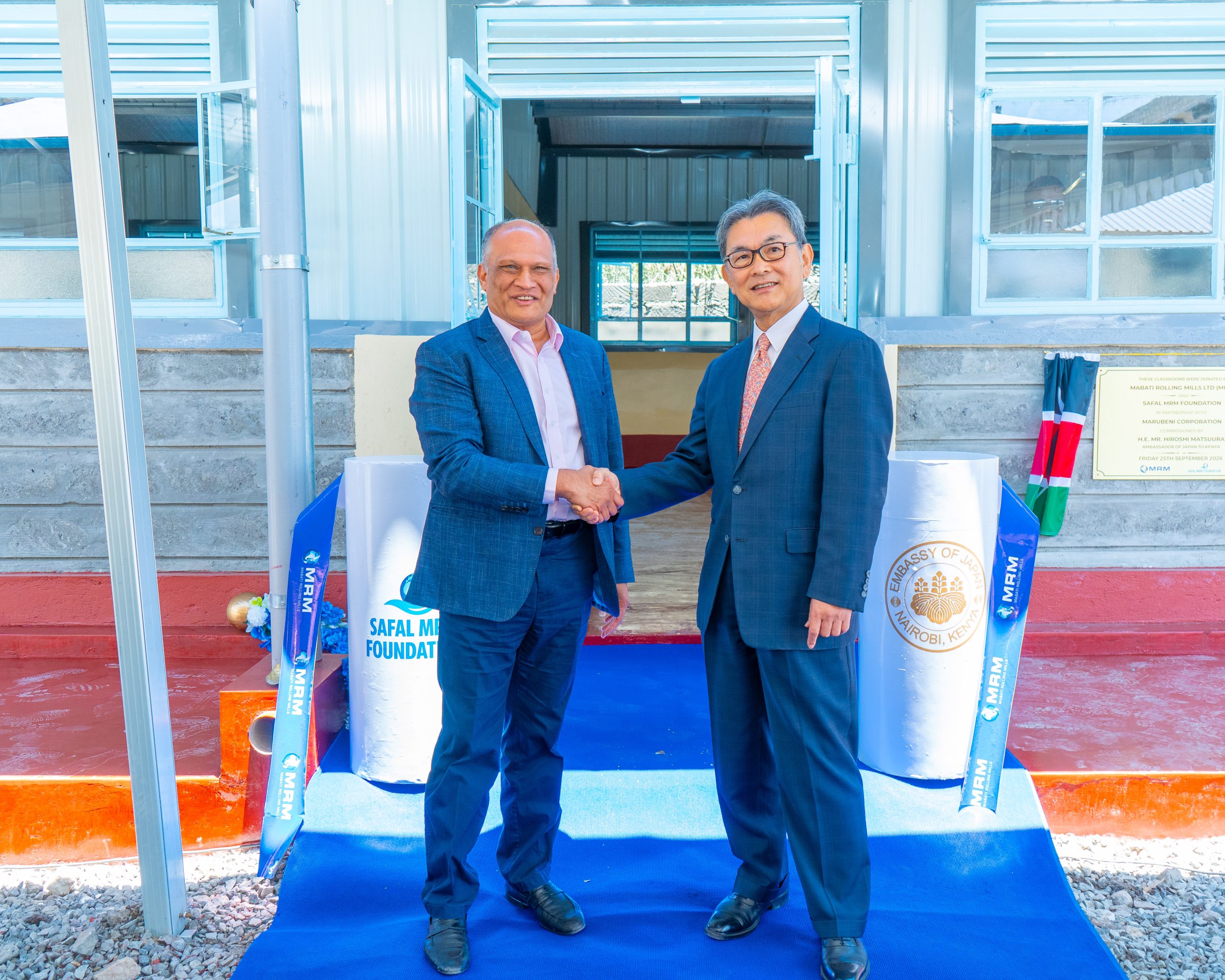
At Ngwata Primary School in Mlolongo, some classes have been squeezing in more than 250 learners. That pressure has now eased, thanks to two new classrooms and desks for 150 pupils, funded by Mabati Rolling Mills (MRM) and Marubeni Corporation.
MRM, through its foundation arm, the Safal MRM Foundation, partnered with Marubeni on the project, which cost USD 40,000 (Kshs. 4,000,000), including furniture. It brings relief to the more than 4,000 learners at the school, who now have better access to a conducive learning environment.
The classrooms were built with MRM’s SAFBUILD® pre-engineered steel building technology, which promises safe, durable learning spaces. They were officially handed over at a ceremony attended by the Japanese Ambassador to Kenya, H.E. Hiroshi Matsuura, marking a partnership that combines international goodwill, Kenyan industrial expertise and community need.
Speaking at the handover, Albert Sigei, CEO of Mabati Rolling Mills, said, “At MRM, we believe that our success is interlinked with the success of the communities we serve. This partnership with Marubeni demonstrates what is possible when we combine shared purpose, resources and innovation to address real community needs. Through the Safal MRM Foundation, we are not only putting up classrooms; we are helping create an environment where children can learn, grow and build a brighter future,” said Sigei.
Sigei also spoke about the technology behind the build. “The classrooms were built using MRM’s cutting-edge SAFBUILD® pre-engineered steel building technology. This system is faster, more efficient, and more sustainable than traditional methods, reducing construction time and ensuring a high-quality facility. Its application at Ngwata Primary School shows how innovative building solutions can meet urgent community infrastructure needs. This project is also a tangible manifestation of MRM’s commitment to Environmental, Social, and Governance (ESG) principles.”
Chief Guest Ambassador Matsuura praised the collaboration behind the project. “This project is a shining example of how private sector and international partners can collaborate to deliver social impact. The success of this project is a direct result of collaboration between Japan, the Safal MRM Foundation, and MRM through its subsidiary Safal Building Systems team. It is an example of how resources and technology can be combined for shared goals.”
For the school, the gratitude was plain. Headteacher Faith Maeke said, “We are deeply grateful to MRM, the Safal MRM Foundation and Marubeni for this support. The new classrooms will help ease overcrowding and provide our learners with a safer and more conducive environment to learn and grow.”
The support arrives at a critical time. Ngwata serves a predominantly vulnerable community, including families of casual labourers from surrounding informal settlements, many of whom face socio-economic challenges.
The project is part of MRM’s wider community work through the Safal MRM Foundation, which focuses on four pillars: Education, Health, Shelter and Environment. Education is at the centre of the Ngwata intervention, but the Foundation’s broader aim is to improve community wellbeing, promote access to dignified shelter, support healthier communities and contribute to environmental sustainability.
