Across Africa, a growing number of businesses make their money by keeping land, forests and soils healthy. Many of them still struggle to find investors who understand that model. A new accelerator is trying to change that, and two of its first five picks are Kenyan.
A conflict-free gum arabic exporter and an agroforestry farm group working around Limuru, Naivasha and Naro Moru have been chosen for the first cohort of the Nature-First Innovation Lab (NFIL). The 12-month programme is run by FSD Africa with Systemiq and the African Natural Capital Alliance (ANCA), and is funded by UK International Development and the Norwegian Agency for Development Cooperation (Norad). Its goal is to get the five enterprises ready to raise investment, with a combined fundraising target of about USD 10 million.
Two Kenyan businesses, one shared logic
The first of the Kenyan enterprises, Acacia EPZ, was founded in 2015 by Sam Ombogo Nyamboga. It exports gum arabic, an ingredient found in soft drinks, sweets and medicines. More than 70% of its collectors are women, and their incomes depend on acacia trees staying healthy. With conflict disrupting supply from Sudan, the company offers buyers a traceable, conflict-free alternative, and its revenues have grown 56% in two years.
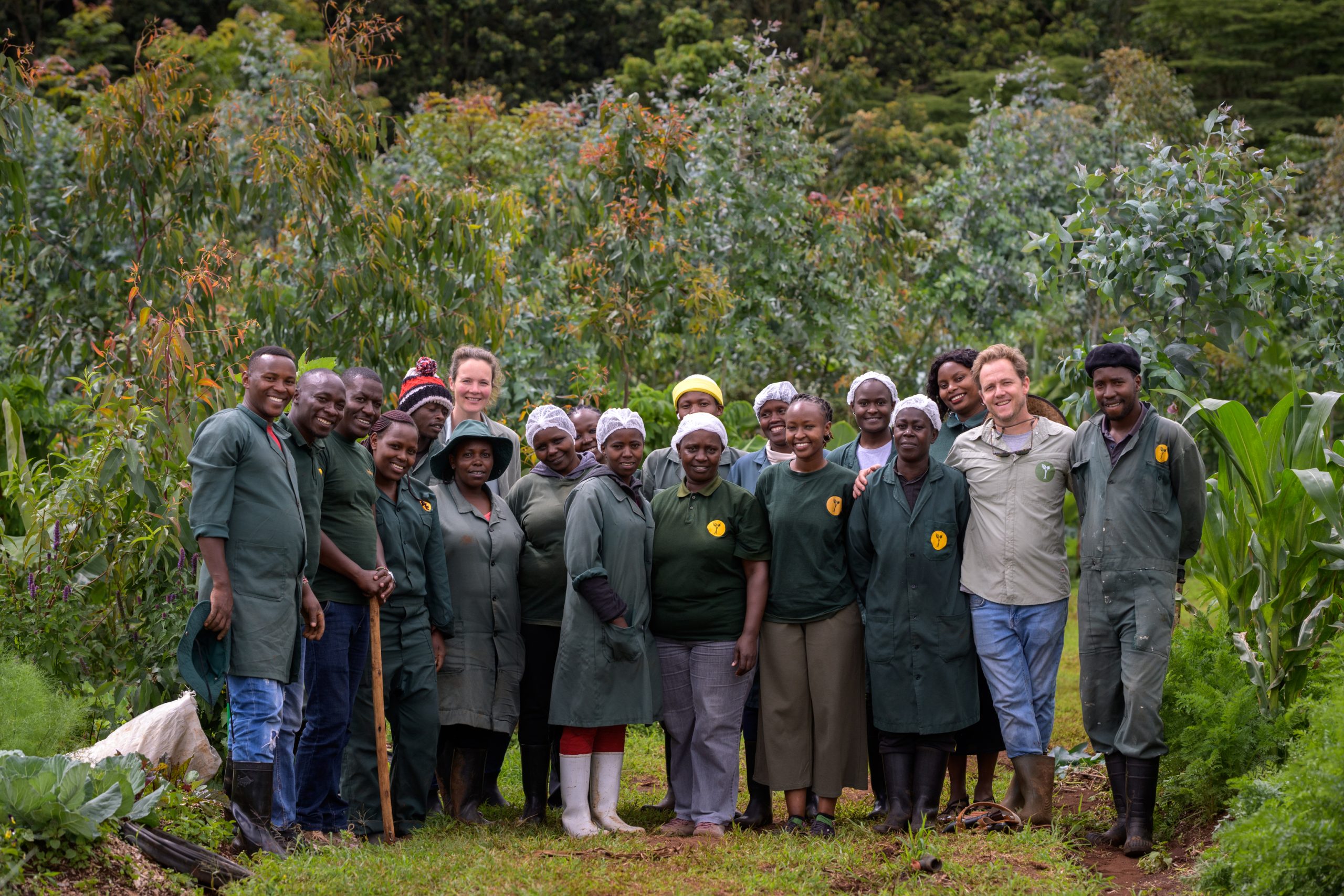
The second, ForestFoods, is one of the few East African businesses showing that syntropic agroforestry can pay. The approach grows trees, crops and livestock together so that the land regenerates rather than wears out. ForestFoods farms near Limuru, Naivasha and Naro Moru, and is developing a new site at Shimba Hills.
A cohort built on healthy land
They join three other African enterprises. Forested works with smallholder farmers in Ethiopia, Kenya and Uganda, supplying regenerative honey, beeswax, shea butter and oils to international beauty brands. In Tanzania, NovFeed turns organic waste into fish feed and fertiliser. In Ghana, Savanna Agri Chains sources and exports shea butter and baobab, working with more than 1,000 women harvesters across 22 districts in the north of the country.
What ties the five together is that their revenue depends on maintaining or restoring healthy land, forests and soils.
The gap between grants and investment
The stakes are large. Research by FSD Africa and McKinsey Sustainability estimates that 62% of Africa’s GDP depends on nature. Yet enterprises that build protection and restoration into how they earn money often find it hard to secure the capital to grow.
Dorothy Maseke, Head of the ANCA Secretariat and Lead, Nature Finance and TNFD at FSD Africa, says NFIL is meant to close that gap.
“A growing number of African enterprises reach technical feasibility and then stall because revenues aren’t sufficiently anchored, governance is not investment-grade, and documentation is incomplete. It’s that gap between what grants and philanthropy will fund and where commercial capital begins that NFIL is designed to fill. These five enterprises are already established and generating revenue. What they need now is support to get investment-ready.”
Each enterprise will receive grants, help with financial planning, governance and measuring its impact on nature, and introductions to investors. NFIL takes no equity. Its job is to bring enterprises to the point where investors can make a decision.
The first cohort focuses on regenerative supply chains, a space where the commercial potential is considerable. One recent estimate (BCG, 2025) puts the opportunity for commercial investors in regenerating the world’s 30 most valuable landscapes at USD 310 billion.
What the founders say
Commenting on its selection by NFIL, Sam Ombogo Nyamboga, Founder and CEO of Acacia EPZ, said: “Being selected for the Nature-First Innovation Lab is a real milestone for us. It recognises what we’ve believed since day one: that keeping Kenya’s acacia woodlands standing and building genuine incomes for the families who harvest from them are the same task, not competing ones. The world needs a source of gum arabic it can trust, one that isn’t tied to conflict, and that is exactly what we are building.”
Sven Verwiel, Co-Founder and CEO of ForestFoods, said: “Our ambition is to show that producing good food, restoring landscapes and creating meaningful livelihoods can go hand in hand with building a commercially successful business. As we expand to Shimba Hills, NFIL will help us strengthen the business model that connects our farms and growers with processing, training and reliable markets. We hope the programme will unlock the investment and partnerships we need to grow, working with people who share our long-term vision for regenerative food systems.“
