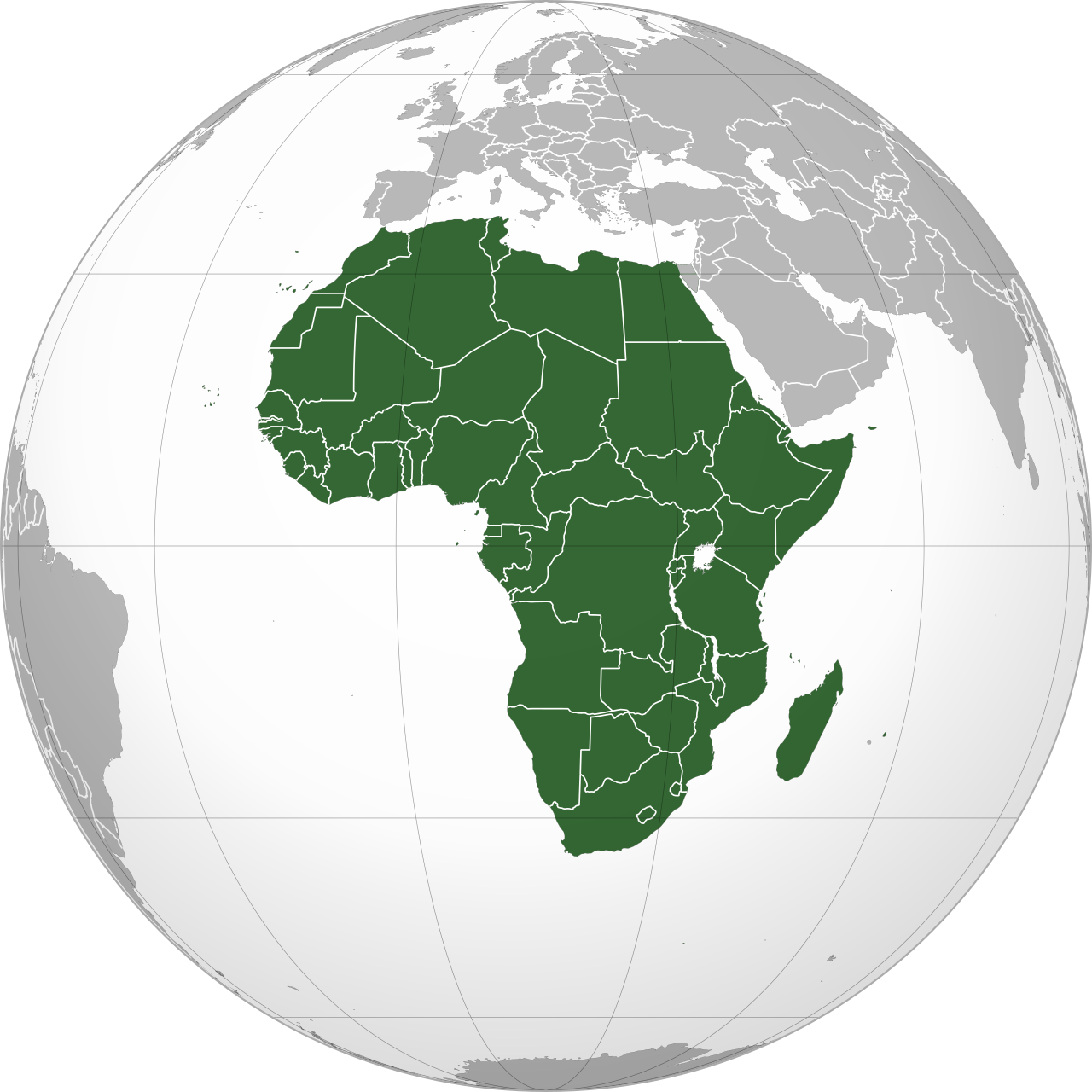
Industrialisation in Africa is not only constrained by ambition — it is constrained by structure. That is the blunt finding at the heart of the 2025 RED Index of Industrial Development in Africa, released by the Business Council for Africa. With analytical rigour and consistency, the Index identifies the precise conditions that determine whether economies can transform at scale — and concludes that most African countries do not yet meet them.
Four economies stand apart from the rest: Morocco, Egypt, South Africa, and Mauritius. These are the only nations on the continent that possess the alignment of conditions required to sustain industrial growth. Rwanda and Nigeria display meaningful progress, but both remain incomplete in their trajectories. The bulk of African economies, by the Index’s measure, are classified as either Vulnerable or Stalled.
“Africa’s development cannot be imported or outsourced. It must be built, owned, and sustained from within. What is required now is clarity of structure and commitment to execution.” Aliko Dangote, President & CEO, Dangote Group
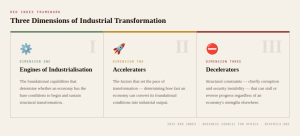
The Index evaluates each economy across three decisive dimensions — a framework that cuts through surface-level development indicators to interrogate the underlying machinery of industrial transformation. The Engines of Industrialisation capture foundational capabilities; the Accelerators determine the pace of transformation; and the Decelerators are the structural constraints that can stall or reverse progress entirely.
Across the continent, corruption and security instability emerge as the most damaging decelerators. These twin forces undermine institutional effectiveness and impose a ceiling on the execution of industrial policy — regardless of how strong an economy’s engines or accelerators may be. Even well-resourced economies cannot sustain industrial momentum when governance failures erode the ground beneath them.
The methodological foundation of the RED Index draws on the lived experience of economies that have already navigated the difficult passage from agrarian or resource dependence to industrial modernity: South Korea, Malaysia, Vietnam, Brazil, Morocco, and Ethiopia. From these trajectories, the Index isolates the factors that consistently underpin success — providing not just a diagnostic tool, but a decision-making framework for countries designing long-term industrial strategy.
“This is not just an index. It is a call to action — for African policymakers, investors, and businesses to take ownership of Africa’s industrial future and commit to the structural changes required to deliver sustained growth.” Arnold Ekpe, Chairman, Business Council for Africa
For global capital, the implications are direct. As investors seek scalable and resilient growth opportunities beyond saturated markets, the RED Index offers a precise lens: where industrialisation is genuinely viable, where structural risks remain elevated, and where targeted intervention could unlock long-term value.
Africa’s industrial future will not be distributed evenly — nor will it arrive on sentiment alone. It will be built by those economies that have done the structural work. For now, the evidence points to four.
