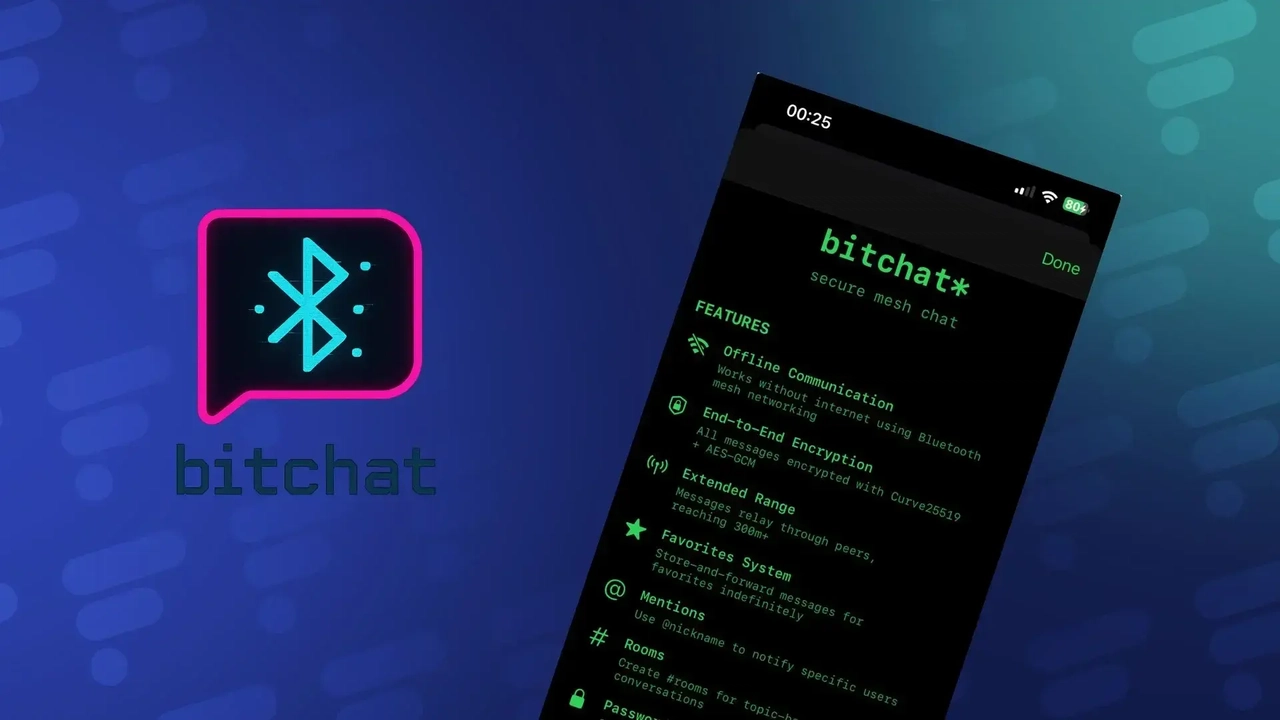
Ugandans are rapidly adopting Bitchat, a decentralized messaging app, as concerns grow over potential internet restrictions ahead of the country’s presidential elections scheduled for next week.
According to pseudonymous Bitchat developer Calle, the app recorded hundreds of thousands of new Android installs in Uganda over the past several days—roughly equivalent to 1% of the national population.
The spike follows public calls by opposition leader Robert Kyagulanyi, popularly known as Bobi Wine, urging citizens to download the app as a contingency against a possible government-imposed internet shutdown.
The move reflects lingering memories of Uganda’s 2021 elections, when authorities enforced a nationwide internet blackout lasting more than four days. Wine has previously argued that the disruption contributed to electoral irregularities.
Momentum around Bitchat accelerated in late December after Wine’s appeal gained traction online. On Monday, Uganda Communications Commission (UCC) Executive Director Nyombi Thembo warned that the app could be blocked, citing the country’s technical capacity to do so.
Government officials, however, have publicly downplayed the likelihood of a shutdown. ICT Permanent Secretary Aminah Zawedde stated that no decision has been made to restrict internet access.
Despite the warnings, Calle and other Bitchat advocates remain skeptical that authorities could effectively block the platform, given its underlying architecture. The debate is further complicated by the continued suspension of Starlink services in Uganda due to licensing issues, limiting satellite-based alternatives for internet access.
Bitchat was developed last year as a weekend project by Jack Dorsey, the founder of Twitter (now X) and Square (now Block). Unlike conventional messaging platforms, Bitchat enables users to create location-based chatrooms and transmit messages via Bluetooth-powered mesh networks.
This peer-to-peer design allows devices to communicate directly without relying on central servers or traditional internet infrastructure, making the app resilient to large-scale network shutdowns.
The technology has historical precedent. Similar mesh-networking tools, such as FireChat, were used by protesters during Hong Kong’s 2014 Umbrella Movement to coordinate activities amid signal interference.
The app has gained international attention in recent protest movements. During Nepal’s Gen Z-led demonstrations last year, Bitchat played a key role after authorities banned 26 platforms, including Facebook, X, YouTube, and Signal.
Daily downloads reportedly jumped from 3,000 to 50,000, with Nepal accounting for nearly 40% of global installs at the peak. Protesters leveraged the mesh network to organize large-scale marches that ultimately contributed to the collapse of the government.
A similar adoption pattern emerged in Indonesia during protests in September 2025. Calle reported a sharp rise in local installs, with analytics showing more than 12,500 downloads by early September—surpassing combined installs in the U.S. and Russia at the time.
These episodes underscore the vulnerability of centralized internet infrastructure, which governments can disrupt relatively easily during periods of unrest. While Bluetooth-based mesh networks are effective in localized settings, their reach remains limited without dense user participation.
Complementary hardware solutions, such as GoTenna devices that use radio frequencies to extend connectivity over several kilometers, are increasingly being explored for disaster response and off-grid communication.
Satellite internet services like SpaceX’s Starlink add another layer of complexity to government control over connectivity by providing access directly from orbit.
Although still centralized, satellite links offer an alternative when terrestrial networks are disabled. Starlink has previously been used during outages in Sudan amid civil conflict and by activists in Afghanistan to bypass nationwide restrictions.
In Uganda, Starlink maintains that it does not operate in markets where it lacks regulatory approval. Nevertheless, online forums have reported instances of users activating terminals in licensed countries and operating them elsewhere on a roaming basis.
