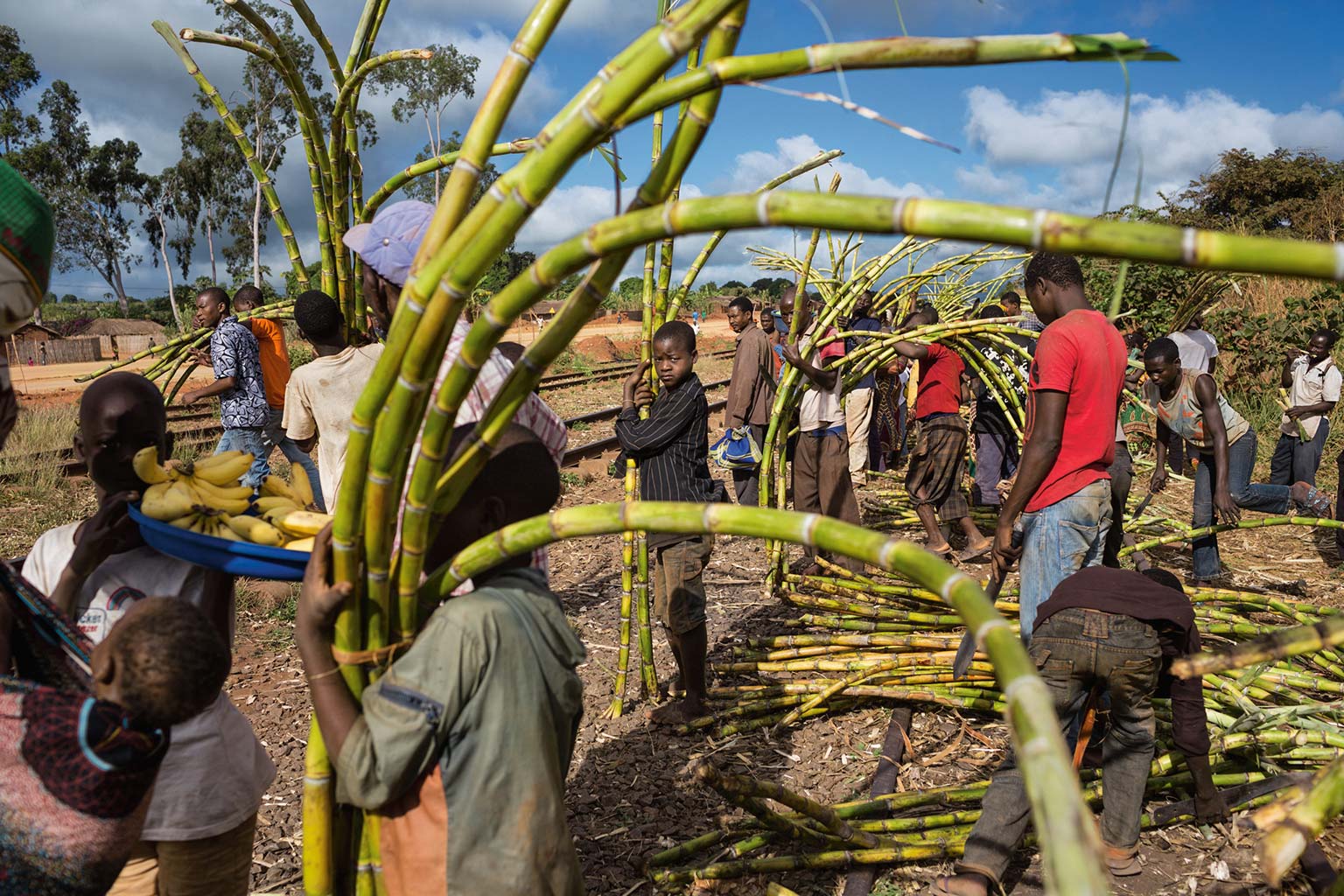
The country’s sugar sector is set to experience growth amid upsurge of both local and foreign investors
Banking
Shahbal conquered numerous obstacles to set up Gulf African Bank
By Boniface Otieno Kanyamwaya
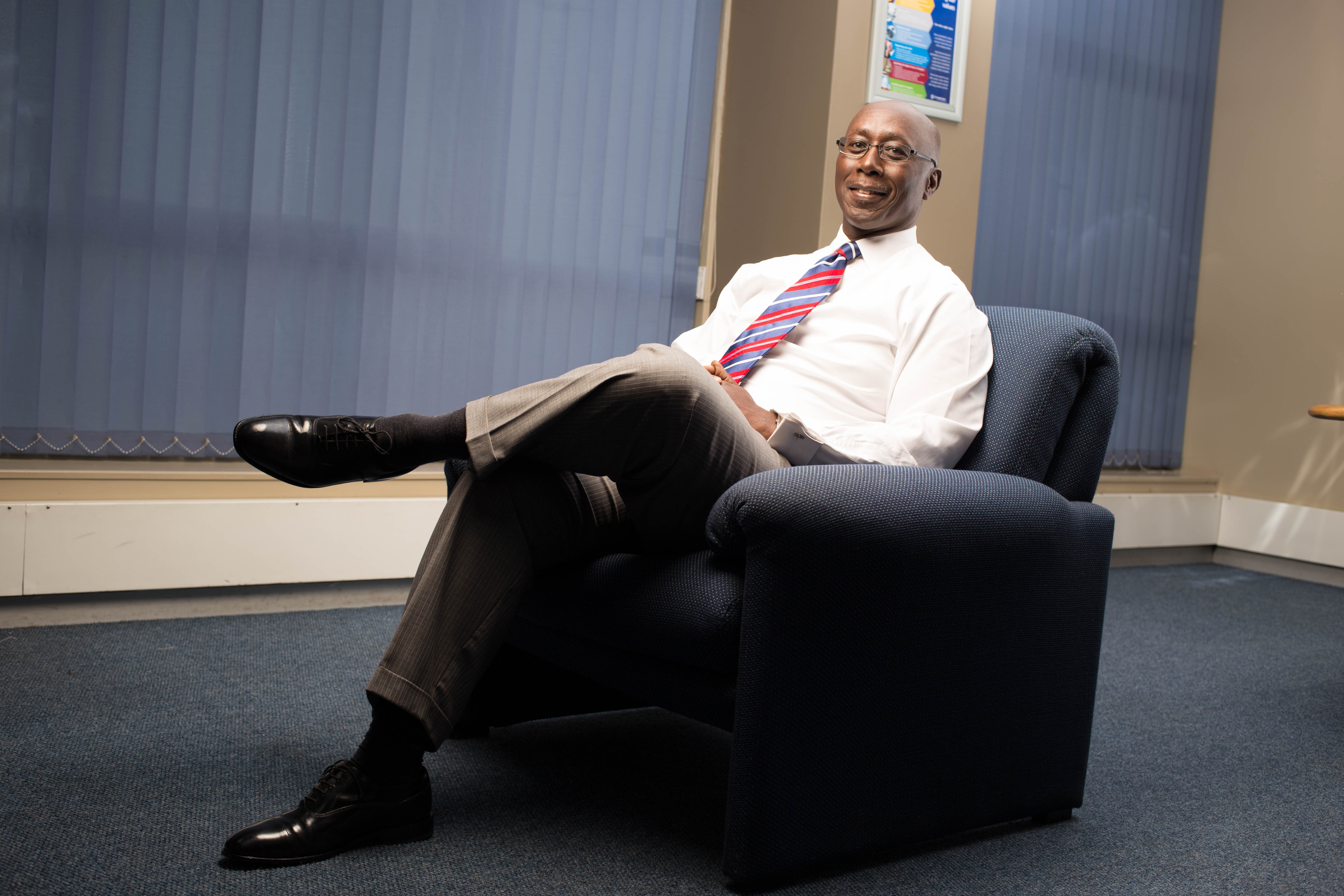
Suleiman Shahbal, the founder chairman of Gulf African Bank and Gulf Energy Company is an ebullient and eloquent but surprisingly humble man. He is widely accepted as the father of Islamic banking in East Africa.
A one-time gubernatorial candidate in Mombasa County, and therefore a prominent person, his public standing has recently been jolted by a series of political mis-steps in the now-increasingly vicious countdown to the 2017 General Election.
But on this auspicious occasion, and later in a sit-down moment in his ornate office in suburban Nairobi, Shahbal came out as a man who has persevered and conquered all in his way to become the giant he is in business circles in Kenya and beyond.
This Mombasa born and bred son of Middle-Eastern parentage left Kenya in the early 1980s for university education in the United States. He returned in 1986 armed with two undergraduate degrees — one in Finance and another in international banking.
To his consternation, the job market in Kenya did not readily avail him an opportunity and after a year of “tarmacking” he left for the United Arabs Emirateswhere he joined First Gulf Bank.
He would later join the prestigious CitiBank Group and head its International Banking Division in the UAE.
From his Dubai headquarters, he was responsible for setting up and administering operations in India, Bahrain, Qatar, Kuwait, to name but a few countries. This was a very satisfying period in his career because he had the opportunity to meet and mix with regulators across the Arab Peninsula and Indian sub-continent, and to appreciate their uniqueness.
“It was an opportunity to put into practice much of what I had leant in the USA as a young man. The chance was far more enriching than any MBA would have been,” he says.
In 1996, he decided that it was time to return home and try his hand in business. Armed with two business ideas and a lot of youthful exuberance, he arrived in Kenya to a mixed reception.
His first venture, a Sharia-compliant bank, was denied a licence (abinitio) by the National Treasury which was headed by then Finance Minister George Saitoti and then Central Bank of Kenya governor Philip Ndegwa.
He says that the National Treasury and CBK found it hard to give him with a licence because, they said, he didn’t have sufficient business experience during the application process.
Secondly, there was no law to regulate Islamic banking in the country.
On the other hand, his second brainwave, an oil importing company, was slightly better received but hit financing turbulence and in a matter of years collapsed.
Shahbal once again headed to the Middle East, this time to Oman, to seek employment as he planned his second return to Kenya.
Following regime change in Kenya in 2002 after the General Election, he felt sufficiently emboldened to try again and see if he could obtain a licence to set up a bank.
He secured an appointment to see President Mwai Kibaki in mid-2006. A 30-minute presentation followed by a 2-hour chat saw him leave State House with an “in-principal” approval.
Once he got to CBK to formally get his licence, he learnt of efforts by another group of investors who wanted to set up a similar Shariah-compliant bank in Kenya.
Immediately Shahbal saw an opportunity to aggregate capital, and sought to woo this team, but met with a lot of reluctance in this outfit, which subsequently established First Community Bank.
The increasing number of Shariah-compliant windows in mainstream banks is a vindication of Shahbal’s vision in 1996 — that Kenya was ripe for such financial services.
Interestingly, Shahbal is more comfortable with the term “Shariah-compliant” than “Islamic banking”.
At Gulf African Bank, his first baby, nineof the top managers are non-Muslims.
Since its inception in 2005, Gulf African Bank has been aggressive in business,with sizeable growth over the years.
In the financial year ending December 2015, the bank posted a profit after tax of Ksh729 million, representing a 81 per cent growth from Ksh402 million the previous financial year.
According to Shahbal, this growth is attributed to management’s efforts to diversify revenue sources by introducing more services and enhancing efficiency through cost management initiatives.
On the positive side however, there was increased efficiency, with the bank’s cost income ratio improving substantially from 66.1 per cent in 2014 to 54 per cent in 2015.
The yield earnings of the group, which is made up of financing and investing assets, increased by 24 per cent to Ksh21.5 million at the end of 2015 compared with Ksh17. 3 million at end of 2014.
An impressive observation is that customer deposits rose to Ksh19 million in 2015 from the Ksh15.8 million as at December 31 2014, an increase of 20 per cent.
The shareholders’ fund on the other hand grew to Ksh3.2 million in 2015, an increase of 23 per cent from Ksh3.1 million at end of 2014.
The bank looks forward to expanding its footprint in areas it has not penetrated.
“Our commitment is to meet the needs of our stakeholders — the shareholders, employees, customers, regulators and the community,” he concludes.
Top Banker says problems happening in the sector not unique to Kenya
By Bonface Otieno Kanyamwaya
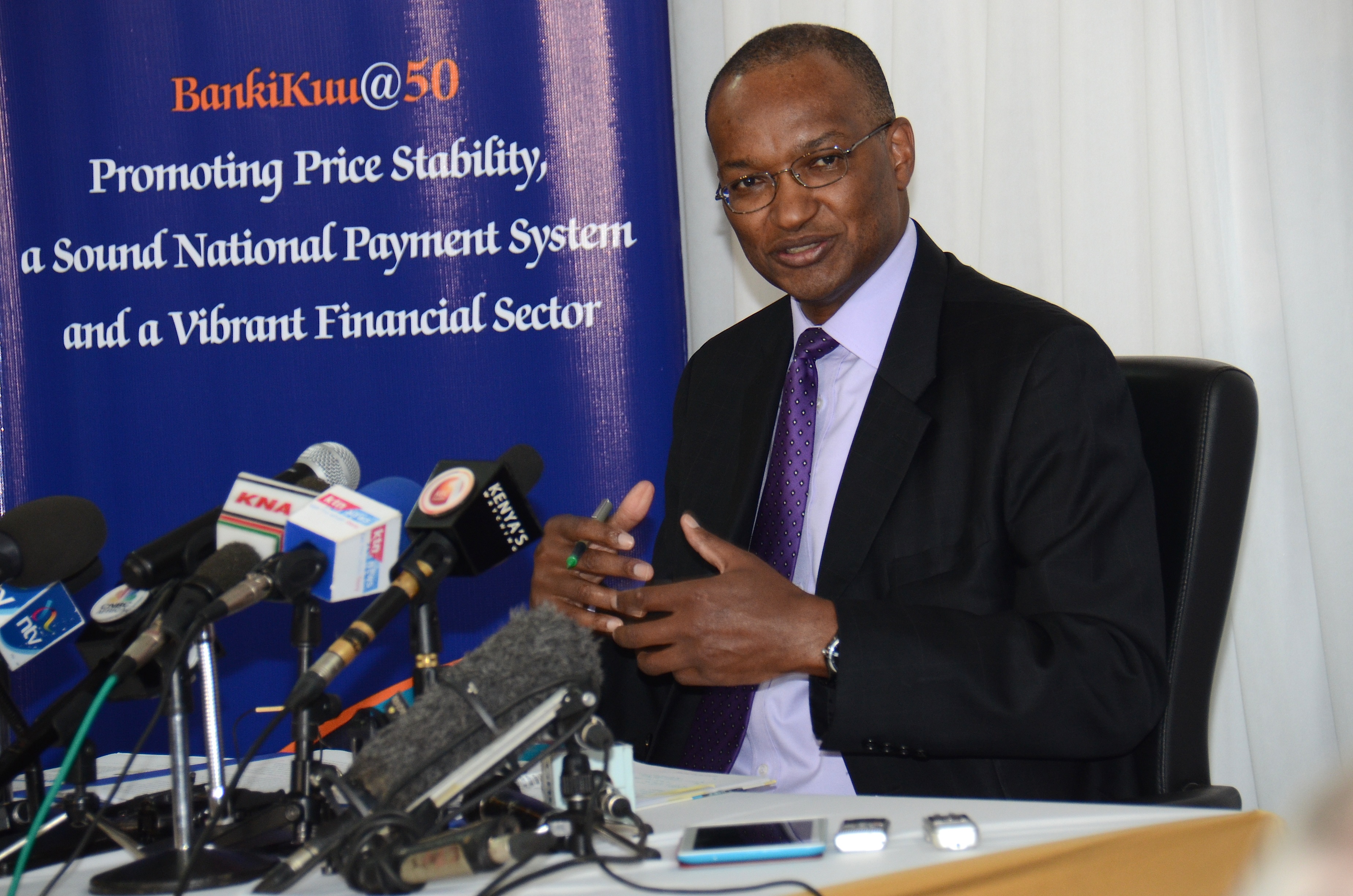
Regulation and Innovation are fast becoming the two main drivers of change in the banking industry in Kenya. A lot has happened over the last decade with the introduction of digital solutions and more recently the introduction of stringent regulatory guidelines and oversight.East African Business Times Magazine’s Bonface Otieno Kanyamwaya caught up with CFC Stanbic Bank Chief Executive Philip Odera for a chat about his thoughts on the above subject. Excerpts;
Q: Where are we as an industry compared to our peers in the region and on the continent?
Odera: I have had the benefit of operating in several African countries and I must say that we often beat ourselves down for matters happening, as if they are unique to Kenya. Virtually every market goes through challenges at certain times of its development and Kenya is not unique in this regard. Having said that, outside of South Africa, Kenya has far more depth, skill set, and product and service diversity than most countries in sub-Sahara Africa.
Q: The spotlight is on banks right now with the recent developments and questions are being asked about the stability of the sector. What is your assessment of the situation?
Odera: I think that it’s important to differentiate between the sector and a few players within the sector. If you go back to the history of banking in Kenya over the last 30 or so years, we have experienced a number of institutions that have run into challenges. To a large degree these have been precipitated by poor or inadequate governance framework in the respective institutions. Consequently because these challenges have vested in individual institutions rather than in the banking sector as a whole, the rest of the players have been able to grow and mature accordingly.
Q: The proposal to raise the minimum capital for banks to Ksh.5 billion from Ksh. 1 billion will come into force in two years. How do you see this playing out ahead of its implementation?
Odera: Raising the regulatory minimum capital is one thing and is outside my area of control, so I will not speak to that. I do however feel that in order to continue playing in this sector and as an institution of any stature, there will be a requirement for increased capital in any case given the vagaries of an ever changing economic environment and the need to strengthen balance sheets. In fact I strongly believe that a large capital base will more and more become a competitive advantage for players in the sector going forward.
Q: Away from the regulations and oversight, digital has emerged as the next frontier in the battle for customers by financial institutions. Are we up for it?
Odera: The reality is that digital has been around for quite some time now. The challenge has been with the slow pace of adoption or change by the financial industry as a whole and this is what has given rise to the proliferation of the FinTech companies in different parts of the world. As Stanbic Bank we have fully embraced the capabilities of digital banking and have rolled out some branches that are fully digital and which facilitate customer interaction and services at levels previously unimagined a few years ago. We intend to continue leading the market with our digital offering.
About the CEO
Mr Philip Odera was appointed the Chief Executive of CfC Stanbic Bank Limited on 2nd March, 2015. Mr Odera has been with Standard Bank for 15 years where he joined as General Manager at Stanbic Bank Kenya Limited. He has served Standard Bank in various capacities as Country Head and Managing Director in Kenya, Malawi and Uganda.
Prior to joining Standard Bank, he served as Consumer Bank Head at Citibank NA, Kenya. He has 29 years of experience in banking and financial services industry, rising from position of Commodities Analyst in Boston (USA) at Kramer Brokerage Company to his current position as Chief Executive, CfC Stanbic Bank Limited.
He holds a Bachelor of Arts degree (Economics) from St Lawrence University, New York and a Master of Business Administration (Finance) from Suffolk University, Boston both in the United States of America.
He sits as an Executive Director in the CfC Stanbic Bank Board and Non-Executive Director on the Board of SBG Securities Limited.
Kenya’s ailing sector finds itself in indeterminate state
By Bonface Otieno Kanyamwaya
The combined effects of a volatile banking sector, an austerity campaign by the National Treasury and a general economic slowdown have conspired to create a toxic brew that has darkened the economic outlook for East Africa’s largest economy.
The word in policy circles is that structural reforms are needed to salvage a fractional reserve banking system that is threatening to come off the rails.
Given that the government is the largest spender in the economy, a clear payment schedule to suppliers and contractors will help these parties reduce their likelihood of defaulting on loan obligations.
Secondly, commercial banks will need to make bigger investments in corporate governance as well as in innovation and technology that support richer credit scoring methodologies.
Lastly, the CBK will need to strengthen its internal regulatory mechanism which includes filling the vacancies in its board and equipping it with the necessary tools to act as lender of last resort.
The claim that bigger banks are necessarily more stable is not beyond impeachment. At the time of its collapse, Lehman Brothers was the fourth largest investment Bank in the United States, with 25,000 employees worldwide and US$639 billion in assets.
In the final analysis, a collective soul searching among industry stakeholders will be the secret source that will usher in a new chapter in Kenyan banking sector.
Tier 1 Bank Analysis-2015
With Chase Bank, Dubai Bank and Imperial Bank being placed under receivership, Kenyans are now perturbed about the stability and health of the banking system. Depositors are losing confidence in the financial institutions and are concerned about the safety of their savings.
The sector recently experienced the flight-to-quality phenomenon as depositors redistribute their savings from lower tier banks to tier 1 banks to protect themselves from the risk of losing their wealth. But the multi-billion- dollar question is: Are these top tier banks stable enough to withstand a financial and economic turbulence?
Performance
There was profitability in the banking industry in 2015. This was primarily caused by the non-performing loans and a challenging environment. With rising inflation and a depreciating currency, the Central Bank of Kenya increased the CBK rate from 10 per cent to 11.5 per cent in July 2015 in an attempt to mop up excess liquidity and tame inflation.
Interest rates were very volatile and inter bank rates soared to over 25 per cent in September 2015. With T-bill rates going over 20 per cent in 2015, banks have to offer depositors a higher interest in order to prevent a flight of depositors for a higher return. Consequently, banks hiked their lending rates in order to maintain their net interest margin.
Banks managers are assuming greater risks than normal and lending to less creditworthy borrowers in an attempt to meet their earnings targets and this has in turn led to bad debt and hence poor profitability.
Co-Operative Bank for instance recorded a 46 per cent in profits after tax; Kenya Commercial Bank (KCB) grew by 16 per cent while Commercial Bank of Africa (CBA) grew by 3 per cent. On the other hand, Equity Bank grew by 1 per cent and Barclays Bank had no profitability growth despite a decline in bad depts.
Interest expense grew by 49 per cent for KCB, 51 per cent for Equity Bank, 68 per cent for Co-Operative Bank, 48 per cent for CBA, 46 Per cent for Barclays Bank and 13 per cent for Standard Chartered.
Profitability ratio
Equity Bank has the highest profitability ratio followed by Cooperative Bank followed by KCB. This shows that Equity Bank is efficiently using bank assets and shareholders’ equity to generate profits as evidenced by the return on average assets (RoAA) and return on average equity (RoAE) ratios. Equity Bank and Barclays Bank have the highest net interest margins of 10.5 and 10.4 per cent respectively.
CBA has the lowest net interest margin due to a heavy high cost of funds of 6.3 per cent. Standard Chartered has the lowest cost of fund at 2.9 per cent followed by Equity Bank and Barclays Bank at 3.0 per cent.
Staff costs accounts for more than 40 per cent of the total costs of the tier 1 banks. With a slow-down in earnings in growth, banks are expected to restructure in their near terms and hence a further drop in earnings is inevitable.
In economics, the law of diminishing marginal return states that as the number of employees increases, the marginal product of an additional employee will at some point be less than the marginal product of the previous employee. This goes on until further hiring reaches to a point where further hiring does not lead to an increased productivity but reduced returns.
Diversification
Fundamental economic forces have led to financial innovation that has lead to increased competition in financial markets. The increase in competition has consequently diminished the cost advantage banks have had in acquiring funds and has undercut their positions in the lending market. As such, banks are forced to diversify into new activities such as bank assurance, investment banking and advisory in search for greater returns as well reinforcing other income streams such as trade finance.
In the long term, banks should not only diversify by products, but also by geography to minimise on the risk of poor return in the country in future as the banking market edges closer to saturation. To cushion themselves from macro-economic shocks, banks should not only rely on interest income, but also on fees and commission income from transactions.
Regulation
With the recent development in Kenya’s financial system, restructuring are expected in the banking industry to strengthen the competitive position of banks. The regulator will adapt its policies to the new financial environment that is emerging. A constructive regulatory approach is to adopt a system of structured bank capital requirements together with early corrective action by the Central Bank of Kenya.
The Cabinet Secretary for the National Treasury’s proposal to increase the minimum core capital requirements to run a bank in Kenya from Ksh1 billion to Ksh5 billion could be a reality. This is because Kenya has more banks than South Africa and Nigeria, which have higher populations. Perhaps the time to consolidate the banking sector in Kenya has come in order to ensure long term financial stability in the financial sector.
Banks should also begin preparing themselves for the Global Basel III regulatory framework to manage risk better. Building capacity in stress testing, risk management, capital adequacy and liquidity management will be of paramount importance for the banks in Kenya in the long-term. With increase in cybercrime in Kenya, the regulator should ensure information security is robust to protect depositors from hackers.
Way forward
Going forward, banks needs to restore the confidence in the financial system. Financial institutions need to be more transparent and make disclosures to the public to foster market discipline and increase market efficiency. The regulator is expected to take early corrective measures to avert other banks being closed or placed under receivership.
Banks will also need to diversify more by products, geography and alternative income channels to cushion themselves from a volatile interest environment.
They will also have to innovative new products to add value to the industry and deploy technology which will cut costs and increase convenience and efficiency to remain competitive.
In 2015, a major management shake-up took place at the National Bank of Kenya and as a result Director of Human Resources Jared Raburu, Director of Islamic Banking Molu Halkano and Acting Director of Corporate and Institutional Banking Emma Mwongela had to go.