Writing is not everyone’s cup of coffee, but this class seven boy has achieved more than just getting published

Writing is not everyone’s cup of coffee, but this class seven boy has achieved more than just getting published

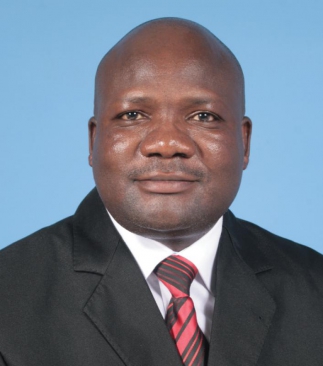
Fountain Enterprises Programme (FEP) Holdings has appointed Maurice Korir as the new Chief Executive Officer to steer the operations of the multi-billion investment company that has interests in real estate, ICT, energy, education, finance and hospitality sectors.
Mr Korir, who has served as Chief Operating Officer of at FEP Holdings since 2014, takes over the reins of the company as part of a seamless succession plan that will see Dr. John Kithaka, the Founder and outgoing CEO, retained on the Board as a Director.
Speaking on behalf of the Board of FEP Holdings, the Chairman, Engineer Erastus Mwongera said Mr Korir had a stellar performance management and corporate governance track record, as well as the requisite experience in change management to unlock the Group’s fortunes.
“Mr Korir has successfully headed the first phase of our restructuring process, through which we have realized 45 percent revenue growth and similar reduction in operational costs in just one year. We are confident that he will set the sails toward a trajectory of greater success with the same vigour, as we embark on the second phase of our transformation programme,” said Eng. Mwongera.
The first phase entailed operational restructuring and setting up of corporate governance structures, while the second phase of the Group’s transformation process will be the implementation of a five-year strategic plan that seeks to grow revenues and attain profitability as well the shareholder value.
Mr Korir has over 17 years of experience, working for multinationals and blue chip companies such as Mobil Oil, Airtel and Ogilvy, a marketing and communications company. He is a Certified Public Accountant with a Master in Business Administration and a Bachelors of Commerce Degree in Finance from the University of Nairobi, and has considerable Board experience.
He takes over the mantle from the vision bearer of FEP who marshalled the mobilisation of over Ksh5 billion for the Group which has investments in diverse sectors of the economy through FEP Holdings Ltd.
“The Board wishes to thank Dr. Kithaka for his vision and commitment in conceiving and managing FEP from a conceptual idea to a unique social and economic movement that has impacted thousands of lives,” said Eng. Mwongera.
He said the outgoing CEO would continue to contribute strategically as a director and Founder President to ensure implementation of the vision and mission of the FEP Group, as well that of the social investment affiliates of FEP; including FEP Foundation. He is also the Chairman of FEP Society, the umbrella organisation of all FEP entities.
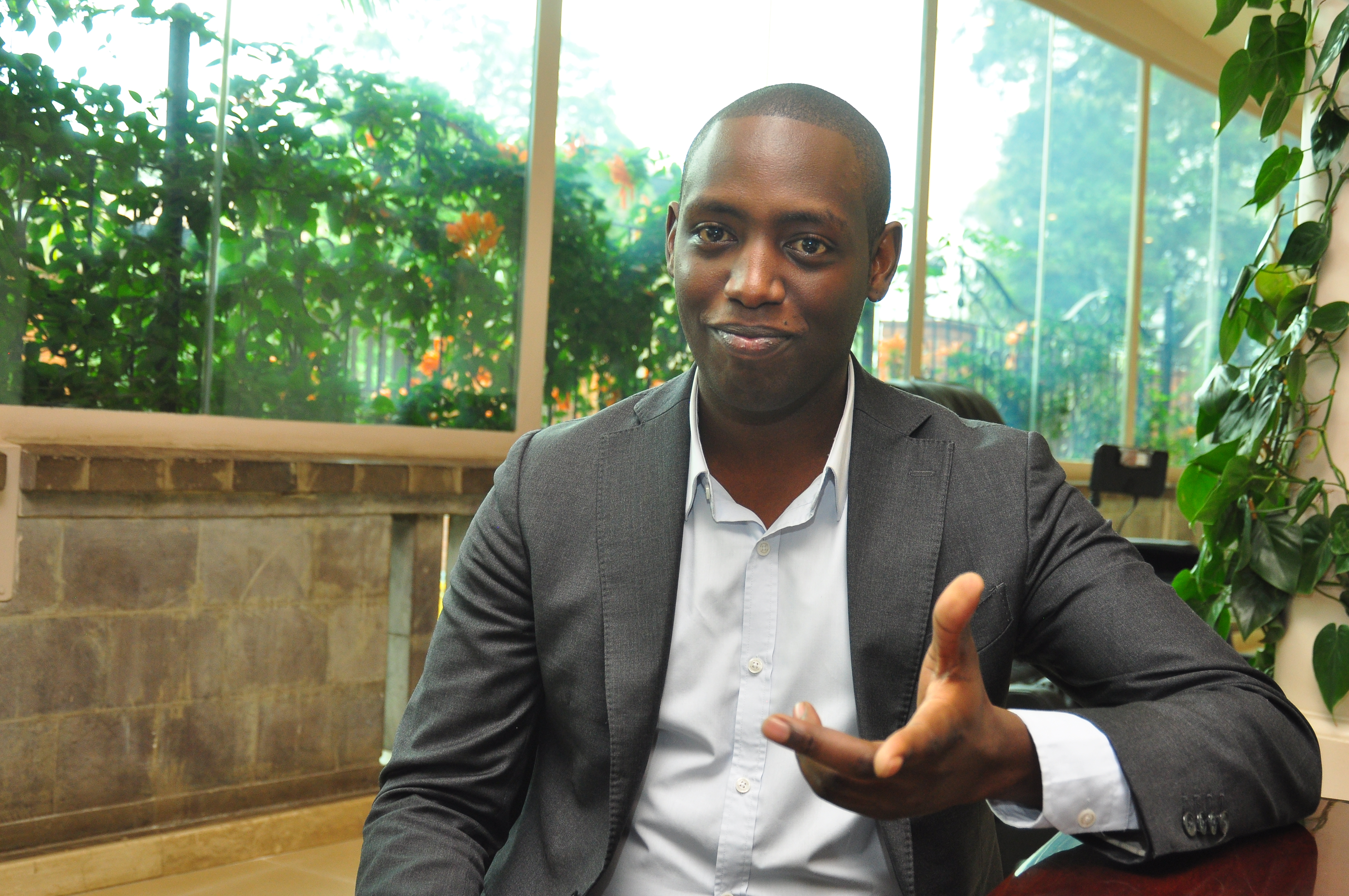
At 27, Jean-Jacques Maikere (JJ) is the managing director for Jumia-marketplace in Kenya formerly known as Kaymu. Popularly referred to as JJ by his peers, Maikere is a prototype for the modern entrepreneur. He earned his Bachelor’s Degree in Business Engineering from Solvay Brussels School. At 25, he founded Kaymu an online marketplace in Angola. Today he heads Jumia marketplace in Kenya. We sat down with him to share more about himself
WHAT WAS YOUR FIRST JOB?
JJ: My first job was a client executive at intern at Thomson Reuters in London. My role was to mainly advice clients from the Buyside, Sellside as well as the quoted companies. I would analyze the financial data and conduct perception studies on behalf of the quoted companies. It was perhaps one of my exciting but challenging times in my life.
HOW OLD WERE YOU THEN?
JJ: Uhm…I was about 24
AS THE MD JUMIA MARKET PLACE WHAT WOULD YOUR IDEAL DAY WOULD BE LIKE?
JJ: Normally I wake up early. At 5 am, be at the office by 7:30 am. My day begins by going through reports from the previous day. I then check on my team and how they are doing in terms of attaining their targets. I spend the rest of the time my day is spent in between meetings. In the evenings you will catch me with my team at Jumia Mjini (Jumia-Marketplaces offline pickup point in the CBD)
SO WHO TAUGHT YOU TO BE A BOSS?
JJ: I started aggressively during my days in the financial sector. At that time I had a really good boss-Christine Hawey. She is one amazing person I must say. She was patient with me and always gave me honest feedback regarding my work. This gave me room to grow in my career. I learned so much from her in terms of handling various situations in the work place. She was godsend.
WHAT IS THAT ONE ATTRIBUTE WOULD YOU SAY HAVE LEARNED FROM HER?
JJ:Positivism without a doubt. She cultivated an optimistic mind into me. I credit her for that.
HOW WOULD YOU DESCRIBE YOUR STYLE OF LEADERSHIP?
JJ: I think I am the type that is relaxed but strict. Most people don’t think I am strict but if I saw something that is not right I will tell you straight.
WHAT KIND OF EMPLOYEES DO YOU HIRE?
JJ: I look for people who can thrive in a smart, hardworking and collaborative environment. People who are team players who want to work to help solve the numerous challenges our clients face.
HOW DO YOU THINK YOUR EMPLOYEES DESCRIBE YOU?
JJ:Hahaa I really don’t know. I don’t think I would like to know really. Hahaha no one likes their boss…I guess.
WHY?
JJ:Sometimes it hurts especially when it is negative. Not that I am worried that my current team would say anything bad….. I just don’t want to know. When I will be far away…feel free to send me a link to an article on what they think of me (laughs)
ASSUMING THERE IS ONLY ONE JOB, LEAVE ASIDE JUMIA FOR A SECOND, YOU COULD APPLY FOR AT THIS STAGE OF YOUR CAREER, WHERE WOULD YOU APPLY AND WHY?
JJ: I would probably apply for Chief Executive Officers job at Google Inc. I am a big fan of what they do there. There is so much learning considering what the company has done over the years. Its an amazing place to work i guess.
IF YOU COULD CHOOSE A DIFFERENT CAREER FROM WHAT YOU CURRENTLY ARE WHAT WOULD BE YOUR CHOICE?
JJ: Oh maan..That is interesting; I would probably be a chef. I love to cook (Chuckles) I would make a great chef I guess.
WHAT IS THE BEST ADVICE YOU HAVE EVER BEEN GIVEN?
JJ:This is a bit strange, but it was an advice given by mum. She told me if I wanted to be happy in life, then I got to have three basic principles which I refer to as 3R. Respect for yourself, be Responsible and lastly Respect others. These are the principles that guide me today.
WHAT ARE YOU REALLY INTO OUTSIDE OF WORK?
JJ: I like to cook and travel. I have been to over eight countries in the world so far.
FAVORITE COUNTRY YOU HAVE VISITED OR STAYED IN OUT OF THE EIGHT?
JJ: That is a tricky one; I would probably say Mozambique because it is so close to the beach. But so far I would say Kenya is the best (Laughs) apart from the cold July/August weather which is taking a toll on me.
DID ANY OF THOSE COUNTRIES SURPRISE YOU?
JJ: Yes….. Angola.
Angola is like an island in the middle of Africa. Everyone speaks Portuguese despite the country being surrounded by francophone and Anglophone countries. It also has one of the expensive cities in the world. I had wonderful times there.
LETS SAY YOU ARE PACKING A BAG THAT ONLY HOLDS 3 THINGS. WHAT ARE THEY?
JJ: uhhm!.. my laptop, a smart phone and power bank. Those are the things that define me and today’s world
WHAT KIND OF PEOPLE DO YOU DISLIKE?
JJ: People who have issues with themselves and use it as an excuse to be mean to other people. They forget everyone has their own problems.
IF YOU COULD HAVE LUNCH WITH ONE PERSON, WHO WOULD IT BE?
JJ: hahaa that is a tricky one. I would mention someone but I am afraid that the guy wouldn’t pay the bill. But I will say Malcolm X. I am a real fan of him and what he did. I would also pick Mahatma Gandhi I am a fan as well but I doubt whether he would go for Nyama choma with me. I do enjoy nyama choma you know.
IF YOU HAD A CHANCE, WHO WOULD YOU TRADE PLACES OR CAREERS FOR A WEEK WITH?
JJ: I would say Romelu Lukaku, Belgian professional footballer who plays for

Jack Ma, founder and CEO Ali Baba Group
Premier League side Everton and the Belgium national team unfortunately I can’t run as fast as he does. Bob Collymore’s (Safaricom CEO) job would be interesting as well. …..On a second thought I think I would trade places with Jack Ma, the Chinese business magnate and philanthropist who is also the founder and executive chairman of Alibaba Group.
WOULD YOU RATHER BE LUCKY OR SMART?
JJ: That is simple. I would be smart or intelligent. Being smart or intelligent is permanent. If you combine intelligence with persistence, experience and a good attitude you will be better off. I think luck is random
HOW DO YOU DEAL WITH FAILURE?
JJ: Personally, I accept it. I try to understand where the problem could have been then try and find solutions.
WHAT IS YOUR GREATEST FEAR?
JJ: Missing out on opportunities perhaps why I try to grab every opportunity that comes my way.
Firm helps you grow your business
By Ben Oduor
You have just borrowed a huge sum of money from the bank with intentions of investing in horticulture.
Armed with the cash, you prepare a big piece of land and plant your seedlings within the early weeks of the rainy season, optimistic of a good harvest.
Unfortunately, the sun scorches, and the weatherman hints of a serious drought within the coming months. True to the announcement, the heat takes a toll on your crops, and the bank comes after you demanding its money. You are devastated.
Occasionally, enthusiastic traditional farmers have dared unpredictable weather conditions and gracefully reaped fruits from their labor. On the other hand, weather conditions can sometimes be unbearable to the crops, resulting to losses that lead to emotional and economic setbacks.
This, experts say, is largely contributed by failure to apply modern farming methods.
It is because of this traditional farming backdrop that Smart Solutions Africa (SSA), a multi-national consultancy firm which offers operational models to public and private institutions, has set strategies in motion to mitigate such challenges.
Through one of its products, the farmer’s kit, which majors on greenhouse construction, technical support and advisory, the enterprise ensures that once they have supplied and installed the greenhouses, they walk their customers all the way to harvesting through technical and professional support, giving them an edge above their competitors.
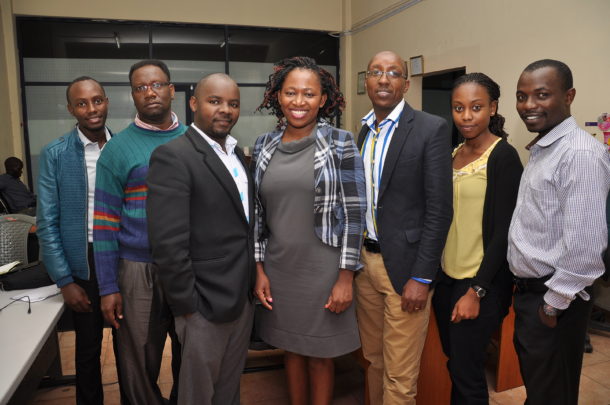
Emily Njuki, the firm’s co-founder and director says their services go beyond selling greenhouses as they provide extensive agricultural advice to clients, analyse and test the soil through a partnership with the Kenya Agricultural Livestock and Research Organization (KALRO).
The firm has also partnered with the Youth Enterprise Development Fund- a body that provide loans to Kenyan youth enterprises- to refer to them youth groups interested in agribusiness.
“Through this partnership, we give greenhouses to young people and offer them technical support,” she says.
Growing Smart Solutions
Five years ago, Njuki was restless. She had been working for Interconsumer Products Limited as a brand executive but was dissatisfied with the way companies offered their services.
“I identified a huge gap in the way agencies operated their business. They were not giving clients the best,” she says, adding that at that point, she started packaging her ideas to bridge the deficit.
With her marketing background and long experience working at a big corporate, she was fortunate to meet Patrisio Njeru, a PhD holder in quality management and a lecturer at the time stationed at the then Kenya Polytechnic (now Technical University of Kenya) , who also envisioned a similar investment.
“With my marketing background, coupled with his quality management experience, we were set for the business,” she says.
Armed with two laptops, the two started sourcing for clients, at times meeting them at Njeru’s office.
With sh120000 from their savings, she reckons that they incorporated SSA in 2011 and officially kicked off operations in February 2012.
At the early stages, the firm suffered low capital streams and had few services to test the waters, but now has laid a formidable footprint in the Kenyan market with offices in 10 regions in the country and the head office in Nairobi.
Jack of all trades
Currently, the firm offers solution based services such as trade management, merchandising, product launches and sampling, consumer competition, agribusiness solutions, fish ponds and liners supplies, environmental impact audits and greenhouse construction, technical support and advisory services.
The director says marketing is one of the firm’s drivers for it has enabled the enterprise attract a huge clientele base over the years.
For instance, the firm has been outsourcing services and merchandising staff for New Kenya Cooperative Creameries for the past four years and for promotions and merchandising on behalf of Premium Foods Industries and Inter Beauty Products Limited.
Also, it has recruited merchandise staff for Nokia East Africa and trained human resource staff for the county council of Mbeere.
Additionally, SSA has just signed a mega deal with Safaricom which will see the firm popularise a new service promoted by the mobile service provider, called shupavu- which has been on the mobile banking segment- to its users.
“Smart Solutions Africa’s approach is to bench-mark firm’s operations and management strategy against global standards,” it says in a statement, adding that the approach ensures customer ownership and brands that keep the promise and surpass consumer expectations.
To keep clients satisfied, the firm says that it engages organisations in identifying existing gaps and develops remedial strategies to bridge them.
It is partly for this reason that Njeru was listed by Business Daily among the Top 40 under 40 promising male entrepreneurs while Njuki won the CFC Stanbic Rising Star Award Entrepreneur of the Year 2015.
Further, in 2013, Njuki was appointed minister for Youth and Sports by Embu County Government.
Going forward, the food scientist, who also has a Masters in Business Administration, is optimistic that Smart Solutions will be among the multibillion shilling firms in Africa in the next decade.

Mhealth Technologies leading the way in making Kenya a healthy nation
His development agenda and what he has accomplished so far during his tenure with the State Corporation

Enwealth aims to be part of the revolution

Mobile service provider brings banking services closer to the rural folks
By Tullah Stephen
Mobile money is paving the way for greater financial inclusion and transforming the way consumers transact with one another in Tanzania.
Mobile service providers have been on the forefront in ensuring that mobile money services are brought closer to the people in rural areas.
Such companies have been complementing the government’s efforts to even out imbalances that inhibit Tanzanians from carrying out financial transactions. Among the companies leading Tanzania’s financial inclusion is Millicom International Cellular SA (MIC), which trades as Tigo in Tanzania.
Since launching its inaugural mobile money platform, Tigopesa in 2014, the firm has gone on to introduce other innovative products that have not only seen its subscriber base grow, but also resulted in it being ranked the second most successful mobile finance service provider in Tanzania.
Today Tigo has 5.2 million of the country’s 17 million subscribers.
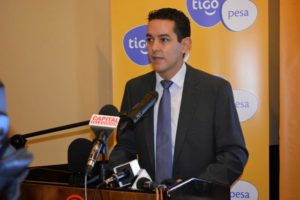
Diego Gutierrez, General Manager Tigo Tanzania
CEO Diego Gutierrez says the key is innovation, which is bringing about new digital financial tools that address the lack of access to the formal financial system in many developing economies. “Tanzania has a great appetite for innovation and we have created world-firsts with products such as universal mobile money interoperability that began in 2014, and international transfers with currency conversion, among others.”
In 2014, Tigo Tanzania became the first telecom company in the world to share profits generated from its mobile money Trust Account in the form of a quarterly distribution to customers. The revenue share model is in line with a Bank of Tanzania (BoT) policy that allows the country’s mobile operators to increase e-money deposits and mobile money transactions through new loyalty incentives. BoT is the country’s central bank.
Mobile money, Gutierrez explains, has emerged alongside microfinance as an imperative tool for financial inclusion, enabling the population to access services such as electronic transfers, payments and savings. The development of mobile money as a means of financial inclusion has been encouraged by mobile phone penetration in developing countries like Tanzania.
According to BoT, Tanzania is at the top of the pile in financial inclusion in sub-Saharan Africa. The country is also ranked sixth globally for providing the most conducive environment for financial inclusion by the Intelligence Unit of the Economist through its Global Microscopic Surveys conducted in 2014 and 2015.
Recently, Tigo launched a first of its kind product dubbed TigoNivushe, which gives customers immediate access to small loans with different repayment periods and administrative costs based on the duration of the loan.
The loans — an average of Tsh10,000 (US$5) — are processed in real-time and funds are transferred in minutes. As customers build up their credit history, they are able to borrow larger amounts with lower administration fees. Loans are delivered directly to the mobile wallet so customers can immediately use the funds to pay bills, transfer to others, or cash out at the thousands of agents across the country.
According to Gutierrez, Tigo is learning from its customers in regards to what they want and how they want it delivered. “For us this is crucial to the success of mobile money products. Through this we can also pull down barriers to financial inclusion by continuing to support initiatives that reach the population as well as deliver education about personal finance.”
By ensuring that mobile money services are closer to the local people, Gutierrez says Tigo is complementing the government’s efforts to narrow the gap between the rich and poor, helping increase the country’s economic security and stability.
Tanzania is one of the leaders in mobile money penetration and one of five countries in the world where more adults have a mobile money account than in a conventional financial institution.
The Global Findex Data reports that 32 per cent of adults in Tanzania have a mobile money account. In east Africa, the country is second to Kenya where some 58 per cent of adults have such accounts. Uganda and Somalia follow with 35 per cent.
The Monetary Statement of the first half of the 2015/16 fiscal year also reports that BoT targets to have at least 70 per cent of the population living within five kilometres of a financial access point by 2017. This target follows the country’s exceptional performance in the usage of formal financial services among the unbanked population that surpassed its initial target by 50 per cent of adult population in 2014.
In line with this policy, Tigo has recruited over 50,000 merchants across the country to ensure a seamless network of customers accessing TigoPesa mobile services. Currently, the telco has 44 shops in the country and there are plans to open more.