Opinion
Repeatedly renewing short-term contracts over a long period of time, without transitioning an employee to a more secure employment arrangement, may amount to a violation of their constitutional right to fair labour practices.
In a significant judgment, the Employment and Labour Relations Court (ELRC) in Gichuki v Kenya Power & Lighting Company Plc (Petition E021 of 2024) [2025] KEELRC 2578 cautioned employers against the casualisation of labour.
The petitioner, a meter reader, was engaged by KPLC in 2015 on an initial three-month contract. This contract was repeatedly renewed, almost exclusively in three-month blocks, for over eight years. The work was continuous and integral to KPLC’s operations.
In July 2023, she was summarily dismissed for allegedly aiding in the installation of an illegal electricity line. Aggrieved, the petitioner moved to court seeking declarations of, among other things, wrongful dismissal and constitutional violations of her rights.
The court held that the dismissal was fair under sections 41, 43, and 45 of the Employment Act. However, the rolling contract system, applied over eight years for core functions, was constitutionally impermissible under Article 41. As a result, the court awarded KES 450,000 in general damages but declined costs.
Repeatedly renewing short-term contracts over a long period of time, in this case an eight-year period, without transitioning the employee to a more secure employment arrangement, constitutes a violation of the employee’s constitutional right to fair labour practices.
For state corporations and public bodies, the court applied the Public Service Commission Act, 2017 (PSC Act) and the PSC Regulations, 2020, which prescribe minimum contractual periods of 12 months (extendable to five years) for public officers under section 45 of the PSC Act, and limit temporary appointments to exceptional, short-term, or seasonal needs.
The court underscored that public sector employers should not use short fixed-term contracts to casualise what are essentially permanent roles.
Section 37 of the Employment Act discourages the casualisation of labour. Drawing parallels to the situation, the court was adamant that offering short-term contracts to employees for prolonged periods is casualisation of labour, which deprives employees of job security and terminal benefits due to permanent and pensionable employees.
Notably, under section 37, casual employment converts into term employment where the work continues for at least one month, or the work cannot reasonably be completed within a period amounting to three months or more. This signals a strong shift in jurisprudence toward substance over form when assessing employment relationships.
While the court in this case declined to award remedies such as reinstatement or compensation for unfair termination, it awarded KES 450,000 in general damages for the breach of Article 41, together with interest at court rates. This underscores that employers may be financially liable for constitutional breaches even when they have complied with statutory termination processes.
The court was clear that calling a contract temporary does not absolve the employer of scrutiny where the nature of work is continuous and long-term, central to the organisation’s functions, and deployed in a serial, rolling manner. This means human resources and legal teams must audit beyond terminology.
Relying on the Supreme Court’s decision in Kenya Ports Authority v. Joseph Makau Munyao and Four Others (Petition No. E008 of 2023), the ELRC reiterated that any employer conduct that offends any law governing relations between parties may be deemed an unfair labour practice.
The decision continues a growing line of jurisprudence interpreting section 37 of the Employment Act to convert short-term engagements into permanent employment or indefinite contracts where continuity and nature of work so demand.
Your organisation may be at risk if you have back-to-back short-term contracts renewed for more than a year, especially for recurring functions; temporary staff assigned supervisory or acting roles over long periods; or staff excluded from benefits or progression due to artificial contractual breaks.
Employers are advised to conduct an audit across departments or business units that rely on rolling short-term contracts, prioritise conversion of such roles into longer or open-ended terms, and adopt a fixed-term contract policy that ensures employees’ prospects for career growth and advancement are realised without sacrificing the genuine needs of the business.
This policy should also periodically review whether certain roles remain temporary or have evolved into continuous functions warranting a more permanent engagement, adopt performance evaluations aligned with equal opportunity for career progression, and record justification aligned to project scope or time-bound need.
For public institutions and utilities, it is critical to benchmark against the PSC Act and PSC Regulations and proactively close gaps before litigation risk materialises.
The writer is a Partner at Cliffe Dekker Hofmeyr (CDH) Kenya
AGOA and Africa’s Trade Future: Beyond Extension to Transformation
I’ve had countless conversations over the past few months with policymakers and exporters navigating impossible uncertainty about contracts and commitments they entered into in good faith.
What I’ve come to realise from these conversations is this: the African Growth and Opportunity Act (AGOA) isn’t just a trade policy.
For example, in Kenya, it’s a lifeline for over 66,000 women and youth in our textile and apparel sector alone. It’s the difference between prosperity and precarity for hundreds of thousands more across horticulture, manufacturing, and agriculture.
But it’s also something else. It’s a mirror reflecting a deeper question we must ask ourselves: What kind of trade partnership do we truly want with the United States?
The Numbers Tell Only Part of the Story
Yes, AGOA has delivered measurable impact. Africa’s exports to the U.S. grew from $17.9 billion in 2002 to $31.4 billion in 2022, with a notable peak in 2008, when exports reached $86.1 billion. Kenya is one of the success stories, with exports growing from $110 million in 2000 to $771.3 million by 2024. Our textile and apparel sector, which accounts for more than 90% of our AGOA exports, has created tens of thousands of jobs, primarily for women and young people.
These aren’t just statistics. They are lives that were transformed. They represent school fees paid. They’re families lifted out of poverty.
But here’s what the numbers don’t capture: the anxiety of entrepreneurs who’ve built businesses around duty-free access, only to watch that certainty evaporate into political uncertainty. The stress of workers who’ve just heard that their jobs hang in the balance of Congressional debates thousands of miles away.
That’s the human cost of uncertainty.
We welcome the Extension, But We Need More.
The recent talks of a one-year extension are a relief, not a solution. It would give us breathing room, but it doesn’t give us what businesses need most: predictability.
You cannot build a sustainable enterprise on a one-year horizon. You cannot attract foreign direct investment when your competitive advantage expires annually. You cannot plan for growth when you’re constantly planning for survival.
As business leaders, we must be honest about what this moment demands. It’s not just about renewing AGOA. It’s about reimagining what our trade partnership with the United States should look like for the next generation.
The AGOA uncertainty isn’t just a crisis. It’s a mirror reflecting an uncomfortable truth about how we’ve structured our economies. We’ve built export machines pointed outward while our largest market,1.4 billion Africans with a combined GDP of over $3 trillion, remains largely untapped. We have the youngest, fastest-growing population on earth. We have complementary economies that could support integrated value chains spanning the continent.
What we lack is the commitment to trade with each other first.
Three Truths We Must Acknowledge
First, AGOA was never meant to be permanent, and that’s actually okay.
The purpose of trade preferences was always to build capacity, strengthen competitiveness, and graduate to more sustainable trade models. Kenya has done precisely that. We’ve built world-class manufacturing capacity that can compete anywhere.
The question isn’t whether we can survive without AGOA. It’s whether we’re brave enough to thrive beyond it.
Second, bilateral trade agreements take time, but the work must start now. President Ruto’s pursuit of a bilateral trade agreement with the United States is the right strategy.
Such an agreement would offer the long-term predictability our businesses desperately need. But these negotiations are complex, requiring alignment across multiple sectors and stakeholders.
That’s why we need a robust transition framework. Not one year. Not a series of annual cliffhangers.
But a meaningful bridge, perhaps five years, that allows us to complete bilateral negotiations without holding our breath every twelve months.
Third, we cannot put all our trade eggs in one basket.
Even as we pursue deeper ties with the U.S., we must accelerate implementation of the African Continental Free Trade Area (AfCFTA). We must cultivate markets in Asia, Europe, and the Middle East. We must ensure that our young entrepreneurs aren’t dependent on any single market access pathway.
Diversification isn’t disloyalty. It’s a smart economic strategy.
Where Policy Meets Practice
Our government has pursued AGOA extension and bilateral negotiations with determination. That work continues and matters deeply.
What would amplify this effort is the accelerated implementation of AfCFTA provisions, moving from commitments to commercialisation. Trade facilitation reforms that genuinely reduce the cost of doing business are essential. Policy consistency that allows investors to plan beyond election cycles.
Perhaps most critically, we need integration across sectors. Trade policy works when it’s synchronized with industrial strategy, infrastructure investment, and skills development. Siloed efforts, however well-intentioned, deliver fragmented results.
Mutual Economic Prosperity
The Kenya-U.S. economic relationship has always been built on mutual benefit, not dependency.
That foundation remains strong.
What businesses on both sides of this partnership need most right now is predictability. The ability to sign contracts with confidence. To make investment decisions without annual cliffhangers. To build supply chains that serve American and African markets sustainably.
AGOA has created value for American consumers through competitive products, for American companies through reliable sourcing, and strengthened American interests through the economic stability that partnership enables.
As we navigate this transition, whether toward bilateral agreements, extended AGOA, or entirely new frameworks, the spirit of mutual benefit should guide us as equal partners building something that works for everyone involved.
Ubuntu in Trade
In leadership, I often return to the African philosophy of Ubuntu, I am because we are. It reminds us that true prosperity is shared. That sustainable growth lifts communities, not just companies.
That’s the spirit we need in this moment. Not Global North versus Global South. Nor East Africa versus West Africa. But a genuine commitment to building trade frameworks that create shared prosperity for all.
Currently, intra-African trade accounts for only 15-18%, which is much lower than intra-regional trade in other continents, ranging from 40 to 80%. From where I sit, that’s the real inflection point.
Our biggest opportunity as Africans is to trade more and smarter amongst ourselves, not as a consolation for missing out on AGOA, but as the economic strategy we should have been pursuing all along.
What Business Can Do
This moment calls for practical shifts in how we operate.
Market diversification isn’t just risk management; it’s a growth strategy. The businesses navigating this uncertainty best are those who’ve been building multiple revenue streams across different regions.
Active participation in AfCFTA implementation matters. Not waiting for perfect conditions, but trading, learning, and contributing to improvements through real commercial experience.
And perhaps most importantly, investing the same energy in understanding African markets that we’ve historically invested in understanding Western ones.
The Real Question
The conversation shouldn’t be: “How do we save AGOA?” It should be: “How do we build an African economy so integrated, so dynamic, so resilient that no single external trade agreement can make or break us?”
AGOA’s uncertainty is uncomfortable. However, comfort breeds complacency. Discomfort breeds innovation. And innovation, resilience.
Sixty-six thousand Kenyans in the textile sector are counting on us. Hundreds of thousands more across African economies are watching. But more importantly, a generation of African entrepreneurs is ready to build pan-African businesses if we create the enabling environment.
The future of African trade won’t be written outside the continent. It will be shaped by the choices we make here, now, together, whether we see this moment as a loss or a liberation. Whether we finally commit to the economic integration we’ve been promising for decades.
I remain optimistic. Not because AGOA might be extended, though that would help. But because of the latent potential waiting to be unleashed if African businesses are given real access to African markets.
What are we waiting for?
Maxwell Okello is the CEO of the American Chamber of Commerce in Kenya.
Kenya’s High Court verdict signals a realignment for foreign companies seeking justice
For years, foreign companies trying to enforce contracts in Kenya have relied on a well-established understanding that local registration under the Companies Act was not required to pursue a legal claim.
Then, one year ago, this understanding was shaken when a High Court decision suggested that non-registered companies could be barred from suing, creating a heightened period of uncertainty for international businesses operating in Kenya.
But thanks to an even more recent case, the High Court has reaffirmed the established rule, essentially giving unregistered foreign businesses access to Kenyan courts.
In this case, Bruton Gold, a company incorporated in Dubai, filed a lawsuit in Kenya. Fraud, professional misconduct, and other unlawful acts were all cited in relation to an agreement to export gold from Kenya. The defendants challenged the case on the basis that Bruton Gold had not registered in Kenya. However, the High Court has now ruled that registration requirements do not limit access to justice.
The lesson: Registration remains relevant for defining the right to operate a business in Kenya, but it does not, on its own, bar a foreign company from seeking redress through the courts.
While the Bruton Gold decision provides reassurance, uncertainty in the broader legal landscape has not entirely disappeared. Previous rulings suggesting stricter interpretations remain part of Kenyan jurisprudence and could be cited in other cases. Foreign companies should continue to evaluate carefully whether their activities constitute “carrying on business” in Kenya and whether local registration might offer a prudent safeguard.
The Bruton Gold case highlights the importance of proactive legal planning. Foreign companies and lenders entering the Kenyan market should ensure contracts are enforceable, anticipate potential procedural challenges, and consider the merits of local registration as part of a risk management strategy.
At the end of the day, this High Court decision represents a welcome reaffirmation of the long-standing legal principle. It provides clarity and reassurance for businesses navigating the Kenyan market, while underscoring the value of strategic compliance and careful legal planning.
This ruling revealed that, while a business’s legal identity is based on where it was incorporated, registering in Kenya is not enough to define that. Now, a clearer line in the sand has been drawn, separating the right to operate a business from the constitutional right to seek justice.
Now, a foreign business that engages in even a single transaction in Kenya for whatever legitimate business purposes can pursue legal remedies in Kenyan courts without being automatically barred for non-registration. A foreign business is determined to be “carrying on business” in Kenya according to the specifics of the case. With this move, legitimate claims are not unjustly dismissed, and it emphasises that access to justice takes precedence over technical registration requirements.
The court also revealed that locus standi (the right to be heard) is a fundamental principle rooted in the Constitution. Registration may be relevant in specific contexts, but it is not, in itself, the determining factor of whether a foreign company has the right to pursue a claim. What we have here is the recognition of the constitutional guarantee of access to justice.
Additionally, Section 974 of the Companies Act (Cap 486) (the “Companies Act”) currently restricts unregistered foreign companies from carrying on business in Kenya, a term presently limited to offering or guaranteeing debentures in Kenya. The Business Laws (Amendment) Bill, 2025, proposes to introduce a provision within this section, clarifying that foreign companies may still sue, be sued, enforce rights, or incur obligations in Kenya without registration, provided they comply with Kenyan law. This amendment aligns statutory language with the constitutional right of access to justice as affirmed in Bruton Gold, harmonising the Companies Act with judicial principles and reinforcing foreign companies’ legal standing in Kenya.
That said, foreign companies and lenders entering the Kenyan market should remain vigilant ensuring contracts are enforceable, assessing potential procedural risks, and consider the merits of local registration.
Ultimately, the Bruton Gold decision represents a more balanced and constitutionally sound approach by Kenyan courts to provide more tangible access to justice for foreign businesses. Separately, the proposed amendment to the Companies Act underscores ongoing legislative efforts to align company law with this evolving judicial outlook. Together, these developments are both reassuring and a clear reminder that the Kenyan legal landscape demands rigorous planning, an awareness of evolving jurisprudence, and a strategic approach to compliance and risk management.
The writer is the Managing Partner at Cliffe Dekker Hofmeyr (CDH) Kenya
Sammy Ndolo, Managing Partner at Cliffe Dekker Hofmeyr (CDH) Kenya, examines how the Draft Companies (Annotation and Rectification) Regulations, 2025 aim to bring greater clarity and consistency to the correction of company records and filings.
The Draft Companies (Annotation and Rectification) Regulations, 2025 (Draft Regulations) introduce a structured framework for correcting, updating or annotating errors or omissions in company registers and official filings. They aim to operationalise the powers granted to the Registrar (pursuant to section 862 of the Companies Act (Cap 486)) to provide a clear and consistent mechanism for rectification of corporate records.
Under the provision of the Companies Act, the Registrar is empowered to remove any entry relating to a company from the register, based on very specific grounds upon application by a person with a legitimate interest. However, the act fails to provide clarity on what constitutes a “legitimate interest”. The Draft Regulations address this gap by defining “legitimate interest”, thereby establishing clear locus standi for persons entitled to apply for rectification – a notable inclusion from the act.
These include directors or former directors, shareholders or former shareholders, administrators or executors of a shareholder’s estate, and beneficial owners of a company. This provision is significant as it creates legal certainty by expressly identifying who has the right to seek the remedy, thereby reducing ambiguity and the risk of frivolous applications.
The Draft Regulations also set out the Registrar’s annotation powers, which is a new mandate that empowers the Registrar to place a note on the register to clarify misleading or outdated information, make corrections, and record the date of entry to address any confusion that may arise from such misleading information. It is worth noting, however, that they do not clarify the legal effect of annotations, such as whether third parties can place reliance on them in commercial transactions.
The Draft Regulations mirror the grounds provided in section 862 of the Companies Act for an application for rectification, including an entry that derives from anything invalid or ineffective, derives from anything that was done without the authority of the company, is factually inaccurate or is derived from something factually inaccurate, or is derived from something that is forged.
However, this scope may be regarded as narrow in that rectification applies only to very limited circumstances and does not extend to material that is simply disputed, subjective, or made in good faith under proper authority. In summary, the mechanism is designed to correct clear errors or wrongful acts rather than to reopen legitimate exercises of discretion or bona fide administrative decisions.
Significantly, rectification is restricted to a period of 12 months from the date of the entry in the register, a restriction which may be viewed as limiting for companies that may only discover errors after this period has lapsed. The limitation may prove particularly problematic where errors or unauthorised filings are uncovered later, for instance during due diligence or financing processes. Such delayed discoveries, falling outside the 12-month window, raise legitimate concerns about the applicability and overall effectiveness of the proposed regulations.
Nonetheless, the essence of the Draft Regulations lies in the procedure prescribed for rectification upon an application to the Registrar. Once an application is made, the Registrar is required to issue a written notice of intention to rectify the register, addressed to the company and the public.
This notice must set out the company’s details, the omitted or erroneous information, the recipients’ right to object (underpinning the right to fair administrative action guaranteed under the Constitution of Kenya), the potential effect of the rectification, and the date of issuance. In addition, the notice must specify the deadline for lodging written objections, being within 28 days from the date of the notice.
Consistently, the right to object is limited to persons with a legitimate interest, who must file the prescribed form setting out their details, identifying the rectification application, and stating the grounds of objection. Where objections are filed, the Registrar is obliged to acknowledge receipt and notify the affected parties accordingly.
Significantly, the Registrar is barred from effecting any rectification once an objection has been lodged whose purpose is to ensure that due process is followed and prevent any administrative discretion by the Registrar. Importantly, however, the Draft Regulations do not preclude the Registrar from referring an application for rectification to the courts and seeking appropriate orders which, by way of extension, broaden the scope of remedies available.
While the Draft Companies (Annotation and Rectification) Regulations, 2025 are a welcome step in clarifying the rectification framework and embedding safeguards aligned with constitutional standards of fair administrative action, their practical impact will depend on how flexibly and efficiently they are applied. Striking the right balance between protecting stakeholder rights and ensuring timely, cost-effective corrections will be critical to avoiding procedural bottlenecks that could undermine the very certainty and reliability the Draft Regulations seek to promote.
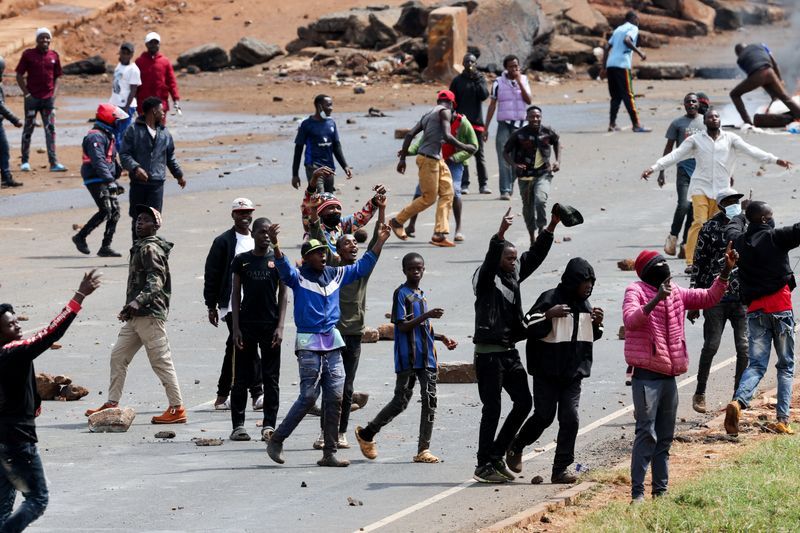
The recently held elections in Tanzania have ignited widespread protests, as demonstrators voice their disapproval of the government’s decision to bar prominent opposition leaders from vying for the presidency and subsequently charging them with treason— a crime carrying a potential death penalty. These protests, particularly felt in Dar es Salaam and other major Tanzanian cities, have escalated into violence. Scenes of rage where protesters are tearing down the posters of President Suluhu, lighting bonfires and targeting private properties, littered the social media.
In response to this unrest, the Tanzanian government shut down the internet and imposed a dusk to dawn curfew. Critics argue that these measures represent a blatant violation of democratic principles, including freedom of expression, access to information, and the right to vote. These events, unfolding under the watch of the international community, are further wounding the nation’s already struggling economy.
The government’s suppression of dissent through internet shutdowns and mistreatment of opposition leaders is perceived as deterrence to foreign investment and an incitement to violence among citizens. This, in turn, has led to the looting and destruction businesses and damage to infrastructure—all critical contributors to national economic growth. Other deliberate actions, such as media gagging and various unprecedented moves by the Tanzanian government, are seen as undermining socio-economic development, which relies on national integration fostered by unity and common values.
Like Tanzania, in 2024, Kenya experienced significant nationwide protests marred by abductions and extrajudicial killings, resulting in substantial negative economic impacts. Earlier this year, Uganda witnessed widespread protests and violations of fundamental rights following the abduction of an opposition leader, Kizza Besigye, in Nairobi and his subsequent arraignment in a military court in Uganda. Since then, a series of protests have erupted concerning taxation introduced on small businesses and the acquisition of business permits. These events led to the establishment of parliamentary committees to address public grievances. A section of international lawyers was permitted to observe the court-martial proceedings.
One thing is certain in all these regrettable circumstances. A threat to democratic rights is akin to striking at the heart of a nation. It invites instability, shaking the very foundations upon which a nation is built, most notably its economy. It is imperative that the East Africa Community intervenes to assist one of its own through dialogue and counsel on safeguarding democratic rights and fundamental freedoms. These elements are key players in national growth, socio-economic flourishing, and integration.
Not so fast: Disputed debts and arbitration clauses as a shield against insolvency proceedings
Can a contractor pursue insolvency proceedings where the debt is disputed and an arbitration clause exists? This was the central issue before the Court of Appeal in Kwale International Sugar Company Limited v Epco Builders Limited & 2 Others [2025] KECA 227 (KLR), a case with implications for contractors, employers and legal practitioners navigating construction disputes.
In 2012, Kwale Sugar contracted Epco Builders (Epco) to construct a sugar factory under a KES 2.22 billion Engineering, Procurement and Construction (EPC) agreement. A dispute arose over alleged non-payment of KES 712 million. Epco issued a statutory demand and subsequently filed an insolvency petition seeking liquidation of Kwale Sugar.
Kwale Sugar applied to set aside the demand and strike out the petition, arguing that the debt was genuinely disputed; the parties were bound by an arbitration clause; and the demand was defective under the Insolvency Regulations.
The High Court dismissed the application. On appeal, the Court of Appeal upheld the outcome but clarified important legal principles at the intersection of insolvency law and construction contracts.
Kwale Sugar had cited personal bankruptcy provisions instead of the corporate insolvency rules. The court found this error non-fatal, confirming that courts will prioritise substance over form in the absence of prejudice.
The Court of Appeal criticised the High Court’s remarks that the debt was undisputed, noting that such conclusions should be reserved for full hearings or arbitration. Courts should be cautious not to prejudge contested issues during interlocutory proceedings.
While acknowledging the existence of the arbitration clause, the court held that it does not oust the jurisdiction of insolvency courts. Insolvency proceedings are collective in nature and serve a public interest function that may override private dispute resolution arrangements.
The court held that defects in the statutory demand, such as form irregularities, will not invalidate it unless actual prejudice is demonstrated. In this case, no prejudice was shown.
For contractors, certificates are persuasive but not talismanic. Their legal effect depends on the contract’s terms, and they will not cure fundamental issues of non-compliance, missing support or unresolved set-offs. Insolvency should be reserved for clear cases of non-payment, not deployed as leverage in a live valuation dispute.
The message to debtors is equally clear: a technical objection is strongest when coupled with a coherent evidentiary record showing why the sum claimed is not presently due under the contract.
The consequences are practical. For employers, an arbitration clause is valuable only if it is invoked promptly and carried on the back of documentary substance, such as engineer or architect determinations, measurement records, variation orders, defect notices, correspondence evidencing reconciliation and a credible set-off schedule.
Paying the undisputed slice protects credibility and undercuts any narrative of inability to pay, while reserving genuine disputes for the agreed dispute-resolution forum. For more on what constitutes a genuine dispute, see our previous alert here.
For project owners, contractors and funders, the case reinforces the value of disciplined paperwork: interim payment certificates (IPC) packs tied to contract mechanisms, site diaries, measurement sheets, variation order (VO) approvals, notices and reconciliations. In a payment standoff, those records, rather than the insolvency court, will decide who ultimately pays whom, and how much.
Debt disputes must be resolved on merits, not prematurely at interlocutory stages. Arbitration does not override insolvency jurisdiction, especially where the debt is not genuinely contested. Genuine disputes on substantial grounds must be resolved through appropriate forums like arbitration or full trial. Form defects in statutory demands will not invalidate proceedings unless actual harm is proven.
The Kwale Sugar decision reinforces the principle that insolvency proceedings must be reserved for clear cases of inability to pay and cannot be used as leverage in unsettled construction disputes.
It also clarifies the boundaries between private dispute resolution mechanisms and public insolvency processes. Where debts are genuinely disputed on substantial grounds, the appropriate forum remains the agreed dispute resolution mechanisms, not the insolvency court.
Don’t leave disputes to chance: Kenyan businesses must embrace ADR
If there’s one lesson I’ve learned over the years advising Kenyan businesses, it’s that disputes are inevitable. It doesn’t matter how many plans you’ve made; how strong your policies are or how well you know your colleagues – conflicts will arise.
The real question is, how will you deal with them? And if you go that route, when will you get your day in court? Courts in Kenya are clogged. In 2022, magistrates’ courts reported over 233,000 delayed cases, and backlogs in the High Court are equally daunting.
I have witnessed firsthand how even small contractual disagreements can turn into years-long court battles, draining time, cash, and energy. That’s where Alternative Dispute Resolution (ADR) comes into play.
Processes like mediation and arbitration aren’t just legal tools, they’re business tools. They are a way to protect your company’s most valuable assets: relationships, reputation, and working capital.
Take confidentiality, for example. Litigation is public. Trade secrets, pricing models, and strategic decisions can end up exposed. ADR keeps sensitive matters private. Beyond that, it gives you control. You choose timelines, procedures, and even the arbitrators. You decide the language of the process. You tailor it to your business, not the court’s calendar. In my experience, this flexibility often makes the difference between a dispute that disrupts operations and one that is resolved efficiently.
Yet despite these benefits, many contracts barely touch on ADR – or at least do so very poorly. A 2021 study by the Nairobi Centre for International Arbitration found that 22.4% of commercial contracts surveyed had no ADR clause at all, and another 20% of respondents didn’t know ADR existed. Many clauses are copied from templates and fail to address critical elements like the seat of arbitration, appointing authority, or preconditions for triggering the process. These oversights can stall a resolution and leave your business exposed at the worst possible time.
The good news is that ADR works, and it does so with brilliant efficiency. Court-Annexed Mediation has a 92.3% success rate with continued growth recorded. These mechanisms don’t just resolve disputes; they free up cash and energy to focus on growth. Most importantly, they preserve relationships. I’ve seen partnerships salvaged through mediation where litigation would have destroyed trust. Arbitration, while more formal, avoids the public spectacle of a courtroom and allows parties to move forward strategically.
ADR isn’t just about legal compliance. It’s about embedding a solid mindset of dispute resolution within the business. Companies that proactively embed ADR clauses are more resilient, more strategic, and better able to navigate uncertainty. If there’s one insight, I want business leaders to take away, it’s this: don’t wait for a dispute to force your hand.
Build ADR into your contracts now, and you protect more than just your legal rights, you protect your business.
In global health discussions, Kenya’s Rift Valley often emerges as a case study on the hidden risks of fluoride in groundwater. The region’s unique volcanic geology naturally releases fluoride into aquifers, sometimes in concentrations as high as 23.5 milligrams per litre far above the World Health Organization’s safe threshold of 1.5 milligrams per litre. Communities dependent on these untreated water sources have faced prolonged exposure to excessive fluoride, leading to a long-standing public health challenge: fluorosis.
This condition, caused by ingesting excess fluoride over time, stains and weakens teeth and in severe cases, leads to permanent damage. Children, whose developing teeth are highly vulnerable, bear the brunt of this crisis. At the same time, a lack of intervention and widespread misinformation has led to mistrust in fluoride as a whole, even in products like toothpaste, where it is used in safe and controlled amounts to help prevent cavities. This mistrust compounds Kenya’s already severe oral health challenges, particularly in rural and low-income areas.
Fluoride, when used at appropriate levels, is one of the most effective tools for protecting teeth. However, addressing excessive fluoride in drinking water while improving access to affordable dental care and educating communities about safe oral health practices must go hand in hand. Without these interventions, communities affected by fluorosis will remain trapped in a cycle of preventable oral health issues.
The visible impact of fluorosis has contributed to a deep scepticism around fluoride in affected communities. Many households avoid products like fluoride toothpaste altogether, unaware that its controlled use is safe, beneficial, and prevents cavities. This mistrust, coupled with limited access to professional dental care, has left many communities with few options for treatment or prevention.
Addressing fluorosis must start with reducing excessive fluoride levels in drinking water. Technologies such as community-based defluoridation plants, successfully implemented in rural India, or household water filters, as used in Ethiopia, offer practical solutions to reduce fluoride exposure. Kenya can adapt similar models through partnerships with county governments, NGOs, and private stakeholders to provide safe drinking water to communities affected by high fluoride concentrations.
Equally important is improving access to affordable dental care. Prolonged exposure to excessive fluoride weakens teeth, but many families cannot afford basic oral hygiene products like toothpaste, and rural areas often lack access to dentists.
Subsidised oral care products must also play a central role in tackling Kenya’s fluoride crisis. Making fluoride toothpaste affordable, or providing it free in high-need areas, could encourage wider adoption of preventive oral care. Schools, in particular, could serve as distribution points for fluoride products and education programmes, allowing children to adopt healthy habits early while encouraging families to follow suit. These initiatives have the potential to reverse the long-term effects of misinformation while protecting at-risk communities from preventable dental health issues.
Education and trust-building will be critical. Localised campaigns led by health workers, teachers, and community leaders can clarify the distinction between excessive fluoride in groundwater and the controlled, safe fluoride found in toothpaste. These campaigns must engage communities at every level, using trusted individuals to address fears and rebuild confidence in fluoride-based solutions. Schools, radio programmes, and community forums can provide the platforms needed to create buy-in and lasting change.
This challenge also presents Kenya with an opportunity to lead. As fluoride-related health crises affect other countries with similar environmental conditions, Kenya can set a global example by implementing innovative solutions to combat fluorosis. By investing in water treatment technologies, mobile clinics, and strategic education initiatives, Kenya can position itself at the forefront of solving one of the world’s most pressing oral health challenges.