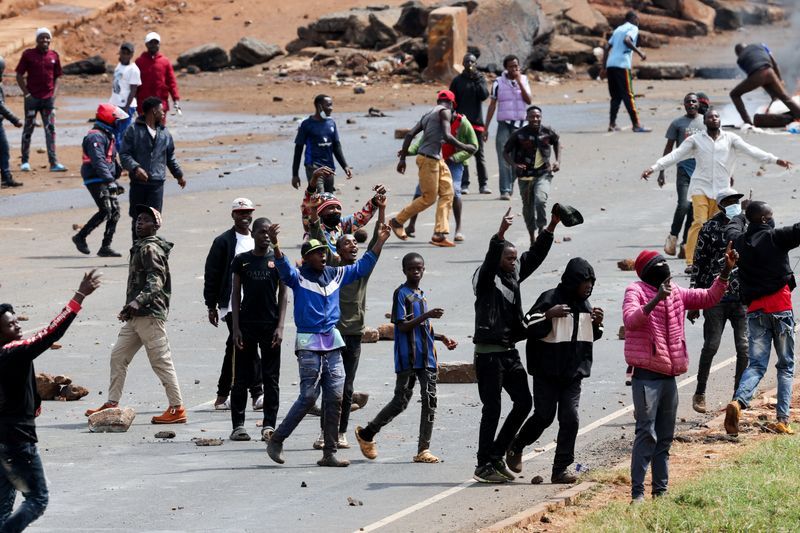
The recently held elections in Tanzania have ignited widespread protests, as demonstrators voice their disapproval of the government’s decision to bar prominent opposition leaders from vying for the presidency and subsequently charging them with treason— a crime carrying a potential death penalty. These protests, particularly felt in Dar es Salaam and other major Tanzanian cities, have escalated into violence. Scenes of rage where protesters are tearing down the posters of President Suluhu, lighting bonfires and targeting private properties, littered the social media.
In response to this unrest, the Tanzanian government shut down the internet and imposed a dusk to dawn curfew. Critics argue that these measures represent a blatant violation of democratic principles, including freedom of expression, access to information, and the right to vote. These events, unfolding under the watch of the international community, are further wounding the nation’s already struggling economy.
The government’s suppression of dissent through internet shutdowns and mistreatment of opposition leaders is perceived as deterrence to foreign investment and an incitement to violence among citizens. This, in turn, has led to the looting and destruction businesses and damage to infrastructure—all critical contributors to national economic growth. Other deliberate actions, such as media gagging and various unprecedented moves by the Tanzanian government, are seen as undermining socio-economic development, which relies on national integration fostered by unity and common values.
Like Tanzania, in 2024, Kenya experienced significant nationwide protests marred by abductions and extrajudicial killings, resulting in substantial negative economic impacts. Earlier this year, Uganda witnessed widespread protests and violations of fundamental rights following the abduction of an opposition leader, Kizza Besigye, in Nairobi and his subsequent arraignment in a military court in Uganda. Since then, a series of protests have erupted concerning taxation introduced on small businesses and the acquisition of business permits. These events led to the establishment of parliamentary committees to address public grievances. A section of international lawyers was permitted to observe the court-martial proceedings.
One thing is certain in all these regrettable circumstances. A threat to democratic rights is akin to striking at the heart of a nation. It invites instability, shaking the very foundations upon which a nation is built, most notably its economy. It is imperative that the East Africa Community intervenes to assist one of its own through dialogue and counsel on safeguarding democratic rights and fundamental freedoms. These elements are key players in national growth, socio-economic flourishing, and integration.
Tanzania’s Threat to Democracy Is a Threat to Economic Growth
Looming violence, internet shutdown, violent protests, extrajudicial killings and abductions a recipe to economical shutdown in Tanzania and East Africa community.
757
