Samsung Electronics has announced Samsung Hospitality TV compatibility with AirPlay, allowing hotel guests to connect their iOS and iPadOS devices to the TVs in their rooms easily and securely.
Guests will be able to enjoy the convenience of watching their favourite shows and movies from popular streaming services, listening to personal playlists on various music platforms, viewing photos, practising presentations, playing games and more on the TV in their room. By simply scanning a unique, on-screen QR code, guests can privately and securely connect their iPhone or iPad to the Samsung Hospitality TV.
Ensuring both convenience and robust security, no personal information is ever stored or saved and all information about paired devices is automatically erased upon guest checkout. This feature not only enhances the guest experience but also provides peace of mind regarding data privacy. Additionally, hotel managers and operators can easily update their management systems to enable AirPlay technology, simplifying the integration process.
The integration of Apple AirPlay is part of Samsung’s broader strategy to enhance the in-room experience for hotel guests while providing powerful management tools for hotel operators. Samsung’s latest hospitality TVs include LYNK Cloud and SmartThings Pro for enhanced connectivity, seamless management and improved guest experience.
“Samsung is committed to building a robust and connected ecosystem that enhances convenience, usability, and overall guest experience,” said Hoon Chung, Executive Vice President of Visual Display Business at Samsung Electronics. “AirPlay allows both iPhone and iPad users to easily share their favourite content on the big screen in their hotel room, making their temporary stay at a hotel feel more like home. LYNK Cloud and SmartThings Pro also give hotel management better business insights while making their operations more seamless and efficient.”
For hotel managers and operators, LYNK Cloud is a comprehensive cloud solution for Samsung Hospitality TVs that offers customizable content, remote device management and access to OTT entertainment. Equipped with an e-commerce platform, LYNK Cloud provides an in-room ordering system that offers guests interactive services such as booking hotel services, ordering room service, a digital concierge and more, all bundled in solution. With LYNK Cloud, hotel managers can also use insights to personalize content and experiences for hotel guests to create impactful promotional content across different rooms or properties worldwide.
SmartThings Pro brings enhanced connectivity to hotel managers, delivering more interoperability and security with IoT devices in their properties. Hotel IT managers can connect and control Samsung smart devices2 throughout the hotel, such as Hospitality TVs, Smart Signage, air conditioning systems and more IoT devices3 through one efficient dashboard. The SmartThings Pro Dashboard enhances multi-unit management, device performance monitoring — all designed with scalability and developer-friendly integration in mind. To meet the diverse set of hotel partners’ needs, SmartThings Pro also offers customizable Application Programming Interfaces (APIs) for seamless integration with existing systems, and a customizable dashboard.
Tech
Samsung Unboxes Latest TV Line-up, Bringing a New Era of Samsung AI TV to Kenya
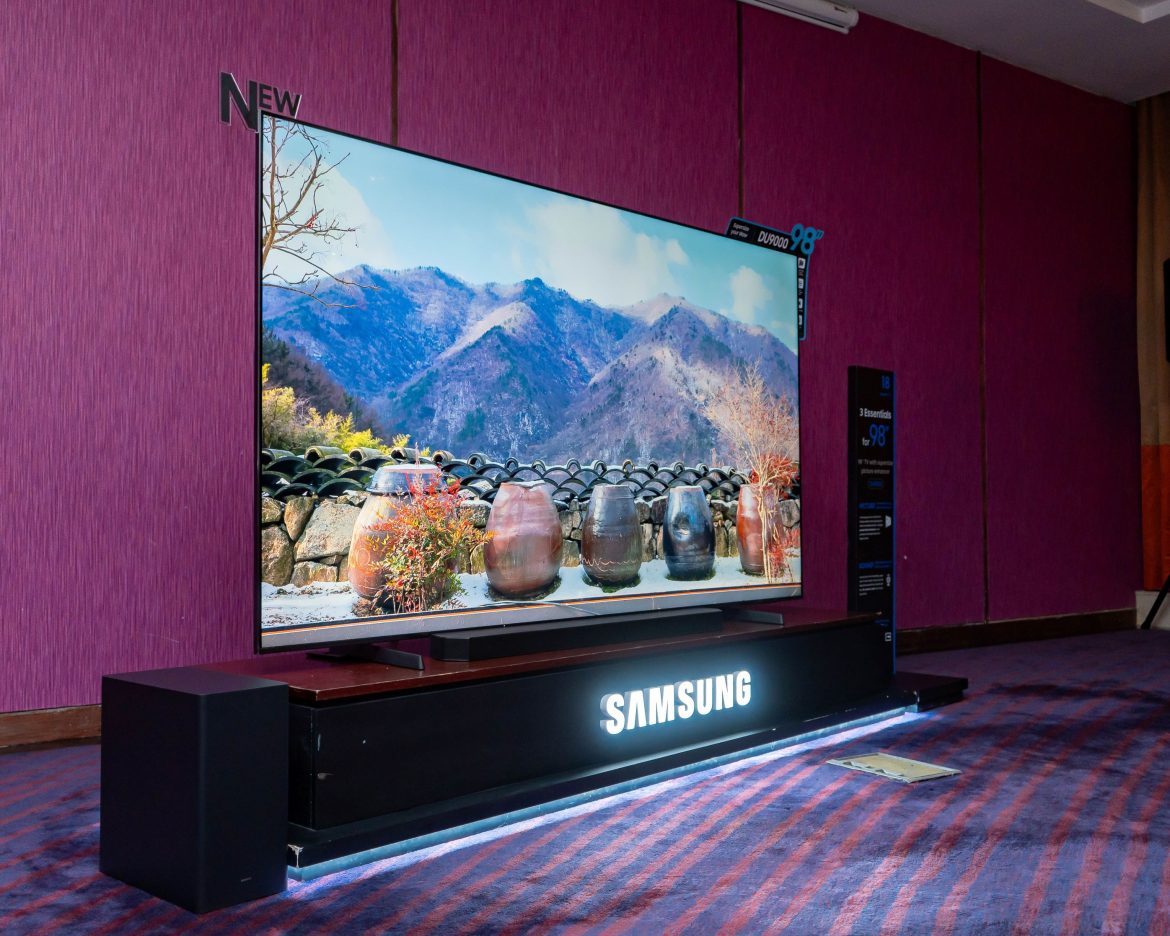
Samsung Electronics East Africa Ltd. unveiled the 2024 TV and sound device line-up at the local Unbox & Discover event at Capital Club in Nairobi. The event showcased the latest Neo QLED 8K and 4K, OLED TVs, and sound devices.
As the world’s leading TV manufacturer for 18 consecutive years, Samsung’s offerings this year elevate the home entertainment experience with a range of powerful, AI-driven solutions.
Rahul Kochhar, Business Head of the Consumer Electronics Division at Samsung Electronics East Africa, said, “We are pushing the boundaries of home entertainment by integrating AI to enhance traditional viewing experiences. This year’s TV lineup demonstrates our commitment to innovation, offering products that provide premium viewing quality while significantly enhancing our consumers’ lifestyles.”
Elevating Senses With Neo QLED 8K: Clarity, Sound and Smart Experiences
Neo QLED 8K is the flagship of Samsung’s latest TV line-up. It is equipped with the advanced NQ8 AI Gen2 processor, marking a significant leap in AI TV technology. This processor features a Neural Processing Unit (NPU) and an eightfold increase in neural networks from 64 to 256, ensuring an exceptional viewing experience with crisp details, regardless of the input source.
Every scene on the Neo QLED 8K is a feast for the eyes, thanks to its AI-driven picture technology. It brings out the finest details with outstanding clarity and naturalness, from facial expressions to subtle nuances. With 8K AI Upscaling Pro, users’ favourite shows and movies are transformed to match the 8K display closely, allowing them to enjoy the level of detail and picture clarity surpassing conventional 4K TVs. Additionally, AI Motion Enhancer Pro makes fast action smoother and clearer — a dream for sports fans — while Real Depth Enhancer Pro adds a lifelike depth to the picture and pulls viewers into the scene every time. All these features come together to redefine the big-screen experience.
The Neo QLED 8K also delivers audio powered by AI sound technology. This year’s Active Voice Amplifier Pro now excels at extracting dialogue from background noise, ensuring every word is heard clearly. Object Tracking Sound Pro also enriches the audio experience by syncing the sound with on-screen action, creating a more dynamic and engaging viewing experience. Adaptive Sound Pro refines the audio experience by intelligently adjusting the audio to the content and room acoustics for a genuinely rich and lifelike sound.
The Neo QLED 8K also boasts AI features that understand and adapt to user needs. The AI Auto Game Mode kicks in during gaming, optimising the visuals and audio for an even more immersive and engaging gaming experience. The AI Customization Mode adjusts the picture for each scene based on user preference, while the AI Energy Mode saves power without compromising picture quality. These features ensure that Neo QLED 8K is easy, personalised, and energy efficient for all entertainment needs.
Samsung’s latest TVs are designed with SmartThings AI capabilities to save energy. The new AI Energy Saving mode can reduce energy use by 23% compared to the standard mode. Thanks to SmartThings integration, various Samsung TVs can automatically adjust colour validation based on the viewing environment to enhance energy efficiency. Samsung has also unveiled an upgraded Frame TV with dynamic screen refresh rates and better colour validations for improved energy efficiency.
The Neo QLED 8K QN800D is available in sizes of 65, 75, and 85 inches. The Neo QLED 4K is available in one model, QN85 D, and in sizes of, 55, 65, 75, 85,. The Neo QLED 8K and 4K line-up promises an unparalleled viewing experience in the premium large-screen category.

Smart Features with Samsung Tizen OS for Enhanced Integration and Personalisation
In 2024, Samsung’s AI screens are set to redefine the user experience with advanced connectivity and a suite of smart features, apps and platforms. Leveraging the powerful Tizen OS, these innovations have created an ecosystem that is connected, personalised, and secure through Knox Security. This allows devices to integrate effortlessly into users’ digital worlds, transforming screens into a central hub for all their needs.
Samsung’s latest TVs are designed to connect with a smart ecosystem immediately upon setup. The moment users turn on their new Samsung TV, the TV recognises and connects to existing networks and devices, all orchestrated through a simple notification on users’ smartphones. This effortless setup extends to all Samsung devices at home, third-party appliances, and IoT devices, thanks to its compatibility with HCA and Matter. This eliminates the need for extra hubs, so everything from lighting to security sensors can be managed directly from the screen.
Samsung’s 2024 screen line-up also brings integration with users’ smartphones to new heights. Users can bring their smartphone near the TV to activate Smart Mobile Connect, which turns the device into a universal remote for the TV and connected home appliances. Additionally, in 2024, users can use their smartphones as game controllers with a customisable user interface (UI) and haptic feedback, offering convenient and enhanced gameplay at their fingertips.
Beyond connectivity, Samsung’s 2024 Smart TVs provide a highly personalised experience with its apps and platforms. With the latest addition of widgets, TV screens are now personalised dashboards that allow users to easily monitor home status, camera feeds, energy usage, weather updates and more.
Security is paramount, and with Samsung Knox, every feature, app, and platform benefits from robust protection, allowing connected experiences to remain private and secure.
Expansive Line-up for All Entertainment Needs: Neo QLED 4K, OLED and Sound Devices
Samsung is introducing an expanded and enhanced range of TVs and sound devices this year, designed to offer consumers a wider array of choices to suit diverse lifestyles and preferences. This comprehensive line-up underscores Samsung’s commitment to innovation and a customer-centric approach.
The 2024 Neo QLED 4K lineup brings cutting-edge innovations from the latest Neo QLED 8K flagship TVs, elevating the viewing experience with ground-breaking features powered by the NQ4 AI Gen2 Processor. This advanced chip breathes life into almost any content, rendering it in stunning 4K resolution. With the world’s first Pantone Validated display for colour accuracy and Dolby Atmos for an immersive audio experience, Neo QLED 4K sets the bar for the ultimate 4K UHD experience. Neo QLED 4K will be available in sizes ranging from 55 to 98 inches, catering to diverse viewing environments.
Samsung is also introducing the world’s first Glare-Free OLED, eliminating unnecessary reflection while preserving deep blacks and clear images under lighting conditions. Powered by the same formidable NQ4 AI Gen2 Processor as the Neo QLED 4K lineup, Samsung’s OLED TVs boast features like the Real Depth Enhancer and OLED HDR Pro, bringing picture quality to new heights.
Additionally, with features such as Motion Xcelerator 144Hz ensuring smooth motion and quick response rates, Samsung OLED is the ultimate choice for gaming. Complemented by sleek designs, these OLED TVs elevate the viewing space. Available in Kenya in two models —S90D — ranging from 55 to 83 inches, there’s a perfect fit for every home.
The 2024 line-up also includes the latest Q-Series Soundbar, Q800D, which boasts an 11.1.4-channel setup with Wireless Dolby Atmos. This model comes with a host of features that stand as a testament to Samsung’s continued leadership as
Tales of people who have been forced to close down their Facebook and Twitter accounts are commonplace. Many of the victims cite harassment, loss of money to strangers as well as trampling of the privacy of people they met online.
According to a recently released report, online criminals are on the prowl in Kenya notwithstanding arrests and convictions that have been reported in the media.
The report further adds that the crooks are becoming smarter and choosy, as online bullies only aim for high-profile victims.
In their 2023 Annual Cybersecurity Report, researchers from Trend Micro, a leading outfit in the field note that criminals are opting for quality over quantity, seeking higher returns from fewer, more valuable targets in Kenya.
“We blocked approximately 37 million email threats, over half a million malicious Uniform Resource Locators (URLs) in the country,” says Gareth Redelinghuys, Country Managing Director for the African Cluster at Trend Micro during a recent media interview.
During the same period, according to the report, more than one million malicious mobile apps directed at Kenyan businesses and consumers were also saved from falling victims. This shift indicates that cybercriminals are opting for quality over quantity, seeking higher returns from fewer, more valuable targets.
“Our latest data shows that threat actors are fine-tuning their operations, shifting away from large-scale attacks, and instead focusing on a smaller range of targets but with higher victim profiles for maximum gain with minimum effort,” noted Redelinghuys in a statement to the media last week.
Even as Trend Micro protected Kenyans from hundreds of ransomware attacks, the overall trend shows a decrease in the number of such attacks. The nature of these attacks has evolved, becoming more sophisticated and harder to detect.
To achieve their evil schemes, the cybercriminals use advanced techniques to avoid being detected, such as Living-Off-The-Land Binaries and Scripts, which use non-malicious files native to operating systems to camouflage their activities.
Global ransomware detections have seen a significant drop from 2021 to 2023, averaging less than half the detections recorded in 2020. However, this decline should not lead to complacency among security teams, as the reduction in volume does not equate to a reduction in threat severity.
The report also highlights an increase in Trojan FRS threats globally, suggesting that attackers are becoming more adept at bypassing initial detection measures. In 2023, several ransomware families exploited remote and intermittent encryption, as well as unmonitored virtual machines, to bypass Endpoint Detection and Response (EDR) systems. By using less content during encryption, these attacks minimize the chance of triggering detection mechanisms.
Prominent ransomware groups such as Clop and BlackCat were particularly active last year. Clop exploited major vulnerabilities, while BlackCat launched a new variant and leveraged regulatory requirements to pressure victims into quicker responses.
Email threats in Kenya have also seen a shift towards more sophisticated methods. Although email threat detections decreased from over 66 million in 2021 to 37 million in 2023, the rise in malware detection suggests a strategic shift by attackers. Rather than indiscriminately targeting large numbers of users, cybercriminals are now conducting more targeted operations, such as Business Email Compromise (BEC) schemes, which are designed to appear legitimate and evade scrutiny.
“IT leaders must refine their processes and protocols to combat these persistent and increasingly sophisticated attacks with efficiency,” urged Zaheer Ebrahim, Solutions Architect for the Middle East and Africa at Trend Micro.
“As attacks become more difficult to detect, the cost of successful breaches will rise,” added Zaheer.
Kenya has a law that protects its citizens from all kinds of online harassment. It is called the Computer Misuse and Cybercrimes Act 2018 and was in April, after revision, approved by The National Assembly as Computer Misuse and Cybercrime (Critical Information Infrastructure and Cybercrime Management) Regulations, 2024.
Trend Micro is a global cybersecurity leader dedicated to making the world safe for the exchange of digital information. With a robust platform that protects millions of individuals and thousands of organizations across various environments, Trend Micro leverages decades of security expertise, global threat research, and continuous innovation to deliver advanced threat defense techniques optimized for clouds, networks, devices, and endpoints.
By Henry Mangome I sciencejournalist2021@gmail.com
TECNO Partners with Local Leaders to Deliver Aid to Kenyan Flood Victims
Mobile phone leader TECNO has joined forces with local leaders in Kenya to deliver vital supplies to communities devastated by recent floods. The company’s relief efforts were spurred not only by its social responsibility ethos but also by the personal impact of the disaster on a TECNO employee in Syiokimau, who lost property and required Red Cross evacuation.
“The floods have caused immense hardship for countless Kenyans, including members of our own team,” said Wilfred Odera, IMC Manager for TECNO Mobile-Kenya. “This experience solidified our commitment to supporting both our colleagues and the wider community during this crisis.”

TECNO’s contribution included essential items such as food, bedding, and water storage containers. The company aimed to provide immediate relief and assist those struggling to rebuild their lives.
“TECNO’s assistance has been a true blessing,” said a grateful recipient. “Without their support, I wouldn’t have been able to provide for my family. This aid has given us hope for the future.”
The impact of the floods has been significant, displacing over 300,000 people according to the Kenya Red Cross. TECNO recognizes this widespread devastation and remains committed to ongoing support.

Beyond immediate relief, the company plans to launch additional CSR initiatives. In July, TECNO will begin stadium renovations to promote Kenyan football development, fostering local talent and encouraging youth participation in the sport.
This commitment to social impact builds upon TECNO’s past efforts. In February, the company partnered with footballer Dennis Oliech to organize a football training camp for under-15s in Nairobi, Mombasa, and Nyeri.

This initiative demonstrates TECNO’s long-term vision for positive societal change, nurturing future generations of Kenyan football talent.
“We believe in giving back and are dedicated to creating a lasting positive impact on the communities we serve,” said Mr. Odera. TECNO’s actions reflect this commitment, both in times of crisis and through ongoing development initiatives.
Showmax Completes Safaricom M-Pesa Integration For Kenyan Subscribers
African streaming service Showmax on Wednesday announced the completion of its M-Pesa integration, allowing customers in Kenya to pay for their subscriptions using the popular mobile payment method.
The move comes just days after the platform relaunched in Kenya with four new original titles.
The integration is a key part of Showmax’s strategy to provide a seamless and convenient streaming experience for its customers.
According to Joe Heshu, Showmax Chief Operating Officer, the goal is to become the number one streamer in Africa, and offering M-Pesa as a payment option is a crucial step in achieving that goal.
“We want our customers to have a great streaming experience, and that means delivering content, payment methods, and features that enable this,” said Heshu. ”
We’ve worked with our long-time partners at Safaricom to ensure that the process of bringing M-Pesa onto the platform was managed, tested, and rolled out to customers as quickly as possible.”
The integration is expected to make it easier for customers to access Showmax’s content, including its new original titles such as “Big Girl Small World”, “Untying Kantai”, Season 2 of “The Real Housewives of Nairobi”, and “Nilichoma”, which is set to launch on May 28.
“By integrating M-Pesa to Showmax, we are empowering our customers to enjoy their favorite shows with ease and convenience,” said Peter Ndegwa, CEO of Safaricom PLC.
Showmax East Africa GM, Emma Gichonge, said that the company is focused on its upcoming content slate and is committed to providing customers with a range of payment options.
“I’m delighted that customers can now use M-Pesa on the platform to pay for Showmax. M-Pesa was a world-first, innovated in Kenya, and it’s fitting to have it available and in action as our new Kenyan titles launch,” she said.
The M-Pesa integration is currently available in Kenya only, but Showmax plans to expand the service to other countries in the future. Customers can pay for their subscriptions using M-Pesa by following a few simple steps, which are outlined on the Showmax website.
Pricing and Plans
Showmax offers a range of plans, including:
- Showmax Entertainment: KES 650 per month (includes access to Showmax Originals, hit international and local series, movies, and kids’ shows on TV and mobile devices)
- Showmax Entertainment Mobile: KES 300 per month (includes access to Showmax Originals, hit international and local series, movies, and kids’ shows on one mobile device only)
- Showmax Premier League: KES 500 per month (includes access to Premier League live from SuperSport, plus all-access content on mobile devices)
- Bundled plans: Showmax Entertainment + Premier League (KES 1,000 per month) and Showmax Entertainment Mobile + Premier League (KES 700 per month)
Three-, six-, and 12-month plans are also available through the Showmax website.
African ICT Leaders Advocate Policy Reforms for Digital Growth
African ICT Ministers, policymakers, and stakeholders have been urged to implement policy reforms within Africa’s ICT sector to harmonize better ICT policies for the continent’s digital economy.
Kenya’s Cabinet Secretary for Information, Communication, and Digital Economy, Eliud Owalo, highlighted that outdated policies are hindering investment in the continent’s ICT sector. He specifically pointed out the 30% local shareholding rule for foreign companies looking to invest in Kenya’s ICT sector as a barrier to foreign direct investment.
“In Kenya, we have successfully removed the 30% local content requirements for ICT companies. Why have laws that hinder foreign direct capital investment? Africa needs to attract foreign investment while safeguarding our local interests,” stated the CS.
Eng. John Tanui, Kenya’s Principal Secretary, State Department of ICT and Digital Economy, emphasized the importance of encouraging the development of digital platforms within Kenya and Africa. These platforms, he explained, should be local and indigenous to contribute to the economy.
The ICT Authority of Kenya noted that African innovators face challenges in scaling their products and securing capital for growth, often leading them to sell their innovations to foreign investors. To address this issue, policies supporting and protecting local innovators are crucial.
Africa’s digital marketplace requires robust policies, laws, and regulations aligned with the AU’s Agenda 2063 to attract foreign investment and empower innovators. Kenya will host the Connecter Africa Summit from April 21st to 24th to facilitate the harmonization of these policies.
CS Owalo emphasized the importance of aligning African efforts with the AU’s Agenda 2063 to transform the continent into a digital marketplace. The agenda focuses on developing transformative e-applications and services, particularly in intra-African broadband terrestrial infrastructure.
PS Tanui highlighted the significance of digital platforms in the global economy and the need for young Africans to engage with this space to become active participants.
The Connected Africa Summit 2024, scheduled for April 21st to 25th in Nairobi, will bring together African leaders, including Africa Union Chairperson (AUC) Moussa Faki Mahamat, World Bank President Ajay Banga, and Africa Development Bank President Dr. Akinwumi A. Adesina, to discuss the African tech agenda and their role in green technology and governance of generative AI for African realities in preparation for the UN Summit of the Future in September 2024.
Securing Against Evolving Cyber Threats: Harnessing AI and Zero-Trust Principles
Trend Micro Incorporated (TYO: 4704; TSE: 4704) has recently highlighted a concerning trend in cybersecurity: the increasing utilization of generative AI by cyber criminals. This development underscores the urgent need for enhanced security measures and tools. In a notable revelation, Trend Micro reported detecting over 1.8 million instances of malware targeting both businesses and consumers in Kenya last year alone.
Zaheer Ebrahim, Solutions Architect for the Middle East and Africa at Trend Micro, emphasized the growing threat posed by AI-driven cybercrime. He remarked, “The speed and scalability of AI are elevating the sophistication of social engineering tactics, facilitating rapid data mining for exploitation by cybercriminals. To effectively counter these threats, defenders must comprehensively grasp the evolving nature of cyber threats and adapt their security strategies accordingly.”
Before the emergence of generative AI, cybercriminals predominantly relied on two phishing strategies: mass-targeted attacks and meticulously crafted, manually targeted campaigns, often referred to as ‘harpoon phishing’ or ‘whale phishing’. Generative AI is now blurring the lines between these approaches, enabling cyber attackers to deploy highly targeted, linguistically convincing messages on a large scale and across multiple languages. This evolution extends beyond traditional mediums like emails and texts, encompassing persuasive audio and video ‘deep fakes’, posing an even more formidable challenge to businesses.
Consider a scenario where a company mandates live voice authorization for high-value transactions. An attacker could exploit this requirement by sending a seemingly legitimate email with a manipulated phone number and using a deepfake voice to confirm the transaction over the phone. The proliferation of user-friendly tools like HeyGen has significantly lowered the technical barriers, allowing cybercriminals with limited coding skills to create sophisticated, undetectable outputs.

Looking ahead to 2024, experts at Trend Micro anticipate continued advancements in large language model (LLM) development for malicious purposes, alongside the emergence of new tools facilitating malware authorship and reconnaissance activities. The rise of ‘reconnaissance as a service’ (ReconaaS) is foreseen as cybercriminals seek to monetize stolen personal data by enabling ultra-targeted attacks.
In response to these evolving threats, organizations must adopt a proactive defense approach, combining zero-trust principles with AI-driven security measures. Zero-trust mandates meticulous verification of identities and restricts access to sensitive information or processes to authorized entities only, thereby minimizing the attack surface and impeding cyber intrusions.
For instance, in the case of a fraudulent purchase order email with deepfake voice confirmation, zero-trust protocols would prohibit users from contacting the provided number. Instead, a predefined list of trusted contacts or multi-stakeholder approvals would be required for transaction verification, potentially supplemented by coded language for enhanced authentication.
While phishing attacks have become increasingly sophisticated, cybersecurity awareness training remains indispensable, complemented by robust defensive technologies. AI and machine learning can play a pivotal role in detecting fraudulent attempts by analyzing message sentiments or evaluating web content.
In conclusion, as cybercriminals leverage AI in increasingly sophisticated ways, organizations must harness technological advancements to fortify their defenses. By integrating AI capabilities with zero-trust security frameworks and fostering a culture of security awareness, businesses can effectively combat evolving cyber threats and safeguard their digital assets.
TikTok Partners With African Union for Safer Online Spaces in Africa
TikTok has announced a partnership with the African Union Commission’s Women, Gender, and Youth Directorate (WGYD), dedicated to enhancing awareness of online safety among the youth, parents, educators, and guardians across Africa.
The collaboration comes at a critical time, responding to the pressing need for digital safety in light of the unique challenges confronting the continent.
Africa finds itself at a crucial digital juncture, witnessing the rapid expansion of social media platforms alongside mounting concerns for the protection of its younger populace. Recent regulatory scrutiny and the looming specter of potential bans underscore the imperative for proactive measures to ensure a secure online environment.
In light of these circumstances, TikTok and the African Union Commission (AUC) have joined forces to introduce the continent-wide #SaferTogether Campaign, designed to educate and engage young individuals, parents, educators, and community leaders on digital safety through in-app and on-ground initiatives.
This flagship, multi-year endeavor, inaugurated at the TikTok Safer Internet Summit in Accra, Ghana, and graced by distinguished government officials and regulators from across the continent, underscores the unwavering dedication of both TikTok and the AUC to digital literacy and safety.
TikTok places paramount importance on fostering a secure atmosphere, bolstering security measures, and collaborating with the AUC to champion the safety and empowerment of children in the digital sphere, thereby advancing the digitalization of Africa for the welfare of its youth. By uniting for discussions on a safer internet, TikTok and the AUC are steadfast in delivering valuable educational resources and guidelines to cultivate a positive and secure online experience for all stakeholders.
This initiative, which integrates in-app and on-ground endeavors, seeks to educate and empower communities on digital safety, aligning closely with the AUC’s focus on children’s safety in the digital realm and the Digital Transformation Strategy for Africa. It encompasses a comprehensive in-app campaign featuring educational videos on internet safety, complemented by hashtag challenges and endorsements from content creators on safety practices.
Furthermore, TikTok and the AUC will disseminate “Digital Safety Toolkits” to assist educators and guardians in addressing critical digital safety concerns. These resources will be easily accessible on TikTok through a dedicated microsite, serving as an interactive guide to promote safer online behaviors.
Fortune Mgwili-Sibanda, Government Relations & Public Policy Director at TikTok, Sub-Saharan Africa, underscored the strategic significance of this collaboration: “Our #SaferTogether partnership with the African Union Commission’s Women, Gender, and Youth Directorate underscores TikTok’s profound commitment to the diverse markets across Africa. Through initiatives such as our educational workshops and the development of comprehensive safety toolkits, we are dedicated to nurturing a digitally secure environment for all.”
In alignment with this sentiment, Ms. Prudence Nonkululeko Ngwenya, Director of the Women, Gender, and Youth Directorate at the African Union, commended the partnership as a pivotal stride towards empowering Africa’s youth and safeguarding their digital futures.
“The launch of the #SaferTogether campaign with TikTok aligns with the African Union’s ongoing endeavors to advocate for safe online experiences for young people in Africa, as well as their mental well-being through the 1 Million Next Level Initiative. While internet access can facilitate connectivity, enhance digital literacy, and broaden livelihood opportunities for children and young individuals, it is imperative that they are provided with a secure environment to reap the benefits of digital platforms.”
Through overarching frameworks and initiatives such as the Digital Transformation Strategy for Africa and the 1 Million Next Level Initiative, the AUC aims not only to champion increased access to digital platforms for young individuals but also to promote their safe usage to address concerns related to unsafe internet practices. TikTok remains resolute in implementing effective security measures and empowering users with control over their accounts and content.
This commitment is mirrored in its comprehensive Community Guidelines and robust moderation policies, which advocate for a community-driven approach to safety by encouraging active user involvement in upholding community well-being. Users are urged to report any content that contravenes guidelines and engage with others in a respectful manner.
As TikTok and the African Union Commission embark on this collective journey, they reaffirm their joint pledge to cultivate a more inclusive, secure online community for the youth of Africa.
Through the fusion of technology and education, this partnership will equip young individuals with the tools and confidence necessary to navigate the intricacies of the digital realm with prudence and safety.
Advancements in Tanzanian ICT and Cybersecurity: A Strategic Endeavor
Tanzania, as an esteemed member of the International Telecommunication Union (ITU) General Assembly, has garnered recognition for its commendable endeavors in revitalizing its Information and Communication Technology (ICT) achievements, along with the formulation of strategic plans aimed at enhancing cybersecurity measures. According to data sourced from the ITU, Tanzania ranks as the second safest country in Africa for cybersecurity.
Being an active participant in the ITU General Assembly, Tanzania has demonstrated a concerted focus on providing high-speed internet services to households and establishments. This initiative is substantiated by readiness assessments conducted by esteemed institutions such as the Portulans Institute and the Said Business School at the University of Oxford, United Kingdom. Tanzania’s emphasis on empowering its technologically adept youth is evident in its ambition to establish centers dedicated to nurturing talents in Artificial Intelligence and technological innovations.
The Director-General of the Information and Communication Technology Commission (ICTC), Dr. Nkundwe Mwasaga, attributes this notable ranking to the relentless efforts of the ICTC in spearheading innovative technology programs and initiatives. Dr. Mwasaga highlights the transformative impact of enabling young individuals, underscoring the resultant proliferation of diverse ICT programs. This advancement not only augments the technological landscape but also positions Tanzania as a trailblazer in technological advancements.
The Tanzanian government underscores the imperative of further investment in this domain, recognizing the youth’s dynamism, agility, and innovativeness. This commitment is exemplified by the forthcoming establishment of eight additional ICT centers across the nation, dedicated to nurturing ICT talent and expanding opportunities for youth innovation. Strategically located in areas such as school vicinities, these centers are poised to accommodate up to 200 individuals simultaneously. They will be situated in Arusha, Dar es Salaam, Dodoma, Lindi, Tanga, Mwanza, Mbeya, and Zanzibar.
Dr. Mwasaga underscores the significance of Artificial Intelligence (AI) not only in enhancing efficiency but also in offering extensive opportunities for skill development. Consequently, these initiatives aim to cultivate a cohort of up to 500 young ICT professionals proficient in AI and related skills. Moreover, the ICTC envisages collaborating with the ITU to establish a technology innovation center for the East African region, along with initiatives such as a Metaverse studio, enhancement of internet content, district-level ICT development research, and the establishment of a Resilience Academy within the country.
African Businesses Can Now Harness Google AI to Simplify Search Advertising
Following its initial announcement in January, businesses across Africa can now use Google’s Gemini AI-powered chat-like tool for Search Ads.
This intuitive tool is now fully operational and designed to help businesses in Africa and across the world boost their online visibility.
In regions like Sub-Saharan Africa, where internet penetration is rapidly increasing, the ability to effectively reach customers through online advertising is becoming increasingly crucial for business growth. Google’s conversational experience takes the complexity out of ad creation, empowering businesses of any size to easily craft campaigns that resonate with local audiences.
“Creating effective ads can be time-consuming, especially for small businesses,” explains Shashi Thakur, VP & GM of Search Ads & Ads on Google Experiences. “Our new conversational experience helps businesses of all sizes tap into the power of Google AI to create successful Search campaigns with remarkable ease.”
Here’s how the conversational experience works:
- Easy to Get Started: Simply provide a website address, and Google AI will automatically analyse the content.
- Tailored Suggestions: The AI generates relevant keywords, ad headlines, and descriptions, inspired by a business and its target region.
- Visual Inspiration: Need ad images? Google AI pulls visuals from a website or creates new ones.
- You’re Still in Control: Advertisers review and approve all AI-generated elements, ensuring ads reflect their brand.
The introduction of this conversational experience has led to tangible benefits for businesses utilising the platform, with businesses using the conversational experience in Google Ads are 42% more likely to publish Search campaigns with ‘Good’ or ‘Excellent’ Ad Strength. This strong ad quality has been shown to directly increase conversions.
This development is part of Google’s broader initiative to empower small businesses in Africa and globally, by facilitating the creation of impactful Search ads. By automatically generating headlines and descriptions based on existing website content, Google’s AI enables ads to dynamically respond to relevant searches. This adaptive approach ensures that small businesses can effectively capture the attention of potential customers, enhancing their visibility in search results.
The conversational AI experience for Google Search Ads is now available globally for English-speaking advertisers, with plans to extend support to additional languages in the near future.