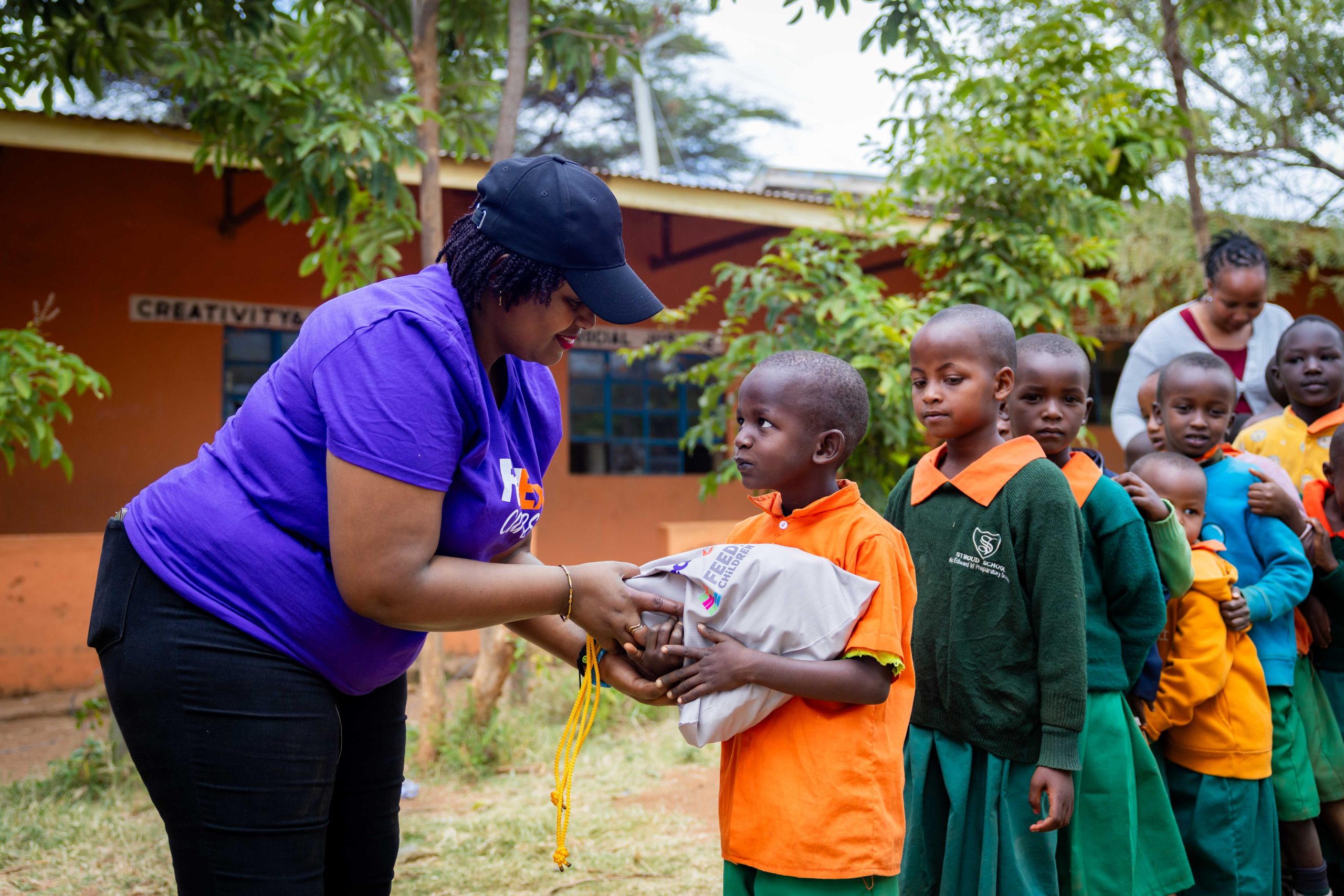
Thousands of children in Bisil, Kajiado County now have better access to hygiene essentials after Federal Express Corporation and Feed the Children launched the Clean Futures Alliance, a joint initiative supporting Water, Sanitation and Hygiene (WASH) outcomes across the region.
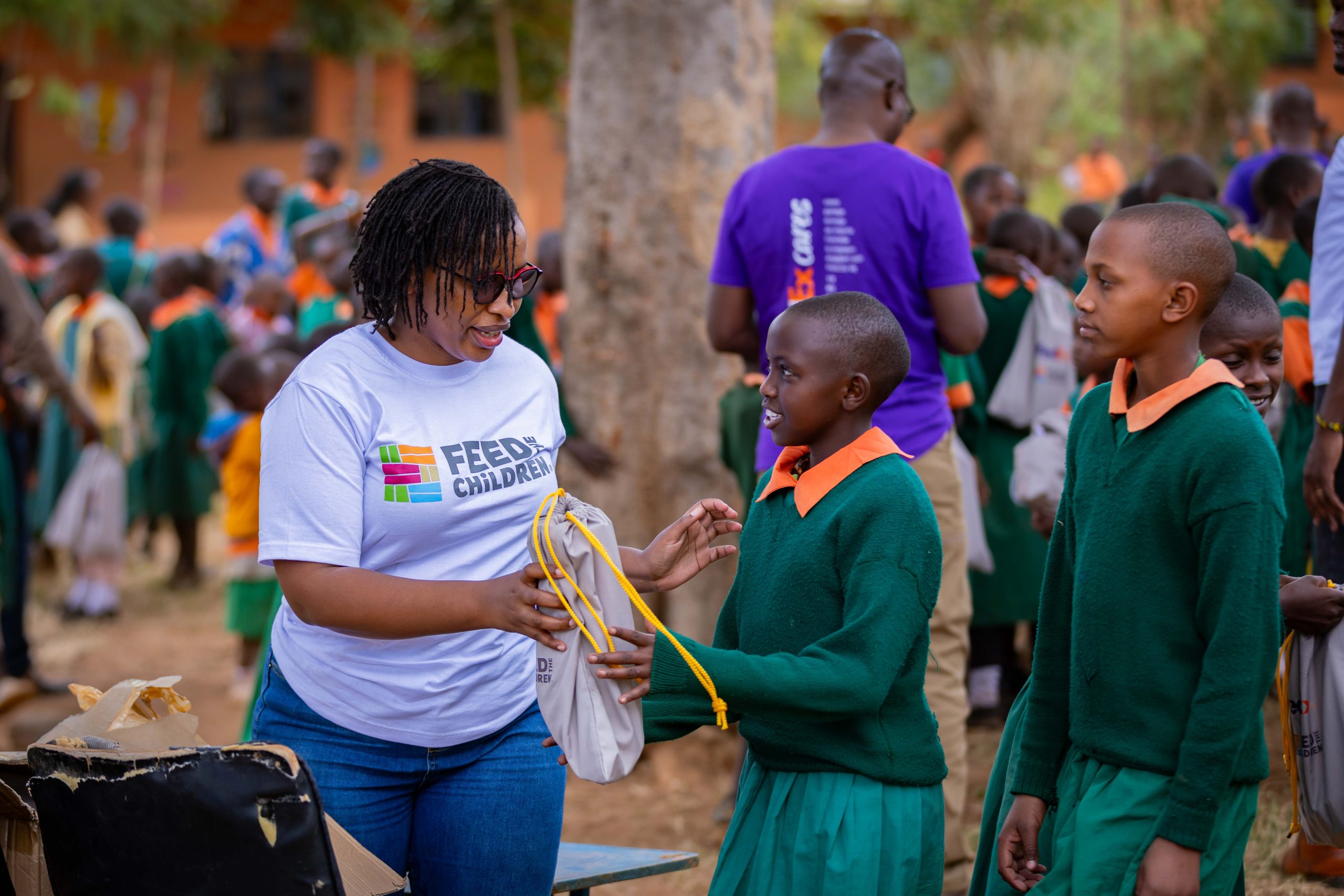
A pupil receives a hygiene kit from a Feed the Children volunteer as fellow students look on at a beneficiary school in Bisil.
Under the FedEx Cares program, FedEx team members joined community partners on the ground to distribute personal hygiene kits and lead hygiene education sessions for 2,400 school-aged children and adolescents, with the goal of building healthier daily habits that extend beyond the classroom.
“At FedEx, our purpose goes beyond moving packages it is about connecting people and communities to the resources they need to thrive,” said Nelson Teixeira, managing director, Operations, Sub-Saharan Africa at FedEx. “Through the Clean Futures Alliance, our team members are bringing that commitment to life by supporting children and families in Kenya and creating meaningful impact where we live and work.”
The rollout included WASH education sessions at Inkati and Noontoto primary schools, where students learned practical hygiene habits alongside receiving their kits, hand-packed and distributed by FedEx volunteers as part of the company’s broader community engagement efforts.
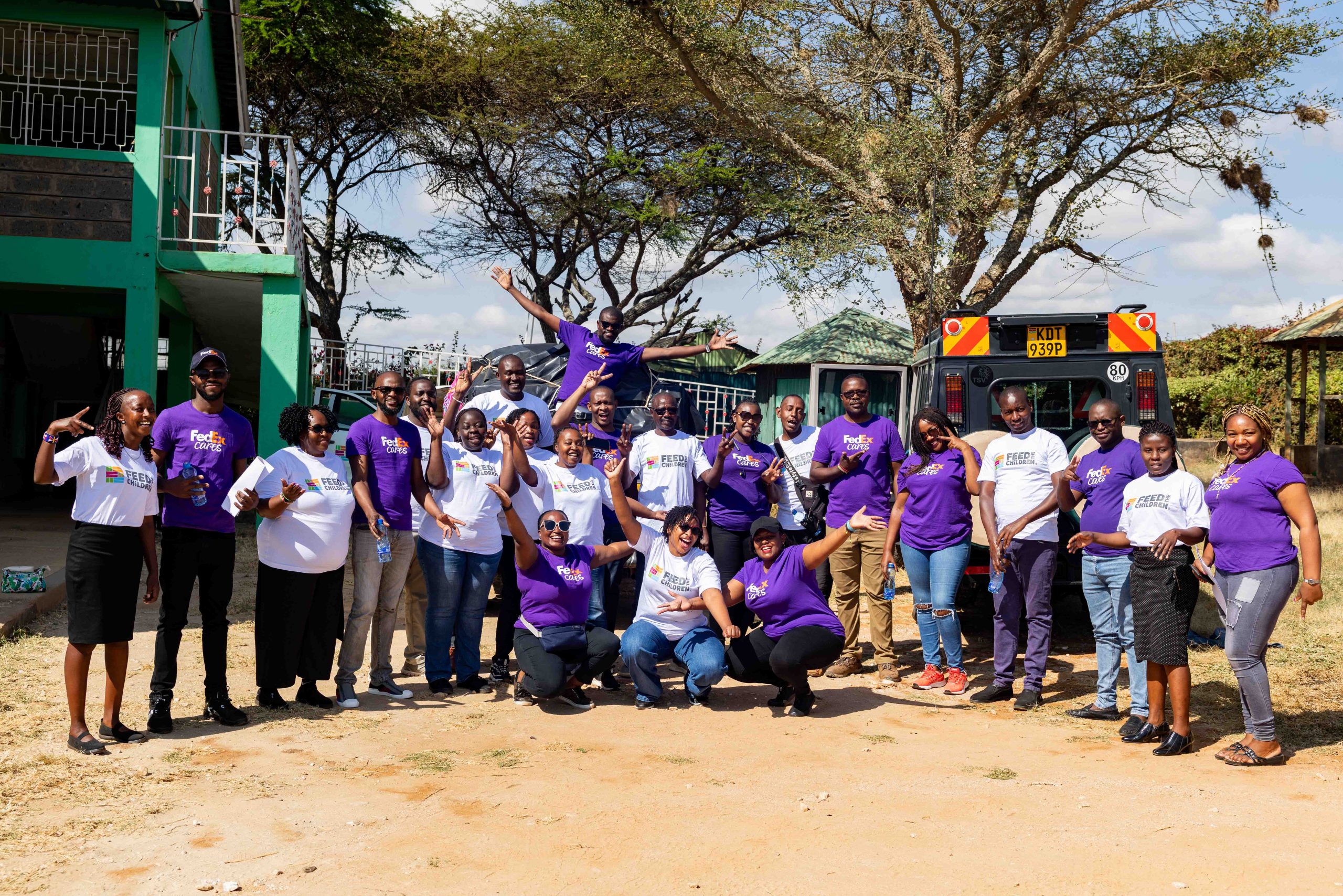
FedEx and Feed the Children volunteers pose together after a day of hygiene kit distribution and WASH education in Kajiado County.
Emily Callahan, president and CEO of Feed the Children, said the collaboration is about more than supplies. “Access to hygiene supports children’s health, confidence and ability to stay engaged in school,” she said. “Our continued collaboration with FedEx is helping expand community-driven solutions that enable children and families to build healthier futures.”
The Clean Futures Alliance is the latest chapter in a longstanding partnership between the two organizations, both committed to expanding access to essential resources in the communities where they operate.
