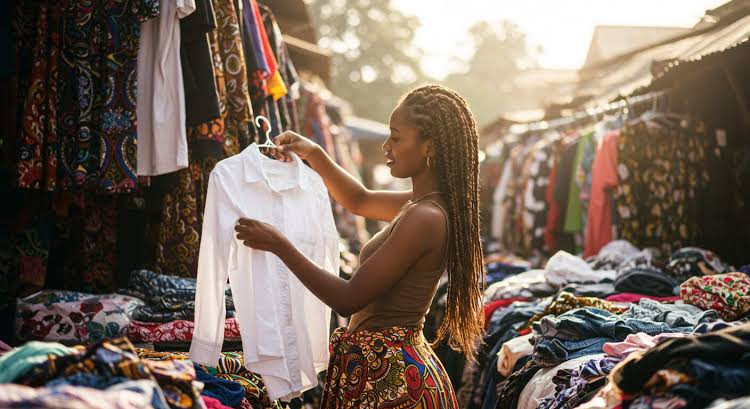
With proposed international waste shipment regulations threatening to reshape the second-hand clothing trade, questions are emerging over the economic consequences for Kenya, where mitumba supports millions of livelihoods, generates billions in tax revenue and provides affordable clothing to households.
Teresiah Wairimu Njenga of the Mitumba Consortium Association Kenya and Mathias Gustavsson of IVL Swedish Environmental Institute discuss the implications of the proposed Basel Convention rules, the distinction between reusable clothing and textile waste, and why Kenya must make its case ahead of the December 2026 deadline.
Kenya’s second-hand clothing trade has grown into one of the country’s most significant commercial ecosystems, supporting an extensive network of importers, wholesalers, market vendors, transporters and small-scale retailers.
Beyond the busy trading stalls of Gikomba, Toi and other markets across the country, the sector sustains millions of livelihoods, provides affordable clothing to households and contributes substantially to government revenue. Its economic significance is reflected in the value of imports, which reached approximately USD 230 million in 2024, exceeding the roughly USD 160 million spent on new ready-made clothing imports during the same period.
Yet this established trade is approaching a critical policy moment as countries consider how second-hand textiles should be treated under the Basel Convention, the international framework governing the movement and disposal of hazardous and other wastes.
Proposed changes could bring certain used textile shipments under Prior Informed Consent (PIC) procedures, potentially introducing additional documentation, regulatory approvals and longer shipping timelines.
For an industry that depends on predictable supply chains, advance payments and relatively quick stock turnover, the implications could extend well beyond importers to traders, consumers and businesses throughout the value chain.
At the heart of the debate is a fundamental question: should clothing that has been sorted, inspected, purchased and imported specifically for reuse be treated as a product or classified as waste? Kenya already has standards governing used textiles, including KS EAS 356:2019, which requires shipments to meet specified quality requirements and undergo pre-export inspection.
However, stakeholders argue that international regulations must distinguish between reusable garments with an established commercial market and worn-out textiles destined for recycling or disposal.
The economic stakes are considerable. A recent study estimates that up to two million people are directly or indirectly involved in the mitumba trade, with women and young people particularly dependent on the sector.
Beyond employment, the trade generated approximately KSh 12 billion in tax revenue in 2022 and KSh 16 billion in 2023. It also supports transport, warehousing, logistics and an expanding network of businesses involved in recycling and upcycling.
For small-scale traders, the implications are particularly significant. Mitumba offers relatively accessible entry into business, allowing individuals to start with limited capital and gradually build their enterprises.
A disruption in the supply of bales could affect the entire chain, from importers and wholesalers to market vendors whose daily earnings depend on the availability of affordable stock.
The debate also intersects with Kenya’s industrialisation ambitions. As the government pursues the revival of domestic textile and apparel manufacturing, questions have emerged over whether restrictions on second-hand clothing imports would create greater opportunities for locally manufactured garments.
However, stakeholders argue that the two segments serve different market needs and that restricting mitumba would not necessarily translate into increased demand for Kenyan-made clothing. Instead, they advocate policies that allow both sectors to develop while strengthening domestic production, quality standards and circular textile systems.
With countries expected to submit comments on the proposed options by 30 November 2026 ahead of the Basel Convention’s COP-18 meeting in April 2027, Kenya has an opportunity to present evidence from its established second-hand clothing market and influence the direction of the discussions. The challenge is to protect legitimate trade in reusable clothing while strengthening environmental safeguards, waste management and traceability.
In this interview with The East African Business Times, Teresiah Wairimu Njenga of the Mitumba Consortium Association Kenya (MCAK) and Mathias Gustavsson of IVL Swedish Environmental Institute examine the economic importance of the sector, the potential consequences of the proposed regulations and the case for recognising reusable second-hand clothing as a product rather than waste. They also discuss the implications for consumers, businesses, government revenue and local manufacturing, and outline the policy changes they believe Kenya and other African countries should pursue.
How significant is the mitumba trade to Kenya’s economy and employment?
Teresiah Wairimu Njenga, Mitumba Consortium Association Kenya:
Mitumba is one of the largest parts of Kenya’s clothing economy and one of its biggest sources of jobs. Kenya imported about USD 230 million of second-hand clothing in 2024, more than the roughly USD 160 million it spent on new ready-made clothing. Net imports have almost tripled since 2010, from roughly 80,000 tonnes to roughly 230,000 tonnes in 2024.
Up to two million people are directly or indirectly involved in the trade, many of them women and young people. Many of today’s importers started as small-scale traders. The trade also supports jobs in transport, logistics and small-scale retail, and it pays tax and import duty to the government.
The recent study estimates that up to two million people are directly or indirectly involved in the sector. What does this mean for traders, transporters, market vendors, and other people who depend on the trade for their livelihoods?
Teresiah Wairimu Njenga: For people working in this sector, mitumba is an important source of household income. The trade supports importers, bale traders, market vendors, drivers, accountants and warehouse operators, and it sustains the small-scale retail and logistics around them. Women and young people are especially dependent on it.
Entry costs are low, meaning the trade is a way to build a business and support your family. Traders and everyone involved in the trade rely on the same flow of bales, so any disruption would reach them all at once, risking jobs and earnings for hundreds of thousands.
Why does the study argue that reusable second-hand clothing should not be classified as waste? What criteria should distinguish clothing intended for reuse from worn-out textiles destined for recycling or disposal?
Mathias Gustavsson, IVL Swedish Environmental Institute: Sorted second-hand clothing arriving in Kenya is a product that buyers choose, order and pay for, labelled by garment type, quality grade and quantity. Shipments must meet the Kenyan standard for used textiles (KS EAS 356:2019) and pass pre-export inspection at the sorting centre. Mixed bales and textile waste are barred.
In the report, we propose defining “fit for reuse” criteria together with the people who run these markets. Textiles would have to meet the criteria and be documented as doing so.
The criteria should build on existing standards, namely the Kenyan standard and business-to-business sorting standards, and the EU is developing end-of-waste criteria for the same purpose.
Textiles verified as fit for reuse would then be treated as second-life products, not waste. Basel controls would focus on textiles for recycling and final disposal, where demand is weaker and the risk of dumping is higher.
The report suggests that the Prior Informed Consent process could extend shipment timelines from 30–40 days to between one and six months. How would such delays affect cash flow, operating costs, stock availability, and business survival?
Mathias Gustavsson: The effects would compound, because the trade runs on speed and advance payment: today an order takes around 30–40 days, with a deposit of 30% to 100% of the value paid upfront. Based on the plastic waste experience under Basel, Prior Informed Consent (PIC) could stretch that to one to six months, in our estimate.
If that were to happen, we would see interruptions to cash flow, rising operating costs, reduced stock for markets like Gikomba and Toi, and ultimately a risk of collapse for the trade as a whole.
Keeping verified reusable textiles outside of PIC avoids these prolonged delays. The report expects some extra administration on that route, but judges the risk of significant delays to be low.
How could the proposed regulations affect the cost and availability of affordable clothing in Kenya?
Teresiah Wairimu Njenga: Proposed regulations would mean that less clothing could be available and prices could rise to cover the extra expenses, reducing access to affordable clothing for the poorest Kenyans.
This is a price-sensitive market: in the 2015/16 household budget survey, 51% of Kenyan households had bought used clothing in the previous three months, and 91.5% of them spent under KSh 1,000.
For many households, mitumba provides basic clothing where the alternative is often to have nothing, and even low-cost new garments may be unaffordable. Restricting the trade could also bring with it job losses and smuggling, driving a legitimate trade underground.
The report estimates that Kenya imported approximately USD 230 million worth of second-hand clothing in 2024. What contribution does this trade make to government revenue, foreign trade, and local economic activity, and what would Kenya stand to lose if imports declined significantly?
Mathias Gustavsson: The trade pays its way. The tax revenue from mitumba brought KSh 12 billion in 2022 and KSh 16 billion in 2023 to the government. In trade terms, USD 230 million of second-hand clothing imports in 2024 was larger than the roughly USD 160 million of new ready-made clothing imports.
The 177,664 tonnes imported in 2022 kept transporters, warehouses, market traders and small retailers busy, and the trade also feeds Kenya’s recycling and upcycling sectors.
In the report, our analysis showed that heavy restrictions could shrink both mitumba and manufacturing, while poorly designed policy would push the trade into imports of low-cost fast- and super-fast fashion products rather than building a stronger circular economy of textiles.
The study suggests that the proposed restrictions could deliver limited environmental benefits, noting that research in East Africa and Ghana found that only 1–2 per cent of a bale typically becomes waste. How reliable are these findings, and what measures could Kenya adopt to manage the residual waste without disrupting the trade in reusable clothing?
Mathias Gustavsson: The 1–2% finding rests on five studies from Uganda, Tanzania, Kenya and Ghana, not one. Three come from, or were funded by, the SMEP programme of UK International Development, including a WasteAid study of Owino Market in Kampala.
Two were commissioned by trade associations, MCAK in Kenya and the Ghana Used Clothing Dealers Association. All of the studies agree on the range, while our own fieldwork with interviews with stakeholders in Nairobi and Europe also confirmed this range. IVL carried out that work independently, and the report went through our audit and approval system.
The figures also make commercial sense. Importers choose what they buy, pay a deposit when ordering and pay import duty, so buying unsellable textiles would simply lose them money. Fagia, the unsold items at the end of a selling cycle, is resold at low prices in secondary markets, so it is not waste.
How would restrictions on imported second-hand clothing affect Kenya’s textile manufacturing ambitions?
Teresiah Wairimu Njenga: They would not help them. Mitumba and local manufacturing serve different market needs, and our earlier study with the Institute of Economic Affairs Kenya found that mitumba complements local production rather than competing with it.
Kenya’s textile industry is largely oriented towards export rather than the domestic market, built around export processing zones. It also depends on imported raw materials, with synthetic fibres making up 64% of textile raw-material imports by value in 2024, so domestic value addition remains limited.
Revitalising domestic cotton production, which the government supports, can go hand in hand with the second-hand trade.
Restricting mitumba would not fill the gap with Kenyan-made clothing. Instead, the most likely alternative would be low-cost imported textiles.
What specific changes should Kenya and other African countries advocate for to ensure that reusable garments are not subjected to waste shipment controls?
Mathias Gustavsson: The first priority is to distinguish waste from product before any controls apply. In the report, we recommend five changes that Parties can press for ahead of the 30 November 2026 comment deadline:
1. Classify textiles verified as fit for reuse as second-life products, handled like new textiles and outside Prior Informed Consent.
2. Revise and harmonise the HS and Basel codes (HS6309, HS6310, B3030) so reuse, recycling and disposal flows are clearly separated.
3. Develop “fit for reuse” criteria with existing market actors, building on standards such as the Kenyan standard and business-to-business sorting standards.
4. Focus Basel controls on textiles for recycling and final disposal, where the risk of dumping is higher.
5. Design traceability and chain-of-custody systems as market-enabling tools, not only enforcement tools.
With countries expected to comment on the proposed options by 30 November 2026 ahead of the Basel Convention’s COP-18 meeting in April 2027, what action should the Kenyan government take?
Teresiah Wairimu Njenga: Kenya should put its evidence in writing before 30 November 2026 and keep making the case through to COP-18 in April 2027. This is the moment for evidence from importing countries to shape the outcome. These are the actions we call for:
1. Submit comments that show how the trade already works. These should cover the Kenyan standard for used textiles, pre-export inspection, the ban on textile waste imports, deposits paid on order and the 1–2% waste finding.
2. Build on its position at Basel’s next open-ended working group meeting. African views are still forming, so Kenya can press the case for distinguishing waste from product first.
3. Bring in the people who run the trade. “Fit for reuse” criteria should be built with traders, importers and standards bodies, so they reflect how the market works. The sector is fragmented, with no single stakeholder able to speak for everyone involved.
4. Strengthen waste management in Kenya. Delivering on the 2024 EPR regulations shows that Kenya takes textile waste seriously while defending reuse.
Beyond opposing measures that could disrupt the trade, what long-term reforms would make Kenya’s mitumba sector more sustainable, competitive, and resilient?
Teresiah Wairimu Njenga: We would call for rules and quality standards to be harmonised for new and used clothing, so that both industries can grow.
Kenya has no sorting facility for reuse today, but importers are interested in setting one up, for example, in a Special Economic Zone. We hope the government will hear our voice and give the mitumba sector the support it deserves.
Teresiah Wairimu Njenga represents the Mitumba Consortium Association Kenya (MCAK), an industry association representing stakeholders in Kenya’s second-hand clothing trade.
Mathias Gustavsson represents IVL Swedish Environmental Institute, an independent research institute working on environmental and sustainability issues. His contribution to the interview focuses on the research and policy considerations surrounding second-hand textiles, reuse and the Basel Convention.
