444
For decades, the story of the First and Second World Wars in East Africa has remained largely invisible to the communities whose ancestors fought, laboured, and died in them. Many Kenyans are unaware that the wars reached their soil, let alone that their own relatives may have served.
The Commonwealth War Graves Commission (CWGC) is working to change this through a growing suite of educational programmes designed to reconnect people with their history, restore dignity to African servicemen, and transform war cemeteries into spaces of learning, reflection, and community life.
Reintroducing the wars to Kenyan memory
A recurring theme in the CWGC’s work is the simple but profound truth: many Kenyans do not know these wars happened here. Many do not realise they may have relatives who served, died, or disappeared during the conflicts.
The CWGC actively invites the public to share family names so researchers can search their databases and archives. This process often leads to emotional reconnections, families discovering, sometimes for the first time, what happened to their forefathers.
School visits: making history relatable and human
Education Officer Rose Maina, a trained teacher, leads much of the Commission’s outreach. Her approach is grounded in empathy, storytelling, and making history relevant to young people.
Why schools matter
Many Kenyan schools, especially public schools and those in informal settlements cannot afford long trips. The CWGC therefore focuses on schools near the Nairobi War Cemetery and welcomes them for free tours. Teachers often worry about “studying in a cemetery,” but once they see the respectful, structured learning environment, they appreciate the value of outdoor education.
Students learn not only history but also horticulture, heritage care, and conflict resolution.
What students learn
Rose helps students grasp the full context of the world wars by explaining what the conflicts were about, what was happening in East Africa at the time, and the crucial yet often overlooked role Africans played.
She guides them through why so many soldiers never returned home and uses these stories to illuminate the profound human cost of conflict, making the history relatable, emotional, and deeply relevant to their own communities. She emphasises that although the Allies “won,” no one truly wins a war when so many lives are lost. This becomes a powerful entry point into discussions about conflict management and peaceful problem‑solving.
Bringing the public into spaces they’ve always passed by
Many CWGC sites in Kenya are seen as “European cemeteries.” Locals often walk past them daily without ever stepping inside. The CWGC is working to change this perception by opening its sites for public tours, hosting community events, training local guides, creating heritage trails, and explaining the historical purpose and placement of each cemetery and memorial. Through these efforts, the CWGC helps communities understand that these sites are not foreign or disconnected spaces, but integral parts of their own history and heritage.
Correcting the record
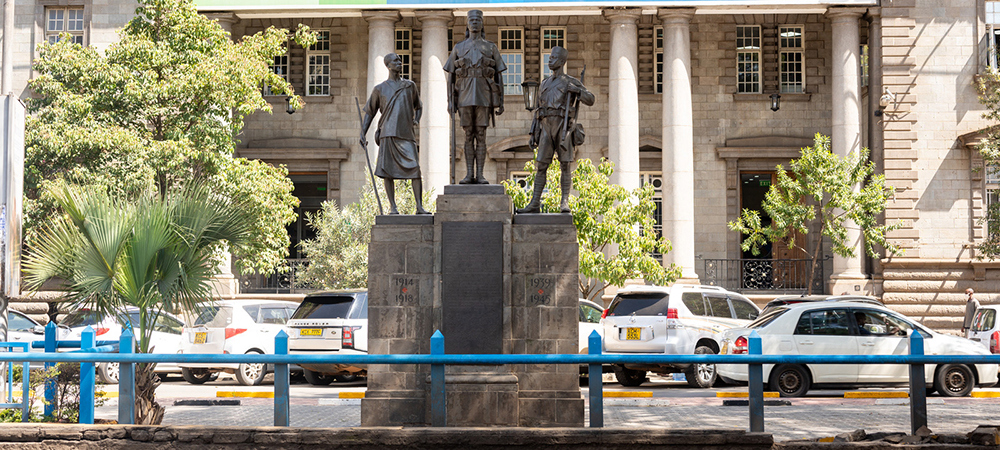
The Nairobi African Memorial commemorates African soldiers collectively, without individual names. CWGC openly discusses this injustice and explains how they are working to restore individual recognition.
This transparency builds trust and helps communities understand the “why” behind CWGC’s work.
A living, growing story
CWGC’s educational activities in Kenya are reshaping how communities understand their past.
Through school programmes, public tours, guide training, heritage trails, and community partnerships, the CWGC is helping Kenyans reclaim a history that was long overshadowed by European narratives.
Through school programmes, public tours, guide training, heritage trails, and community partnerships, the CWGC is helping Kenyans reclaim a history that was long overshadowed by European narratives.
For Rose and her colleagues, the work is deeply personal and profoundly rewarding, rooted in restoring dignity, reconnecting families with their forgotten histories, teaching peace, making the past relatable, and ensuring that the sacrifices of African soldiers are never forgotten. Above all, their mission is to give Kenyans the powerful realisation that their ancestors had a meaningful role to play in these global conflicts, a role that deserves to be remembered, honoured, and passed on to future generations.
