MYDAWA aims to bridge the gap between healthcare providers and patients thus improving quality and cost of healthcare.

MYDAWA aims to bridge the gap between healthcare providers and patients thus improving quality and cost of healthcare.
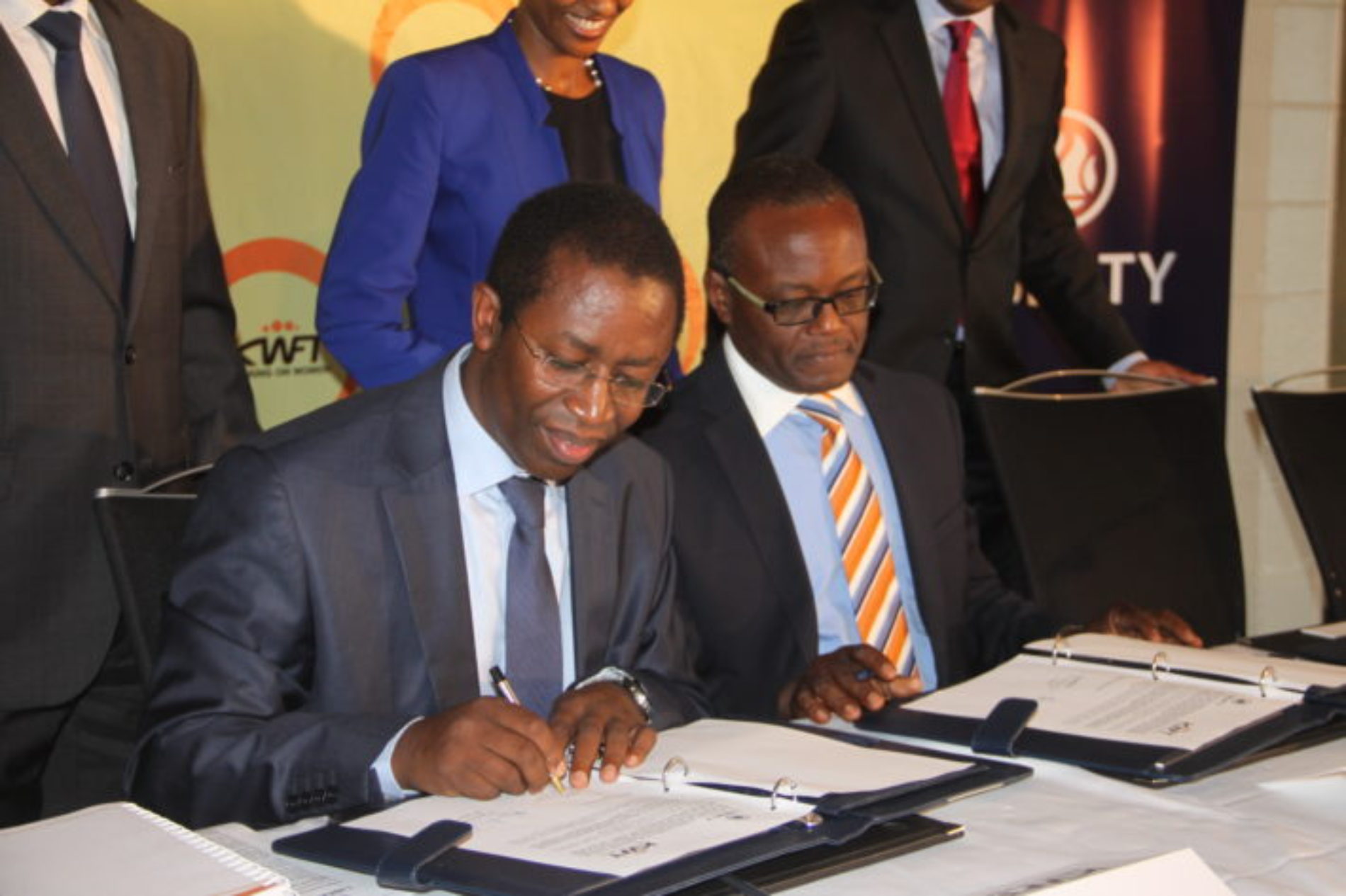
Kenya Women Finance Trust (KWFT) has partnered with insurance provider Liberty Life Assurance to offer life insurance to its members. The cover dubbed KWFT Maisha Plus seeks to give the over 800,000KWFT customer’s beneficiaries’ peace of mind in unfortunate of demise.
“Financial burden accompanied with the loss is strenuous leaving families emotionally and financially drained. “This product is meant to provide peace of mind to our members during and after bereavement” says Mwangi Githaiga managing director KWFT.
Maisha Plus will be offered at a premium of KSh75 per month. Beneficiaries who have loans with KWFT receive up to Ksh100,000 in the event of a members demise. Claims, Mr Githaiga will be settled within two days.
The life cover will be exclusive to the over 800,000 KWFT bank customers in urban, peri-urban and rural areas. KWFT customers will be able to pay through agency banking or through mobile banking which currently has over 200000 subscribers.
Abel Munda, Liberty Life managing director said the new partnership will help increase life Insurance penetration in Kenya. “As life assurance companies in Kenya, it is our responsibility to provide vast assurance products to Kenyans.” He adds that the partnership will be key to driving life insurance that remains low in the country.
Kenya continues to record low insurance penetration rate of one per cent. Lack of awareness by consumers has been fronted as the main reason to this. The Association of Kenya Insurance has also been quoted attributing the low levels to the rebasing of the country’s economy. Insurance penetration is calculated as per a country’s GDP. After Kenya’s rebasing its GDP expanded by 25 per cent.
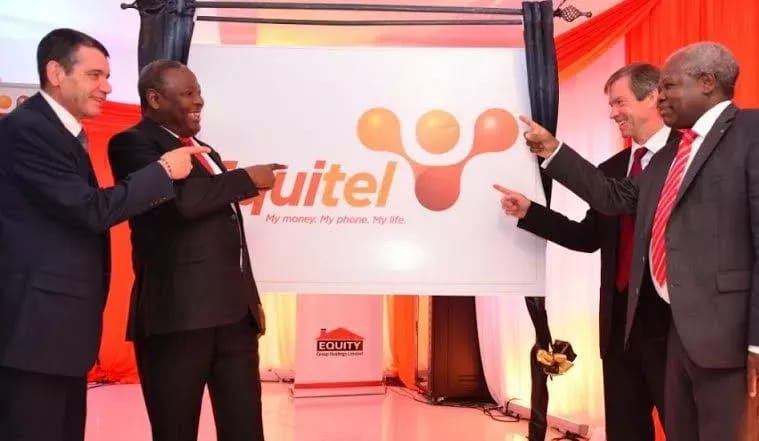
Equitel’s Eazzy Loan disbursements increased by more than six times in 2016, making the platform the preferred choice for accessing credit for bank customers.
Equity Bank, which operates the Equitel mobile money transfer service, announced that the value of Eazzy Loans advanced last year increased to Kshs 38.5 billion up from Ksh5.4 billion in 2015. This represents a 618 per cent increase.
“The digitization strategy continued to bear fruit for the Bank as the Group rolled out tools that deepened financial inclusion and broadened access, which resulted in an enhanced savings culture,” said Equity Group CEO while releasing the 2016 Full Year financial results at the Group’s investor briefing.
Equitel users increased to 2.7 million up from 1.6 million over the same period while the value of transactions increased to Ksh350 billion up from Ksh115 billion, representing a 318 per cent rise.
The number of processed Equitel transactions also increased in 2016 from 94.3 million to 227.4 million, a 141 per cent rise.
Equity Group added that continued use of Equitel and other digital banking products was fundamental in reducing the Group’s cost-to-income ratio to 50.7 per cent in 2016 up from 52.9 per cent recorded in 2015.
Overall, the Group’s profit before tax grew to Kshs 24.9 billion from Kshs 24.0 billion during the same period in 2015 with the regional subsidiaries contributing Ksh1.4 billion, accounting for 5 per cent of the Group profit before tax.
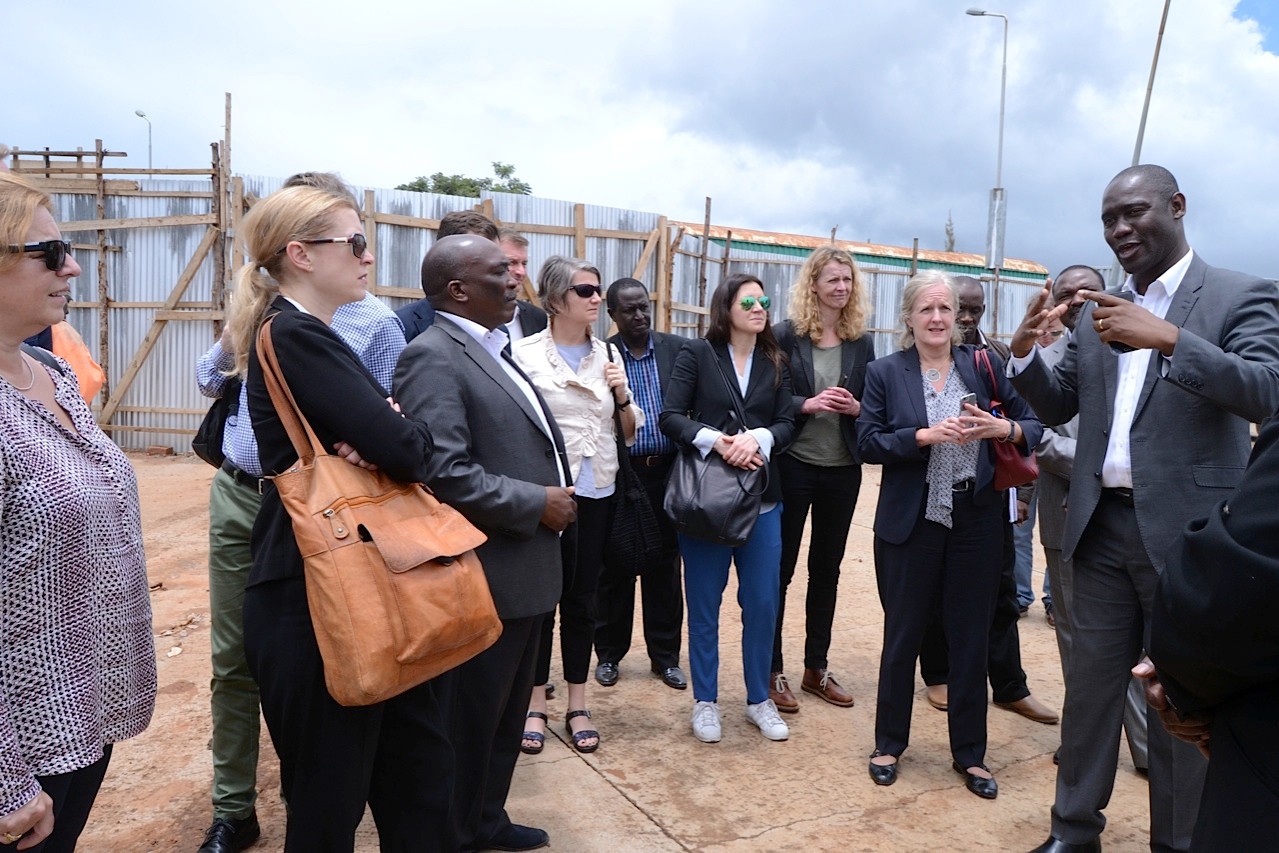
A Swedish delegation led by the Director General for Trade in the Swedish Ministry Foreign Affairs, Ms Karin Olofsdotter, and the Director General for International Development Cooperation, Johannes Oljelund and the Swedish Ambassador to Tanzania, H.E Katarina Rangnitt visited the Tunduma One Stop Border Post (OSBP) currently under construction. The border lies between Tanzania and Zambia. The visit was organised by the Swedish Embassy in Tanzania in collaboration with TradeMark East Africa (TMEA).
The visit provided an opportunity to assess the impact of different trade facilitation initiatives being supported by the Swedish government and other development agencies aimed at improving the lives of Tanzanians by strengthening the business environment. TMEA is providing funding to the Government of Tanzania through the Tanzania Revenue Authority (TRA) for the construction of the Tunduma OSBP and is working with border agencies in Tanzania and Zambia to set up mechanisms for integrated border management and harmonization of customs procedures. This aims to reduce waiting times at the border post by 30 per cent within 18 months.
Congestion at Tunduma, the busiest border in Tanzania in terms of volume of cargo, makes Dar es Salaam Port unattractive to importers in East and Central African countries. Transit cargo traffic represents about one third of total cargo handled by Dar es Salaam but this could drop if urgent action to decongest the border town is not taken. Deficiencies in the existing regulation, management and administration and the poor state of physical facilities at the border also contribute to the congestion.
It takes 45 days (to and fro to deliver goods to Zambia, 15 of which are spent at Tunduma. 80 per cent of all transit containers destined to Burundi, DRC, Rwanda, Uganda and Zambia are charged demurrage by shipping liners for the delay to bring empty containers to the Dar es Salaam Port. The demurrage charges are estimated to cost the Tanzanian economy about $10million annually.
TMEA and its partners have worked very successfully to reduce the costs of transport across East Africa, which has reduced the costs of imports and increased commerce and government revenues.
In his speech, TradeMark East Africa Country Director, Mr. John Ulanga remarked ‘’the support being provided by Sweden in supporting trade facilitation in areas of standards harmonisation and support to cross-border women traders is vital promoting cross-border trade and reducing poverty in Tanzania”.
The Director-General of TMEA David Stanton noted that TMEA in conjunction with Sweden and other development partners will replicate the success of other one-stop border posts in the region. He added that TMEA will work with the government especially to improve the treatment of women cross-border traders so they can trade without hindrance, and generate greater incomes for their families. Tanzanian women traders interviewed by the Swedish delegation were trading in Zambia and DRC.
Sweden has a long tradition of generous and ambitious development aid.
“Delivery of these trade facilitation projects including the construction of the Tunduma OSBP is expected to promote cross border trade which is vital for the many women cross border traders working in Southern Tanzania. A key outcome of these projects is increased Incomes, creation of jobs and sustained livelihoods for the people of Tanzania” Karin Olofsdotter, the Director General for Trade noted
Earlier in the day the Directors General and the delegation paid a courtesy call to the Mbeya Regional Commissioner, Mr Amos Makalla. Ms Makalla briefed the delegation on the economy in Mbeya and key development projects undertaken in collaboration with development partners, including Sweden. The delegation noted with satisfaction the impact they have had in building small business and improving the welfare of clients.
Sweden through Financial Sector Deepening Tanzania (FSDT) has supported The National Microfinance Bank (NMB) to develop a mobile banking service which has made it less costly for traders especially women in rural areas to gain access to financial services.

FEP Holdings has implemented an Enterprise Resource Planning (ERP) system worth US$ 131,008 (Ksh13.5 million) in a bid to improve efficiency and enhance internal controls as part of it’s on going implementation of a framework strategy dubbed Explosion 2020.
According to Maurice Korir, the Chief Executive Officer of FEP Holdings, the strategy is aimed at attaining year on year bottom line growth of 30 per cent as a minimum and sustainable profit before tax of at least Ksh1 billion by 2020.
“The SAGE Evolution system will improve our management information system and streamline operations for optimal growth,” he said.
The ERP system comes with a procurement module that ensures all purchases follow the established procurement policies and tiered approval processes.
The ERP system also features fixed asset management and tagging which ensures that the Group has proper inventory of all its assets valued at KSh3Bn and their respective location. “This is important for safeguarding FEP Holdings’ existing assets,” he added.
With the installation of the system, Korir said the company would now be more customer centric, with incidents being booked into the system such as customer suggestions, complaints or any occurrence which requires action.
“We will now ensure that customer complaints are booked, actioned or escalated to the relevant person within a reasonable time,” he says
FEP Holdings Ltd has consolidated management of its businesses with a paradigm shift that moves away from managing enterprises on legal entity basis, to one that seeks to capitalise on synergies that can be derived from co-related business units.
The system’s branch accounting capability now ensures the centralization of all strategic business units’ records. “We have already linked the branches of Fountain Technologies Limited in Uganda and Tanzania to our ERP system with Ghana due to be linked this month,” he added.
The company has within the last two years recruited a new management team to head the audit, finance, investments & projects, procurement and marketing departments. “We also recruited division managers to lead commercial operations because at the end of the day, a system is as good as the people running it,” he said
The installation will also support more efficient employee payroll and performance management, improve gathering of business intelligence and harness the use of ICT for service delivery at all levels.
The automation will be extended to Fountain Credit Services Limited (FCSL) which installed a new core banking system and is set to roll out digital loans within this quarter.
The ERP system is part of the re-engineering of FEP Holdings’ operations to compete in a dynamic business ecosystem where disruptive technologies are consistently necessitating continued business innovation.
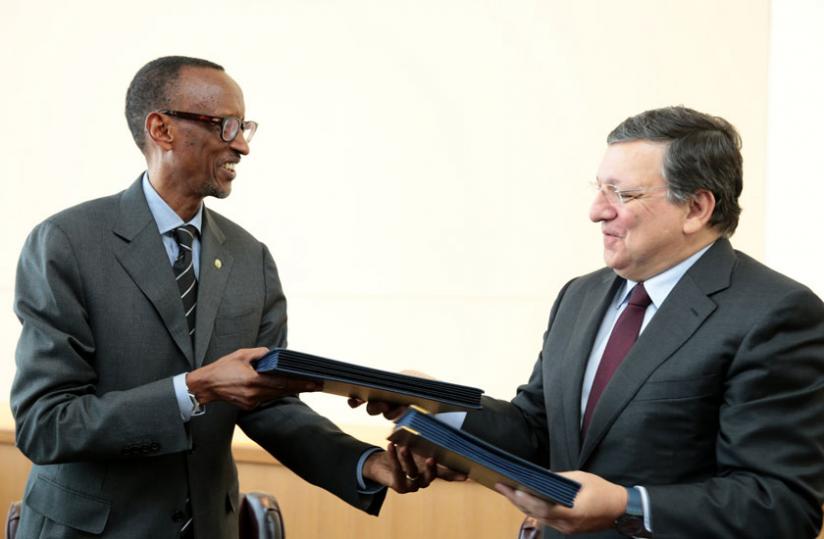
The government of Rwanda is planning to engage private sector in a bid to improve healthcare across the country.
Housing deficit hits the roof as Uganda’s population clocks 34.6 million people. How Housing Finance Bank Uganda plans to address this situation

Bankers’ umbrella body in a drive to promote access to financial services in Uganda
By Tullah Stephen
Uganda’s financial structure was once characterised by stringent government controls and instability. This led to financial repression and stagnation in the development of Uganda’s banking sector. However, a shift in government policy, in the 1990s, saw the industry gain momentum. The government embarked on a mission to liberalise the sector, which saw the number of banks increase tremendously.
Today, an open playing field for private investors, foreign and local, in Uganda’s banking sector has welcomed 25 commercial banks and one development bank, all keen to participate in the sector’s growth. These reforms specifically provided for liberalization of the sector, strengthening of banks, better regulation and oversight across all tiers of financial institutions, provisions for more products & services, and controls to address risks of money laundering and terrorist financing.
However, despite this impressive progress, Uganda continues to lag behind its east African peers in terms of the banked population. Figures from Bank of Uganda (BoU), the country’s banking sector regulator, indicate that only 20 per cent of the population is banked with about 6.5 million accounts. Evidently, financial inclusion is still extremely low in Uganda, which is why the Uganda Bankers Association (UBA) is turning to financial inclusion to encourage the population to access financial products and services.
UBA’s mandate is to promote a strong and vibrant banking sector, encourage good governance and best practices in banking as well as represent the professional and business interests of its members. According to Fabian Kasi, the chairman of the umbrella body, the goal is to endow the population with wealth creation initiatives to assist them avert poverty. “Our idea is to have the benefits of financial services spread throughout the population to support the country’s economic growth and reduce poverty,” says the chairman of UBA.
UBA, he adds, has for the last two years been championing for financial literacy in Uganda. The ratio of financial saving to GDP, which is an indicator of financial literacy, is one of the lowest at about 13 per cent. UBA’s goal, according to Kasi, is to increase access to financial services and products, their usage and quality of financial services and products.
UBA’s financial literacy programme covers areas such as managing savings, capital mobilisation, funding SMEs and consumer rights among others. “Over UShs 200 million was invested in consumer literacy program that was launched in 2013 and the progress has been very good with the introduction of new products targeting specific population groups spread across the country.”
Kasi who also served as executive director of FINCA Uganda Limited until 2010 argues it is also in the interest of the country’s economy that the population open and manage bank accounts so that banks can get more financial resources needed to finance economically viable projects, which will in turn steer Uganda towards greater economic heights.
“As an association we have been encouraging our members to develop products that will easily attract the larger and excluded consumer market, which comprises of women and youth. This is in addition to being innovative in how we market products,” says Kasi, adding that as they engage with the public through financial literacy campaign, they will be further simplifying banking while sensitising population on how to make money and manage it better.
Promulgation of Financial Institutions Act 2016
The Government of Uganda has since promulgated the Financial Institutions Act 2016, which provides for Islamic Banking, Banc assurance and Agency Banking among others including the creation of key governance structures such as Sharia advisory board.
Kasi, who is an accountant by profession and also the managing director of Centenary Bank Uganda, says the industry is fortunate to have the Financial Institutions Act in place.
The Act, he adds, also permits the banks to provide insurance products and services.
Agency banking will see banks transact business with people outside the banking system, especially in areas where banks have no presence. About 80 per cent of the population in Uganda live in the rural areas.
Building Confidence
The association is also trying to ensure that Ugandans maintain confidence in their banks. According to Kasi, most people avoid going to the bank as they often think that banks are for the elite.
“We are undertaking initiatives that will help the banks ran efficiently. We are setting up an Asset Reconstruction Company (ARC) also known as Asset Management Company that will manage assets that are not doing well for the banks,” he says.
ARCs have been used across the world and mostly in Asia where they have been used to manage or re-construct stressed assets (viable businesses struggling with debt) The ARC will assist banks manage toxic debt impacting on the loan book, which in-turn affects liquidity and ends up eating up the capital of banks hence reducing their balance sheets. “In a year’s time we should have the ARC in place.” says Kasi.
Mobile money services is also growing in Uganda with mobile operators and banks working together to promote financial inclusions. UBA is encouraging its members to look for ways to reduce high operational expenses that translate into higher cost of doing business making service delivery expensive to clients. Kasi says the association is currently advocating for sharing of costs & other resources among banks, especially in agency banking.
Capping Interest Rates not the way to go
While capping interest rates continue to dominate debates in the country, the umbrella body has continuously advocated against it, arguing that capping interest rates remains counterproductive for the country’s economy.
Interest rates started rising in April 2015 as BoU attempted to wave off any inflationary pressures resulting from the depreciation of the Uganda shilling. As at June this year, commercial banks’ lending rates averaged 23.54 per cent.
“Capping rates stifles free market forces, discourages investment in the financial sector as well credit growth , instead facilitating black credit markets,” which is bad for investment says Kasi.
“Capping rates discourages investors in the financial sector who then turn to other markets. This creates shortage of much needed credit and capital, which not only makes it scarce and expensive but starves the businesses who need to trade and invest. It sends a very wrong signal for investment,” says Kasi.
Uganda’s overall savings are still low and the government’s collection of taxes has also not been effective enough, thus leaving limited sources of capital for financing projects. When commercial banks have to finance longer term projects, the have to secure longer term funding from other sources at a higher rates.
The challenge around cost of credit has not been made any better by the burgeoning non-performing loans (NPLs), which he argues is due to a challenging business environment both in country as well as in key regional markets.
NPLs as the percentage of total loans in the first half of 2016 had gone up to over seven per cent, the highest rate for any quarter since December 2003. The agricultural sector led with the highest level of non-performing loans in Uganda banks with 15.3 per cent.
“What is however important is that the sector has demonstrated resilience in these challenging times and withstood shocks. We remain committed to addressing our challenges and contributing to economic growth.”

The ongoing bribery investigations on Cognizant Technology Solutions (CTL) could spill over to the firm’s clients based in other countries, including parts of Africa where the US-based IT company is starting to gain traction.
By end of October, Cognizant investors has lost over USD4.5 billion, with industry analysts expressing fears that the bribery accusations against the firm could have more devastating impact, according to an article in India’s Business Standard.
Ashwin Shirvaikar, an analyst with Citigroup, downgraded the stock and slashed his stock price target. In his report, Shirvaikar said: “While it is too early to know the specifics of the investigation, the possible violations appear to be quite serious, especially since the company’s President Coburn resigned.”
Locally, Cognizant is working with Kenya Commercial Bank (KCB) and Faulu Bank to assist with their core banking system transformation initiative. These institutions must pay close attention to this development in order to be prepared to ward off any negative consequences to the bank that may arise due to the fall out of the bribery investigation.
Responding to a question on the investigation’s possible impact on the company, a Cognizant spokesperson told Business Standard: “The internal investigation is in its early stages, and the company is not able to predict what, if any, action may be taken by the Department of Justice, SEC or any governmental authority in connection with the investigation or the effect of the matter on the company’s operations, cash flows or financial position”.
A number of clients from financial services and healthcare industries have already cancelled their projects with Cognizant in the face of the ongoing probe while others have scaled down on joint projects.

The African Development Bank Group (AfDB) and CRDB Bank Plc (CRDB) of Tanzania signed a US$ 120 million loan agreement yesterday in Nairobi in a bid to finance infrastructure and SME projects in Tanzania.
The loan will support infrastructure development, particularly the power and transport sectors, which is a major constraint for Tanzania’s economic diversification and growth. The SME sector is also key to creating more jobs and this project will support a wide range of SMEs across agriculture, construction, manufacturing, education and services in order to promote inclusive growth in the country.
CRDB is the largest commercial bank in Tanzania and was established in 1969 and listed on the Dar-es-Salaam Stock Exchange in 2002. It has a wide geographical coverage of the Tanzanian market where it operates over 120 branches across the country and an additional 3 branches in Burundi.
CRDB has been supporting various sectors such as power, manufacturing, agriculture and SMEs over the past years. In 2008, the AfDB provided a risk-sharing facility to promote SMEs in the agriculture sector, through which more than 270 SMEs benefited. Since 2008, CRDB has expanded its SME loan portfolio and partnered with more than 1,739 agents, or non-banking intermediaries to widen its reach.
This is “Agency Banking” for which CRDB obtained a license from the Bank of Tanzania and the model has enabled the bank to provide services in far-flung areas where establishing branches may be uneconomical hence efficiently allowing the financially excluded to access banking services.
The Line of Credit (LOC) will help finance SMEs and infrastructure projects in Tanzania. It will provide valuable support towards infrastructure development which is a major constraint to Tanzania’s economic growth.
The LOC will also help to scale up lending to SMEs and women enterprises in both urban and rural areas to create more jobs and promote inclusive growth for Tanzania’s economy by leveraging CRDB’s network of branches and banking agents.
The LOC will potentially support regional trade and thus promote regional integration through expanding capacity of the country’s port and airport as well as stimulate tourism and government revenues in coming years.