Japanese car maker aims at its regional business expansion

Japanese car maker aims at its regional business expansion

By Tullah Stephen
Kenya’s ambitions of becoming a regional hub got a boost on Thursday after the US Federal Aviation Administration (FAA) granted Jomo Kenyatta International Airport (JKIA) Category One Safety and Security Status.
The move according to the country’s ministry of Transport will allow faster air transport of goods and passengers boosting the country’s trade and tourism as airline operators from both countries, will now be able to operate direct flights to the US.
“With Category One status there will be faster movement of goods and people between the two countries, with an eradication of any delay especially to horticultural produce from Kenya,” said a statement from the ministry of Transport.
Owing to JKIA’s second class status, passengers flying from Kenya to the US previously had to transit through Middle East, Europe, Ethiopia, South Africa or Nigeria countries whose airports had achieved Category One status.
For a country to attain the status, it must prove its compliance with International Civil Aviation Organizations safety standards for air craft operations and maintenance.
The past couple of years has seen Kenya invest in infrastructural expansions at JKIA. New terminals have since been opened which have allowed JKIA to separate departures and arrivals seen as a key security requirement.
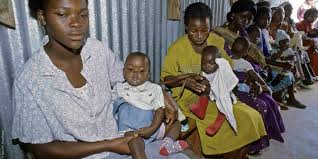
Experts drawn from the pharmaceutical industry have called for strategic partnerships between both the public and private sector to improve healthcare delivery in the sub-Saharan region.
Speaking during a conference on Improving Access to Medicines through Partnerships in Sub-Saharan Africa organised by Takeda, a pharmaceutical company, the team of experts noted that a majority of patients arrive too late for healthcare due to lack of awareness on health issues or lack of access to healthcare facilities.
Josh Ruxin, the Co-Founder and Executive Chairman of Goodlife Pharmacies keynoted the conference and said there was a need to rationalize healthcare systems and channel funds toward increased access to basic health services and access to essential medicines.
“Billions of dollars have been pumped into the sub-Saharan region to combat ailments such as HIV/AIDS, Malaria and Tuberculosis often yielding tremendous results. However, the tide has changed. Other diseases, especially Non-Communicable Diseases (NCDs) such as heart disease, diabetes and cancer are now the leading cause of death” said Mr Ruxin.
According to data from International Finance Corporation, sub-Saharan Africa is ranked as having the worst health on average in the world. The region has 11 percent of the world’s population but carries 24 percent of the global disease burden.
Ruxin noted that in Kenya alone, Non-Communicable Diseases account for more than 50% of total hospital admissions and over 55 per cent of hospital deaths. Disease such as cancer, hypertension, and diabetes are becoming commonplace due to more sedentary lifestyles and shifts in eating habits. Sadly healthcare is increasingly become an economic burden to the family unit and a leading cause for emerging consumers to fall back into poverty.
It is now estimated that Kenyans spend about Ksh10 billion annually overseas on cancer treatment. Mr Ruxin noted that it was critical for the renewed effort to improve healthcare in the region focus on developing sustainable, mutually beneficial partnerships that span from the public to the private sector.
The barriers to quality affordable healthcare that have created a conducive environment for the epidemic growth of NCDS can only be addressed when all stakeholders collaborate to tackle issues such as improving diagnostic capabilities, access to quality and affordable medicines and universal health insurance.
Mr. Ruxin said Goodlife Pharmacies – which is backed by Leapfrog Investments and the IFC — has played a critical role in bringing down the price of quality medicines by building a large pharmaceutical chain that can negotiate better prices with drug suppliers.
“One of the challenges the region has had is the existence of standalone pharmacies that purchase medicines in small quantities and pass on the higher cost to consumers,” he explained. He continued, “The wealthiest people in the world – in Europe, the US, Japan and elsewhere are paying lower prices for quality drugs because they are buying from providers that operate at scale. The private and public sectors must address this dissonance which is costing consumers in the region money, and sadly, lives.”

There are those who will advise you to forget and move on when a disaster wipes out your business. Continuity East Africa will show you how to bounce back to business.
By Tullah Stephen
The 2015 Westgate terror attack in Nairobi should serve as a cautionary tale to those in business. The attack reminded investors in the region how fragile businesses can be in the wake of natural or artificial disasters.
For weeks, businesses adjacent to the attacked mall remained closed as a security measure. Employees and their employers were asked to stay home for days. As a result, businesses suffered massive and potentially crippling losses.
So what happens during these calamitous times when businesses are not able to operate? As an entrepreneur or an investor, how do react to emergencies of such magnitudes?
Pete Frielinghaus, the managing director of Continuity East Africa says most businesses rarely recover from such disruptions. A few that bounce back are those that have insurance policies. But even then, insurance cover is not a guarantee.
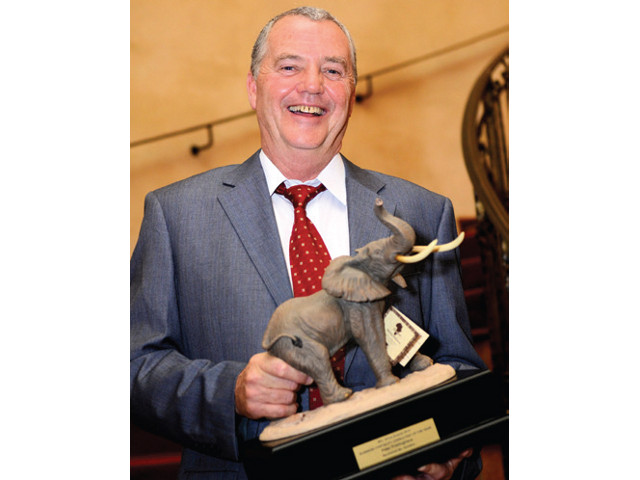
Pete Frielinghaus, the managing director of Continuity East Africa
Frielinghaus says businesses should have a plan in place that will ensure that they continue to operate seamlessly during interruptions.
“Businesses rarely get a heads up when such things happen. It is critical that businesses take time to create and implement their own disaster and continuity plan before the worst happens,” says Frielinghaus.
Business continuity (BC), he explains, refers to maintaining business functions or quickly resuming them in the event of a major disruption. A BC plan outlines procedures and instructions that your company needs to follow in the face of disaster.
The plan, Frielinghaus explains, covers business processes, assets, human resources, business partners, among others, which a company may count on when the business are temporarily down.
Creating a business continuity plan
Businesses, Frielinghaus says, ought to start by making assessment of what processes they would require to continue operations in the case of a disaster. This should include items, space the employees would need, as well as the data they would need protected.
The next step, Frielinghaus says, is to formulate the plan bearing in mind the daily functions are most important to the business.
Choosing a BC consultant
According to Frielinghaus says, companies should look for experts that can help them understand their risk profile, and then develop appropriate risk-mitigation strategies.
Frielinghaus, who oversees operations at Continuity East Africa, points out that Continuity EA, is among the few companies offering such services in the region.
Last year, the firm launched the first phase of its KSh200 million business recovery centre to help Kenyan businesses draw up threat profiles and reduce impact of disruption.
The new work office provides local businesses with a workspace where they can continue to work while they recover from interruptions. The space has 104 seats, each with a desk and a chair, cable interconnection for voice and data, as well as uninterrupted power supply (UPS). All these are located at the data recovery centre.
The workspace, Frielinghaus says, is categorised into two. There is the dedicated seats category, which guarantees a pre-defined number of customers. These seats are allocated exclusively to a customer who can use them at any time, including during large scale crises.
Then there is the shared seats category, which offer flexible scheme of pre-defined number of customers and offers them enough room to implement their business continuity plan during normal situations. However, this category of seats guarantees only a ratio of seats during large scale crises.
Frielinghaus says clients are also free to sign up for a combination of shared and syndicated seats.
The firm’s first target is the financial sector, which has experienced tremendous growth in the last few years.
“Already, we have the necessary infrastructure up and running and we are configuring four clients at the moment.”
In addition to work-area recovery and data centre facilities, Continuity EA offers full advisory and training services to upskill their own staff.
Continuity plan vs disaster recovery
One of the biggest misconceptions, Frielinghaus says, is that people think that a disaster recovery plan is the same as BC. However, disaster recovery plan focuses mainly on restoring IT infrastructure and operations after a crisis and is mostly part of a business continuity plan.
A major challenge for African business is the fact that BC is not yet embedded in most organizations cultures. According to Frielinghaus, business continuity plans are not a priority to most businesses in sub Saharan Africa as some are just comfortable with just creating backups.
“With east Africa’s economy growing, the region is becoming more prone to interruptions.”
He points out that there are only a handful of companies offering quality BC services in the region and that could perhaps be the reason why awareness of the concept is low.
Frielinghaus, who has been in the industry for the last 27 years — working with different companies across Africa, believes that one of the biggest challenges to business continuity in east Africa is shortage of skills in business continuity.
“We are working with the United States International University (USIU) in Nairobi to help them prepare a curriculum for BC. The market is huge and wide open for exploration. We hope this initiative will expand the pool of professionals in the region.”

The government of Rwanda is planning to engage private sector in a bid to improve healthcare across the country.
The demand for spirits continue to challenge the supremacy of beer in the Kenyan market.

Uganda’s vision to set up an automotive industry to boost its economy and provide employment for its fast growing population is on course. The Uganda Investment Authority has already commissioned two companies to start car production in the country by 2018. One of them is Kiira Mortors Corporation, which unveiled its first hybrid electric sedan, the Kiira EV SMACK. The East African Business Times Magazine caught up with Allan Muhumuza, the Vice President of marketing and sales at KMC to find out more. Excerpt:
Since announcing your entry into the vehicle production last year, what has been the progress so far?
We are currently on course with the implementation of the first phase of our 25 year business blue print. The first phase involves a number of things.
First is the plant design. We have a plant based at Kagogwa village in Jinja where we obtained a 99-year lease for 100 acres of land.
From the piece of land we are building state-of-the-art facilities for engineering, corporate affairs and a vehicle validation unit.
Other plans include construction and development of the government automotive industry development plan as well as training and recruitment programmes.
We are also seeking for partnership agreements with automotive original equipment manufacturers.
What are some of the production plans you have for KMC?
Production will begin in mid-2018 with a planned capacity of about 3,600 units per year. This will later rising to 9,960 units per year. The first batch of vehicles will be running on fossil fuels with an Internal Combustion Engine. Most of the units are going to be light and medium duty truck.
Who will you be targeting with these trucks?
First, is going to be the government. The government as you know is one of the biggest spenders. But we will also explore other markets such as the business community and the NGOs. We also intend to penetrate the market deeper and go beyond the borders.
How would you describe the reception to KMC concept vehicles so far?
It has been quite positive. I believe that the market is ready to adopt the vehicles. We have seen some good news in South Africa and Morocco where similar technologies have been launched before. I predict that in the next few years, the engine as it is now will be the ‘dinosaur’ of the automobile industry – extinct.
What does the response mean to Uganda’s auto industry?
It means that people are beginning to view Uganda differently, especially in the auto industry. But, it is also a testament of Uganda’s commitment to exploring clean and green transportation technology. Also, KMC is committed to enhance environmental stewardship as we develop Uganda.
Most people would have expected you to start with the production of the Kayoola Solar buses. Why is this not the case?
When you look at the automotive companies when they release a prototype vehicle, it takes on average seven years before it is introduced in the market. But also considering there are no electric vehicles on the road, we are cautious and still studying the market carefully. We still need time and we are preparing the market for it as well.
In a market filled with Asian brands, how is KMC positioned to penetrate the market with its locally made models? What is your strategy?
Our product will be competitively priced. The fact that they will be made in Uganda means they are certainly going to be cheaper for the population as opposed to importing a vehicle. Also, we are making sure our vehicles can be serviced anywhere in Uganda. The Buy Uganda Build Uganda policy will also play an important role in pushing up the uptake of our products.
How do you read the current trends in the motor industry in Uganda, from your perspective?
The industry has a lot of potential. We have seen the government work towards eliminating the bottlenecks that hinder the ease of doing business. On the other hand the market is now demand-driven and consumers are more informed on what they want.
Among your biggest target is the public transportation. How big is this market?
Kampala Capital City Authority has an existing demand for at least 500 buses for its major routes. The capital is projected to have a mass mobility demand growth estimated to be five times in the next three years exceeding over 700,000 passengers per day. The adjacent routes serving into the capital such as Jinja, Entebbe, Masaka and Bombo road are expected to have 500,000, 200,000 and 300,000 passengers per day respectively. So there is a lot of opportunities.
What are some of the challenges the vehicle industry is experiencing currently?
I believe from an operational outlook, the limited availability and reliability of electricity as well as the availability of skilled labour are going to keep manufacturing costs high for players in Uganda compared to producers elsewhere in the east Africa region.
From a policy point of view, we still need to come up with legislation that will curb importation of used cars.
As the middle-class rises, demand will also rise. It will make perfect sense to locally manufacture cars as opposed to importing them as that will sink back the revenue into the economy.

Housing deficit hits the roof as Uganda’s population clocks 34.6 million people. How Housing Finance Bank Uganda plans to address this situation

Bankers’ umbrella body in a drive to promote access to financial services in Uganda
By Tullah Stephen
Uganda’s financial structure was once characterised by stringent government controls and instability. This led to financial repression and stagnation in the development of Uganda’s banking sector. However, a shift in government policy, in the 1990s, saw the industry gain momentum. The government embarked on a mission to liberalise the sector, which saw the number of banks increase tremendously.
Today, an open playing field for private investors, foreign and local, in Uganda’s banking sector has welcomed 25 commercial banks and one development bank, all keen to participate in the sector’s growth. These reforms specifically provided for liberalization of the sector, strengthening of banks, better regulation and oversight across all tiers of financial institutions, provisions for more products & services, and controls to address risks of money laundering and terrorist financing.
However, despite this impressive progress, Uganda continues to lag behind its east African peers in terms of the banked population. Figures from Bank of Uganda (BoU), the country’s banking sector regulator, indicate that only 20 per cent of the population is banked with about 6.5 million accounts. Evidently, financial inclusion is still extremely low in Uganda, which is why the Uganda Bankers Association (UBA) is turning to financial inclusion to encourage the population to access financial products and services.
UBA’s mandate is to promote a strong and vibrant banking sector, encourage good governance and best practices in banking as well as represent the professional and business interests of its members. According to Fabian Kasi, the chairman of the umbrella body, the goal is to endow the population with wealth creation initiatives to assist them avert poverty. “Our idea is to have the benefits of financial services spread throughout the population to support the country’s economic growth and reduce poverty,” says the chairman of UBA.
UBA, he adds, has for the last two years been championing for financial literacy in Uganda. The ratio of financial saving to GDP, which is an indicator of financial literacy, is one of the lowest at about 13 per cent. UBA’s goal, according to Kasi, is to increase access to financial services and products, their usage and quality of financial services and products.
UBA’s financial literacy programme covers areas such as managing savings, capital mobilisation, funding SMEs and consumer rights among others. “Over UShs 200 million was invested in consumer literacy program that was launched in 2013 and the progress has been very good with the introduction of new products targeting specific population groups spread across the country.”
Kasi who also served as executive director of FINCA Uganda Limited until 2010 argues it is also in the interest of the country’s economy that the population open and manage bank accounts so that banks can get more financial resources needed to finance economically viable projects, which will in turn steer Uganda towards greater economic heights.
“As an association we have been encouraging our members to develop products that will easily attract the larger and excluded consumer market, which comprises of women and youth. This is in addition to being innovative in how we market products,” says Kasi, adding that as they engage with the public through financial literacy campaign, they will be further simplifying banking while sensitising population on how to make money and manage it better.
Promulgation of Financial Institutions Act 2016
The Government of Uganda has since promulgated the Financial Institutions Act 2016, which provides for Islamic Banking, Banc assurance and Agency Banking among others including the creation of key governance structures such as Sharia advisory board.
Kasi, who is an accountant by profession and also the managing director of Centenary Bank Uganda, says the industry is fortunate to have the Financial Institutions Act in place.
The Act, he adds, also permits the banks to provide insurance products and services.
Agency banking will see banks transact business with people outside the banking system, especially in areas where banks have no presence. About 80 per cent of the population in Uganda live in the rural areas.
Building Confidence
The association is also trying to ensure that Ugandans maintain confidence in their banks. According to Kasi, most people avoid going to the bank as they often think that banks are for the elite.
“We are undertaking initiatives that will help the banks ran efficiently. We are setting up an Asset Reconstruction Company (ARC) also known as Asset Management Company that will manage assets that are not doing well for the banks,” he says.
ARCs have been used across the world and mostly in Asia where they have been used to manage or re-construct stressed assets (viable businesses struggling with debt) The ARC will assist banks manage toxic debt impacting on the loan book, which in-turn affects liquidity and ends up eating up the capital of banks hence reducing their balance sheets. “In a year’s time we should have the ARC in place.” says Kasi.
Mobile money services is also growing in Uganda with mobile operators and banks working together to promote financial inclusions. UBA is encouraging its members to look for ways to reduce high operational expenses that translate into higher cost of doing business making service delivery expensive to clients. Kasi says the association is currently advocating for sharing of costs & other resources among banks, especially in agency banking.
Capping Interest Rates not the way to go
While capping interest rates continue to dominate debates in the country, the umbrella body has continuously advocated against it, arguing that capping interest rates remains counterproductive for the country’s economy.
Interest rates started rising in April 2015 as BoU attempted to wave off any inflationary pressures resulting from the depreciation of the Uganda shilling. As at June this year, commercial banks’ lending rates averaged 23.54 per cent.
“Capping rates stifles free market forces, discourages investment in the financial sector as well credit growth , instead facilitating black credit markets,” which is bad for investment says Kasi.
“Capping rates discourages investors in the financial sector who then turn to other markets. This creates shortage of much needed credit and capital, which not only makes it scarce and expensive but starves the businesses who need to trade and invest. It sends a very wrong signal for investment,” says Kasi.
Uganda’s overall savings are still low and the government’s collection of taxes has also not been effective enough, thus leaving limited sources of capital for financing projects. When commercial banks have to finance longer term projects, the have to secure longer term funding from other sources at a higher rates.
The challenge around cost of credit has not been made any better by the burgeoning non-performing loans (NPLs), which he argues is due to a challenging business environment both in country as well as in key regional markets.
NPLs as the percentage of total loans in the first half of 2016 had gone up to over seven per cent, the highest rate for any quarter since December 2003. The agricultural sector led with the highest level of non-performing loans in Uganda banks with 15.3 per cent.
“What is however important is that the sector has demonstrated resilience in these challenging times and withstood shocks. We remain committed to addressing our challenges and contributing to economic growth.”

Fresh Chewing Gum, a product of Kenafric Industries Limited will be giving out a brand new Subaru Impreza to a lucky winner in the ongoing National Consumer Promotion (NPC) that has already seen thousands of participants win cash and TV sets.
At least 200 participants win Sh250 daily with five monthly winner of 40 inch flat screen TVs in the promotion that is running up to February next year, when the grand prize winner will be unveiled.
To participate, one just need to buy Sh5 Fresh Chewing gum, and send the unique code inside the packet to 31511 on any network.
Each code sent is entered in the daily, monthly and grand prize draw, giving participants equal chances to win cash, TVs and the brand new 2015 Subaru Impreza.
Speaking while handing over TV sets to monthly winners, Morris Huw, Business Unit Manager at Kenafric industries Limited urged consumers to continue participating to increase their chances of winning numerous prizes.
‘’For only Sh5, we not only give our consumers best chewing gums in the market but also a chance to positively change their lives,’’ said Huw
In a span of less than 5 years, Fresh Chewing Gum has established itself as one of the market leaders in the country with presence in other regional countries like including Uganda, Tanzania and DRC.
The brand has captured the market with its flavored chewing gums which appeal to changing lifestyles and desires of the youthful consumers.
These flavored varieties include -Berry fusion, Smooth sensation, Peppermint, Spear mint, Fruity and Menthol.
Recently, Kenafric launched the new Fresh 10s stick pack, which appeals mostly to the older consumers.