Africa’s financial, social, and economic conditions are today playing a crucial role to the growth in popularity of cryptocurrencies. Two entrepreneurs an over the counter crypto currency trading platform after deciding to turn their home-grown Bitcoin exchange operation into an official company.

Tech
Equitel has recorded double-digit growth in both the value and number of mobile money commerce transactions, according to the latest data from the Communications Authority.
Equitel processed 87.9 million mobile commerce transactions between April 2018 and June 2018, up from 77.6 million transactions in the preceding quarter, representing a 13 per cent increase. At the same time the value of mobile commerce transactions increased to Ksh328.2 billion, a 13 per cent increase from Ksh290.3 billion that was processed over the same period.
Equitel is increasingly growing the volume and value of mobile commerce transactions boosted in part by the EazzyPay Paybill number that allows payments to be received from all mobile money transfer services through the interoperability feature
Equitel accounted for 23 per cent or Ksh328 billion of the Ksh1.427 trillion that was transacted in the form of mobile commerce payments.
The volume of person-to-person transfers, on the other hand, increased by 2 per cent to stand at Ksh117 billion from Ksh114.1 billion over the same period.
Overall the number of transactions processed stood at 140.4 million up from 128.6 million translating to a 9 per cent increase while the value of transactions increased by 6 per cent to stand at Ksh413.4 billion from Ksh389.3 billion.
Equitel’s subscription base as at June 2018 was 1.95 million.
Equitel, which was launched in July 2015, now accounts close to 22 per cent of the Ksh1.919 trillion that was moved in the economy through mobile money services in the third quarter of the fiscal year.
By Brian Yatich
It is the era of analytics, data-based learning and decision-making. The internet is now the go-to medium where everything happens, and it is imperative that businesses stay on par.
The recruitment industry is not left behind. The process of collecting and analyzing job applications has shifted to the digital direction, providing richer insights into candidates and employers now more than ever.
As organizations are slowly adapting to this new recruitment direction to remain competitive, it has slowly transformed the human resource job market.
Just recently Google announced their online job board to the delight of job seekers everywhere. Using advanced machine learning and natural language search algorithms, the search engine behind this latest development has already proven that it gives accurate results.
The new system is meant to help job seekers find job advertisements from various job postings and job boards on the web closely aligned with their unique qualities and backgrounds as it shuffles through CV’s for matching keywords for a specified job for the candidate.
This has proven that the future of job hunting is heavily relied upon artificial intelligence (AI), to simplify the process in connecting employers and candidates.
However, the bigger question remains, how does digitized recruiting operate without losing the vital human element of it?

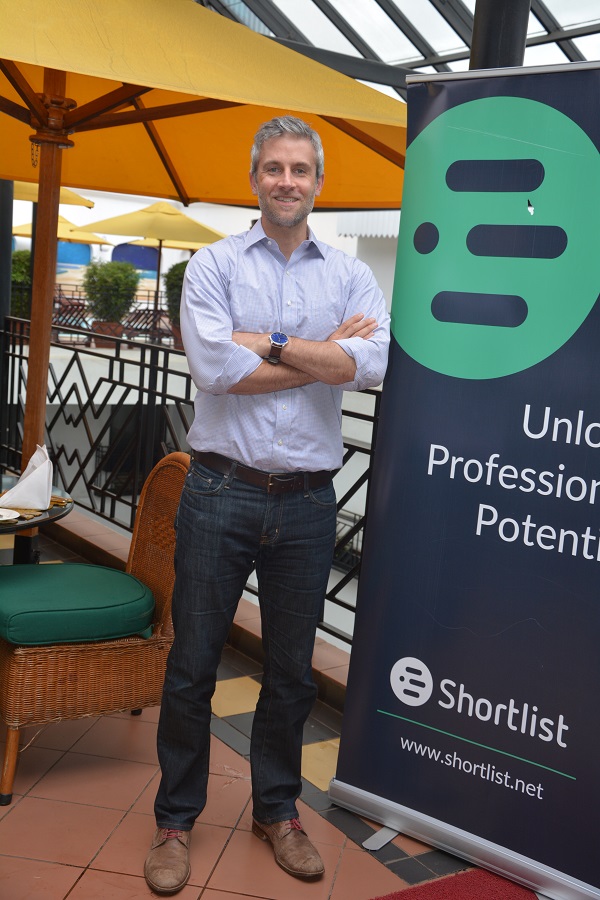
The co-founder and CEO of Shortlist — a deep tech startup – Paul Breloff
The co-founder and CEO of Shortlist — a deep tech startup – Paul Breloff, realized the potential of digital and data-driven recruiting back in 2016, when those terms were not as famous as they are becoming today. His Kenya-based startup focuses on digitizing the hiring process, making it easier for every company (not just the big, rich ones) to leverage technology to build better teams.
“One of our philosophical points of view is that resumes and CVs are not very good indicators of someone’s potential,” Breloff notes. “They can tell you where someone has come from, what they have done, but they are not good indicators of where this person can go.”
Shortlist was founded on the premise of streamlining and making hiring processes more efficient by automating the manually intensive process of posting jobs to job boards, receiving CV’s, interacting with candidates and clarifying certain details.
“This is where technology can really come in handy,” Breloff says.
Man vs. Bot
“Sifting through multiple job postings has proven to be a cumbersome task for candidates, and finding the right position that fits one’s passions, experience and goals can be a huge task,” he says.
With that in mind, Breloff and his team set up an online recruitment technology platform, Shortlist, with the ambition of streamlining and making hiring a more efficient and objective process for employers.
“What we saw,” he says, “was a lot of companies posting jobs on job boards, getting thousands of CV’s and resumes and having to sit down and review them manually. Many innovators, especially in the e-recruitment space, have resorted to the use of AI and bots, which have made things easier not only the recruitment sector but almost all sectors.”
The Internet Report 2017 by iFreedoms Kenya details the rising trends of bots in Kenya, capable of providing businesses and institutions looking at messaging bots to provide their customers with relatively simple services in convenient ways.
“AI tools are rapidly emerging in the support space, as they can address high-urgency situations quickly, but when it comes to high-emotion scenarios, no AI can replicate human empathy. There’s still a distinct advantage to having a real person help a customer. Some support interactions just require a human element.” Breloff says.
According to Breloff, the Shortlist platform screens candidates using predictive chat-based interviews and online competency-based assessments.
“By digitizing the initial stages of the screening process, we help companies find candidates with the skills they need to succeed on-the-job, while avoid bias and inefficiencies. This objective ‘top of the funnel’ screening, paired with live candidate interaction and support, is how we find the best-fit candidate for each role,” he says.
The tech-based firm has spent a lot of energy in the platform piecing together their business model to have a human touch feel to it as well as blend it with technology. “Getting that balance is really important to us” Breloff says.
“If you are an employer, rather than us selling you the technology, we are selling you the service. You don’t need to understand what happens behind the platform if you don’t want to. Each of our product offerings, ranging from a full-service recruiter to a lighter-touch software option, allows employers to efficiently and objectively identify top talent for junior- to mid-level roles,” he adds.
On the employers side, the firm has built a platform that makes it easy for the company to have all their candidates go through a uniform process, where they avoid perusing through all CV’s and give candidates the opportunity to show what they can do through challenges and answering questions relating to the field.
“We do this by customizing a digital obstacle course and creating a job application where they will be evaluated on whether they are fit for the job or not,” he says.
On the candidate point of view, the job seeker is tested with a bit of work where they go through a digital experience with a chat-based bot that collects different information in a quick easy way.
“The bot screens users based on experience, location, salary expectations among other things. Then the candidate progresses to a skills assessment related to the job they are applying, removing the aspect of bias.” he says.
The assessment performance is then presented to the employer as they keep updating the candidate on the job they have applied for, we intend to create a mindset that will determine the success of the company.
To advise and walk jobseekers through the process, the firm has a set team of 15 people who engage directly with customers.
Bots, according to experts won’t completely eliminate the HR function, but will rather assist highly-skilled professionals to recruit the best talent and provide further leverage to an organization.
“Yet, there will be a continued need for skilled recruiters to facilitate the human aspects of the process – phone calls and in-person interviews retaining that relationship– that technology cannot be replicated,” Breloff says.
Last year the firm merged with Spire Education – a training business workforce that builds worker training programs for East Africa’s leading employers to further leverage their services in a bid to build a bigger platform.
Shortlist has worked with over 160 companies including M-KOPA, UberEats, and Twiga Foods, and has handled over 400,000 job applications on the Shortlist platform.
Looking into the future, the firm is banking on a number of training programs and partnerships that span multiple industries and functions, including finance, sales/marketing, technology, and data science, to further improve Shortlist.
“At Shortlist, we see such a big opportunity beyond just the narrow question of recruiting, we think about how to develop, train and retain that talent once they are hired by building better team cultures and value structures,” he concludes.
ESET has been awarded the highest designation in the Innovation, Product, Market and Overall Leader categories in the 2018 Kuppinger Cole Leadership Compass Enterprise Endpoint Security: Anti-Malware Solutions.
The annual report by Kuppinger Cole, examines the key vendors in the Enterprise Endpoint Security market, with a special focus given to Enterprise Anti-Malware Solutions. In this evaluation, Kuppinger Cole assesses product and service functionality, innovation and the relative market share of each vendor evaluated in the annual report.
In the “Innovation Leadership” category, Kuppinger Cole recognizes leaders as vendors who are deploying new technologies and features designed to detect and remove sophisticated malware in current or upcoming products. ESET is praised for having a multi-faceted detection array, helping to identify and thwart threats facing enterprises. Kuppinger Cole also notes ESET excels at detecting file-less malware, polymorphism, and ransomware.
“We are honored to have our enterprise security solutions recognized by Kuppinger Cole,” said Juraj Malcho, Chief Technology Officer at ESET. “Enterprises are facing an increasingly-sophisticated enemy, capable of deploying a variety of technologies to attack their networks and endpoints. ESET is committed to delivering best-in-class solutions for businesses to better detect and protect against these types of attacks.”
The report further evaluates each vendor on five pre-selected security criteria essential for decision makers of enterprise-sized organizations. ESET received a rating of “strong positive” in the Functionality, Integration and Usability categories and a rating of “positive” in the Security and Interoperability. These ratings recognize ESET’s expertise in delivering advanced and scalable security solutions to businesses in the enterprise sector.
In the category of “Overall Leadership”, ESET placed highly due to its thirty-year history of fighting malware and delivering innovative products and solutions to the market. Kuppinger Cole identifies “Overall Leaders” by a combined rating in products, market presence and the innovation categories.
By Brian Yatich
Over the past few years, we have noted how the world is rapidly making a complete shift from the traditional way of doing things to embracing the digital shift with technological advancements.
E-recruitment is well on its way to change the employment landscape, significantly easing the processes by Human Resource (HR) administrators in job placement and creating a further needed opportunity in the labour market for job seekers where getting a job has proven futile..
Thousands of graduates go out every year seeking job opportunities matching their skills. Employers, in turn, are uncertain how to assess the abilities of their applicants in their pursuit to hire the right candidate.
An increasing number of tech-savvy entrepreneurs are looking to solve the unemployment crisis with tech-based solutions that seek to improve access to job opportunities and ensure employers are matched with the right talent.
One such start-up is FUZU, an online-based system that churns talent using a computerized algorithm to find the best talent and match them with suitable employers.
The online firm was established on the premise of curbing the unemployment rate, which is rife across many African countries.
According to World Bank report on Youth and Opportunity, close to 800,000 youth enter the Kenyan job market annually. Out of this, only about 70,000 may succeed in securing employment in the formal sector.
The report further indicates that Kenya’s unemployment rate currently stands at approximately 40 per cent up from 12 per cent in 2006. Youth between 15 and 34 years constitute more than 40 per cent of the estimated national population at 43.5 million people. This accounts for a massive 70 per cent of the unemployed workforce.
With an estimate of 15 million unemployed youth in the country, this presents a massively worrying situation.
“In Kenya and more broadly the African market, there’s a problem where people calibrate their expectations poorly, so they apply for jobs that are well above their qualifications, some go way too up or down” Jussi Hinkkanen, Chief Executive Officer at FUZU.
Jussi notes that the recruitment sector is going to have a bigger impact on the future of the continent.
“The e-recruitment is a market that is globally in a transition, the traditional job boards are coming to the end of their journey, and we see different types of companies coming on board upping the game and bringing in new tools with a lot of innovations which is good for job seekers,” He says.
Fuzu is focusing on allowing jobseekers to learn new skills in order to obtain better employment.
“It’s not so much about credentials, whether you have a degree or not, it’s actually more of; Can you do your job?” Jussi points out.
How it works
The Fuzu platform allows access to users who are either searching for a job or are employers looking for personnel. The platform uses competency-based hiring algorithm by deploying a rigorous process in analysing and finding the best candidate for a specified job.
“For employers, Fuzu offers a set of tools to automatically analyse the job seekers’ curriculum vitae (CV’s), testing the candidates through online psychometric and talent tests at the same time marketing the company as an attractive employer,” Jussi says.
For the job seeker experience, Fuzu provides career counseling, learning solutions and gives information about open positions and industry updates; providing support and guidance at different stages of the user’s career.
Once a registered user has selected a specified job, he or she is prompted to outline their career goal and apply for jobs that are specifically matched to their skills.
“If a user opts for a premium package, he or she will then get an automated instant feedback, where they will get a detailed analysis of what skills, personalities, and experience other candidates for the same application have compared to them, we then give you access to top 10 CV’s with their details removed. So that you can benchmark from others and have a snapshot of what the market requires,” Jussi adds.
To wade off competitors and rank top from other job boards, Fuzu offers career-planning tools including personal career advice and provide access to professional coaches and giving instant personalized feedback to users to develop the job seekers skills and competencies.
In March, the online firm partnered with Google Africa to allow job seekers to use the new Google Job Search experience, where Fuzu will be able to integrate its content through Google’s open structured (Schema) to help them quickly and easily find opportunities across the web, and refine their search to meet their specific needs suited for them.
Fuzu has also closed partnership deals with several global and regional giants like Techno Brain, Microsoft, McKinsey, Accenture, Facebook, Rockefeller Foundation, and Multichoice.
The Finnish Kenyan-based firm now has access across East Africa, with a talent pool of over 400,000 profiles with a usage of over 1 million.
By Tullah Stephen
March 2018, would perhaps go down as one of the worst months yet for online social media and networking service company Facebook. The California based company has been on the spotlight ever since revelations on data privacy breach was made against it. Data analytic firm Cambridge Analytica is said to have secretly harvested personal data from 50 million of Facebook s users. The British firm is said to have used the data to help manipulate elections in different parts of the world including Kenya, Nigeria, US and British Brexit campaign.
It is said the Cambridge Analytica gathered data from Facebook users via a third party app created by Aleksandr Kogan a Cambridge University researcher. The app involved users answering a personality questionnaire which it then scrapped users’ personal details as well as their friends. While creating an app was nothing wrong, handing over the data to Cambridge Analytica was against Facebook’s policy. The company crafted campaigns and ads based on electorate’s real need and fears gathered from the quiz app.
The crisis Facebook is experiencing stems from Facebook policies that allows third party app developers to extract personal data about users and their friends from 2007-2014.
This latest debacle could be most damaging than any other of its recent gaffes. Ever since the scandal went public on the 15th of March, the California based company shed almost US$75 billion. When the firm first acknowledged the illegal data sharing scandal, its stocks were trading at US$185.06. While at the time this article was penned, it was trading at US$151.68. Owing to this, the company’s market cap- the value of a company calculated by multiplying the number of total shares by the current share price- also dipped by 17 percent to US$441.44.
While this is not enough, the company is also facing the threat of losing advertisers with the likes of Commerzbank, Mozilla and Pep Boys cancelling their advertising. The US Federal Trade Commission (FTC) also confirmed that it will be investigating the social media firm on the reports of privacy issues. “The FTC takes very seriously recent press reports raising substantial concerns about the privacy practices of Facebook. Today, the FTC is confirming that it has an open non-public investigation into these practices,” said the agency in a statement.
In a response to the debacle, Facebook founder Mark Zuckerberg admitted that the policies that allowed the sharing of data was a breach of trust with the people who share their data with the tech company and expect it to protect the data. “We have the responsibility to protect your data, and if we cannot we don’t deserve to serve you,” he wrote on a post on the platform. He pointed out that the firm had made some changes to correct the breach. Facebook also said that it hired a digital forensics firm to conduct an audit to review if users’ data was still owned by Cambridge Analytica.
If found culpable, Facebook could face millions of dollars in penalties. Among the charges that could be pressed against Facebook include violation of consent decree the company signed with FTC in the year 2011. The decree requires the tech company to notify users and receive explicit permission before sharing personal data beyond their specified privacy settings. The violation of the decree could carry at least USD40, 000 per violation. In 2012, Facebook privacy settings caused major regulatory and legal challenges when it was forced to settle with FTC over charges that it had deceived users. Facebook had promised users that they could keep their information on Facebook private and then repeatedly allowing it to be shared and made public.
From its website, the British data mining firm says its work in Kenya is the largest political research it has ever conducted in East Africa. As per the 31st of December 2017, Kenya had around seven million Facebook Subscribers. This is compared to just four million subscribers five years ago.
By Tullah Stephen
While Africa prides itself in achieving mobile-first status, the prestige has brought with it a peril that is fast hurting her people. The rise of mobile malware attacks targeting mobile phones has increased unabated. Malware, is any form of malicious software written with the intent of doing harm to data, devices or to people. Initially, they were designed to only target mobile desktops, laptops and servers but things have since changed.
A recent study on the impact of mobile attacks in enterprise environments carried by Check Point a global cyber security, revealed that enterprise mobility was found to be susceptible to attack on both major mobile platforms, android and iOS.
Out of 850 organizations worldwide surveyed by Check Point, 51 per cent in the EMEA had experienced at least one mobile attack in the last year with an average being 54 per company. A research by Serianu an IT service and business consulting firm in 2016, ranked the sectors most vulnerable to cybercrime on the continent placing Finance and government at the top. Technology firms, telcos and manufacturing sectors were also key targets for attackers.

Ryan McGee, Mobility Sales leader at Check Point
“The explosion of mobile devices, remote workers and Bring Your Own Device (BYOD) has been among the reasons we are seeing an increase of malware attacks on mobile,” says Ryan McGee, Mobility Sales leader at Check Point. Attackers are exploiting the weaker security controls in less developed nations. Attackers McGee explains, have realized that it is easier to target mobile phones than corporate networks.
A report by global digital agency We Are Social and Hootsuite, reported that Africa currently has over 4 billion people using the internet growing by 20 per cent in 2017. Affordable mobile technologies and devices have also contributed largely to the growth of internet users.
Mobile devices have increasingly become assimilated into the business environment through BYOD, CYOD methods. Employees are choosing to use their phones to access work emails or undertake other sensitive information. They are also downloading apps sold on third party platforms that in most cases are infected with malware. Some of these devices are not managed by security measure such as enterprise mobility management (EMM) platform of any mobile threat management platform. Such platforms have been known to restrict some of the liberal authorizations and user settings on BYOD devices.
“Attackers are using network based attacks such as hoaxed Wi-Fi, malicious management profiles to phish data as well as attacks on mobile operating system. They are focusing efforts on malware that can also disable security services and infect machines in order to be easily exploited.”
Some of the common sources are from malware-infected app downloaded from third party stores. Other sources include; man-in-the middle attacks over Wi-Fi where a malicious actor intercepts, sends and receives data meant for another person without either of the parties knowing. Operating System exploits and malicious links sent over SMS have also been common types of attacks on users.
With increasing risks, McGee says the solution is not prohibiting the use of Mobile IT to prevent attacks. EMM is the foundation of threat mitigation without which employees will be exposed to smartphone attacks. “There are demonstrated advantages that corporates can get from mobile users accessing their devices to access information where and when they need it. Therefore a growing need to ensure it is done in a safe environment.”
There are a number of solution providers who are offering products that corporates can use to protect their employees and their devices. Check Point, for example is rolling out a product dubbed SandBlast which the company says identifies malwares and actively blocks it with minimal impact on user delivery times. SandBlast Mobile adds a critical security layer that can be used to dynamically change access privileges to reflect risk levels and transform static management policies into dynamic mobile threat prevention. The product currently rolled out in two packages; corporate and personal offerings. Pricing can be per device or on user bases depending on what customers prefers.
McGee says the challenge in combating cybercrime in Africa in generally a lack of understanding on what cybercrime is. In addition to the ignorance, criminals have taken advantage of the weak legislative environment. However there has been a growing awareness with corporate and government acknowledging the impacts malware attacks and the need for effective response.
Samsung has introduced a new Galaxy A8+ designed for photo and video enthusiast with its advanced live focus feature.
The new Samsung Galaxy A8+ is seen as a competition to the OnePlus 5T, Nokia 8 and Xiaomi Mi Mix 2.
According to Charles Kimari, Head of Internet and Mobile at Samsung Electronics East Africa, the release of the Galaxy A8+ introduces high-end features from the flagship family of Galaxy smartphones, such as the Infinity Display and our first Dual Front Camera with Live Focus.
“The Galaxy A8+ exemplifies our continued dedication to meeting the needs of our consumers by providing them with greater choice and convenience, ” he said
The device features a Dual front camera, Infinity Display and stunning ergonomic design that draws on Samsung’s flagship design heritage and experience. With additional everyday features, the Galaxy A series is more stylish, practical and convenient than ever before. Snap bright, clear selfies with the 16MP F1.7 rear camera and 16MP+8MP F1.9 Dual Front Camera, no matter where you are or what you’re doing.
The Dual Front Camera is made up of two separate cameras so you can switch between the two to take the type of selfie you want, from close-ups with a blurred background to portrait shots with a clear and crisp background. And with the advanced Live Focus feature, you can easily blur the background before or after you take the picture to create high-quality images.
From day to night, the advanced camera makes sure you capture sharp images, even in low-light conditions. The new device also allows you to customize your photos with fun options, from adding stickers to your selfie or highlighting a culinary extravaganza with Food Mode.
Shaky video footage will be a thing of the past with video digital image stabilisation (VDIS) technology, and with an added hyperlapse feature, you can now create time-lapse videos that let you record, tell and share even longer stories.
When watching movies or playing games, the latest Galaxy A device sets a new standard for uninterrupted, immersive viewing experiences. The Infinity Display goes beyond the bezel with an immersive 18.5:9 display ratio, so that you can view the whole scene across your screen for the ultimate cinematic experience.
The large screen is supported with ergonomic curved glass on the back and front. Its sleek glass and metal frame, smooth curves and comfortable grip make it even easier to watch or interact with content on your phone.
The device will continually keep you informed with the Always On Display, meaning you can get information at a glance without unlocking your phone.
Offering IP68 water and dust resistance, the Galaxy A8+ can withstand the elements, including sweat, rain, sand and dust, making it suitable for nearly any activity or situation. The Galaxy A8+ support microSD card so you can expand your storage capacity by as much as 256GB.
Brian Yatich
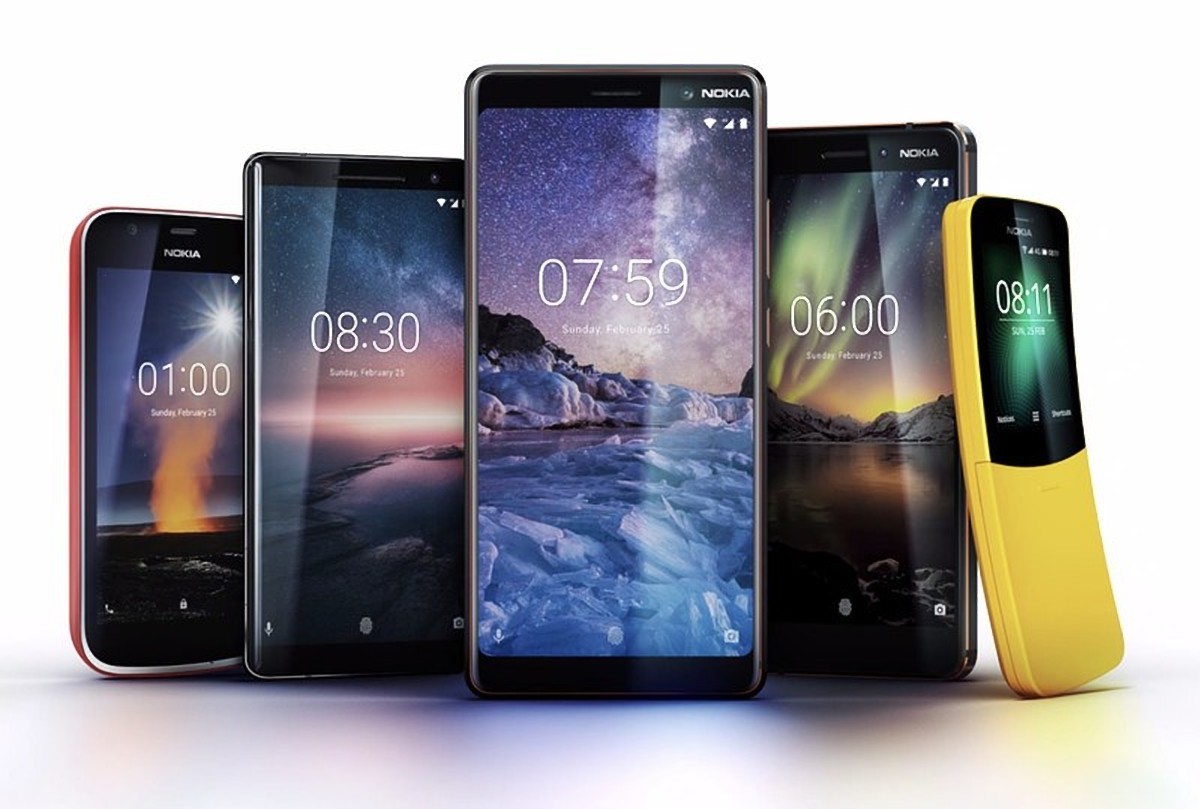
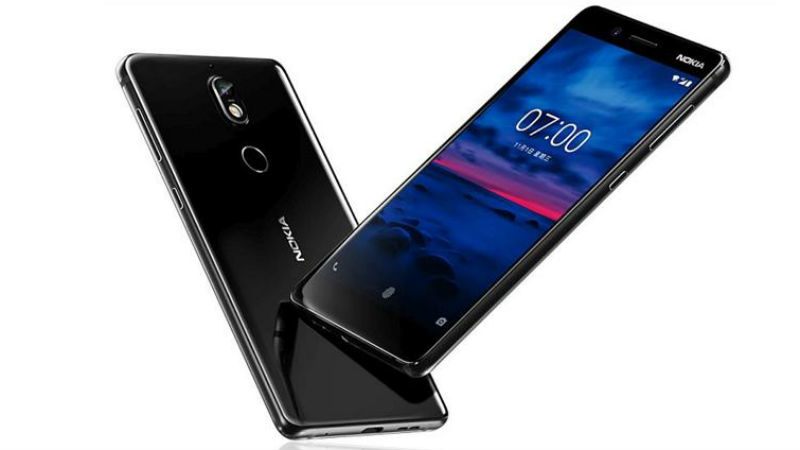
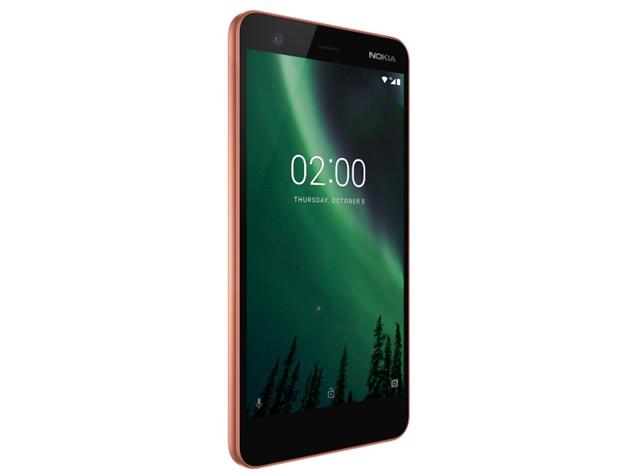
HMD Global, the home of Nokia phones, has announced five new additions to its portfolio of Android smartphones – Nokia 8 Sirocco, Nokia 7 Plus, new Nokia 6 and Nokia 1.
These new devices comes after the phone company, according to analyst firm Counterpoint, sold total of 16.3 million phones between July and September of 2017. From this figure, 2.8 million were smartphone sales and 13.5 million were feature phone sales.
The five new devices, according to the phone maker, promises a pure, smart, secure and up-to-date Android experience.
The Global phone maker also announced it is set to become the first global partner to have a full suite of devices selected into the Android One programme by Google, seeking to deliver a pure, secure and up-to-date Android experience has ensured Nokia smartphones were a natural fit for the global programme.
In a statement, the Executive Vice President & Chief Marketing Officer of HMD Global Pekka Rantala said that smartphones are an everyday partner and something people need to know they can rely on.
“Last year we promised that we would deliver on all the hallmarks of a true Nokia phone experience and that we would live up to the trust people have in the Nokia brand. This year, we are delighted to join the Android One programme that reinforces our commitment to pure, secure and up-to-date Android and makes us a natural choice,” He added.
Specs
With a pure Android installation, the Nokia smartphones come with no UI changes or hidden processes that would eat up battery life or slow them down so you can enjoy your new phone for longer.
Nokia 8 Sirocco

Inspired by the rich design heritage of Nokia phones, the Nokia 8 Sirocco’s elegant design and compact style is the ideal blend of precise crafts-man ship and purposeful innovation.
The device delivers storytelling features including enhanced Dual-Sight, ZEISS optics and carefully tuned acoustics with Nokia spatial audio, the Nokia 8 Sirocco is an ultra-compact powerhouse, and our most beautiful smartphone to date.
Its curved glass finish envelops a precision-crafted stainless-steel frame to deliver a fusion of strength and beauty.
Its stainless steel frame is 2.5 times stronger than 6000 series aluminium, and its 3D Corning Gorilla Glass 5 is robust enough to endure life’s everyday knocks. Luxuriously weighted and perfectly balanced, it feels more secure in your hand thanks to the improved grip given by the dual diamond-polished stainless steel frame.
The device allows users to capture every detail thanks to the Nokia 8 Sirocco’s dual rear sensors with ZEISS optics that combine an ultra-sensitive, wide angle primary camera for impressive low-light performance and a secondary 13MP sensor with 2x optical zoom.
Nokia 7 Plus

Made for creators to deliver stunning content, the Nokia 7 Plus combines innovative optical hardware and imaging algorithms that captures moments into photos.
The device is enhanced Dual-Sight, dual rear sensors with ZEISS optics combined with an ultra-sensitive 12MP wide-angle primary camera for excellent performance in both low-light and it also has an extra secondary 13MP camera that delivers 2x optical zoom for the moments when you wish you were closer.
The Nokia 7 Plus is backed by powerful Qualcomm Snapdragon™ 660 Mobile Platform to enable users to capture and enjoy more content for longer.
With its gently curved back and slim edges, it comes with a big-screen experience in a comfortable, neat package with a vivid 6-inch 18:9 Full HD+ display, making the Nokia 7 Plus perfect for browsing, social media consumption, gaming and entertainment with more content in the same width as a traditional 5.5-inch display device.
Available in a choice of two colour blends, Black/Copper and White/Copper, the Nokia 7 Plus will go on sale from early April.
The New Nokia 6

Building on the success of its predecessor, the New Nokia 6 packs an enhanced Dual-Sight, ZEISS optics, USB-C fast charging, offering a more compact screen-to-body ratio, Nokia spatial audio and pure, secure and up-to-date Android Oreo.
The New Nokia 6 takes the original’s precision quality to the next level by combining a body, made from a solid block of 6000 series aluminium, with an 11-hour two-tone anodising and polishing process.
The device unites a sculpted 2.5D display with damage-resistant Corning® Gorilla® Glass with a compact and refined body built to last.
The Nokia 6 is available in three slick colour blends ranging from Black/Copper, White/Iron and Blue/Gold, as well as two configurations of 3GB RAM/32GB ROM.
Nokia 1

The Nokia 1 is a breakthrough in accessible technology, delivering smartphone essentials with the reassuring quality you expect of a Nokia phone and a refreshingly familiar design to fans around the world.
The device comes with Android Oreo™ (Go edition), a version of Android optimized for devices with 1GB RAM or less.
Featuring the iconic ‘Nokia smile’ in a fresh new package, the Nokia 1 is designed to be smooth and responsive while highlighting apps that are optimised for Android Oreo™ (Go edition).
Nokia 8110 – Reloaded

Nokia is keen on re-inventing the old with the launch of Nokia 8110.
The device comes with a 4G network spectrum, delivering crystal-clear VoLTE calling and is complete with the iconic curved slider design.
With a familiar and easy to use interface, the Nokia 8110 features an intuitive tactile mechanics, with slide to answer and end calls, as well as an addictive helicopter style spin on its axis.
Nokia 8110 comes with the quality you expect from a Nokia phone, delivering durability and reliability as standard.
With access to an app store, for favourites like Google Assistant, Google Search, Google Maps, Facebook and Twitter, send and receive emails or import your contacts and sync your calendar with Outlook and Gmail.
To keep it running flawlessly, the device features the Qualcomm® 205 Mobile Platform. And yes, it comes with a revamped version of Snake.
With two vibrant colours to choose from, Traditional Black and Banana Yellow, the Nokia 8110 will be available from May.