After launching ‘Megamix’ Tigo thrills customers with another data and voice bundle package.
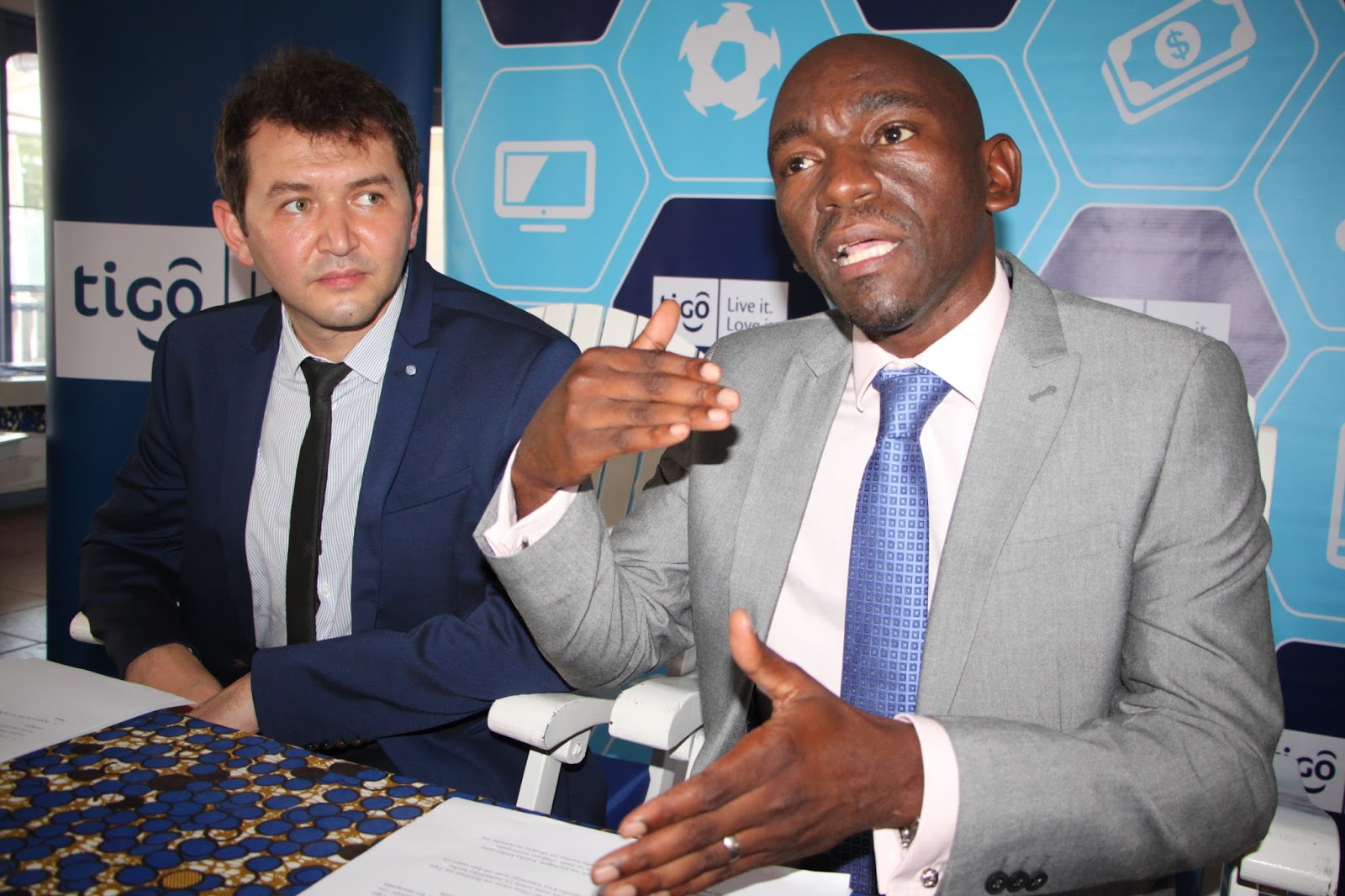
After launching ‘Megamix’ Tigo thrills customers with another data and voice bundle package.

Microsoft East Africa and Liquid Telecom have joined forces to improve and accelerate the use of cloud services across Africa. The joint project will help boost the continent’s access to world-class software.

The designation, a first for any global TV manufacturer, highlights the ability of Samsung’s Quantum dot-based TV to overcome conventional display limitations

African data collection startup Bamba has announced today that it has closed its first seed investment round after raising US$1.1 million (Kes. 110 million) in investment funds, making it one of the largest and most successful seed rounds completed by an East African startup. At closing, Bamba is proud to have a global investor base that spans Silicon Valley, New York, Washington DC, Austin, London and many regions throughout Africa.
Bamba is a boutique data collection agency that specializes in innovative solutions for rapidly gathering cost-effective and high-quality consumer insights from emerging markets that can be otherwise challenging to reach. One such solution is Bamba’s unique tool that allows the building of highly targeted and responsive panels for data collection.
Clients hail from a diverse array of sectors, including market research consulting, private equity, agriculture education, health, finance, government agencies, NGOs and private companies. The versatility and effectiveness of Bamba’s offerings have resulted in numerous high-profile clients, such as Kantar, the Aga Khan Foundation, and IPSOS. “Bamba has made it possible to deliver panel-based projects a lot faster by providing access to highly targeted respondents,” says Arnold Nyakundi of IPSOS Kenya.
With humble beginnings in Nairobi, the company started with just its 3 co-founders, Al Ismaili, CEO Shehzad Tejani, COO (@Tejanishehzad) and Faiz Hirani, CTO (@FaizHirani) and had a core workforce of 7 full-time employees in 2015.
“Since then, we’ve further expanded to employ 21 full-time staff, along with numerous other field consultants around the world. It’s incredible; we’ve established a global reach, spanning Canada, US, UK, Uganda, Tanzania, South Africa and Nigeria. This is in large part thanks to ongoing support from our investors,” says Al Ismaili, co-founder and CEO.
Bamba’s success in attracting investors was the result of a number of factors that created a perfect storm. First, in the past several years, consumers in emerging markets have become more engaged and connected through widespread adoption of smartphone or feature phone technology, presenting the opportunity to finally tap into the wants, needs and opinions of these consumers for companies agile and innovative enough to build the right tools.
Second, investors have become increasingly interested in opportunities to invest in the African market in recent years, and accelerator programs have stepped up by accepting greater numbers of African startups into their mentorship programs.
Finally, Bamba was itself accepted into the prestigious TechStars accelerator program in 2016, where they gained access to a well-established network that provided them with business development mentorship, customer acquisition, capital, talent recruitment, as well as a sizable initial financial investment as part of the accelerator program.
Rishi Varma, founder & CEO of AlphaDetail which was acquired by QuntilesIMS (formerly IMS Health), was introduced to Bamba during their time at Techstars. Rishi was based in San Francisco where he built the largest market research firm focused on primary research in the pharma/biotech industry in the US and was so impressed by the Bamba team that he became one of their initial investors.
“Since the first day I met the founders of Bamba, I knew they had a special team and product to tackle a challenging but large market opportunity. I had no reservations in backing them financially and as an advisor. Having built a highly successful market research practice myself, I can clearly see the Bamba team has what it takes to do the same,” he said about his investment decision.
Bamba’s cutting-edge data collection software also attracted some attention from within Africa. In November 2016, Bamba was invited to participate in Lions’ Den, the Kenyan equivalent to popular TV programs Dragons’ Den and Shark Tank, where Bamba pitched to the show’s panel of 5 venture capitalists (also known as Lions). They successfully won over Darshan Chandaria , CEO and director of the Chandaria Industries Group, who invested US$250,000 (Kes. 25 million) to be used to expand Bamba’s operations throughout Africa.
Other investors have been attracted to Bamba’s unique combination of positive social impact and real functional value;
“We are very proud to be investors in Bamba,” says Brett Hurt, founder of BazaarVoice and Data.world. “Not only are [they] providing a very valuable analytics service, but they are also providing jobs in countries that really need them. This is one of those rare businesses that has a combination of a massive market opportunity and a real social impact. Their focus just couldn’t be better.”
Having achieved its investment goal for the first seed round, Bamba now looks to the future with plans to put the US$1.1 million towards developing new innovative data collection solutions, supporting a larger number of clients, and expanding its team and geographical reach. Of course, this will all be done while continuing to lend a voice to people in emerging markets so that they can play a bigger role in shaping their world.

FEP Holdings has implemented an Enterprise Resource Planning (ERP) system worth US$ 131,008 (Ksh13.5 million) in a bid to improve efficiency and enhance internal controls as part of it’s on going implementation of a framework strategy dubbed Explosion 2020.
According to Maurice Korir, the Chief Executive Officer of FEP Holdings, the strategy is aimed at attaining year on year bottom line growth of 30 per cent as a minimum and sustainable profit before tax of at least Ksh1 billion by 2020.
“The SAGE Evolution system will improve our management information system and streamline operations for optimal growth,” he said.
The ERP system comes with a procurement module that ensures all purchases follow the established procurement policies and tiered approval processes.
The ERP system also features fixed asset management and tagging which ensures that the Group has proper inventory of all its assets valued at KSh3Bn and their respective location. “This is important for safeguarding FEP Holdings’ existing assets,” he added.
With the installation of the system, Korir said the company would now be more customer centric, with incidents being booked into the system such as customer suggestions, complaints or any occurrence which requires action.
“We will now ensure that customer complaints are booked, actioned or escalated to the relevant person within a reasonable time,” he says
FEP Holdings Ltd has consolidated management of its businesses with a paradigm shift that moves away from managing enterprises on legal entity basis, to one that seeks to capitalise on synergies that can be derived from co-related business units.
The system’s branch accounting capability now ensures the centralization of all strategic business units’ records. “We have already linked the branches of Fountain Technologies Limited in Uganda and Tanzania to our ERP system with Ghana due to be linked this month,” he added.
The company has within the last two years recruited a new management team to head the audit, finance, investments & projects, procurement and marketing departments. “We also recruited division managers to lead commercial operations because at the end of the day, a system is as good as the people running it,” he said
The installation will also support more efficient employee payroll and performance management, improve gathering of business intelligence and harness the use of ICT for service delivery at all levels.
The automation will be extended to Fountain Credit Services Limited (FCSL) which installed a new core banking system and is set to roll out digital loans within this quarter.
The ERP system is part of the re-engineering of FEP Holdings’ operations to compete in a dynamic business ecosystem where disruptive technologies are consistently necessitating continued business innovation.
By Brian Yatich
Panic app that alerts local security, medical, and fire authorities in case of an emergency
Insecurity in the East African region over the last few years has been on the rise; in Kenya for instance, Nairobi tops the list with more sophisticated criminals in operation.
A recent study conducted by Mo Ibrahim index of African governance has revealed a worrying upsurge in the level of armed robberies and other violent crimes with the country being ranked poorly in personal security for its citizens and visitors and in the safety and rule of law.
However, several institutions are taking upon themselves to curtail this state and also to capitalize on the same, as they offer range of different security apparatus like CCTV’s and scanners, but one team of university students have defied the odds and come up with their very own Security App, which acts as a watchdog in case of an emergency.
“Cases of insecurity has been a ravaging concern, the streets are no longer safe particularly during the night. Women and children are subjected to fear in lonely alleys” says James Chege co-founder Usalama App.
The developer says that there is a lot to be done with the current security situation in Kenya, pointing out the major metropolitan regions that are marred with cases of petty crime like pickpocketing which he believes can be eradicated by a more watchful society attesting that the rate of emergency response systems like the 999/911 hotline is not yet on top notch.
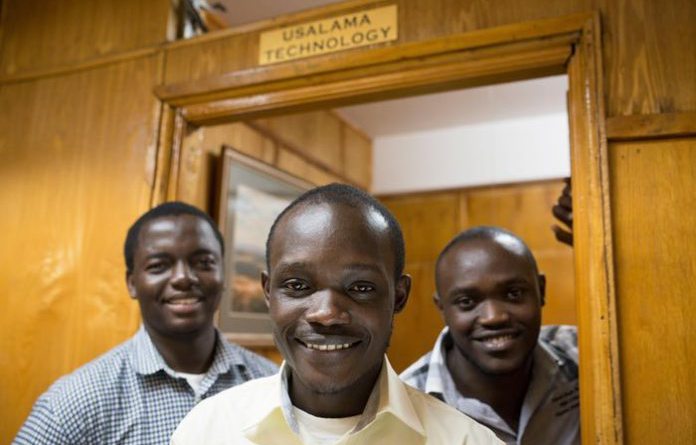
Edwin Chege together with his Team
With task at hand, he teamed up with his school colleagues; Kenneth Gachukia, James Chege and Marvin Makau, and crafted a security app dubbed “Usalama” which translates to Safety in Swahili.
Chege discloses that Usalama Technology was conceived by Edwin Inganji, there lead founder, who seemingly got mugged and attacked by unknown assailants on his way home from university, and made away with his valuables, he then vouched to end this vice.
“Usalama application is a security application owned by Usalama technology. Its main aim is to offer fast, efficient and easy emergency communication when an individual is confronted with emergency situations which range from crime, health and gender violence based emergencies” Chege explains.
“The app, he says “contains a big database of all record of crime alerts prompted by users which will enable police and other emergency responders to identify crime-prone areas, allowing them to put in place the necessary security measures,” he says.
For a new user to register, Chege states that the app requires one to provide three contacts of their next of kin, including their spouse, a work colleague, and a parent.
“Those contacts are the first people to be notified in addition to a relevant emergency service providers in case of an emergency” he adds.
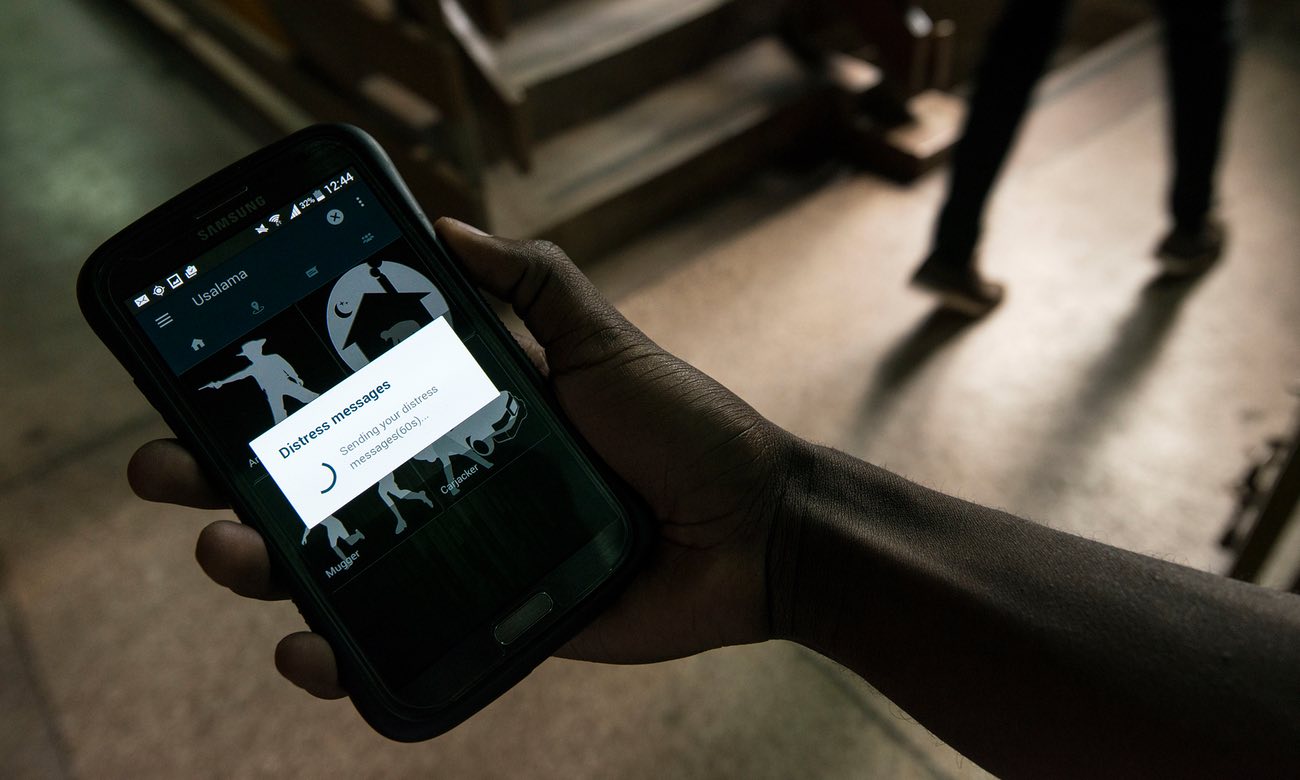
Once triggered the App discreetly sends emergency updates to all preselected contacts every five minutes at the same time, providing a one-way call allowing the recipients to listen to you without compromising your security, this will go on for a while until the situation is resolved.
“The application can be triggered in a number of ways; for instance, you can either shake the phone or click on the distress button on the home page of the App depending on the sensitive nature of the emergency” He explains.
Apart from those features, Chege says that the App has options like, “walk with me” which he says allows users to walk and monitor each other virtually on a map as they head towards different directions.
“It also has a timer which allows users to set destinations towards which they are going and have pre-defined alerts raised in the event they do not arrive, one amazing feature also is ‘usalama around’, which allows users to view other Usalama users 200 metres from their physical location in order to have a better sense of security and location and lastly a ‘based crime news’ which enables users to anonymously post crime news around them.” He says.
Chege reaffirms that the App has been so effective that it has seen it receive rare reviews and has featured in different international media.
Usalama is currently partnering with the GVRC (Gender Violence Recovery Centre) Nairobi women’s hospital.
“Several entities have called to declare an interest but we cannot disclose them as yet as contractual negotiations are currently underway, ” he says.
Starting up has been a tussle for the four, the App has been running based on the proceeds acquired from other activities conducted by Usalama Technology. A rough estimate of the amount reinvested into the application by the company is closing to half a million Kenya shillings, and they are on the course of spinning around their fortunes.
Coverage
Since its launch mid-November last year, Usalama has attained more than 1500 downloads with about 300 installs in Mozambique and 300 others from across the region.
“Kenyan downloads are just slightly near the 1000 mark. The application over the past week has been averaging about 100 downloads a day. We have also received considerable media attention with articles being published both locally and internationally in media, blogs, social networks and TV” he says.
“Our target now is to grow all aspects of the enterprise into fully fledged and self-regulating departments that all turn over healthy margin. Also, we hope to have launched our other products in the East African market and have them competing at the highest level” he says.
Challenge
“The main challenge,” Chege says, “we faced in the initial stages was financing before we established structures within the company that allowed us to earn money before the Usalama platform stabilised. Since our innovation was a relatively new concept, we also faced scepticism from those who did not understand or share our vision” he says.
The developer says that, for one to be a successful entrepreneur it all boils down to one thing, how you handle adversity and the ability to handle it in a positive manner.
“Entrepreneurship is never a guarantee and the road is full of ups and downs however how well you handle challenges determines your persistence and persistence always goes a long way in building enterprises,” he says.
Within the next five years, Chege says that their target is to fully penetrate the African security market, with a major global footprint market and to be the main emergency communication service provider within the continent.
Since their launch last year, the app has attracted over 3,000 users and has been shortlisted to represent Kenya in the Africa Prize for Engineering UK that aims at awarding social entrepreneurs in Africa, where only 16 African entrepreneurs are selected by the Royal Academy of Engineering based on the potential of their project. The finals for this award will be later this year.
With public safety and security of people in mind, Chege and his team plan to ensure security and peace for people in Africa and also go a long way in averting the high crime rate in the region.

After successfully launching Windows Insider4Good program in Nigeria last year, Microsoft in partnership with GrowthAfrica, today announced that it will be expanding the program to East Africa.
The program according to Microsoft is designed to help entrepreneurs who have innovative social business ideas tackle local problems in their local communities and change how they live.
The Insiders4Good East Africa Fellowship program will be seeking to support 25 entrepreneurs from Kenya, Uganda, Tanzania and Rwanda with mentorship and technology as they seek to turn their ideas into reality.
“Innovation is in the DNA of East Africans and we see this region as key area where exciting ideas are grown. We have been impressed by the growth we have seen in Nigeria and we are thrilled to expand in this area,” said Bambo Sofola Microsoft Director of Software engineering.
Successful applicants will be taken through a six months of tailored technical and strategic mentorship from local and international leaders. This is in addition to receiving a suite of Microsoft hardware and softwares. According to Sofola, the applicants for the East African Fellowship don not need to have a technology oriented idea.
The announcement was made during the ongoing NexTech Africa event in Nairobi, Kenya. The event is described as a “meeting of the minds designed to engage, empower and inspire” people from every walk of life across the continent.
Interested entrepreneurs can apply for the fellowship before March 31st with the boot camp set to begin on the 6th of June 2016. To apply visit http://Insiderfellows.com.
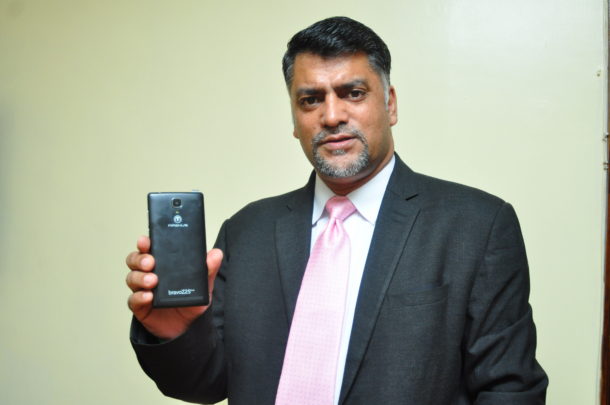
Magnus Telecom’s foray into African smartphone market could trigger fresh price war with the already existing brand is in fierce competition
By Bonface Otieno Kanyamwaya
According to a study by e-commerce company, Jumia, of the 3.1 million devices sold in Kenya in 2015, 1.8 million were smartphones, representing 58 per cent of the units sold.
“This represents a substantial year-on-year growth of 112 per cent compared to 3.6 per cent increase recorded in the feature phone category,” says Parinaz Firozi, Jumia Kenya Managing Director.
The report further indicates that high penetration and growth rate of smartphones is primarily due to a strong economic climate and increasing internet and mobile connectivity. This has created a favourable competitive landscape, which has led to proliferation of more brands in to the local market.
One such brand, which has just made a debut in Kenya and is out to battle for a share of the smartphone market with the already well established brands like Samsung, Huawai, Tecno, and Infinix is Magnus Telecom.
“After consolidating our position in Saudi Arabia and United Arab Emirates (UAE), we wanted to create our own brand outside these markets. Kenya is a very advanced market composed of urban and rural mature customers. It’s cool weather condition also makes it the ideal place to be in east Africa,” says Mr.Noor Ali Noor, Director (Africa) , Magnus Telecom.
Magnus Telecom is part of Telelink Group Limited based in Dubai, UAE.Telelink has been in telecommunications business for the last 15 years while Magnus mobile is about three years old in the UAE market.
According to Mr Noor, unlike other brands, Magnus Telecom is proud to be among the smartphone brands to redefine the market for users in Kenya.
The company, Mr Noor says, is perfectly positioned to wrestle it out with the other big brands in the next wave of smartphone devices with price tags that are unbelievably affordable.
We will address the market through our Kenya Partner UMOJAPAY Smart Shop Limited Headed by Ms Riffat Manji. The service arrangement for Kenya customers is with Finecare, headed by Mr Toni.
For instance, their smartphones retail at between Ksh 4,500 (US$ 45) and Ksh 16,999 (US$ 169.9).They also sell feature phones retailing at between Ksh 1,200 (US$ 12) to Ksh 2, 500 (US$ 25).
“Whoever said high-end handsets have to be expensive missed the point. Our idea is to sell at a lower price and generate volumes rather than selling a few handsets at exorbitant prices,” Mr Noor.
“We are not here to make money at the initial stages, but rather to give people value for money. Once they realise this, we will grow and then we start making money. It’s a game of numbers aimed at acquiring 5 percent of the market share by March 2017.”
The phones are currently being sold mainly through Jumia Kenya. However, they also intend to partner with leading telecommunication service providers such as Safaricom and Airtel to help market their brand in the Kenyan market.
Additionally, they are looking forward to sell their products in other e-commerce sites such as OLX Kenya.
Unique features
“Our wide range of phones features long lasting batteries, impressive in build memory that can expand to hold all of users’ precious memories. Add magic touch screens, dual SIM capabilities, and anti-radiation technology, and you’ve got a selection of future proof handsets that are set to excite even the most discerning buyer.”
Devices in the infinity line make up the company’s flagship range and the Infinity G10 is right at the top of this pile.
Retailing at Ksh. 13,000 (US$ 130), Magnus Infinity G10(4G) is a dual SIM phone, which uses both a micro SIM and a nano SIM card. However, SIM 2 slot, which takes the smaller of the two cards, is also the micro SD card slot.
It has a 13 megapixel camera at the back complete with a flash. On the front is the expected 5 megapixel camera with an LED flash.
One of the most compelling features in this phone is the fact that it comes with 16 GB of storage space. This is enough to install plenty of apps and store many files. If you choose to install a micro SD card, you will be glad to know that you can upgrade by a maximum capacity of 64 GB. Since there is enough storage, one can carry movies to watch while on the move.
Its graphic processor also enables one to turn the 5.5 inch display into a gaming screen and bring enjoyment into one’s leisure.
Call for fair Competition
One of the key issues that Mr Noor is lobbying for in the sector is a level playing field.
“If you are a player within this sector, and also abide by Government policies and contribution to society that will be much better progress and growth as an Organisation and Brand. We are ready to cooperate with CAK for any initiative they attempt.
Mr Noor believes that in the next five years, Magnus Telecom will be a well-known brand not only in Kenya but across east Africa.
“We will be among the top three brands in east Africa not only in terms of volume but also in terms of value for money, good after sales services, and regular introduction of new models,” he says.

African startups will have the chance to launch and promote their innovations to investors during the annual conference.
By Tullah Stephen
Early stage startups in Sub-Saharan Africa, are now invited to apply for the 6th edition of Demo Africa, an initiative that aims to connect African startups’ to the global ecosystem.
Through Demo Africa, tech startups in the region will have a chance to launch their products while they meet and interact with venture capitalists, investors and tech acquisition specialists from across the world.
Entry categories include Health, Education, Agriculture, Commerce, Hospitality, Manufacturing, Entertainment, Energy and Logistics. Thirty companies will be selected to launch their products at the main event that will take place in September 6th and 7th in Johannesburg South Africa.
The 30 companies will also receive mentorship and will attend a 2-day bootcamp in preparation for their launch and software and services worth more than USD150,000 each for the next three years. The annual event will be preceded by mini demo events in 14 different countries in Africa. The mini demos or innovation tours will commence on the 7th of February in Nairobi and will traverse across the continent till the 19th of May where the tour will come to an end in Cameroon.
DEMO Africa team and partners will engage with tech startups’ to share the DEMO Africa vision as well as coach and mentor interested startups in addition to sharing tools that can help them build and grow their businesses.
“We will be covering all the four corners of the continent and we have increased the number of countries that we will visit this year,” said Eng. Martin Obuya, projects director at DEMO Africa.
Some of the new demo stops according to Eng Obuya, include Botswana, Cote D’voire, Senegal and Morocco. “There has been a lot of innovation and entrepreneurship activities in these new countries and we hope to catalyze the ecosystems there in line with our mission.”
On his part, Harry Hare, the executive director at DEMO Africa said the events aim is to engage with the startups in the various countries. “We urge the startups to take the advantage the partner network created by DEMO Africa and its partners through the LIONS@FRICA partnership to create linkages and networks that can help them grow.”
According to Harry, Africa’s tech space is showing a growing potential to solve the numerous challenges the continent is facing. He adds DEMO Africa is actively participating in pushing technology in Africa to greater heights. Since 2012, DEMO Africa alumni have generated over USD54 million in both venture and angel investment or from unique mix of positioning and exposure.
To apply to launch at DEMO Africa, visit www.demo-africa.com

By Themba Nobanda,
East Africa is a region where millennials (18 to 34 year olds) constitute more than three quarters of the entire population. It is thus important for most brands to win over this segment of the society to achieve sustainable growth. The major challenge for most brands today is how to reach and engage this particular age group given their apparent apathy to marketing material coming their way and their reliance on technology that makes traditional communication channels somewhat obsolete.
The technology revolution that has occurred in the past decade, can be argued to have created the widest generation gap between this generation and older segments in society since the industrial revolution. There is a general lack of comprehension on the market needs of this segment with most marketers coming from an older and different generation. Whilst there are some existing studies that provide insight into millennials, most of these strategies are formulated in The West where elements like diversity of cultures are less pronounced making the ‘one size fits all’ solution not sufficient in the African continent.
One of the main differences between this generation and earlier age groups is that they are more connected thanks to a wide range of devices and availability of broadband, and so their concept of conversation, friendship, socializing is very different. This is a generation where various individuals like Justin Bieber and Kim Kardashian have more influence than presidents and the their endorsement of a product via social media may have greater impact than advertising on prime time news.
Millennials live in a world of limitless possibilities. The idea that one can speak to the President of the United States from a remote village in Kenya via social media and receive a reply, opens doors and opportunities which were earlier deemed to be an impossible dream. In fact, it is arguable that this generation has the best opportunity to leap frog the rest of the world as technology has removed hurdles that have been seen to pull the African continent back such as physical infrastructure (roads, rail, ports).
Motivated by a mix of circumstance and opportunity, millennials show much less reliance on governments and corporations to help them solve issues. The result is a generation of young Africans that is showing greater creativity, innovation and entrepreneurship than ever before. Uganda, now ranked the world’s most entrepreneurial nation, also has the world’s youngest population. An often murmured Luganda expression ‘Twakowa tusaba government etuyambe’ (literally: we got tired of waiting for government to help), reflects the disappointment in a government but simultaneously expresses the sense of self-reliance that is spurring them to get up and make things happen for themselves. ‘The Hustle’, is a phrase used often by young Kenyans to refer to the economic struggle of making something out of nothing (as it were). It has become common language in Kenya, where unemployment is at its highest ever and 5th highest in the world at 40 per cent, but shows the resilience and determination to succeed that is core to the ‘yes we can’ attitude of millennials.
Brand managers/Marketers/Agencies need a new mind set
Gone are the days when advertisements and promotions were created to talk to the audience. Successful brands of the future have to be humbler and prepared to talk with (not to) their audiences. This generation is motivated more by conversations and peer to peer referrals than ever before, enabled by the speed and frequency of communication that digital and social media have created. In this new age the tables have turned from brands leading conversations to consumers spearheading them. While this might pose a challenge, with the right tools this is also great chance for brands to reach an audience that knows no borders and the potential customer base is not limited by geography nor currency in the advent of digital currency.
To get to millennials, agencies need to come up with ideas that go hand in hand with the brand strategy applying a more creative approach that invests more in agile tactical marketing to stay relevant and be in the right conversation at the right time. Tools such as the Consumer Connection Survey (CCS) by Dentsu Aegis Network East Africa set to be launched in Kenya in April 2017 can allow brands make decisions based on data based analysis which has been lacking in the African continent.
Social Media
Tools such as CCS that research social media behavior to understand sentiment offer a three-sixty-degree view of what consumers need enabling brands to communicate better with them. With data strategists working closely with brand managers, there can be better use of insights generated by such tools to create communication that resonates with millennials. As many pundits will attest, brands that are getting traction in the market place are those that understand social media. Many successful new businesses have been launched and built on social media way before getting on to traditional media. Yet older and more larger organizations are finding it more difficult to adapt.
The role played by social media in creating or destroying brands is bigger than ever before and will only continue to grow in significance. Studies have shown that seventy percent of people are likely to look at online reputation of a product like an app on the app store or a hotel/destination they plan to visit. Social media peer to peer influence is construed to be more believable than traditional advertising creating an increased need for brands to team up with influencers.
Analytics software such as CCS Planner provide solutions that enable more impact through well placed and timed campaigns like pop ups or posts to a segment tailored to their tastes and preferences. With these tools, brands can target consumers specifically interested in what products they sell meaning a company like General Motors only advertises to clientele that is specifically interested in cars at that time. Using such analytics brands can also effectively monitor and evaluate progress and adjust campaigns as and when necessary to optimize their performance. The new age requires, new thinking and new tools. Opportunity in 2017 and beyond belongs to the innovative.
The author is the Client Service Director at Dentsu Aegis Network Sub Saharan Africa