As M-PESA turns 10, data shows 93 per cent of WorldRemit’s money transfers to Kenya go to mobile money accounts

As M-PESA turns 10, data shows 93 per cent of WorldRemit’s money transfers to Kenya go to mobile money accounts

Institutions often fail to recognise the impact of cyber security on business, therefore risk damaging organisations’ data, assets and reputation.
By Brian Yatich
Cyber crime has become a growing phenomenon, ignited by the constant growth of technology which has provided criminals with more tools and methods to perpetuate crime.
Cases of burglary, theft and shoplifting which had previously been an issue have reduced and the evil has now shifted online, this has never been an issue to the countries in the region until lately.
Early last year an anonymous hacker group, only identified as “Anonymous” conducted a sophisticated cyber-attack on Kenya’s government facilities, it breached the foreign ministry server and made away with loads of data which ended up leaked to the deep web (a community hidden from the normal internet).
The attack was conducted under the slogan “OpAfrica” an operation which seeks to expose government and corporate corruption across African countries.
The data contained confidential files from the ministry’s server including email conversations, security related communication, international trade agreements and letters discussing the security situation in Sudan.
Other documents include letter conversation related to business collaboration deal between Kenya and Oman and several other documents discussing state officials visiting the country.
Also the same year in March, the Central Bank of Kenya (CBK) received information that the bank and other government facilities could be the target of an imminent cyber-attack; it will be remembered that back in 2013, the CBK suffered a major breach when it’s website was taken over by a cyber-based group known as the ‘Gaza Hacker Team’ which blocked many visitors from around the globe who uses the site to access exchange rates and other financial information.
Another group in February last year hacked Ugandan Ministry Of Finance and leaked data including the site’s database with over 500 usernames, phone numbers, emails and their encrypted passwords, they also attacked another IT company under the Rwandan government. And in Tanzania the same group also leaked details of 64,000 workers from Tanzanian telecom firm.
The anonymous group left a message saying, “It’s too late for African government to expect us”
According to a report by a Kenyan cyber security consulting company, Serianu, 80 per cent of Kenyans connected to the Internet are vulnerable to cybercriminal attacks.
The report indicates that state of Cybersecurity in the region, with majority of private companies and public sector organizations remain very exposed to cyber-crime and internal IT fraud.
Serianu’s study also reports that the annual cost of cyber-crime to Kenyan companies is estimated to be KES 15 billion (USD146 Million) with the public sector being the most affected having losing approximately KES 5 billion per year, followed by the financial services sector at KES 4 billion and the manufacturing and industrials sector at KES 3 billion in third place.
The telecommunications, media and technology and other sectors are estimated to lose about KES 2 billion and KES 1 billion respectively.
The security firm is warning that with the given growing technological landscape especially with the use of social media, will only give cyber criminals an opportunity to infiltrate the networks.
“The scourge is diverse and most institutions affected right from, government institutions, schools, Telecommunication industries and Insurance companies, however these institutions often fails to recognise the impact of cyber security on business, and therefore risk their organisations’ data, assets and reputation” it reads.
The report further found that most organizations with over 70 employees in Kenya have at least two vulnerable computer servers and up to fifteen infected computers that were already hacked into by cybercriminals.
The country records at least 3,000 cyber-related incidences on a monthly basis according to the internet security company.
“The key to protecting data is to develop realistic and prioritized strategies around a situational awareness and pro-actively implement them.” William Makitiani, CEO Serianu said in the report.
“There is a need to thoroughly protect our digital platform. Security professionals need to focus on establishing cyber security situational awareness within their respective organizations,” Makitiani added.
Curbing cyber-crime
Keen on tackling these increasing cases, the government of Kenya has been working on a National Cyber security Master Plan whose goals have included setting up a co-ordinated incidence response mechanism, PKI infrastructure and comprehensive cyber security policies.
With such high incidences of cyber-attacks, the Kenyan government initiated a watch dog known as Cyber Incidence Response Team (CIRT) under the Communications Authority of Kenya to provide information and assistance to its citizens in implementing proactive measures to reduce the risks of computer security incidents as well as responding to such incidents when they occur.
Among these measures it included the setting up of a forensic laboratory in the next three months which, will seeks to monitor imminent threats and prevent possible attacks.
The top four sources of cyber security attacks to the East African countries, the report lists the US with the highest number at 20 per cent followed by China, Russia and Venezuela at 19 per cent, 11 per cent and 10 per cent respectively.
In order to assist East African organisations in overcoming these burden, late last year, the National Information Technology Authority – Uganda (NITA-U) together with NRD Companies organized the fourth annual Cyber Defence East Africa 2016 conference (CDEA) which seeks to serve as a practical knowledge sharing, skills building and networking platform, aimed to address cyber security issues and bring together the Government, the ICT Industry and Academia in efforts to create a better and more secure digital environment for the states, governments, businesses and citizens in East Africa.
Currently, Kenya ranks at (15) position with Uganda ranking at ten (10) globally and Tanzania holds at positon (22) in the ITU Global Cybersecurity Index & Cyber wellness Profiles.
Cyber-criminals have been known to be targeting the holiday seasons, during a period which users are spending money online than usual.
The security firm highlighted the need for an increased number of skilled security professionals and service providers adding that the cyber-crime can be mitigated by building visibility around the company’s data, assessing the risk posed to the data and developing appropriate security programmes.
On a personal level, clicking on any links received from unknown people, or on suspicious links on social sites or e-mail can be malicious and always and are advising that an individual must double-check to ascertain that a webpage is genuine before entering any credentials or confidential information.

Global consulting firm, BFA in partnership with The MasterCard Foundation, have launched a two-day event in Ghana dubbed ‘Africa Fintech Unconference 2017’ which seeks bring together Fintech Innovators thought leaders, banks and other established financial players in the emerging Fintech sector to enable Fintech companies to engage in smarter pan-African partnerships.
‘We are looking to the growing fintech market in Ghana as a complement and counterpart to the East Africa Fintech sector, by cultivating, comparing and connecting what is happening in the West and East regional markets.
Fintech companies across the continent, including those based in Kenya, are also turning to Ghana as an attractive market to expand into, for which bringing the Unconference to Ghana, was compelling and exciting,” Amolo Ng’weno, East Africa Regional Director at BFA.
Key players in the summit were Catalyst Fund and Nomanini (South African payments platform).
Kenyan firms present were Lendable, PayGo Energy, Umati Capital, Interpay, Musoni, Sokowatch, Farmdrive and Rafode Ltd.
The event seeks to drive the agenda and focus on the issues most important to them. Some of the key takeaways about developing strong partnerships from the different sessions include; financial inclusion, strengthen partnerships with established players, understanding and defining clear goals, fostering trust and transparency as well as structuring fair upside for each partner.

MYDAWA aims to bridge the gap between healthcare providers and patients thus improving quality and cost of healthcare.

United Bank of Africa (UBA) and Kenya Tourism Board (KTB) have launched prepaid travel card aimed at promoting Kenyan tourism across the continent. Dubbed the Magical Kenya Prepaid Card, the card is designed with an embedded loyalty platform, that allows accumulation and transfer of points within the hospitality sector and encourage tourists to travel freely.
According to KTB, the card will target West African Nationals traveling for corporate, education, medical and leisure within the continent.
“The Magical Kenya prepaid Travel card is the first of its kind owing to the fact that it is the first destination card launched by UBA with a destination. Additionally, the card will be available to International and domestic travelers in Kenya. This will enable all users, whether UBA customers or not – to have unparalleled access to benefits available across all platforms. This will further enhance the Magical Kenya’s footprint in the continent,” said Jimi Kariuki, the chairperson at KTB.
The cards will be distributed across the UBA Bank’s footprint to customers and potential customers. This according to UBA, will translate to an untapped market of over 5million card users in Nigeria, Ghana and Senegal.
“The West African market is potential to us,” said Mr Kariuki. He added that the launch was the beginning of KTB’s efforts to tap into the market that has high spenders with willingness to spend. “The card is a great incentive as it avails to travellers value adds in terms of bonus points, discounts or gift,”
The target list of customers will be engaged and enticed through registration campaigns as well as convenience for everyday use both in home market and when traveling to Kenya. Customers will be categorized according to their age, deposit balance, types of accounts they hold. This will create an appeal for the card as well as the realization, eventually that this may be the only card needed in the wallet,
“By leveraging on innovative solutions provided by services such as the Magical Kenya Travel Card, tourism can not only lead the new frontier of fairer, stronger and more sustainable growth, but has the potential to become of one the most effective agents of development,” said Isaac Mwige UBA’s CEO.

Jumia Kenya on Wednesday, launched an online store within its website dedicated to selling goods manufactured in Kenya. The online retail store will allow Kenyan manufacturers showcase their ‘Made in Kenya’ products on its website under what it calls ‘Jumia Local’ program.
The program which is a collaboration between local manufacturers and Jumia will see products featured on Jumia’s main platform and promoted through it’s marketing channels.
Jumia Local Project Manager Ms Abigail Bundi, hailed the initiative saying that the manufacturing industry in Kenya brings great benefits. “Through this program we seek to support entrepreneurs in Kenya by labelling their products, thus customers the chance of buying local goods.”
Reduced commission
Merchants joining the program enjoy reduced commission and receive round round-the-clock training and support from Jumia’s vendor management team. Sellers can either store their products in Jumia warehouse or drop them once orders are made.
According to Jumia Kenya, the program will help manufacturers navigate through the complexities of developing nationwide footprint.
Products Listed
Products currently listed on the ‘Jumia Local’ online shop cut across fashion, home and living, electronics and consumables among others. All branded with a “Jumia Local” logo to help customers make their choice of buying Kenyan made goods.
Among the first that have so far listed include Chandaria Industries, Bantu shoes, Alladin world of Brands, Tropical Heat, Bata, and Darling Hair.
“We want to work on having as many products listed and encourage a culture of buying Kenyan to build Kenya. We also want use it to brand our local products for the international market,” said Phyllis Wakiaga, the CEO, Kenya Association of Manufacturers.
She adds that the program will instill pride in Kenyans and support local made products. She urged Kenyan manufacturers to look at expanding from the typical brick-and-mortar and get into e-commerce.
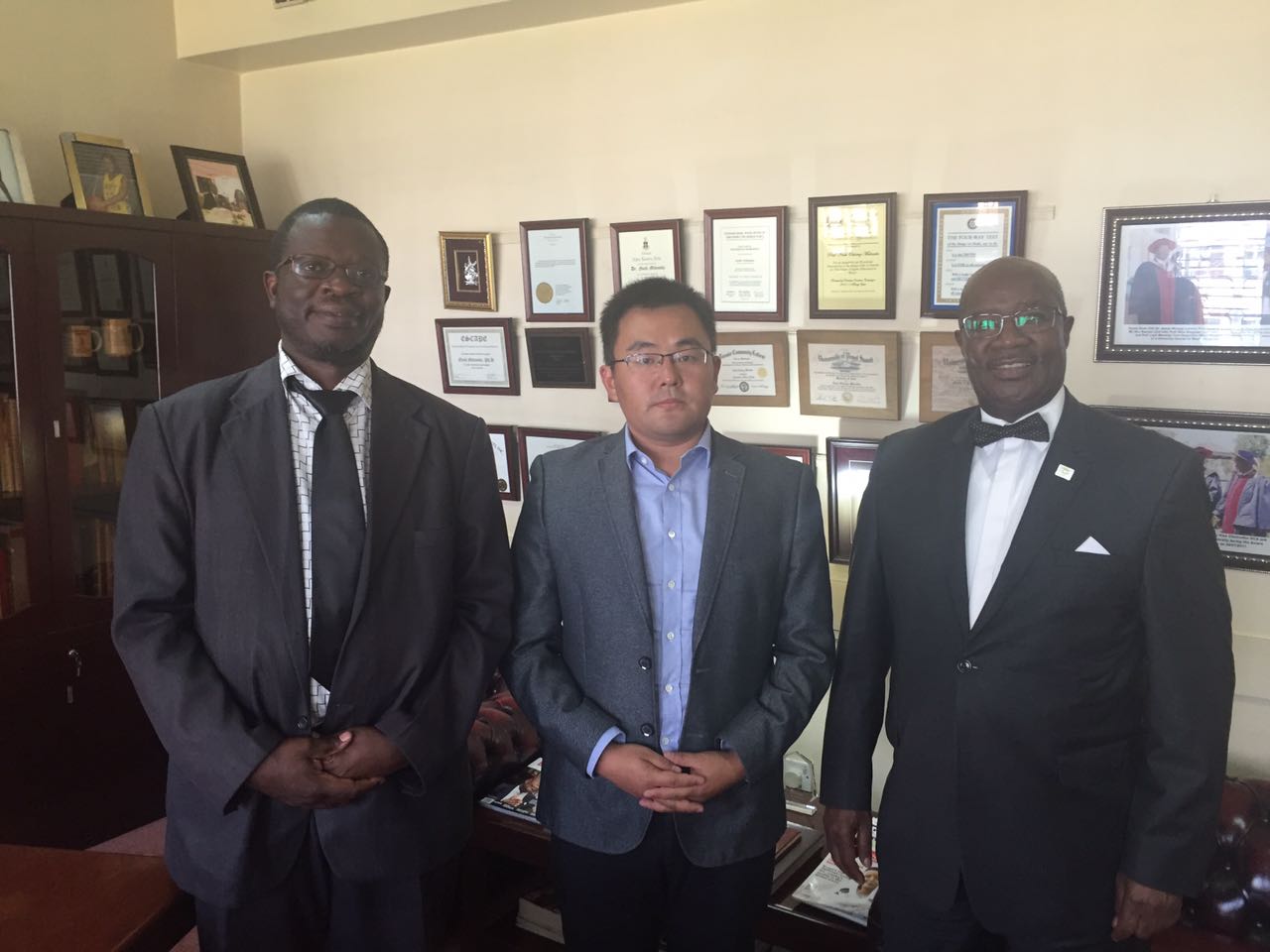
A Chinese doctor brings hope to the under privileged Kenyans seeking advanced medical health care
By Boniface Otieno Kanyamwaya
As of today, Kenya’s health care sector is suffering. Shortage of physicians and moribund health facilities against an ever growing population with numerous health care needs pretty much summarises the sorry state of affairs. The on-going doctors’ strike has only made matters worse.
According to World Health Organisation (WHO), Kenya has just one doctor and only 12 nurses and midwives for every 10,000 people, which is way below the WHO’s recommended ratio of 1: 1000.
The Nairobi based Kenyatta National Hospital acts as the main referral and teaching centre for medical treatment, with other county hospitals taking referrals from their constituencies.
In rural areas, services are provided by health centres and dispensing clinics, though this often lacks facilities and trained staff.
Data from the Kenya Medical Association reveals that about 360 doctors graduate from the two major medicine schools in Kenya, but three quarters of them do not end up working for the government.
“They know that to get a licence, they have to finish one year internship programme. Some wait until they are posted to district hospitals before quitting while the brave ones leave as soon as they are through with the post-medical school training to join the private sector, or they go abroad,” says former Kenya Medical Association Chairperson Dr Abdi Mohamed.
It is partly because of this reason that Prof. Lei Wang (the First China Post-Doctor Aid to Africa) is out to offer free medical aid to poor Kenyans as part of the growing Sino-Kenya cooperation.
Prof. Wang is in Kenya courtesy of a bilateral agreement between Kenya and the Government of China on medical cooperation. He is the Deputy Head of the Expert group on the Qifei project — a collaborative project between China’s Ministry of Science and Technology and Kenya’s Ministry of Health.
He says the Government of China has since donated four modular state of the art container clinics to the Kenyan ministry of health to boost response to killer diseases such as pneumonia, malaria,typhoid, among others.
These clinics Prof. Wang adds, have been able to deliver advanced health care services to disadvantaged communities in Kenya for free.
“Our aim is to ensure that all people have access to medical services regardless of their-economic status,” he says.
The mobile clinics, he points out,are assembled using modern Chinese technology and their design is sensitive to the local environment in Kenya.
These facilities, which cost US$ 100,000 each, are currently operating in Turkana, Mombasa and Nairobi.
“In this way, even the poor people will benefit from the Chinese overseas aid to Kenya, thereby reaffirming China’s commitment to helping African countries improve health care services against a backdrop of rising burden of infections and lifestyle diseases,” says Prof. Wang.
He furtherpoints out that to date they have set up about 20 medical campsoperations in various parts of the country, the latest one being in HurumaChildren’s Home last month,which targeted over 200 orphans who could not access quality medical services.
A wealth of medical experience
Prof. Wang comes from a family of doctors. His father and grandfathers as well as his older brother are doctors in China.
“I was inspired to join the medical profession by watching my grandfather treating ailing patients. I saw my grandfather turn the sorrow of patients into joy, and this inspired me to study hard to become a doctor,” he says.
He then enrolled for a Bachelor’s degree in medicine in the year 2000 and come 2010, he had attained a doctorate in the same field.
Because he was an excellent student, he says he was able to complete studies in a shorter time than expected.
Prof Wang, who is also a professor at the Shenzhen Institute of Advanced Technology besides being an Associate Chief Physician,adds that he was inspired to come to Africa by a movie about Africa, which he watchedat a tender age.
“I remember watching the ‘Out of Africa’ and I immediately fell in love with the continent, “he says.
His visit to Africa, he explains, came at a time when China required doctors to come to Africa as part of the Chinese overseas aid to Africa.“I was selected because I was the most suitable experienced candidate.”
Prof. Wang’s tour in Africa will end in October 2017.
“I hope that I will have inspired a generation of Chinese doctor to provide high quality health service to the people of Africa in order to enhance even further the Sino-Africa friendship,” he says.

The device is one of the affordable smartphones that features an iris scanner in Kenya

Acessing local network PoPs will allow multinationals to route traffic locally

Microsoft East Africa and Liquid Telecom have joined forces to improve and accelerate the use of cloud services across Africa. The joint project is set to boost the continent’s access to world-class software.
Microsoft has a long-term strategic vision to enable affordable broadband access to its customers to empower business and increase productivity. To move this objective forward, Microsoft will collaborate with Liquid Telecom, a pan-African telecommunications provider that operates the region’s largest independent fibre network, which spans over 40,000km across 12 countries.
The joint effort will focus on the delivery of cloud services, small-and-medium business development and the enablement of a television white space technology and partner ecosystem to provide further connectivity across the continent.
Cloud-based operations provide many tangible benefits for businesses, including reduced costs with greater levels of scalability and the ability to deliver new products and services to market faster than traditional IT solutions.
However, businesses across Africa have traditionally been slower adopters of cloud services, particularly in areas with limited ICT infrastructure. The partnership will address this by combining Liquid Telecom’s extensive network reach with Microsoft’s innovative business solutions that bring the cloud closer to the end user.
“We believe in the power and potential of businesses in Africa and we look forward to providing the best that cloud computing has to offer. In the age of digital transformation, we want to provide not only secure data storage, but the efficiency and scalability that businesses need to achieve more,” says Frank McCosker, General Manager of Affordable Access and Smart Financing at Microsoft 4Afrika.
Through fast and more affordable connectivity, Microsoft’s extensive cloud-based software offerings, such as Azure and Office 365, will become more accessible through Liquid Telecom. This will enhance business potential and enable startups and home-grown operations to be more productive and efficient.
As part of the project, Microsoft and Liquid Telecom will also be creating ‘Business in a Box’, which will offer small-and-medium businesses a cloud-based toolkit of relevant applications, cloud services and connectivity.
“Cloud computing is still gaining momentum on the continent, but we believe it has the potential to transform the way businesses of all sizes operate. Through better connectivity, faster internet and secure cloud offerings, businesses will have the platforms and tools they need to grow and succeed. We have the infrastructure to enable locally and regionally hosted cloud solutions keeping African data in Africa,” says Ben Roberts, Group CTO of Liquid Telecom.
The project, with the scope to influence and improve the capabilities of cloud computing in Africa, will accelerate the economic growth and competitiveness of Africa.