Press Release
Business
ALP launches first modern international standard logistics warehousing parks in Kenya
Africa Logistics Properties (ALP) has today announced the launch of Kenya’s first ever grade A logistics and distribution parks for the international and local occupier rental market in order to improve much needed supply chain infrastructure in the country.
The company today announced two land purchases situated in the North and West outskirts of Nairobi, unveiling the purchase of 22 acres at Tatu City, in Ruiru, and 49 acres from Tilisi, towards Limuru.
The two warehouse parks will offer international standard warehousing to multinational and local regional companies in the logistics, retail, light industrial, FMCG and e-commerce sectors.
Kenya is among many African nations suffering losses on inadequate warehousing facilities, with the cost of moving goods in Africa estimated to be up to three times higher than in developed countries, accounting for as much as 75 per cent of retail prices.
“Economic development in Africa now rests significantly on the development of modern grade A industrial and logistics warehouses, which we are moving to build across targeted African capital cities, beginning with Nairobi,” said Toby Selman, the Co-Founder and CEO of Africa Logistics Properties (ALP).
“We have now started construction at the Tatu site, while the construction of infrastructure and road junctions at our western Nairobi site is due to commence in the coming months.”
The design specifications for the ALP warehouses conform with international building standards. “Once complete, the units will also be managed to international property management standards by ALP’s team,’ said Selman.
The company expects to create up to 500 jobs in each of its new warehousing parks.
At Tatu, ALP will be creating 50,000 sqm of grade A warehouse space, to be called ALP North. It has, this month, also agreed terms with an international company for the park’s first rental lease, for 14,000 sqm of warehousing, in Kenya’s largest industrial lease to date.
Each warehouse will provide raised loading bays, 12m high operating eaves, large column grids of 12 x 24 metres, high load capacity, laser levelled flooring together with large high capacity truck yards and parking.
“These specifications enable operators to store up to eight pallets vertically, leading to lower storage costs and overall higher operating efficiencies,” said Selman.
Occupier service charges will also be lower than traditional ‘godowns’, thanks to environmental features such as solar power – with mains and generator back up – and rainwater harvesting.
ALP recently completed the first closing of its oversubscribed initial fundraising, raising $50m from CDC Group, the UK’s development finance institution, and from IFC, a member of the World Bank Group.
Other institutional investors include Maris, a Nairobi based private investment business focused on sub-Saharan Africa, and Mbuyu Capital Partners, an African focused UK based asset manager. ALP also announced last week a $4m investment by DOB Equity, a leading Dutch family office, closing its initial round of equity investments.
The scale and speed of the investor engagement has been driven by the expected economic impact of ALP’s investments and the ALP’s team deep sector experience and execution capability.
“ALP helps to drive down logistical costs by providing grade-A warehousing facilities that deliver built-for-purpose supply chain infrastructure. This infrastructure will create efficiencies that should lead to lower prices for consumers. It will also help both international and local companies to focus on their core business growth instead of having to construct, finance, manage, and maintain warehouses on their own,” said Selman.
ALP’s management team has 40 year experience in developing modern warehousing across emerging markets, having previously built 1.5 million square metres of modern warehousing across Eastern Europe.
By Ben Oduor
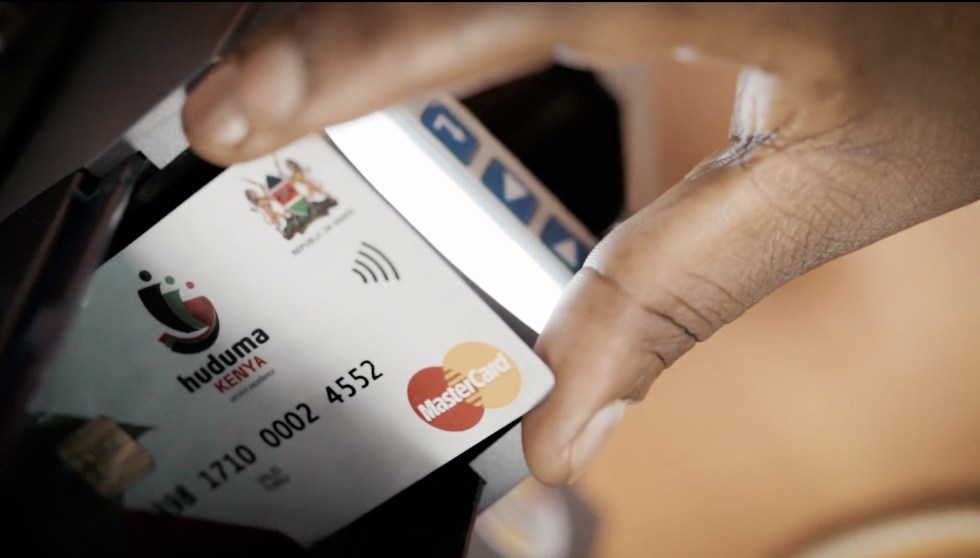
Huduma Card, a multipurpose prepaid card that allows majorly Kenya’s un- and under-banked citizens to benefit from being financially included and able to pay for and receive critical government services, has received a vote of confidence from the government.
The card was lauded due to the critical role it plays in the country in driving financial inclusion. The announcement made during the 2017 World Economic Forum (WEF) on Africa, was in line with the event’s focus which showcased how Africa is ensuring its citizens are empowered through inclusion.
Kenya has been on good course in financial inclusion as more of its population are said to run bank accounts. More are poised to open these accounts so as to operate per the country’s vision 2030 prospects which aim to improve efficiency and transparency of public services and payments.
Mastercard, one of the official technology partners to Huduma, ensures the card offers a secure and convenient way for citizens to transact. This it has enabled by working towards displacing cash with cards, and is committed to financially empowering 500 million people worldwide by 2020.
The company’s partnership with Huduma is part of the strategy to achieve this goal.
Denis Mutuku, CEO of huduma Kenya Secretariat, says he is confident the programs roll out will ensure government’s expectations and the needs of Kenyans are satisfied.
|
IDB Capital remain at the centre of enabling access to industrial credit
By Bonface Otieno Kanyamwaya
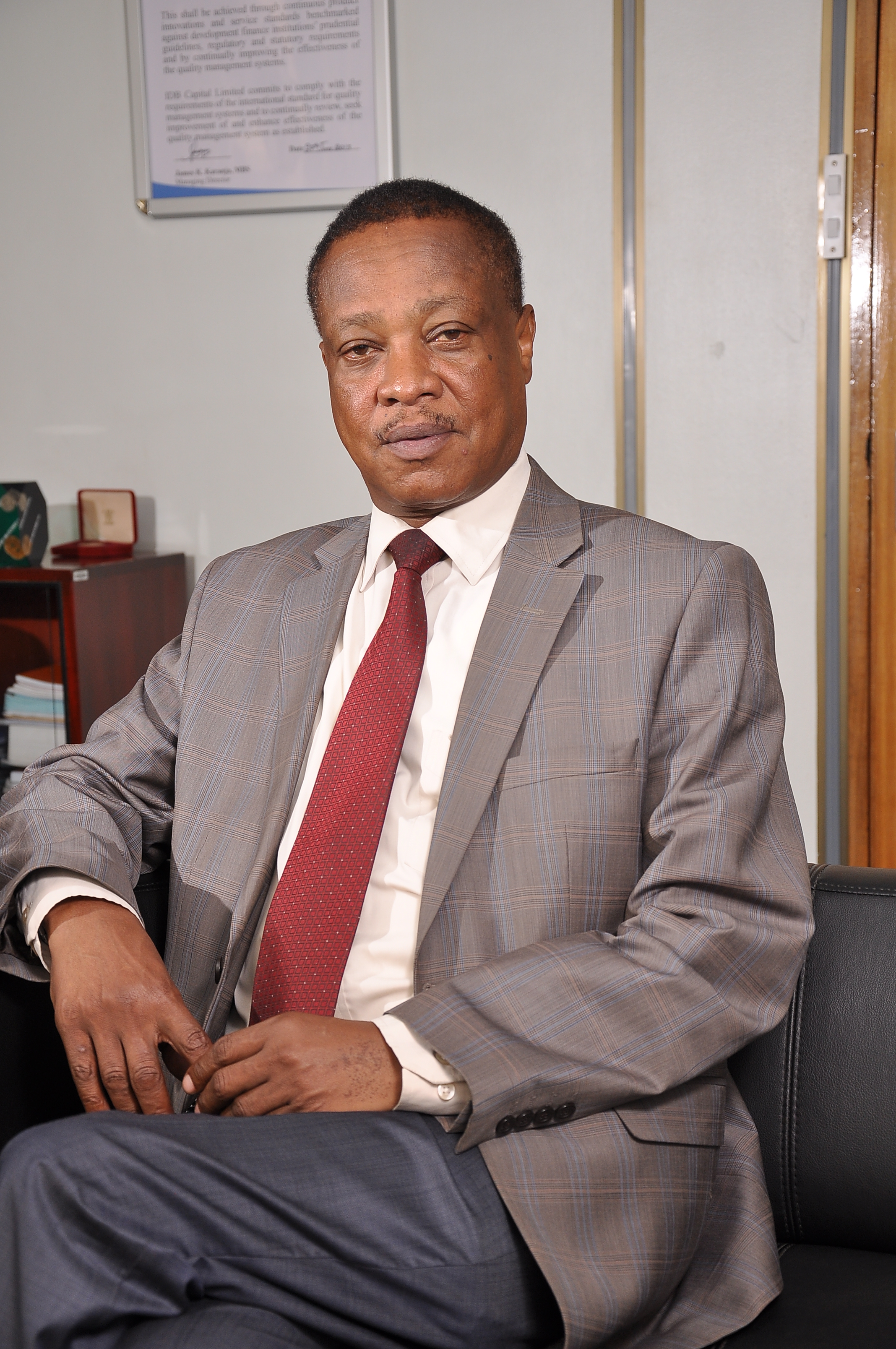
In 1986, TimothyK.Tiampati joined IDB Capital Limited. Currently, he is the Acting Managing Director of the body, which was set up by the Government of Kenya as a Development Finance Institution (DFI) in 1973.
He has seen the parastatal evolve from just offering access to creditto provision of financial services to the industrial sector in furthering economic development of Kenya by assisting in the promotion, establishment, expansion and modernization of medium and large scale industrial enterprises.
The institution supports viable propositions that areenvironmental friendly. The project must be in a position to earn and save the country foreign exchange, support job creation and it must add value to the economy.
Towards the delivery of its mandate, IDB Capital has aligned its operation to key policy guidelines including Kenya Vision 2030 and Kenya Industrial Transformation Programme (KITP).
For the later, the Managing Director says they have contributed to delivery on the credit access component with large proportion having been Small Medium Enterprises (SMEs).
In IDB’s context, SMEs generally refers to target firms or enterprises whose borrowing needs and associated loan repayments is of the average loans sizes of Ksh.5 million (US$ 50,000)to Ksh. 20 million (US$ 2 Million) either for projects establishment orupscaling purposes.
The sub-sectors of primary focus according to Mr. Tiampati include but not limited to manufacturing, tourism, modernizedagriculture, agro-processing or value addition, IT-enabled services, and financial services.
“Among other key consideration in our SME offering are employment generation potential, foreign exchange savings or earnings and the overall contribution to the national economy,” says Tiampati.
Since March 2013, IDB Capital has enabled access to industrial credit to over 17 projects spread across the country thereby supporting nearly 500 direct jobs. These span sectors including building and construction in Nairobi County; in Energy within Murang’a county; in engineering in Kiambu and Nairobi counties; in financial services within Nairobi County; in food and beverages in Kiambu and Nairobi County; health within Kirinyagacounty and Nairobi county as well as in mining and quarrying in Kilifi county of kenya.
In line with Kenya’s economic objective of industrialization, and ensuring equitable distribution of resources, and benefits throughout the country, IDB Capital carries a diversified portfolio of innovative credit products. These include asset finance, project finance, working capital finance and bridge finance that address specific customer needs in various sectors of the economy, such as food processing and beverages, manufacturing, engineering and metal processing, mining and quarrying, health as well as energy, power and transport.This partly delivers on Kenya’s KITP target’s and Kenya’s Vision 2030 blue print.

Nairobi’s Thika Superhighway
$15 Million India Line of Credit for SMEs financing
In view of enhancing bilateral relations between Kenya and India, In July 2016, President Uhuru Kenyatta and Indian Prime MinisterNarendraModi signed US$ 15 million credit line for development of Small Medium Enterprises with IDB Capital being designated the implementing agency in Kenya.
The US$ 15 million line of credit which is near market roll-out in Kenya, IDB Capital envisages lending out between US$ 50,000 and US$ 2 Million at competitive terms to Kenya’s SMEs keen on accessing modern equipment , goods and machinery primarily from India, thereby contributing to technology transfer and related skills.
In the past, the institution has had successful bilateral and multilateral financial collaboration with institutions not limited to Export-Import Bank of India, the World Bank, European Investment Bank, Swiss Investment Corporation, African Development Bank, German Investment Bank, Arab Bank for Economic Development in Africa, Export-Import of China and Export-Import Bank of Korea.
|
For more information and liason, please contact Mr. Timothy K. Tiampati, the Ag. Managing Director, IDB Capital Ltd P.O.BOX 44036-00100, Nairobi-Kenya. Telephone: (020) 2248600; 2247142; Email: Bizcare@idbkenya.com
|
Donation from KQ, GE and Boeing to boost aviation training in the region
By Bonface Otieno Kanyamwaya
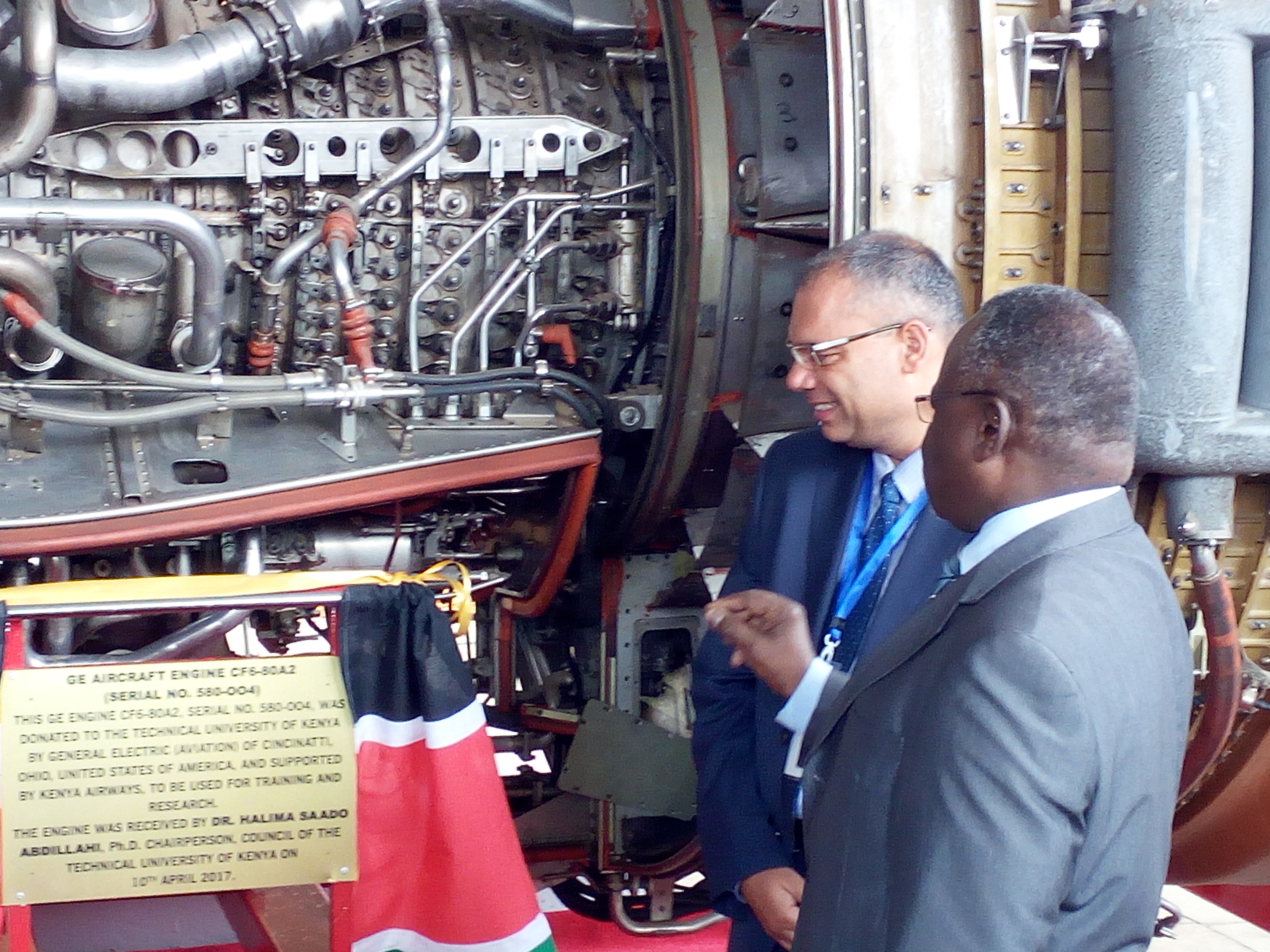
Aerospace and Aviation Engineering programme students at Technical University of Kenya (TUK) can now afford hands-on training on a high-tech CF6-80A2 aircraft engine that powers Airbus A310 and Boeing 767.
The CF6-80A2 engine manufactured by General Electric (GE) along with aviation maintenance training books, training aids, reading materials, used aircraft parts and aircraft manuals were donated today by Kenya Airways, GE and Boeing as a joint initiative to enable capacity building in aviation training schools in the region.
Speaking during the handover ceremony which was held today at TUK, Kenya Airways Strategy and Performance Management Director Thomas Omondi indicated that the donation will strengthens KQ’s commitment to ensure a stronger foundation of aeronautical knowledge, skills and more experience to aviation technicians and engineers even as they prepare for job market at KQ or elsewhere.
On his part, Regional Sales Director for GE Aviation in Africa Dr. Rajiv Bissessur said, “As Africa’s aviation industry continues to grow, the need for skilled aviation professionals in the region is also on the rise, and GE Aviation is proud to play a role in the skill development efforts underway at the TUK.”
“The donated CF6 engine, worth $2 million, will enable aeronautical engineering students to experience hands-on learning with one of the most popular wide body aircraft engine in service today and increase the pool of talented aviation experts that will be needed to service the needs of the airlines in Africa and around the world,” he added.
On the other hand, the institutions Vice Chancellor Prof. Francis Aduol hailed the partnership adding that it will provide the much needed practical and research orientation to our technician and engineering students and thus increase their competitiveness.
TUK is one of the three universities in sub-Saharan Africa that offers Bachelor of Aeronautical Engineering.
Aeronautical engineering training started at the institution in 1969.
To date, more than 400 student are undertaking engineering engineering training at TUK.
Too many SMEs died in Kenya within the last five years. Experts now give their take on how such businesses can be grown to the next level
By Ben Oduor
Did you try your hand on some small business but it failed to see its second or third birthday? I bet a handful has and it’s apparent the business died almost instantly. But you were not alone.
A 2016 survey by Kenya National Bureau of Statistics (KNBS) reveals that almost 400,000 Micro, Small and Medium Enterprises (MSMEs) did not see their second anniversary in the last five years.
The report also reveals that a total of 2.2 million MSMEs closed shop during the years of review, leading to lose of millions of jobs.
The report notes that most of the businesses died because of declining income, increased operating costs, tough economic environment and faulty business decisions. But what could have been done to save them?
Tabitha Karanja, the founder and CEO of Keroche Breweries- the first Kenyan-owned beer manufacturer, acknowledges the rough terrain startups walk as they strive to grow.
She, however, says getting into the murky waters of entrepreneurship requires one to come up with unique business ideas that answer local challenges- those that solve problems and bridge gaps.
The CEO has run her brewer for 20 years, starting off in 1997 at their matrimonial home with her husband Joseph Karanja, after their research showed that drinking patterns within the middle level and low-income earners segments of the market was underserved by the already established liquor manufacturers.
The multi-nationals at the time drew their niche in the upper markets leaving the low and middle markets with limited options. It is then that they felt there was urgent need to manufacture more affordable, hygienic and locally produced liquors.
She has, however, had to overcome myriad challenges. For instance, she was at some point forced to defend her company from claims by rival companies that she ran unethical and unhealthy business. But that did not stop her from pursuing her ambitions.
The company has now curved its niche on the lower, middle and upper classes with products such as summit lager, malt, valley wines, Sauvignon Blanc, Pinotage and Chenin Blanc.
Karanja says startups must nurture a global mindset while conceiving business ideas, craft attractive business plan and instill professionalism in whatever they do.
“Banks are attracted to clearly thought-out and visionary business plans. This, coupled with focused projections convinces financial institutions to buy into and finance your ideas. You also have to think global to attract business partners,” she says.
Even though it’s good to be ambitious, the CEO advises, entrepreneurs must start small.
“It is only by considering the micro status of the business at its conception that one is able to plan properly with limited resources and grow it to a bigger enterprise,” she says, insisting the startups must be ‘focused and work so hard to grow the businesses.’
Business financing, she adds, is equally important. “You cannot run an enterprise without acquiring loans at some point. Banks are important stakeholders in the growth of businesses hence you must confide in them armed with properly constituted business ideas.”
Dr Gilbert Saggia, MD of SAP East Africa says structuring the business properly and avoiding the ‘copy paste’ approach is the best strategy for growing a micro enterprise. He regrets that many businesses have died for offering the same services without any objective planning.
He says one has to be unique when approaching the market and have proper books and records of the business transactions.
“It’s essential to keep good records and books so as to attract capital for running the business. No institution will finance a disorganized business that will give losses rather than profits. Banks want returns, not losses.”
Dr Saggia also believes employing talented staff and automating services gives an edge to young businesses.
On planning to venture into business, Jeff Ngetta of Spire Bank says one should ask: Do I really have the requisite skills for running this kind of business? This, he says, can help the entrepreneur address local business challenges before thinking global.
He asserts that most SMEs are founded as ‘side-hustles’. The owners run them alongside their formal jobs hence fail to give them the attentions they deserve for systematic growth.
“With time, such businesses die since they lack the professional structures required to run a serious venture.”
However, to prevent the death of such an already started enterprise, Peter Kinuthia, Director in KPMG Advisory Services Limited says entrepreneurs should lay out a comprehensive plan on how they want to grow the business to the next level.
He shares sentiments with Dr Saggia that most SMEs die out because they copy business ideas, styles and approaches from each other. This, he says, floods the market with the same products making it hard to sell.
According to Patricia Ithau, a Director at Kenya Private Sector Alliance (KEPSA), most startups never look beyond their noses. They are interested in harvesting quick cash from the business hence fail to grow them to the future.
Starting up, she advises, entrepreneurs should always put some basic system in place so as to record whatever they do on daily basis. This gives a guide on any developments or drawbacks in the business.
She believes conforming the enterprise to the market trends is an important breakthrough for any business. In such a technology driven era, for instance, businesses should advance with technological changes.
“One of the best accounting software businesses can use to manage sales and expenses is the Quickbooks. It can keep the entrepreneurs abreast with the daily business transactions,” she advises, adding that entrepreneurs should work hard to grow their businesses and support the SME sector, which is the lifeblood of the economy.
Kenya Airways (KQ) has signed a Memorandum of Understanding (MOU) with the Seychelles Tourism Board (STB) in a bid to boost intra-Africa traffic to one of the world most popular tourist destination.
The agreement encapsulates a framework for collaboration between the airline and the Seychelles Tourism Board and is underpinned by the strategic value of tourism to both organisations, and to the airlines purpose to promote sustainable development in Africa.
It covers promoting intra-Africa tourism, joint marketing and participation in events across Africa, and stakeholder education.
Its also anchored on the aspiration to strengthen the airline presence in Seychelles as a destination and the STB desire to increase African tourism.
“This partnership will also underscore the important role that Kenya Airways plays in the African economic development, specifically creating vital linkages between the continent and the international market, on which tourism and other key sectors depend on and thrive,” said Kenya Airways CEO Mbuvi Ngunze.
“The MOU will see KTB tap into advertising opportunities on the airline’s platforms while STB will market the Kenya Airways as the preferred airline partner to Seychelles,’ said Infrustructure and Transport Cabinet Secretary James Macharia.
Kenya Airways has operated into Seychelles since 1972 then as East African Airways and today flies four times a week to the island off the coast of Indian Ocean.
The airline is committed to increasing its footprint in Africa and will consider adding its frequencies into Seychelles in the future based on destination growth.
The two organizations will work together to come up with tourism boosting strategies including incentive travels and holiday packages with KQ Holidays
This partnership is significant given that the current global environment is increasingly competitive on both the tourism and aviation fronts
LG wins Dual “Best of the Best” in this years Red Dot Awards
LG Electronics (LG) was a big winner at this year’s Red Dot Design Awards, earning an impressive 20 total Red Dot Awards for excellence in design, including two Best of the Best awards.
The top Best of the Best awards were given to LG’s SIGNATURE OLED TV W and Smart InstaView refrigerator for their innovation and contribution to the design community. Red Dot is widely seen as one of the world’s three most influential design committees, along with the iF Design Awards and IDEA (International Design Excellence Awards).
The LG SIGNATURE OLED TV W features an awe-inspiring Picture-on-Wall design that takes the TV concept and turns it into a piece of art. The super thin minimal profile of the 65-inch W7 – less than 4mm thick when mounted on the wall – creates the illusion of the TV levitating in midair, making the viewing experience even more immersive. The LG SIGNATURE OLED TV W also recently received the 2017 iF Design Award, giving LG a diverse portfolio of award-winning products.
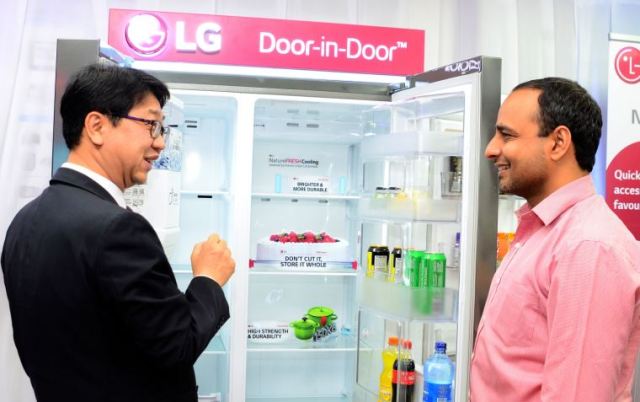
LG’s InstaView Door-in-Door™ refrigerator was recognized by Red Dot for successfully combining a beautiful appliance with interactive technology. The refrigerator features a 29-inch LCD touch display which instantly turns transparent with just two knocks, letting customers peer inside without opening the door. The Smart Tag menu allows users to add stickers and tags on the screen to indicate which foods are stored inside. Smart Tag also offers users the ability to input the expiration date of each item, so the refrigerator can issue reminders when foods near their expiration dates.
In addition to these two Best of the Best awards, LG received 18 additional honors from the Red Dot judges. LG SIGNATURE OLED TV, Gram laptop, V20 smartphone, LG Watch Style and Sports, TONE series wireless headsets and Minibeam projector were among the other LG products recognized for their outstanding design and technological innovation.
“Recognition such as these from an organization as respected as Red Dot is confirmation to us that LG is living up to our expectation as an industry leader in design,” said Noh Chang-ho, vice president and head of corporate design at LG Electronics. “We will continue to offer products that push the boundaries of design and technology, redefining consumers’ expectations and doing our best to set a higher standard for aesthetics.”
Consumer goods manufacturer, Bidco Africa has appointed Chris Diaz as Group Sales and Marketing Director. The appointment comes at a time when Bidco is expected to launch several new products in Kenya.
Prior to his appointment, Diaz was the Marketing Director at Kenya Airways and is also a director at Brand Kenya and Brand Africa.
“Chris is a brilliant and experienced marketer with the capacity to bring the kind of strategic leadership we need to realize our growth ambitions especially as we venture into new categories,” Bidco Africa CEO Vimal Shah said.
Diaz will lead the sales and marketing functions for the entire group including corporate communication, distribution and customer strategies across the consumer markets.
“I am delighted to join Bidco Africa at such an exciting time. I look forward to working with the team to deliver the company’s goals particularly the entry into new product lines,” said Diaz.
Bidco Africa houses multiple manufacturing units including a beverage plant which is expected to begin production later this year. The manufacturer exports products to over 16 African countries.
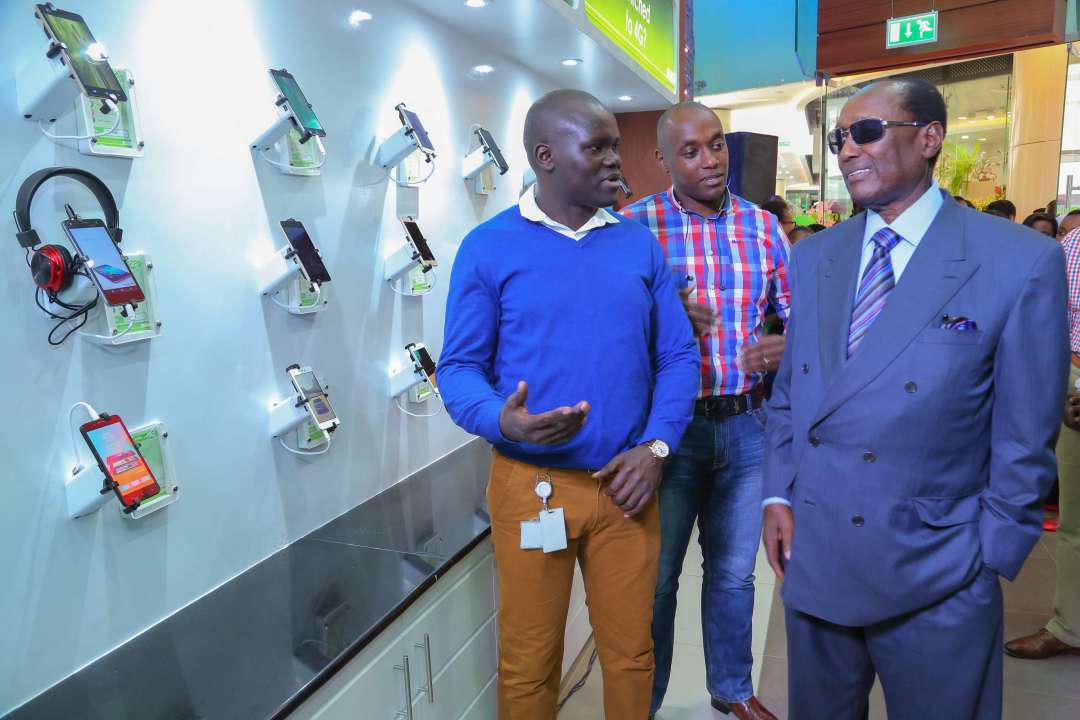
Just weeks after Samsung unveiled a new experience store at Two Rivers Mall, Safaricom now joins other retail outlets to set up shop at the newly opened Two Rivers Mall, as part of its strategy to get closer to customers.
The new shop, which is now the telco’s 46th retail outlet in the country, will offer an opportunity to experience the firm’s devices in order to make informed purchase decisions.
“We are always looking for opportunities to further enhance focus on our customers, in order to build closer personal relationships. This fits into our strategic business objective of always putting the customer first. Our intention is to ensure that as we continue growing, innovating in technology and investing in our network, we do not lose sight of our customers and their needs.” said Steve Okeyo, Regional Sales and Operation Director, Safaricom.
The Safaricom Two Rivers Retail Shop will cater for clients of Two Rivers Mall as well as the catchment areas of Ruaka, Redhill, Kabuku, and Limuru reducing the very heavy footfall experienced in Village Market Shop which will remain operational.
Alongside the retail shops, Safaricom customers can also visit any one of over 60 Care Desks spread across the country to access key services including M-PESA, SIM Registration, SIM Swaps, among others.
Alongside the retail shops, Safaricom customers can also visit any one of over 60 Care Desks spread across the country to access key services including M-PESA, SIM Registration, SIM Swaps, among others. a stitute