SUV offers a rare combination of power, driver comfort and fuel efficiency

SUV offers a rare combination of power, driver comfort and fuel efficiency
Government must act fast to avert complete extinction of some species
By Ben Oduor
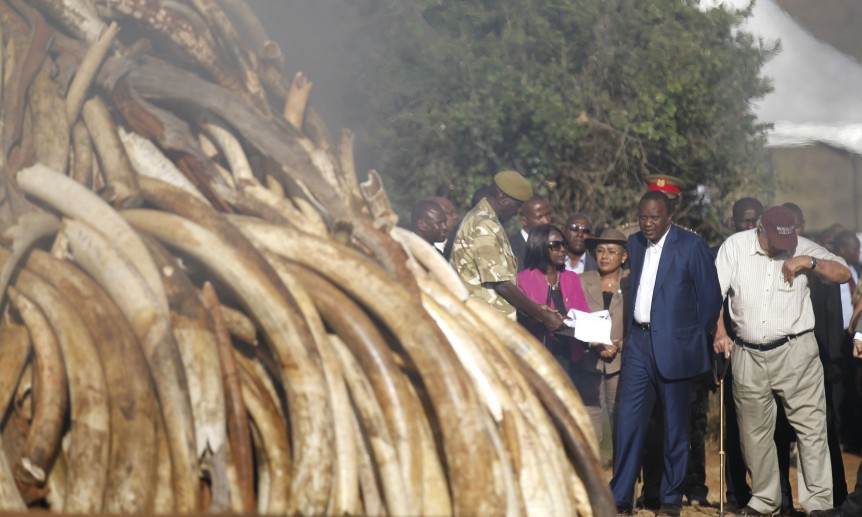
On April 30, a rainy Saturday afternoon, heads of state, United Nations officials, conservationists from around the globe, businesspersons, politicians and the world press gathered at the Kenya Wildlife Service (KWS) headquarters in Nairobi to witness a historic burning of 105 tonnes of ivory.
Kenya’s President Uhuru Kenyatta led the delegation in setting ablaze poached tusks, eight times more than have ever been destroyed at once in history, in a bid to show his commitment to ending the illegal trade.
Addressing the crowd during the ceremony, President Kenyatta said Kenya was making clear its stand on ending the illegal trade.
“Kenya is making a statement that, for us, ivory is worthless unless it is on our elephants,” he said
Echoing his sentiments, KWS Director-General Kitili Mbathi said before the ceremony: “We are doing this to send a message that there is no intrinsic value in ivory, there is only value in elephants. Anybody who owns ivory should be ashamed of themself. Do not buy ivory.”
Huge losses, few charges
However, addressing a separate gathering in Meru County, Kenya’s opposition leader Raila Odinga accused the government of hoodwinking citizens by burning illegal ivory yet the poachers were not charged.
“Which poachers have they put behind bars? What is the essence of burning illegal ivory if it (Jubilee administration) can’t arrest the poachers?” he asked.
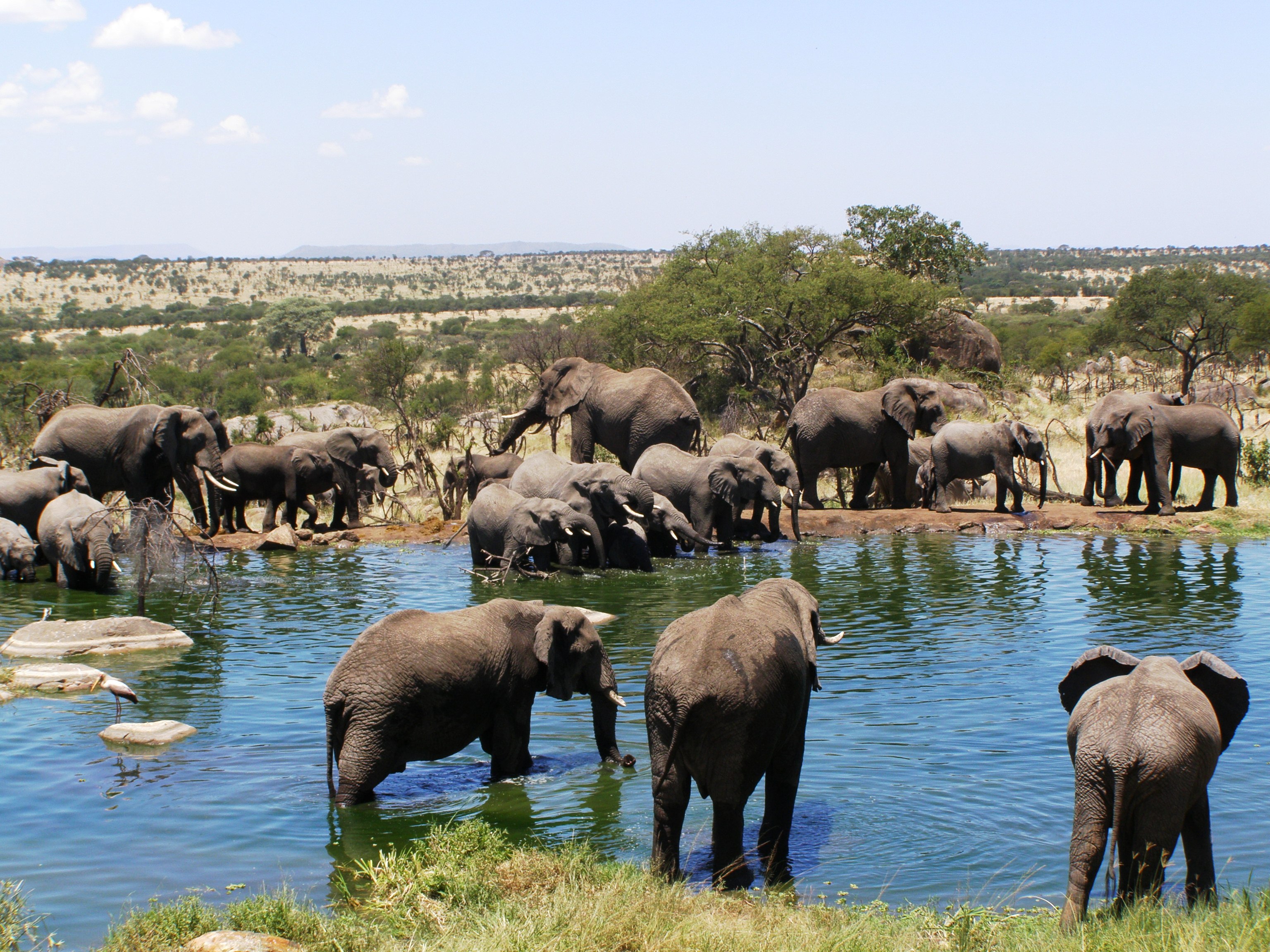
The African elephant faces extinction due to mass poaching fuelled by demand for illicit ivory, mainly in Asian markets. Around 30,000 elephants are killed every year across the continent — a rate of slaughter that sources predict could bring about extinction within two decades.
According to KWS, the 12 ivory towers that were set ablaze were elephant tusks and rhino horns from more than 8,000 elephants and 343 rhinos, estimated to cost more than $172 million (Ksh17.3 billion).
Poaching Facts, an organisation dedicated to uncovering and disclosing facts of wildlife trade, says in a 2013 report that KWS announced that 302 elephants were lost to poaching and a census it carried out that year noted a steady growth to 1,940, a number that was reduced by poachers as Kenya lost 137 elephants and 24 rhinoceros the following year.
The group further says that Kenyan authorities reported that government-held stockpiles had 25,052 pieces of ivory weighing 137,679 kg, which included raw elephant ivory from elephants which died of natural and unnatural causes as well as ivory recovered by other agencies from poachers, traffickers, and raw and worked ivory originating from inside and outside the country.
The Convention on International Trade in Endangered Species (CITES) in 1989 banned commercial trade in African elephant ivory, but has since permitted one-off sales, a move that has increased poaching in Africa, and campaigned against by African heads of state who want a total ban.
A BBC feature Uncovering China’s illegal ivory trade reports that there are around 150 legal, government-licensed ivory shops in China — the only ones allowed to sell ivory to individual buyers in the country.
But, “Chinese consumers, increasingly wealthy, desire ivory. Some think it is lucky, while for some it is a way to display their status. Others see it as a good investment and many give ivory as a gift or bribe to win favour with an official or business contact. It is certainly good business.”
To avoid the law, the BBC says, China’s ivory traders have moved online. “Selling ivory on the internet is illegal and major websites have banned it. But on sites specialising in auctions, antiques and collectables, it is easy to find dozens of photos of ivory pieces for sale.”
Obviously, it is for this reason that Africa, mainly central, eastern and southern countries have been seeing an increase in poaching.
Human-wildlife conflict
According to Dr Max Graham, chief executive of Space for Giants, parent charity of the Giants Club, a historic gathering of African heads of state, business leaders and conservationists dedicated to saving Africa’s elephants, “improved ranger forces, forces to reduce human-elephant conflict and enhanced legal frameworks for convicting poachers and traffickers will help conserve a significant number of elephants and buy us time to end the demand.”
In Kenya, human-wildlife conflict is a reality with communities, mainly pastoralists, occupying land reserved for game parks and wildlife. Frequently, humans are entangled in fierce battle with wild animals that prey on their livestock.
Further, Poaching Facts notes that land encroachment by communities around game reserves leads to subsistence poaching — an issue that Kenya must consider in its efforts to control internal poaching from communities within or near game reserves.
“A vast majority of poaching throughout the world is of small and medium-sized game that are killed for meat. The meat may supplement or be a primary source of nourishment for people living in destitution or in isolated rural communities lacking significant access to regional trade.”
And, projects spearheaded by the Jubilee government such as the standard gauge railway and massive road expansion have worsened human-wildlife conflict as some of them pass through game reserves.
Two months ago, Mohawk, a 13-year-old lion was gunned down by a KWS ranger when it escaped from the Nairobi National Park and attacked a man. The killing sparked criticism from the public who questioned why the rangers did not use a tranquiliser gun.
Lucrative investments
Kenya’s tourism indistry, largely founded on wildlife, contributes about 12 per cent to the East African country’s GDP and has been one of the top contributors to the economy.
The sector contributed KSh229 billion ($2.3 billion) to GDP last year, according to the World Travel and Tourism Council.
The ivory market is as lucrative, with industry reports saying “ivory sales in China had risen for a kilogramme of raw ivory from $750 (Ksh75,459) in 2010 to $2,100 (KSh211,285) in 2014.”
Hence, the Kenyan government should be seen to be practically enforcing stringent legislative frameworks on wildlife conservation to avert a complete extinction in the next decades.
How the government plans to end painful deaths under rubble of collapsed flats
By Jacob Otieno
Memories of the tragic and gruesome Huruma building collapse in Nairobi are still fresh in our minds.
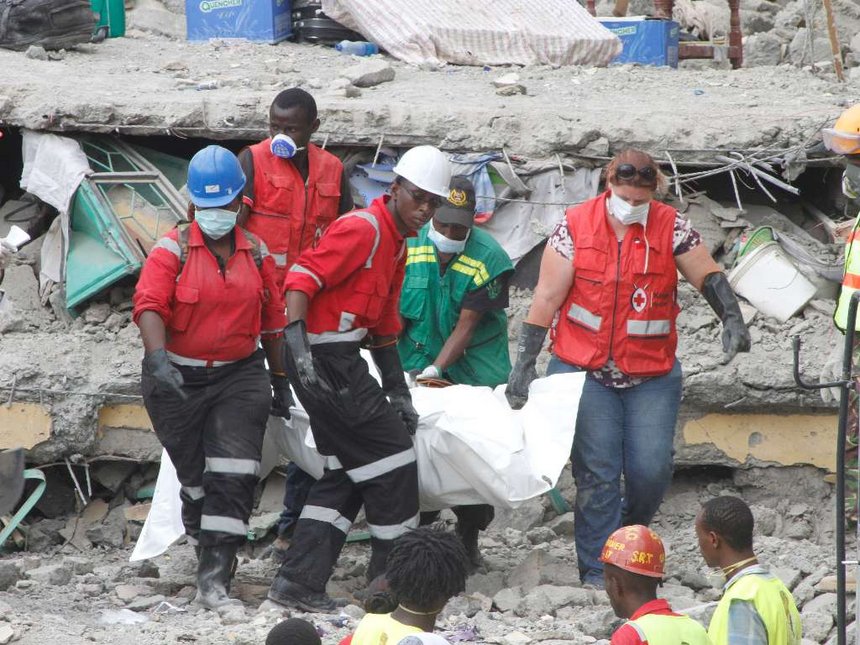
Over 50 lives were lost and hundreds left homeless. But who will save Kenyans from these towers of blood and death?
Cabinet Secretary for Lands, Housing and Urban Development Jacob Kaimenyi seems to be pondering on a way out of the bloody mess in the building and construction sector.
The CS attributes the rising number of tumbling buildings to lack of policy framework, non-professionalism and an inadequate maintenance culture among tenants and proprietors.
He says there are no certified and regulated professionals who handle maintenance issues, adding that even in cases where there are trained personnel, there is still no proper regulatory framework for such professional services.
“The state of affairs in the sector is worrying and needs to be addressed urgently,” says the CS in the latest National Building Maintenance Policy paper.
Since independence, Kaimenyi says, there has been no comprehensive policy framework for maintenance of buildings, leaving room for individuals to use dangerous and incompatible materials for building or repair work.
The CS decries that many individuals, organisations and agencies do not take building maintenance seriously and would spend their money on things like vehicle maintenance instead.
“This results in continued deterioration of buildings to uneconomical levels even if they were structurally sound initially,” he says.
Disturbing trend
Cases of buildings tumbling down, injuring and killing people are not new in Kenya, and more specifically Nairobi. In fact, the cases have skyrocketed to an alarming level in the past few years.
Recently, a building under construction collapsed in Roysambu, just behind the TRM mall on Thika road, killing at least seven people and leaving scores others injured.
A number of reasons have been given why more and more buildings are collapsing, including questionable cost-cutting measures by contractors.
“Although there are cases where engineers have made mistakes in design, it is common knowledge that with the ever rising demand for housing in the country, some developers have resorted to short cuts to avoid paying competent structural engineers,” says Geoffrey Lidonga, a Nairobi-based construction and business development manager.
“A building meant to be three storeys cannot go up to six floors because it is designed to withstand dead load or its own weight and live loads, which are the weight of persons and objects within the building as well as the weight of wind, rain and hail,” he says.
Once a structure loses the ability to carry these loads, then it’s destined to collapse, Lidonga says, adding that in some cases, the contractor is not a qualified or experienced engineer.
“Structural engineers with experience and knowledge of materials, minimum specifications, building codes and structural systems should be hired to design the structure to avoid the risk of collapsing,” Lidonga advises.

The foundation, he says, should also be designed correctly and in accordance with the building’s function and the soil conditions.
Expertise aside, many property owners and developers are rushing to take advantage of the housing demand to put up sub-standard buildings, exposing Kenyans to danger.
Recent industry reports show that Nairobi alone requires over 200,000 housing units per year to meet demand from the growing middle-class by 2030.
“This has led to greedy property owners resorting to the use of short cuts and bribes to make quick bucks at the expense of people’s lives,” says Lidonga.
Most of them, he adds, put up buildings without following due diligence. They also use semi-standard materials and services to spend less money.
“Apparently, services of building professionals are too high for greedy developers who, in trying to stretch finances acquired through bank loans, are tempted to cut corners by bribing the approving authorities,” says Lidonga.
Way forward
CS Kaimenyi says the ministry, in consultation with stakeholders, is preparing a National Building Maintenance Policy paper that will cover design concepts and construction materials to be incorporated during building.
These, Kaimenyi says, will also be used for mobilisation of maintenance funds, standards, building surveyors and community participation in neighbourhood associations.
The policy, according to the CS, has been benchmarked with the best international models, practices and principles including environmental sustainability, safety and healthy, cost efficiency, risk and disaster management.
Though the government and the authorities are talking tough following the Huruma incident, it remains to be seen whether or not they will bring order and sanity to the building and construction industry.
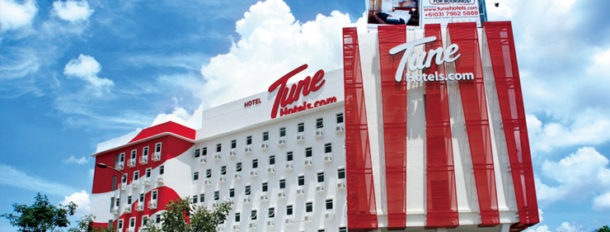
The new hotel will be the brand’s first in Africa
Operators in the sector say new VAT levy to hit Tanzania hard
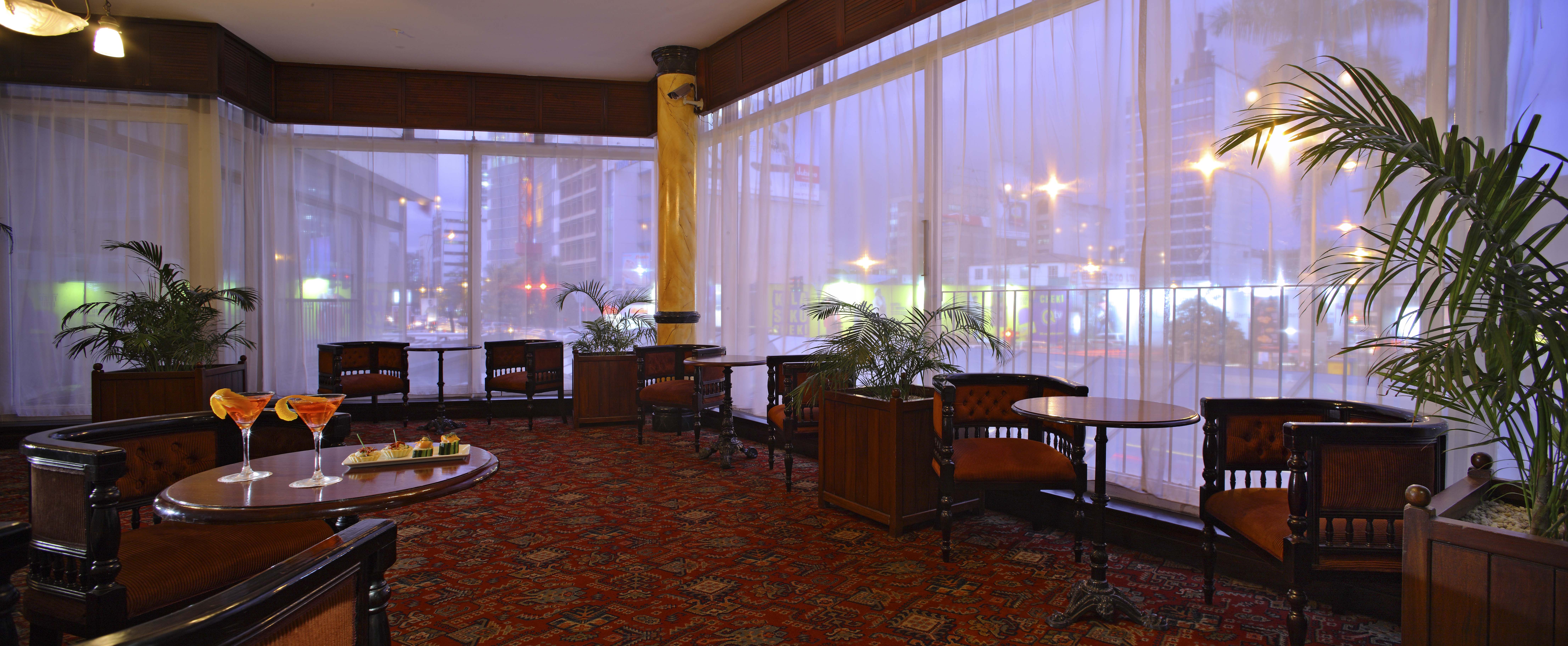
Hotel started off as a tin and wood six-room affair
By Boniface Otieno Kanyamwaya
The Sarova Stanley Hotel in Nairobi is etched in the history of Kenya.
Just over 100 years ago, Mayence Bent and her husband W.S. Bent came to Kenya and set up a structure to cater for the railway engineers whom she thought would make do with a place to eat and sleep.
The business flourished and she went on to expand it in 1905 on Government Road that is now Moi Avenue with 15 beds then. But as fate would have it, the hotel was burnt down with all other neighbouring structures due to a severe rat infestation.
As her entrepreneurial life was undergoing change so did her marriage life when she got a new partner, a Mr Fred Francis Tate, with who she bought a piece of land at the intersection of Delamare Avenue (Kenyatta Avenue) and Kimathi Street (Sixth Avenue) where the Sarova Stanley stands today.
Back then, the hotel was built of old wood and tin and had six rooms.
From these humble beginnings, the hotel has entertained a host of royal visitors, movie actors, musicians and writers just to name a few. One notable visitor, according to the hotel’s Managing Director Paolo Marro, is Princess Elizabeth in 1952. The fans at the Exchange Bar was installed just for her — with the only difference being that they were then operated manually.
Marro says that under these fans is a gramophone that was given to one renowned Danish author, Karen Blixen, who liked coming to lunch at this hotel in the 1920s.
The old-age hotel has also hosted classic Hollywood luminaries such as Grace Kelley, Ava Gardener, who was voted one of the most beautiful women in the 1940s, Clark Gable and Gregory Peck.
As a lavish oasis in the undisturbed Kenyan desert, the hotel has entertained royal guests, including a resplendent ball for His Royal Highness the Prince of Wales and the Duke of Gloucester in 1928, and a regal luncheon banquet for Prince Philip and then Princess Elizabeth during their world tour in 1952, shortly after which she succeeded to the throne to become the queen of England.
Others are Ernest Hemingway, who used to pen his stories right from the hotel’s Thorn Tree Restaurant. Some of his work includes Snows of Kilimanjaro, Green Hills of Africa, Short Happy Life of Francis Macomber and True at First Light, which is regarded as one his best works.
As a leading luxurious hotel, Sarova Stanley has won several accolades across the globe. These include the first Luxury Hotel Awards held in South Africa in 2009 and World Luxury Hotel Awards held in Thailand in 2010.
Others are the World Luxury Hotel Award held in Croatia in 2011, World Luxury Hotel Award in Malaysia in 2012 and World Luxury Hotel Award in Thailand in 2013.
Accommodation and dining
A spacious foyer with patterned marble floors, chesterfields, old clocks and ancient photographs all come together to transport guests to another era. The elegantly furnished guestrooms reflect this same welcoming and historic ambience.
217 individually appointed guestrooms couple the hallmark elegance of the Victoria Age with the modern amenities of the present. The 160 deluxe guestrooms and 32 club guestrooms offer the most spacious accommodations, having been built when sprawling land was abundant in Nairobi. Each room is designed in a classical style and reflects genuine Kenyan hospitality.
The suites are an intimate enclave within the Stanley and outshine all else in Nairobi, with each stately room named after a distinguished person or location in Stanley’s history.
The opulent penthouse Windsor suite accommodates the 1928 ball honouring the Prince of Wales and the Duke of Gloucester. Its royally furnished private terrace, expansive sitting room create the ideal space for entertaining.
The presidential suite, named the Stanley Suite, carries the name of the explorer, Henry Morton Stanley, and features makenzi chairs, antiques, old etchings, exemplified heritage elegance, a safe, a bullet proof wall, a king bed, two 42 inch TV sets all for US$1,300 a night.
To commemorate the Baroness Blixen — a Nairobi resident between 1914 and 1931, and author of Out of Africa and Shadows on the Grass — the Blixen suite is decorated with photos showing Blixen’s life in Kenya along with reproductions of her famous paintings.
Once a guest books the room, he or she is entitled to a huge bathroom, an express checking room, a fruit basket, a bottle of wine of choice, free check-in at US$ 800 for one or two people. This includes bed and breakfast.
Popular with honeymooners, the Lamu Suite takes its name from the exquisite Swahili/Arabic archipelago and island of Lamu off the coast. The suite boasts a four-poster bed, antique Lamu-style furniture, Lamu chests, a washroom for guests and a bucket of fruit for US$800 a night for one or two people.
Double suites are also available and each includes extra bedrooms, historic furnishings while the executive suites are perfect for long term visits. All have names that pay homage to Sarova Stanley’s distinctive past. A double suite costs US$200 per person a night, inclusive of breakfast.
Thorn Tree Café
Named after a single, centrally located Acacia tree planted by Nobel Peace Laureate Wangari Maathai, the thorn tree open-air café is in the heart of Nairobi. Its original tree shadowed guests like Ernest Hemingway who sat beneath it to “watch the world go by”. The tree became a makeshift post box for travellers who left mail pinned to its trunk. The café serves deli selections, wood-fired pizzas and continental dishes. For lunch at the café, one must part with at least Ksh3,500.
The Exchange Bar
Located on the 1st floor, this is where the first stock exchange was launched in Nairobi in 1954. The bar also famously took delivery of the first regional beer from the newly formed Kenya Breweries in 1922, which is now the largest brewery in East Africa. At the Exchange Bar, a beer costs Ksh500 while the most expensive wine at the bar (King George), which is served on white gloves goes at Ksh10,000 a tot. When someone gets a tot, a bell has to be rung. The bar can accommodate up to about 50 guests comfortably.
Pool Deck Restaurant
To catch a glimpse of the coast while grounded in the heart of the city, guests enjoy al fresco dining by the swimming pool at the buffet-style pool deck restaurant. Authentic Kenyan specialties as well as continental and Asian cuisine is served here, along with a special barbeque lunch on Sundays.

Efforts to restore dented image at full steam ahead
By Ben Oduor
Kenya’s tourism sector experienced a dark moment in May 2014 after four countries – the United States, United Kingdom, Australia and France — issued travel advisories to their citizens visiting Kenya.
This followed a series of attacks by Somali Islamic insurgents Al-Shabaab in key towns and cities in the country.
Even though the western countries stated that the decision was taken to protect their citizens from terrorist attacks, the Kenyan government expressed its strong disappointment, saying the action was “unfriendly” and had caused panic among citizens.
“Issuance of such travel advisories only plays to the whims of bad elements in society whose aim is to spread fear and panic among otherwise peaceful people,” said Karanja Kibicho, who was at the time Foreign Affairs Principal Secretary.
He said the government was committed to fighting terrorism through its security forces.
A week later, the British government issued another travel warning advising its citizens to avoid travelling to Mombasa, Eastleigh in Nairobi and areas within 60 kilometres of the Kenya-Somali border, a statement that worsened fears among foreign tourists about the state of security in the country.
Then a shocker hit the sector as western countries, led by Britain, started airlifting their citizens — who are the major foreign exchange contributors to the sector — from key tourism sites in Kenya.
Proactively, after receiving warnings from the Foreign and Commonwealth Office (FCO) about threats of attacks by Al-Shabaab, holiday booking firms began flying Britons back home through their airlines — Thomson and First Choice.
“As a result of the change in FCO advice, the decision has been taken to cancel all our outbound flights to Mombasa, Kenya up to and including 31 October. As a precautionary measure, we have also taken the decision to repatriate all customers currently on holiday in Kenya back to the UK,” announced the airlines.
Reports indicate that Thomson Airways alone had about 400 customers in Kenya, including those in Mombasa and on safari.
Hoteliers and investors in the industry cried foul, with some accusing the four countries of economic sabotage.
“There has been a deliberate war to kill the tourism industry because I believe the West is unhappy with Kenya diverting her allegiance to China. The signs have been there for sometime. First, it was calls for foreigners not to visit shopping malls, restaurants and eating places,” complained Philip Chai, chairman of the Kenya Association of Hotelkeepers and Caterers in Kilifi County, to a national daily.
Consequently, due to insecurity and a weak airline, the Travel and Tourism Competitiveness Report 2015 positioned Kenya 78th in the global ranking, and 5th most competitive tourism and travel market in Sub-Saharan Africa after rivals like South Africa, Mauritius and Seychelles.
Reclaiming the glory
The deplorable state of the sector worried President Uhuru Kenyatta, who unveiled a raft of measures to revamp it.
To begin with, he announced that the government would scrap Value Added Tax (VAT) on air tickets, a move that would reduce travel costs for foreign tourists.
He also ordered the upgrade of Malindi Airport and directed that government bodies hold conferences, ceremonies and official functions at local hotels to boost revenue. He also instructed that national park entry fees be reduced.
President Kenyatta also said all government budgetary resources earmarked for foreign travel would be diverted to domestic travel, urging other arms of government to do the same.
“The National Government urges county governments to reallocate all their foreign travel budgets to domestic travels to spur growth of domestic tourism and sustain employment,” he said.
To increase flights to Moi International Airport and Malindi Airport, the President announced the reduction of landing charges for both local and international flights by 40 per cent and 10 per cent respectively.
Last year, he undertook a major reshuffle where he made tourism a stand-alone ministry from the East African Community Affairs, Commerce and Tourism docket and tasked Cabinet and Principal Secretaries Najib Balala and Fatuma Hirsi to improve efficiency.
100 days in office
Outlining his “100 days in office” and ministry’s achievements to the public at the Kenyatta International Convention Centre (KICC) in Nairobi late March, Cabinet Secretary Balala said his agenda was anchored on marketing, product development and capacity building.
The CS said he had embarked on massive national and international campaigns.
For instance, he has undertaken media interviews with global television networks CNN on the “Quest Means Business” show and British Broadcast Corporation’s (BBC) “Focus on Africa” to publicise the country.
“I was on a reassurance mission in London and Berlin recently where I assured the world that Kenya was not a hotbed of terror as had been earlier alleged, but a holiday destination of choice for many,” he said.
Also, the ministry initiated the Tembea Kenya campaign that aims to boost domestic tourism. Through its Ksh30 Million SMS campaign, the Kenya Tourism Board is encouraging Kenyans to participate and win trips to travel destinations across the country.
In its efforts to attract tourists, the ministry, in consultation with the Kenya Wildlife Service, has reduced park fees from $90 to $60 and scrapped VAT on park fees.
Further, the CS says his ministry has been engaging hotel operators to consider adjusting rates to attract domestic tourists.
Despite tourist numbers falling by 25 per cent to 284, 313 in the first five months of 2015 from 381, 275 in January 2014, this year looks rosier for the sector after Kenya was named one of the world’s top 10 destinations to visit in 2016 by a UK travel publication, Rough Guides, in January, and World Travel Awards 2016 voted Nairobi and Diani Beach the best travel destinations in Africa, among other historical sites.
Global recognitions
At the World Travel Awards 2016 gala ceremony at Diamonds La Gemma dell’Est resort in Zanzibar in April, the Maasai Mara was voted Africa’s best national park, Diani Beach the leading beach destination and Nairobi the best for meetings and conference destinations.
Additionally, Mombasa was named the best destination and the Kenya Tourism Board as the continent’s best while Kenya Airways was accorded Africa’s leading airline, and the continent’s Leading Airline in Business Class.
However, in spite of all this recognition, Kenya still grapples with terrorist threats and her greatest task remains taming the scourge to further boost the sector, which contributed Ksh229 billion to the country’s GDP last year, according to World Travel and Tourism Council.
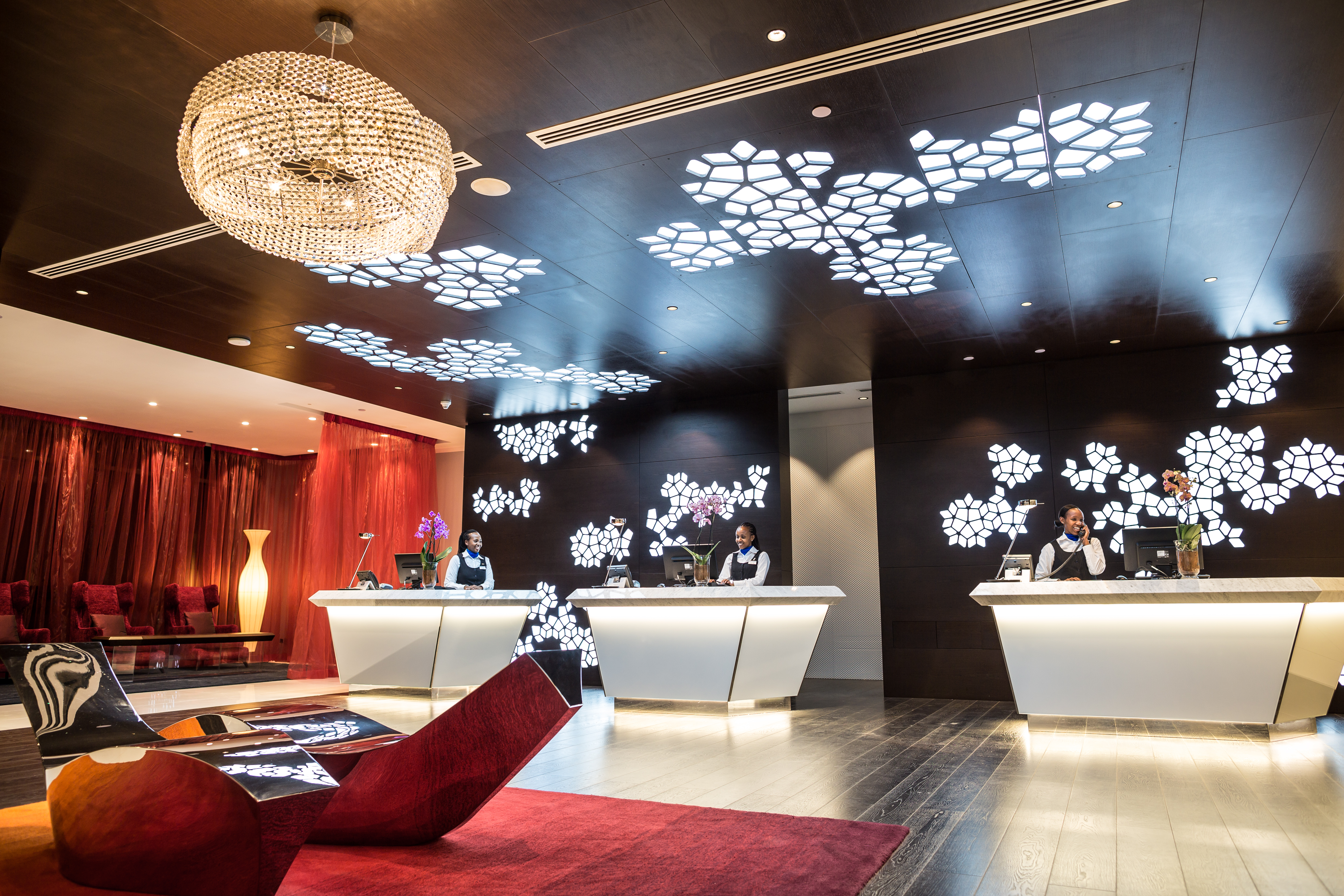
Radisson Blu Hotel befitting space, tailored cuisines and ambient location positions hotel right at the top
By Ben Oduor
“Service often makes the difference between a fine hotel and a memorable hotel. By employing caring and thoughtful staff who make guests feel comfortable and important from the moment they check- in, we promote five-star service through our best asset — our people,” advises Mehdi Eftekari, the General Manager of Four Seasons Hotel Los Angeles at Beverly Hills.
Eftekari adds that with its personalised customer service, intuitive staff and cheerful culture, the hotel has made a memorable impression on its guests for the last 25 years.
His sentiments are echoed by Jens Brandin, the general manager of Radisson Blu Hotel, an international five-star hotel in Nairobi’s fastest area, Upper Hill, and just a 20-minute drive from the Nairobi National Park and Wilson Airport.
Brandin says the hotel jealously guards its image by investing significantly in staff-customer relations. This it does through advocating for staff’s prompt response to customer needs.
As a professional gesture, they recruit proficient staff on the basis of “hospitality personality” from credible institutions offering recognised hospitality courses.
Guided by the mantra, “At all-time stylish, sophisticated and fairly priced”, barely five months since it flung its doors open to visitors in January, Radisson Blu has established a firm foundation that has resulted in it being voted Africa’s leading new hotel by the World Tourism Awards 2016, edging out old players in the industry.
From a leadership perspective, offering five-star services is a priority, but the hotel’s management insists it has to rate its prices favourably.
“Apart from targeting the corporate world, business class, local and international clients, we want to put our focus on the youth. This means that our offers must be unique but fairly priced,” Brandin says.
The first impression at the gate when one is frisked by smartly dressed security officers in black suits and light-blue ties, reveals the extent of value the hotel accords security.
Rooms and lounges
The building towers high, overlooking the Nairobi National Park which is well known for its herds of zebra, wildebeest, giraffe and lions.
With its elegantly furnished 271 rooms and suites, and impressive décor, courtesy of skilled Swedish designer Chris Lundwall, the hotel offers a wide range of accommodation.
The urban, New York Mansion and naturally cool themed rooms and suites take your accommodation experience to unimaginable levels, with such services as free high speed wireless internet, flat-screen TVs and work desks, satellite and Pay-Tv, tea and coffee provisions, mini-bars and in-room safes.
As the latest classified hotel to hit the city’s hospitality market, coming up at a time when Kenya receives huge nods from the international community as a preferred tourism and travel destination, Radisson Blu has upped the game in designing conference facilities to cater to increasing demand.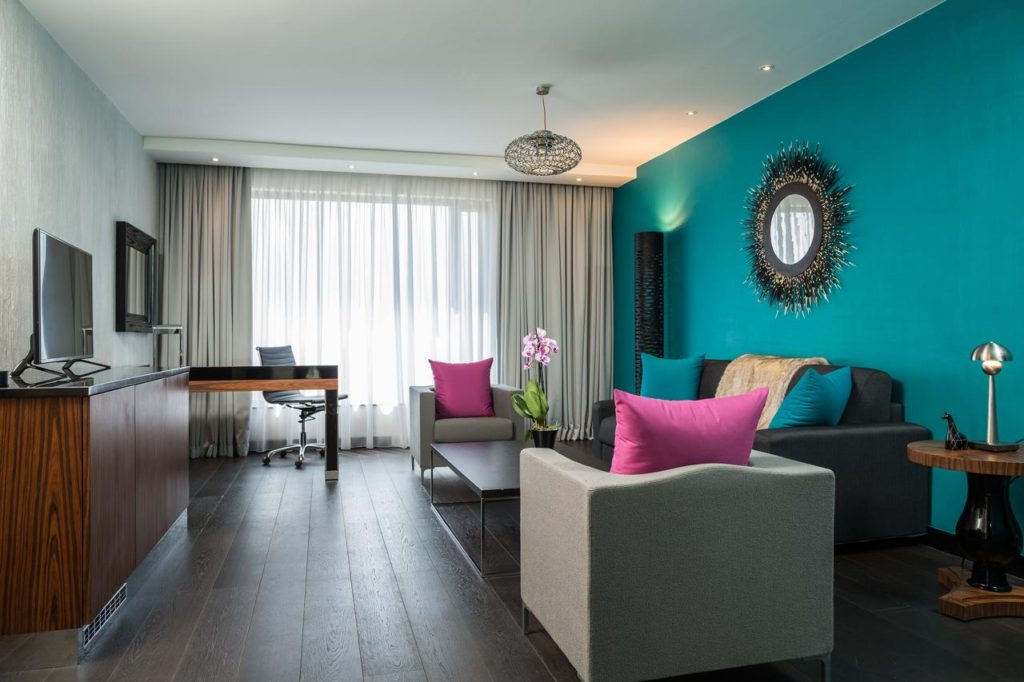
For either large or small conferences, the hotel has 12 elegant meeting rooms, outfitted with free internet access, natural daylight and audiovisual equipment, with the largest venue, the 590-square-meter Mount Kilimanjaro Ballroom, accommodating up to 700 guests.
As part of instilling its standards, and as a welcome gesture, the hotel incorporates fun activities including themed promotions, special brunches and lunches and DJ entertainment.
Restaurants and bars
Despite the high class status, the hotel offers local Kenyan dishes on its menu and blends them with international cuisine to satisfy varied tastes either at the Chop House or Larder restaurants.
With their warm lighting and ambient settings, the restaurants openly invite guests to a free view while their preferred dishes are prepared in the huge kitchens.
Additionally, one can have distinctly Kenyan foods or an international favourite with the option of dining either indoors or al fresco. For business partners or friends looking for a splendid place to unwind, the Humidor Bar & Cigar Lounge, is the ideal spot.
The hotel has an elegant Business Class Lounge on the 8th floor with stunning views of the Nairobi skyline. It’s accessible to guests staying in business class rooms or suites, offering continental breakfast and evening cocktails.
Further, you can maintain your fitness regime at the gym by exercising with a range of machines or take a dip at the swimming pool.
As tourism continues to be among Kenya’s top foreign exchange earners, and the country preferred as one of the best destination markets, Radisson Blu Hotel Nairobi hopes to command a larger stake in the hospitality industry in the coming years.

Hotel started off as a tin and wood six-room affair
By Boniface Otieno Kanyamwaya
The Sarova Stanley Hotel in Nairobi is etched in the history of Kenya.
Just over 100 years ago, Mayence Bent and her husband W.S. Bent came to Kenya and set up a structure to cater for the railway engineers whom she thought would make do with a place to eat and sleep.
The business flourished and she went on to expand it in 1905 on Government Road that is now Moi Avenue with 15 beds then. But as fate would have it, the hotel was burnt down with all other neighbouring structures due to a severe rat infestation.
As her entrepreneurial life was undergoing change so did her marriage life when she got a new partner, a Mr Fred Francis Tate, with who she bought a piece of land at the intersection of Delamare Avenue (Kenyatta Avenue) and Kimathi Street (Sixth Avenue) where the Sarova Stanley stands today.
Back then, the hotel was built of old wood and tin and had six rooms.
From these humble beginnings, the hotel has entertained a host of royal visitors, movie actors, musicians and writers just to name a few. One notable visitor, according to the hotel’s Managing Director Paolo Marro, is Princess Elizabeth in 1952. The fans at the Exchange Bar was installed just for her — with the only difference being that they were then operated manually.
Marro says that under these fans is a gramophone that was given to one renowned Danish author, Karen Blixen, who liked coming to lunch at this hotel in the 1920s.
The old-age hotel has also hosted classic Hollywood luminaries such as Grace Kelley, Ava Gardener, who was voted one of the most beautiful women in the 1940s, Clark Gable and Gregory Peck.
As a lavish oasis in the undisturbed Kenyan desert, the hotel has entertained royal guests, including a resplendent ball for His Royal Highness the Prince of Wales and the Duke of Gloucester in 1928, and a regal luncheon banquet for Prince Philip and then Princess Elizabeth during their world tour in 1952, shortly after which she succeeded to the throne to become the queen of England.
Others are Ernest Hemingway, who used to pen his stories right from the hotel’s Thorn Tree Restaurant. Some of his work includes Snows of Kilimanjaro, Green Hills of Africa, Short Happy Life of Francis Macomber and True at First Light, which is regarded as one his best works.
As a leading luxurious hotel, Sarova Stanley has won several accolades across the globe. These include the first Luxury Hotel Awards held in South Africa in 2009 and World Luxury Hotel Awards held in Thailand in 2010.
Others are the World Luxury Hotel Award held in Croatia in 2011, World Luxury Hotel Award in Malaysia in 2012 and World Luxury Hotel Award in Thailand in 2013.
Accommodation and dining
A spacious foyer with patterned marble floors, chesterfields, old clocks and ancient photographs all come together to transport guests to another era. The elegantly furnished guestrooms reflect this same welcoming and historic ambience.
217 individually appointed guestrooms couple the hallmark elegance of the Victoria Age with the modern amenities of the present. The 160 deluxe guestrooms and 32 club guestrooms offer the most spacious accommodations, having been built when sprawling land was abundant in Nairobi. Each room is designed in a classical style and reflects genuine Kenyan hospitality.
The suites are an intimate enclave within the Stanley and outshine all else in Nairobi, with each stately room named after a distinguished person or location in Stanley’s history.
The opulent penthouse Windsor suite accommodates the 1928 ball honouring the Prince of Wales and the Duke of Gloucester. Its royally furnished private terrace, expansive sitting room create the ideal space for entertaining.
The presidential suite, named the Stanley Suite, carries the name of the explorer, Henry Morton Stanley, and features makenzi chairs, antiques, old etchings, exemplified heritage elegance, a safe, a bullet proof wall, a king bed, two 42 inch TV sets all for US$1,300 a night.
To commemorate the Baroness Blixen — a Nairobi resident between 1914 and 1931, and author of Out of Africa and Shadows on the Grass — the Blixen suite is decorated with photos showing Blixen’s life in Kenya along with reproductions of her famous paintings.
Once a guest books the room, he or she is entitled to a huge bathroom, an express checking room, a fruit basket, a bottle of wine of choice, free check-in at US$ 800 for one or two people. This includes bed and breakfast.
Popular with honeymooners, the Lamu Suite takes its name from the exquisite Swahili/Arabic archipelago and island of Lamu off the coast. The suite boasts a four-poster bed, antique Lamu-style furniture, Lamu chests, a washroom for guests and a bucket of fruit for US$800 a night for one or two people.
Double suites are also available and each includes extra bedrooms, historic furnishings while the executive suites are perfect for long term visits. All have names that pay homage to Sarova Stanley’s distinctive past. A double suite costs US$200 per person a night, inclusive of breakfast.
Thorn Tree Café
Named after a single, centrally located Acacia tree planted by Nobel Peace Laureate Wangari Maathai, the thorn tree open-air café is in the heart of Nairobi. Its original tree shadowed guests like Ernest Hemingway who sat beneath it to “watch the world go by”. The tree became a makeshift post box for travellers who left mail pinned to its trunk. The café serves deli selections, wood-fired pizzas and continental dishes. For lunch at the café, one must part with at least Ksh3,500.
The Exchange Bar
Located on the 1st floor, this is where the first stock exchange was launched in Nairobi in 1954. The bar also famously took delivery of the first regional beer from the newly formed Kenya Breweries in 1922, which is now the largest brewery in East Africa. At the Exchange Bar, a beer costs Ksh500 while the most expensive wine at the bar (King George), which is served on white gloves goes at Ksh10,000 a tot. When someone gets a tot, a bell has to be rung. The bar can accommodate up to about 50 guests comfortably.
Pool Deck Restaurant
To catch a glimpse of the coast while grounded in the heart of the city, guests enjoy al fresco dining by the swimming pool at the buffet-style pool deck restaurant. Authentic Kenyan specialties as well as continental and Asian cuisine is served here, along with a special barbeque lunch on Sundays.