The agreement will see AEC support South Sudan in building an enabling environment for business and world-class oil industry for the benefits of citizens and investors

The agreement will see AEC support South Sudan in building an enabling environment for business and world-class oil industry for the benefits of citizens and investors

Solarcentury today signed a contract to develop a 562kWp solar project for Nairobi’s Galleria shopping mall. The solar system will be installed on the roof of the shopping centre and will provide 50% of the mall’s daytime power needs.
The Galleria Mall solar system is Solarcentury’s second shopping centre project. The first being Garden City’s 858kWp solar carport which has been generating electricity for the retail tenants and facilities such as the lights and escalators since 2015.
This Solar PV system will generate over 860,000 kWh annually for Galleria, offsetting 173 tonnes of carbon per year.
Guy Lawrence, Director of Solarcentury East Africa shared “I’m thrilled that Solarcentury has been chosen to work on this project. This is our 10th solar project of this size and scale; making Solarcentury the leader in providing solar solutions for commercial customers. Businesses in Kenya are continuing to invest in solar as the economics make good sense. This is further proof that solar is a mature and reliable power generation technology that can be deployed quickly and at any scale, resulting in attractive savings from the grid. We are excited about this collaboration and are looking forward to seeing the multiple benefits that Galleria will see, including taking control of their long-term power costs.”
The project will take nine months to complete and will significantly reduce operating costs for the mall, reducing reliance on the national grid. Solarcentury will manage the system from its Operations and Maintenance hub in Nairobi.
The Kenyan government is endorsing renewable energy as a cheaper alternative source of energy, and Galleria Mall is striving to do its part by joining the Governments efforts. Businesses in East Africa can take advantage of accessible and viable solar power and, by reducing their running costs, be more competitive.
Galleria Mall Solar PV is Solarcentury’s 10th solar project in Kenya, having previously designed and built a ground-mounted 500kWp solar photovoltaic (PV) system at Mombasa’s Moi International Airport, installation of three solar PV plants at the Nairobi-based International Centre of Insect Physiology and Ecology (icipe), 1 MWp solar PV for Williamson Tea at its Changoi Tea Farm, a 500kWp system at ALP in Tatu City and setting up of a roof solar system belonging to London Distillers in Athi River, Kenya. This also follows the signing of a contract to build Solar PV at a Unilever Tea Factory in Kericho.

Oman’s largest cement manufacturer, Raysut Cement Company is eyeing acquiring ARM Cement of Kenya as part of the company’s aggressive strategy to expand in East and Central Africa.

Energy company M-KOPA has appointed Elizabeth L. Littlefield as its new Board Chairman. Ms LittleField takes over from Mugo Kibati, who steps down, following his recent appointment as CEO at Telkom Kenya.
Ms Littlefield has been on M-KOPA’s Board since 2017. From 2010 to 2017, she was President and CEO of the Overseas Private Investment Corporation (OPIC), the U.S. Government’s development finance institution. During her tenure, OPIC expanded its portfolio to USD24 billion, doubled its investment in Sub-Saharan Africa and grew renewable energy investments 10 fold. She has also had leadership roles in investment banking and with the World Bank.
Ms Littlefield, Board Chairman, M-KOPA says, “M-KOPA is upgrading lives by making millions of people healthier, wealthier and more productive. I had the pleasure of meeting with customers in Kenya last week and it is clear that the company has made a hugely positive impact. We have a responsibility and an opportunity to deliver even more. I know our team shares a passion for serving our customers and inventing new productive uses for our platform.”
During Mr Kibati’s tenure as Board Chairman, M-KOPA unveiled a range of new upgrades including digital TVs, Internet-enabled smartphones, fridges and financial services. It cemented its leadership of the “pay-as-you-go” solar industry globally. It has now also emerged as one of the biggest Internet of Things (IOT) companies in Africa – thanks to its range of connected appliances.
M-KOPA has provided over one million products to nearly 700,000 homes and micro businesses. The company has calculated that 23 per cent of all customers are putting M-KOPA to productive uses, generating an average of US$ 65 per month in additional income for each of these subscribers.
Jesse Moore, CEO at M-KOPA concludes, “I am delighted that Elizabeth will be Chairman for this next chapter in our growth story. Her global experience will be important as we continue to expand into new markets and launch new products. On behalf of the M-KOPA team, I’d like to thank Mugo for his vision and leadership. The whole industry owes him a debt of thanks for his tireless work with governments, partners and investors to establish off-grid solar as a recognised part of the power mix, as we endeavour to meet our ambitious universal electrification goals.”

The package, which was requested by Kenyan authorities, comprises two loans – USD254 million from the Bank and USD 55million from Africa Growing Together Fund (AGFT)

Leading energy and infrastructure conglomerate, Sahara Power Group is joining forces with Africa Oil & Power as a strategic partner for this year’s South Sudan Oil & Power conference scheduled to hold in Juba from November 20-22.
The energy giant is expected to highlight the need for collaboration among all stakeholders within and outside Africa as South Sudan; the world’s youngest democracy continues its march towards economic growth and development.
Billed as “Africa’s Elite Energy Event”, the conference has been commissioned and endorsed by the Ministry of Petroleum and Ministry of Energy & Dams of South Sudan and is expected to address some of the most critical topics affecting the energy sector including the growth of exploration activities, the resumption of oil production, regional infrastructure, and security status at operational areas, among others.
Sahara Group’s Director for Governance & Sustainability, Pearl Uzokwe will deliver an opening keynote address on the first day of the conference. Speaking ahead of the event, she said “It is highly commendable that the Government of the Republic of South Sudan is lending support to such an important conference. We expect that it will bring together some of the most important stakeholders in the public and private sector to kick-start critical conversations as a prelude to creating organic synergies and long lasting cross-sectoral collaboration for the nation’s economic development. “
The South Sudan Oil & Power 2018 builds on the success of last year’s conference and will feature ministerial keynotes and other delegates from the East Africa region. Those in attendance will be part of several panel discussions on the energy sector as well as interactive workshops for doing business in South Sudan.
Amongst these workshops is one which will be hosted by Sahara Group titled “Collaborative Private Sector Participation in South Sudan’s Power Sector”. It will be jointly led by Uzokwe and Valery Guillebon-CEO Sahara Energy International Ltd PTE, the conglomerate’s oil & gas commodity trading and logistics division.
Uzokwe, who recently emerged as the arrowhead of the Conglomerate’s Governance and Sustainability Directorate said “We anticipate that the conference will be pivotal to providing a credible roadmap that will drive ongoing developmental activities in South Sudan. Sahara Group is delighted to join all stakeholders in this all important mission and looks forward to partnering with the nation to light up South Sudan and lay a solid foundation for sustainable development in South Sudan.”

South Sudan Oil & Power 2018 is returning to Juba on Nov. 21-22, and is focused on attracting international investors and service companies into the country’s newly revamped oil industry.
The theme for the conference — Embracing the Private Sector — follows the successful resumption of oil production by the Greater Pioneer Operating Company this year and the introduction of new international companies into the market, including Russia-based JSC Zarubezhneft. The Russian company is set to begin exploring the country’s open acreage and opportunities in trading after signing a memorandum of understanding with the Ministry of Petroleum this month.
Earlier this year operating consortia investors CNPC and Petronas affirmed their commitment to improving and increasing oil production in South Sudan after re-signing their production agreements with the government. Nigeria-based Oranto Petroleum began exploring for oil and gas in Block B3 in November 2017. With a new peace deal signed and in implementation, the government and existing investors in Juba are optimistic about prospects for energy sector growth.
“South Sudan is dedicated to expanding oil and gas operations to strengthen the economy, as well as pursue economic diversification through new infrastructure and power projects,” said Hon. Ezekiel Lol Gatkuoth, Minister of Petroleum, South Sudan. “With two out of three of South Sudan’s operating companies producing again, it is imperative that new international service companies and providers enter the market to meet the demand for services. We are going to have an aggressive push and incentivize exploration activities with new blocks. South Sudan Oil & Power 2018 will be the venue for these deals to move forward.”
Following a successful event in 2017 — the country’s first dedicated energy and infrastructure conference — the two-day SSOP conference this year will include panel discussions on oilfield development; building the nation through energy infrastructure; and public-private partnerships and initiatives; as well as a reception and gala dinner, presentations and workshops.
The 2018 conference will feature ministerial delegations from Sudan and Equatorial Guinea and is held under the auspices of H.E. Salva Kiir Mayardit, President of South Sudan.
Keynote speakers will include H.E. Salva Kiir Mayardit, President, South Sudan; Hon. Taban Deng Gai, First Vice President, South Sudan; Hon. James Wani Igga, Vice President, South Sudan; Hon. Ezekiel Lol Gatkuoth, Minister of Petroleum, South Sudan; H.E. Azhari Abdallah, Minister of Petroleum and Gas, Sudan and H.E. Gabriel Mbaga Obiang Lima, Minister of Mines and Hydrocarbons, Equatorial Guinea.

The new power system will help the research institute to cut power costs by 40 per cent.

The solar system is expected to generate 800,000 kWh annually and save the tenants KES12 million per year
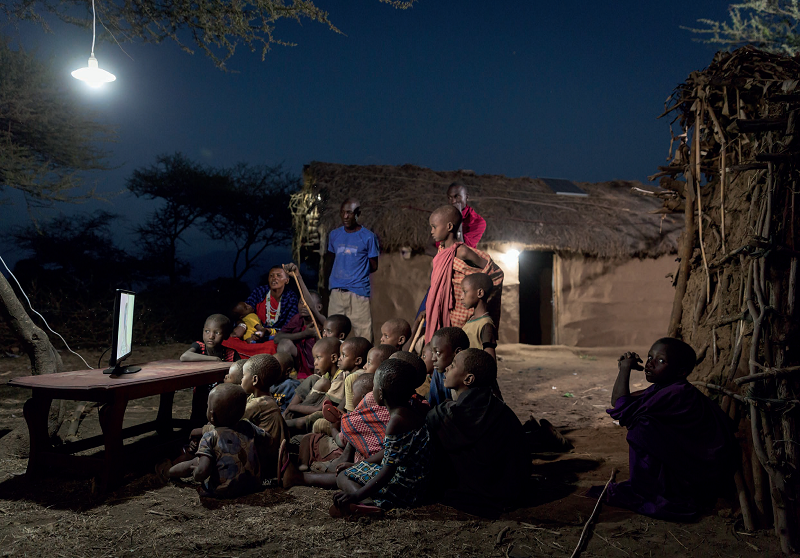
Off-grid renewable energy has witnessed enormous growth over the last decade. Since 2008 capacity has increased and the number of people in rural communities served by the technology has witnessed double growth.
The high costs of grid electricity is what has prompted initiatives in the off grid sub-sector, promoting the growth of socio-economic activities among its residents beyond the grid.
Today, over 500,000 people in Kenya, Uganda and Tanzania are receiving access to low-cost, secure renewable energy and benefit from the socio-economic impact access it delivers according to Energy Progress Report 2016 by the World Bank.
The report, tracking global achievements in sustainable energy, notes that off-grid solar-based systems have increased access to electricity in most rural areas in East Africa with Kenya leading with 60 per cent access, followed by Tanzania at 36 per cent and Uganda at 27 per cent.
As the industry is already gaining traction service providers like Mobisol, Azuri Technologies and M-KOPA are cropping and slowly exploiting the sector with their Pay-As-You-Go (PAYG) lighting products.
The solar products uses a manageable financing mechanism which is made affordable to their customers, allowing them to pay using mobile money on a daily or weekly basis.
The solar firms are appealing to consumers with a pay-as-you-go model with daily payments of as low as Ksh49. A key factor also behind the growth of PAYG home electrification systems has been their business model, which is designed to respond to the needs of rural households and their ability to pay.
This significant uptake of PAYG has also been made possible by the decreasing prices of solar panel systems in Africa.
According to a new report from Global Off-Grid Lighting Association (GOGLA), ‘Powering Opportunity: The Economic Impact of Off-grid Solar’, nearly 60 per cent off-grid solar owners undertake more work and enterprise within just three months of using an off-grid solar home system.
The global association for the off-grid solar energy industry has revealed that households using small scale-solar power in East Africa are reporting a rise in economic activity, with an improvement in income and job opportunities.
The research, funded by The UK’s Department for International Development (DfID) and conducted by Altai Consulting, was based on data collected from over 2,300 small-scale Pay-as-you-go (PAYG) solar owners in Kenya, Mozambique, Rwanda, Tanzania and Uganda in the first quarter of 2018.
With more power for enterprise such as retail and entertainment, together with increased working hours, over a third of respondents reported an average income increase of US $35 a month, more than half the average monthly GDP per capita of the countries surveyed.
“Over 10 per cent have started a new business, and 7 per cent report getting a new job,” the report read in part.
The off-grid renewable energy solutions are being deployed to provide electricity services for a wide range of end-uses, including for powering agriculture, telecommunication infrastructure, healthcare centers, schools, and rural enterprises.
“Provision of power at home has also unlocked productivity, with 44 per cent of the respondents reporting they are using previously dark and unproductive hours to work,” the report said.
Furthermore, over 90 per cent of households replacing toxic kerosene lamps, used by millions in the developing world, claim both improved health and feeling safe.
GOGLA’s impact report comes as global leaders gather to discuss how to meet the world’s Sustainable Development Goals (SDG’s).
With the focus on “Transformation towards sustainable and resilient societies”, the group is seeking insight on how to meet SDG’s including SD7 ‘Ensuring access to affordable, reliable, sustainable and modern energy for all by 2030’.
“This report shows that the net economic and social benefits off-grid solar are a huge opportunity for national governments of the developing world. Governments tell us they are interested in jobs and economic impact.” Koen Peters, Executive Director of GOGLA
He added that the report shows, off-grid solar is directly delivering such impacts and significantly. “We call on policy makers, treasury and energy departments to work together with off-grid companies, banks and institutions to break down barriers to off-grid solar and build a pathway to accelerate energy access,” He said.
Currently, 1 billion people across Africa and Asia, about one in seven people on earth, have no access to electricity.
With falling prices, increased efficiency and financial innovation, such as pay-as-you-go consumer finance, over 120 million people have now shifted from toxic kerosene lamps, candles and diesel generators to clean off-grid solar electricity since 2010.
Off-grid solar power has also meant access to previously unobtainable products and services, such as televisions and phone charging opening up opportunities for work and leisure. The vast majority (94 per cent) report an improvement in quality of life with solar.
The lighting Association hopes that Off-grid solutions will be at the heart of delivering universal electricity access by bundling off-grid renewables with efficient appliances and lighting, giving households better quality energy services at a substantially lower cost, making off-grid access more affordable and reliable.