Redington Value, will provide on-the-ground support to SAS customers in East Africa.

Redington Value, will provide on-the-ground support to SAS customers in East Africa.

Finserve has today launched Africa’s first keyboard app. The innovative app dubbed “mKey” is the first ever to converge social, and financial services into an integrated lifestyle. In addition to providing these services, mKey rewards users the more they transact.
The new app coming just weeks after Finserve officially launched, brings a differentiated user experience to the market, by blending the best of social conversations with the full breadth of financial services and captures that entire world on your keyboard, giving users the opportunity to make more possible.
The name mKey, which is inspired by the concept of mobile, is the key to unlocking new possibilities through the fusion of financial and social into an exciting keyboard app. It has added a Kenyan flavor and pride to its offering through customized emojis; YetuMoji, stickers and gifs made for Kenyans by Kenyans. The app further gives its users the freedom to co-create and use their own emojis.
mKey is available on Google Play Store and developed to run on the Android 4.1 and above, and soon on IOS. The app is targeted at Kenya’s increasingly digital population that is becoming savvier in enhancing their lifestyle through technology and who evidently want to perform financial transactions without visiting a bank or even switching apps.
Speaking during the launch of mKey, Finserve Managing Director, Jack Ngare said the app offers a unique social experience while at the same time offering convenient, safe and secure financial services. mKey will empower users to perform daily tasks such as accessing local and international news, getting aggregated local content, sharing on social media, applying for and paying mobile loans, paying for goods and services, sending and receiving money as well as a chama and group accounts that work like social chat groups, straight from their mKey keyboard.
“mKey has been created to be relevant to people’s social lives and support fun conversations on any social media platform. It is a revolutionary keyboard app with a wide catalogue of customized yetumojis and gifs that will be constantly updated to capture the pulse of trending conversations, celebrating our Kenyan identity,” said Ngare and added “mKey is the most groundbreaking keyboard app out of Africa that blends the social and financial into an integrated lifestyle providing unparalleled convenience. Why switch between apps to perform everyday functions like reading news, paying for goods and services, sharing emojis or even applying for a loan? Simply have a keyboard that goes everywhere with you and is ready to deliver all these services at the tap of an icon. Download mKey today and enjoy the experience of seamlessness and freedom”
Through mKey, users will be able to send and receive money, transfer cash between bank and mobile wallet accounts and, for the first time, open a group account where up to 10 members can make group payments and transactions.
Ngare added that mKey is developed to continuously engage users through a reward system that creates incentives and motivates users to actively use the app’s social media and financial services features.
“mKey has an integrated reward system where users will instantly earn stars and complete levels for performing financial transactions. These stars and levels offer rewards such as free airtime, free transfer of funds or an increase in loan limits,” he said. ‘’And not to forget, this innovation has ensured that users can perform transactions in a completely safe and secure environment’’.
Finserve seeks to collaborate with partners across sectors and markets to enhance mKey’s user experience for both lifestyle and financial services.
“We have ambitions of taking mKey to all the markets in Africa and we are open to integrate mKey to any financial institution in the continent to ensure that we offer relevant financial services,” said Ngare.

By Brian Yatich
For someone handling a multi-national company, Kennedy Chinganya is disarmingly charismatic and friendly. Modesty comes naturally by him as he ushers us into his refined office.
Chinganya is Managing Director, MTN Business Kenya. Joining the Kenyan outfit in 2015 he was tasked with improving governance in the enterprise business across all company operations.
He has vast experience in the ICT sector having worked with IBM for 14 years before joining Microsoft Africa for another 5 years.
Setting up business in Kenya has not been an easy task for the firm. But with experience from operating in other African markets, this was not a bother.
“Our strategy has been tailoring our identity in innovation solutions to meet the latest market needs and being on top of technology, MTN Business Kenya currently focuses on enterprise solutions because we are futuristic. We project future disruptions and we have aligned our approaches accordingly to help businesses optimize their potential,” Chinganya says.
With its headquarters in South Africa, the firm offers network services in cloud solutions, voice and data centre services to the financial services sector, telecommunication companies, government, corporate sector and small and medium enterprises (SMEs).
“In 2010, we bought UUNET previously owned by Verizon Wireless, an American company providing broadband internet, and rebranded it to MTN Business to provide world-class solutions with our core objectives in opening up the region for business for Small and Medium Enterprises, the public as well as private sector,” Chinganya reveals.
MTN Kenya today has invested heavily on data center services over and above the normal connectivity.
“We have structured services that will suit customers across various stages of business growth. We have disaster recovery as a service, cloud infrastructure as a service and we can offer a virtual data centre,” he says.
Having started off with Voice over Internet Protocol (VoIP) which allows businesses to connect in a superior-quality voice calls managed on a single network and routed to multiple branches, the firm has grown further to investing in data security, which Chinganya notes has started to become a big thing as more people want to go into a more secure environment.
“Data centers allow cloud computing, virtualization and convergence which ultimately lowers operational cost for companies in the country with fast access of data and company information,” he says.
Last year, the firm launched a tier III data center offering a dual redundancy, which provides MTN clients with robust remote computing capabilities.
“I think the greatest achievement I can say is putting up a tier 3 data center, because when our customers walk in, it gives them that confidence that we care about them to have invested in this,” he says.
The facility, the second highest classification level for data centers ensures secure access of data everywhere for MTN clients which is available in the 25 countriesthe company has presence across the Middle East, Europe and Africa.
“That itself gives us an upper hand because of our single point of contact with our seamless service. And with the growing competitive landscape, every day we see new players coming on board, we decided to differentiate ourselves with the Tier III data center,” he points out.
Focus on SME’s
The MD alludes that 80 per cent of SME’s do not see their first birthdays, “this is because they do not have the right tools to be able to manage their organizations,” he says.
To counter this, MTN Kenya introduced “SMEasy” a cloud-based accounting tool that gives entrepreneurs with no accounting knowledge or training, the ability to perform crucial finance and related business tasks on the go.
The telco firm has also aligned itself for growth with strategic partnerships and alliances with key partners like Microsoft and Cisco who have journeyed with them to ensure their success.
The future is data
Chinganya says that the ICT industry has evolved very fast from voice to now data. “We have been in the voice business and I can say we have been champions, having gone to markets that no one has dared gone to; Yemen, Syria, Iran, Liberia, South Sudan and we have been successful,” he says.
And the main success in this has been on voice for the last 20 plus years. But we all know that today, voice is slowly dying as more people are consuming data. With tech disruptors like WhatsApp, Telegram, Vibe and even Skype taking over that space.
Chinganya reveals that there is a lot of inhibitors in the adoption of IT, in as much as there is an agenda of pushing for them. “Cyber security is a challenge, and of course the cost of data and connectivity has not dropped it is still very high with the already crowded telco market. We need to look at all those components and actually try to make it affordable in the market,” he says.
His advice, “We need to be constantly innovative. We cannot sit in a space which is always competitive and expect to hear it from someone and adopt it. We always have to embrace the “fast-mover” kind of an attitude. At MTN, constant innovation is very key to us,”
Looking into the future, Chinganya indicates that as MTN Business, they don’t want to look at it as operations between the borders of Kenya, but an organization that seeks to provide ICT solutions across the region.
…Ends…

HMD Global, the home of Nokia phones, has announced that the new Nokia 5.1 is now available to buy from accredited retailers from KES 19,500.

By Brian Yatich
It is the era of analytics, data-based learning and decision-making. The internet is now the go-to medium where everything happens, and it is imperative that businesses stay on par.
The recruitment industry is not left behind. The process of collecting and analyzing job applications has shifted to the digital direction, providing richer insights into candidates and employers now more than ever.
As organizations are slowly adapting to this new recruitment direction to remain competitive, it has slowly transformed the human resource job market.
Just recently Google announced their online job board to the delight of job seekers everywhere. Using advanced machine learning and natural language search algorithms, the search engine behind this latest development has already proven that it gives accurate results.
The new system is meant to help job seekers find job advertisements from various job postings and job boards on the web closely aligned with their unique qualities and backgrounds as it shuffles through CV’s for matching keywords for a specified job for the candidate.
This has proven that the future of job hunting is heavily relied upon artificial intelligence (AI), to simplify the process in connecting employers and candidates.
However, the bigger question remains, how does digitized recruiting operate without losing the vital human element of it?
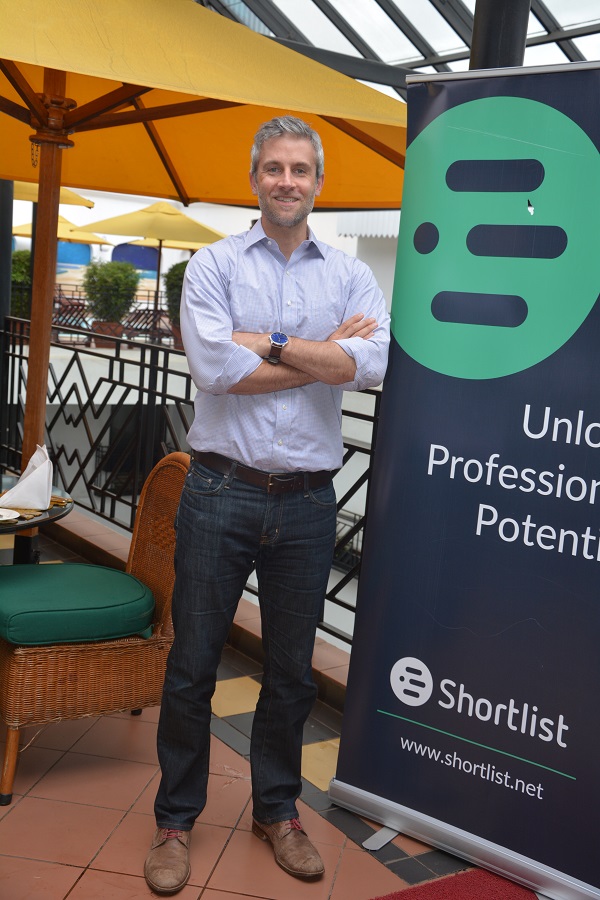
The co-founder and CEO of Shortlist — a deep tech startup – Paul Breloff
The co-founder and CEO of Shortlist — a deep tech startup – Paul Breloff, realized the potential of digital and data-driven recruiting back in 2016, when those terms were not as famous as they are becoming today. His Kenya-based startup focuses on digitizing the hiring process, making it easier for every company (not just the big, rich ones) to leverage technology to build better teams.
“One of our philosophical points of view is that resumes and CVs are not very good indicators of someone’s potential,” Breloff notes. “They can tell you where someone has come from, what they have done, but they are not good indicators of where this person can go.”
Shortlist was founded on the premise of streamlining and making hiring processes more efficient by automating the manually intensive process of posting jobs to job boards, receiving CV’s, interacting with candidates and clarifying certain details.
“This is where technology can really come in handy,” Breloff says.
Man vs. Bot
“Sifting through multiple job postings has proven to be a cumbersome task for candidates, and finding the right position that fits one’s passions, experience and goals can be a huge task,” he says.
With that in mind, Breloff and his team set up an online recruitment technology platform, Shortlist, with the ambition of streamlining and making hiring a more efficient and objective process for employers.
“What we saw,” he says, “was a lot of companies posting jobs on job boards, getting thousands of CV’s and resumes and having to sit down and review them manually. Many innovators, especially in the e-recruitment space, have resorted to the use of AI and bots, which have made things easier not only the recruitment sector but almost all sectors.”
The Internet Report 2017 by iFreedoms Kenya details the rising trends of bots in Kenya, capable of providing businesses and institutions looking at messaging bots to provide their customers with relatively simple services in convenient ways.
“AI tools are rapidly emerging in the support space, as they can address high-urgency situations quickly, but when it comes to high-emotion scenarios, no AI can replicate human empathy. There’s still a distinct advantage to having a real person help a customer. Some support interactions just require a human element.” Breloff says.
According to Breloff, the Shortlist platform screens candidates using predictive chat-based interviews and online competency-based assessments.
“By digitizing the initial stages of the screening process, we help companies find candidates with the skills they need to succeed on-the-job, while avoid bias and inefficiencies. This objective ‘top of the funnel’ screening, paired with live candidate interaction and support, is how we find the best-fit candidate for each role,” he says.
The tech-based firm has spent a lot of energy in the platform piecing together their business model to have a human touch feel to it as well as blend it with technology. “Getting that balance is really important to us” Breloff says.
“If you are an employer, rather than us selling you the technology, we are selling you the service. You don’t need to understand what happens behind the platform if you don’t want to. Each of our product offerings, ranging from a full-service recruiter to a lighter-touch software option, allows employers to efficiently and objectively identify top talent for junior- to mid-level roles,” he adds.
On the employers side, the firm has built a platform that makes it easy for the company to have all their candidates go through a uniform process, where they avoid perusing through all CV’s and give candidates the opportunity to show what they can do through challenges and answering questions relating to the field.
“We do this by customizing a digital obstacle course and creating a job application where they will be evaluated on whether they are fit for the job or not,” he says.
On the candidate point of view, the job seeker is tested with a bit of work where they go through a digital experience with a chat-based bot that collects different information in a quick easy way.
“The bot screens users based on experience, location, salary expectations among other things. Then the candidate progresses to a skills assessment related to the job they are applying, removing the aspect of bias.” he says.
The assessment performance is then presented to the employer as they keep updating the candidate on the job they have applied for, we intend to create a mindset that will determine the success of the company.
To advise and walk jobseekers through the process, the firm has a set team of 15 people who engage directly with customers.
Bots, according to experts won’t completely eliminate the HR function, but will rather assist highly-skilled professionals to recruit the best talent and provide further leverage to an organization.
“Yet, there will be a continued need for skilled recruiters to facilitate the human aspects of the process – phone calls and in-person interviews retaining that relationship– that technology cannot be replicated,” Breloff says.
Last year the firm merged with Spire Education – a training business workforce that builds worker training programs for East Africa’s leading employers to further leverage their services in a bid to build a bigger platform.
Shortlist has worked with over 160 companies including M-KOPA, UberEats, and Twiga Foods, and has handled over 400,000 job applications on the Shortlist platform.
Looking into the future, the firm is banking on a number of training programs and partnerships that span multiple industries and functions, including finance, sales/marketing, technology, and data science, to further improve Shortlist.
“At Shortlist, we see such a big opportunity beyond just the narrow question of recruiting, we think about how to develop, train and retain that talent once they are hired by building better team cultures and value structures,” he concludes.

Sending a job application and getting no response from the employer can be devastating. In fact, it is even more demoralizing than the application being rejected.But, imagine getting a job offer, and the employer waits for you to turn up for your first day but you don’t?
By Ben Oduor
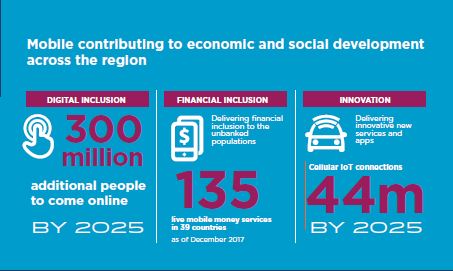
More than half the population of Sub-Saharan Africa will be subscribed to a mobile service by 2025, the latest edition of the GSMA’s Mobile Economy report series, published at the GSMA ‘Mobile 360 – Africa’ event being held in Kigali this week has revealed.
The new report forecasts that there will be 634 million unique mobile subscribers across Sub-Saharan Africa by 2025, equivalent to 52 per cent of the population, up from 444 million (44 per cent) at the end of last year. The report also calculates that the mobile ecosystem will add more than $150 billion in value to Sub-Saharan Africa’s economy by 2022, equivalent to almost 8 per cent of regional GDP.
“For many citizens across the region, particularly those living in rural areas, a mobile phone is not just a communications device but also the primary channel for getting online and a vital tool for improving their lives,” commented John Giusti, Chief Regulatory Officer at the GSMA.
“More needs to be done to extend connectivity to the remaining unconnected and underserved populations across Sub-Sahara Africa, but this will require a focus on long-term industry sustainability that can only be achieved through investment-friendly policies and supportive regulatory frameworks.”
Sub-Saharan Africa has been the world’s fastest-growing mobile region in recent years but subscriber growth is slowing as the industry faces the challenges of affordability and a youthful population. The region’s current mobile penetration rate-44 per cent of the population- is significantly below the global average of 66 per cent.
Further, according to the World Bank, around 40 per cent of the population in the region is under the age of 16, a demographic segment that has significantly lower levels of mobile ownership than the population as a whole.
However, despite these challenges, smartphone adoption continues to increase rapidly thanks to lower device costs, which is serving to accelerate migration to 3G/4G mobile broadband networks and services.
Today’s report predicts that mobile broadband will account for 87 per cent of mobile connections in Sub-Saharan Africa by 2025, up from 38 per cent in 2017. Moreover, nearly 300 million new subscribers are expected to use their devices to access mobile internet services over the next seven years.
Last year, mobile technologies and services accounted for 7.1 per cent of GDP across Sub-Saharan Africa, a contribution that amounted to $110 billion of economic value added. By 2022, the region’s mobile economy is forecast to generate more than $150 billion of economic value as countries continue to benefit from improvements in productivity and efficiency, particularly due to the increase in mobile internet adoption.
The region’s mobile ecosystem also supported 3 million jobs in 2017 and contributed almost $14 billion to the funding of the public sector in the form of general taxation as well as sector-specific levies on the consumption of mobile services.
The report also includes examples of how mobile networks and services are playing a key role in delivering the UN’s Sustainable Developments Goals (SDGs), as well as supporting a fast-growing tech startup ecosystem. Many tech startups in Africa now use mobile as the primary platform to create solutions that address a range of socioeconomic challenges.
“Sub-Saharan Africa’s mobile industry is showing strong progress in achieving the targets of the SDGs, predominantly through increased connectivity and access to information, but also through the delivery of services, such as mobile money, that increase productivity, improve well-being and reduce poverty,” said Giusti.

Whatsapp introduces new feature that allows admins to host groups where no one else can reply

HMD Global, has announced that the new Nokia 3.1 is now available to buy from mobile phone retail stores.
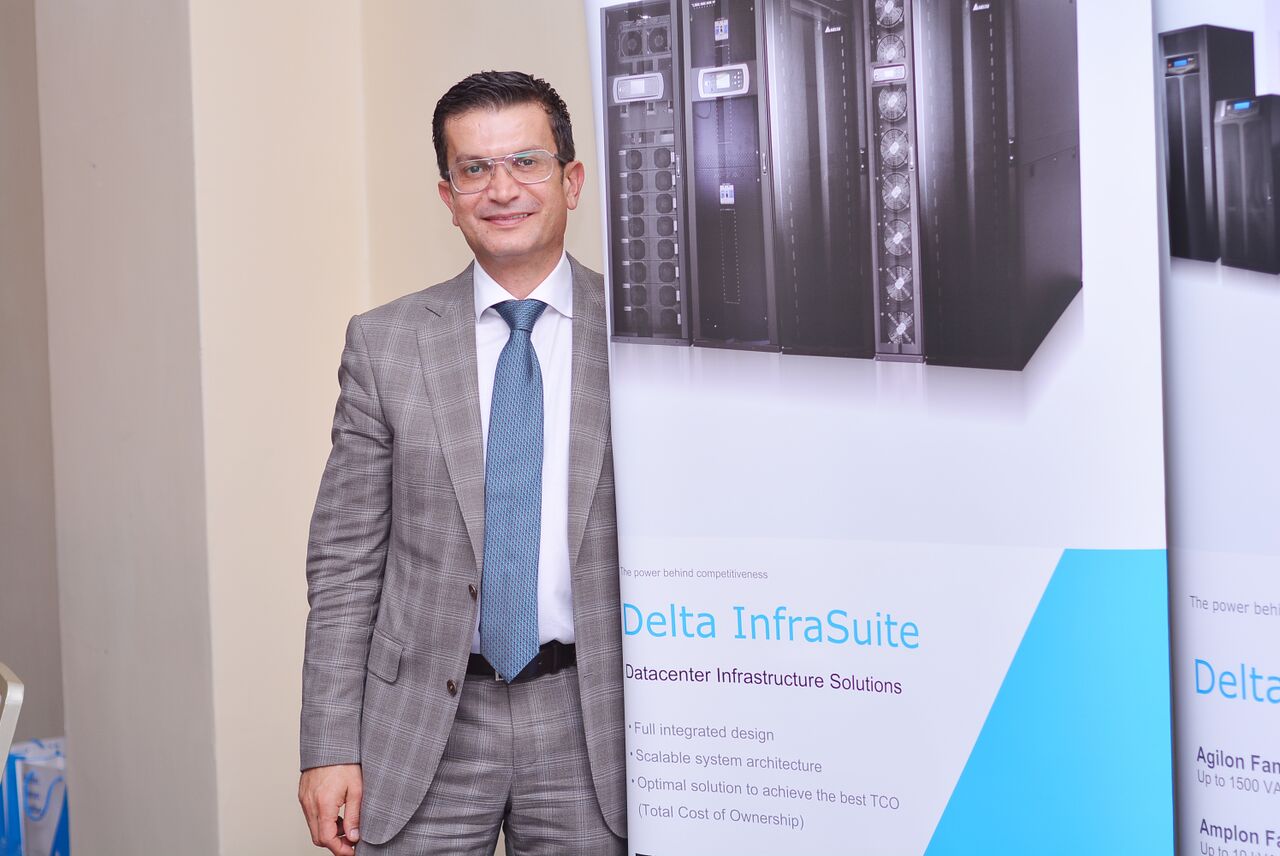
This company understands that you cannot predict an emergency and that is why it wants to help you prepare for one.