Rwanda’s government and Dubai Port World (DPW) signed a concession agreement that will see the later develop and operate the Kigali Logistics Platform (KLP)
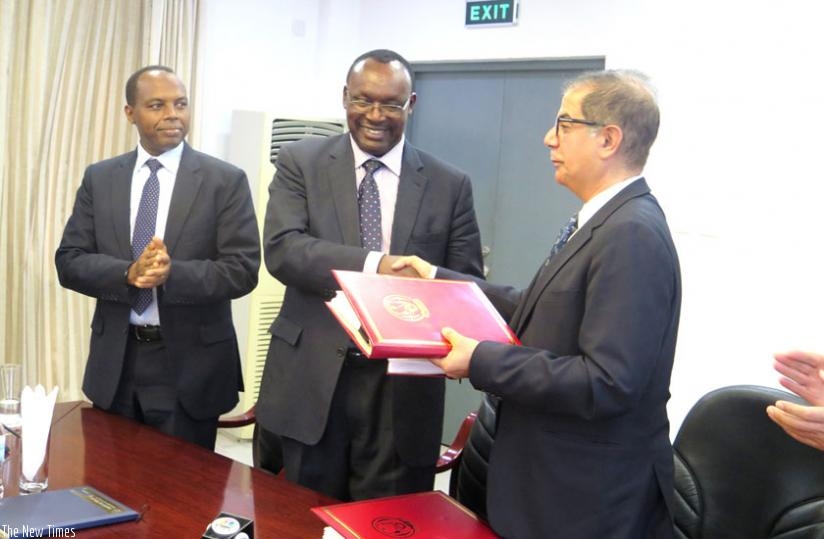
Rwanda’s government and Dubai Port World (DPW) signed a concession agreement that will see the later develop and operate the Kigali Logistics Platform (KLP)

Longhorn’s diversification is paying off

KAM has grown into a respected association that unites industries
By Boniface Otieno
Innovation, dynamism, credibility and respect are the traits of the Kenya Association of Manufacturers (KAM).
Established in 1959 as a private sector body by small group of businessmen who agreed to establish a vehicle to promote their interests under what was then known as the Association for Promotion of Industries in East Africa (APIEA), KAM has evolved to become a respected association that unites industries as well as providing a common voice for business.
“We provide an essential link for cooperation, dialogue and understanding with the government by representing the views and concerns of our members to relevant government agencies,” says Chief Executive Phyllis Osoro Wakiaga.
Wakiaga says as a policy advocacy, KAM has contributed immensely to the formulation and adoption of policies governing trade and investments. These include the contract law, VAT Act, Income Tax, Public Procurement and Disposal Act, Companies Act, land laws and labour laws.
She says KAM has helped Kenya’s manufacturing companies remain competitive in the global trading arena, transforming the economy by creating jobs and driving exports.
Towards this end, from 2009 to 2013, the sector’s contribution to Kenya’s rebased Gross Domestic Product (GDP) grew from 9.5 per cent to 11.3 per cent. The sector comprises of about 3,700 manufacturing units out of which 1,000 are KAM members. They had slightly about 800 members in the last two years.
Similarly, output from the manufacturing sector was valued at Ksh1.1 million in 2014, up from Ksh1.4 million in 2013, according to data from THE Kenya National Bureau of Statistics.
Consequently, overall exports in 2012 increased by 12.2 per cent to US$9.4 billion (23.2 per cent of GDP), up from US$8.4 billion (24.9 per cent of GDP). Of this, the African market was the largest destination of Kenya’s exports, taking up 48 per cent while 26 per cent were sold in the East African Community. The European Union is still Kenya’s second main trading partner and accounts for 24 per cent of exports, of which 7.8 per cent go to the United Kingdom.
Subsequently, the manufacturing sector employed over 280,300 people directly in 2013, up from 271,000 in 2012. The informal sector contributed further employment for 1.6 million people.
In pursuit of their core business mandate, Wakiaga says KAM has been offering a wide range of services in policy advocacy from all levels of services and business information to all their members.
Some of their interventions include conducting objective policy research to inform policy positions on issues affecting manufacturers, lobby government for favourable changes in policy and regulations, offering technical advisory services on taxation, trade and investment and access to market.
KAM also provides technical information on trade agreements under the EAC, COMESA, European Union Economic Agreement and World Trade Organisation, among others.
It also conducts seminars and workshops for members to improve efficiency and profitability.
Despite the turnaround and growth, like all other organisations, KAM faces a number of challenges including the high cost of power.
Wakiaga opines that the cost of power per unit of electricity in Kenya is high and volatile depending on the amount of thermal energy in the system, which is susceptible to changes in international oil prices.
“The current cost and quality of electricity is discouraging new investments and constraining expansion of industries. This is worsened by frequent power fluctuations and unscheduled interruptions and is a cause of lost time and equipment damage due to the low quality of power,” she says.
The association wants the government to subsidise the cost of electricity as it is the case in several countries, including China, whose products are flooding the Kenyan market.
Secondly, a number of Kenyans still do not want to consume locally manufactured products as they are of the mind-set that imported products are superior. As such, KAM is urging Kenyans, starting with government departments and ministries, to buy products manufactured locally, especially in the textiles industry.
Finally, the association believes there is need to streamline regulatory institutions to avoid duplication of roles in the two levels of government.
“Regulations become burdensome when they are many, difficult to administer and comply with and when similar regulations are administered by more than one agency,” says Wakiaga.
Going forward, Wakiaga says she is optimistic that the sector will be able to overcome some of the challenges and attract more members. She also hopes that in the next five years, KAM will be in a position to contribute between 15 to 20 per cent of GDP.
Outstanding career
Wakiaga has been at the Head of Policy Research and Advocacy Unit at KAM since 2013. The unit provides the overall direction in the policy and advocacy work of the association. She has successfully led a partnership with the National Council on the Administration of Justice to develop the Enforcement Manual to Combat Illicit Trade in Kenya and with the Commission on Revenue Allocation on the County Money Bills Project. She represents KAM on the board of the Kenya Industrial Property Institute (KIPI) and is a member of the Kenya Consumer Protection Advisory Committee (KECOPAC).
Before she joined KAM, she was the Manager for Government and Industry Affairs at Kenya Airways where she was a key member of delegations negotiating bilateral air services agreements and was responsible for building and maintaining government and industry relations. She was a member of the East African Community Facilitation Team that ensured improvements across all airports in East Africa. She previously worked at Otieno Omuga and Ouma Advocates.
Currently, she is an advocate of the High Court of Kenya. She holds a Masters in Business Administration from Jomo Kenyatta University of Agriculture and Technology, Bachelor of Law Degree from the University of Nairobi, Diploma in Law from Kenya School of Law, and a Higher Diploma in Human Resource Management from the Institute of Human Resource Management Kenya. She also has a Masters in International Trade and Investment Law from the University of Nairobi.
To top it off, she is an alumni of the Swedish Institute Management programme on Sustainable Business Leadership and Corporate Social Responsibility and was part of the inaugural programme for Africa in 2014. She has also been trained on the role of Private Sector in Government Policy by Strathmore Business School and John Hopkins University; Investment Treaty Law and Arbitration-Africa International Legal Awareness (AILA) UK London and High Performance Boardrooms- Institute of Directors. She has also undertaken a number of leadership and management courses.

Uganda’s UNBS strives for quality
By Boniface Otieno
Adulthood begins at 25. And no organisation knows this better than the Uganda National Bureau of Standards (UNBS).
Created in 1983 through an Act of Parliament, its aim was to develop and promote standardisation, quality assurance, laboratory testing, and metrology to enhance the competitiveness of local industry, to strengthen Uganda’s economy, and promote quality, safety and fair trade.
Back then, it was operating from one-room office in Uganda’s Industrial area, a sharp contrast from its current state-of-the-art headquarters in Jinja Road, Kampala.
But it was not until 1989 that a Bill was passed in Parliament that anchored UNBS in law and gave it some level of autonomy. The Standards Act also created the National Standards Council (NSC), which is the agency’s policy making body.
“Standards promote public good, enhance competitiveness and contribute to a liberalised global trading system. It therefore enhances the production, distribution and management of all goods and services,”
says UNBS Executive Director, Dr Ben Manyindo, the man at the helm of the institution as it celebrates its 25th anniversary.
Since its establishment, UNBS has left an indelible mark. For instance, it has developed over 2,650 standards, certified over 300 industries with about 650 product lines. They have also reduced the adulteration rate of fuel in Uganda from 28 per cent to 5 per cent.
The institution has also developed the National Quality and Standards Policy which came into effect in 2012. It sets the framework of standards not only at national but also at the regional and international level.
As if this is not enough, the 1983 law which established UNBS has been amended to fit into the current regime of business dynamics. This is because back then, the business dynamics in Uganda was government oriented.
UNBS has slightly over 236 employees, approximately 75 per cent of them technical staff. It had about 65 employees in 2013.
“The journey has been long and winding but we are happy to note that more people are beginning to appreciate what standards are in this country,” he says.
But despite its success, UNBS is facing a myriad of challenges. For instance, the institution cannot test up to 500,000 out of an estimated one million weighing scales as well as measuring instruments such as fuel pumps.
This implies that some traders could, therefore, be cheating customers by giving them smaller quantities of items than they pay for.
Also, UNBS can test only half of the 100,000 imported goods such as electricals, tyres and helmets. To make it worse, the institution is only in a position to test 500 of the 3,000 products manufactured in Uganda.
According to Dr Manyindo, this is partly because the institution doesn’t have enough staff and funding from the government to adequately execute its mandate.
For instance, he says UNBS has slightly over 40 inspectors for the entire country while at least 120 are required.
“Importers have an option of clearing their goods at 165 customs stations in Uganda, including at inland container depots. We have 40 officers. You can see 125 stations remain unmarked,” he says.
According to the National Budget Framework Paper for the financial year 2016/2017, UNBS will need Ugs24.8 billion for quality standards and quality assurance.
Of this figure, Dr Manyindo says the government is expected to contribute over Ugs12.4 billion and development partners will provide a substantial amount. The rest will be raised from the bureau’s commercial activities.
However, to be able to police efficiently, the parastatal is embracing technology with the launch of an electronic verification system to enable consumers check the details of the products they buy using their mobile phones.
The e-tag system, which was launched late last year, is as a result of collaboration between the UNBS, Ministry of Agriculture Animal Industries and Fisheries, Ministry of Trade and Cooperatives, agro-input businesses and manufacturers.
E-verification for agro-inputs is intended to provide real time information to help the buyer make an informed decision before purchase.
Before buying a product, for instance, fertiliser, herbicide, seed or an agro-chemical, a buyer will scratch a silver panel on the product to reveal a unique code and send that code to the number provided on the scratch panel.
A message is sent back to the consumer informing them of the product details and whether it is genuine or not.
Also, because the call is free, genuine agro dealers are in position to verify the product for their customers.
Going forward, in the next five years, Dr Manyindo hopes the government will provide adequate resources to be able to implement policies such as the National Quality and Standards Policy.
Secondly, he hopes that there will be an appreciation of standards by all. “ I hope that standardisation will be mainstreamed in all government departments, programmes and projects,” he says.
By Elisha Mayallah
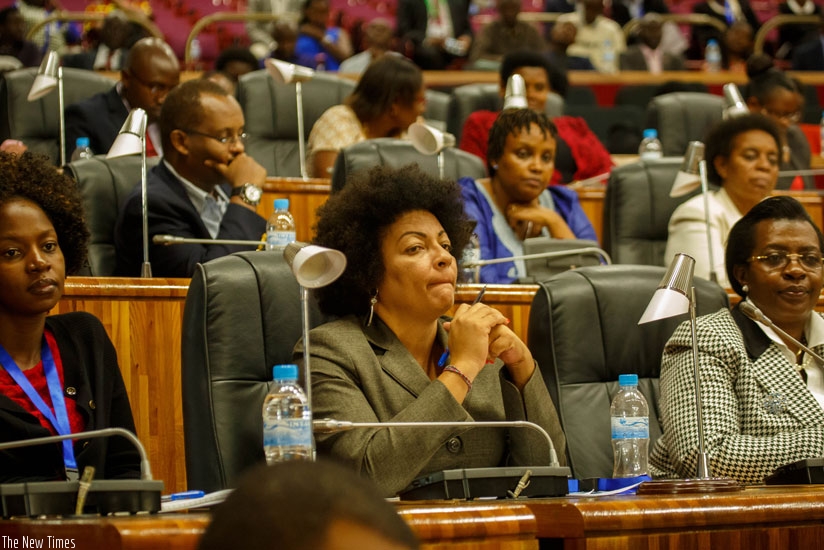
The public hearing workshop, which run last week, was intended to review the petition submitted by the Pan African Lawyers Union (PALU) on November 16, 2015, together with five other Civil Society Organizations (CSOs) namely: Atrocities Watch Africa, Centre for Citizens’ Participation on the African Union (CCPAU), East African Civil Society Organizations’ Forum (EACSOF), East Africa Law Society (EALS) and Kituo cha Katiba – The Eastern Africa Centre for Constitutional Development.According to a press statement from PALU, the Petition called for the following:
Explicit condemnation of the assassinations, extrajudicial and arbitrary killings; use of inciting and incendiary language; and inordinate use of force by the Police, security officials and members of the Imbonerakure (the militia associated with the ruling CNDD-FDD Political Party).
EALA to hold a Public Hearing, in a safe place, that would enable Burundian and East African citizens to testify to the occurrences in Burundi, and make proposals for resolution of the crises. The EALA has been asked to undertake an urgent fact-finding Mission into Burundi.
Also to unequivocally tell the EAC Summit (of Heads of State and Government) that Burundi cannot and will not assume the rotating Chairmanship of the Summit of the EAC, until resolution of the political, human rights and humanitarian crisis in Burundi.
The EALA has also been requested to seek out the African Union (AU) for robust leadership in intervention and mediation in the political, human rights and humanitarian crisis in Burundi, especially because the AU has a more comprehensive and far-reaching legal and institutional framework for intervention than the EAC currently has.
In particular, EALA to call upon the Chairperson of the Assembly of Heads of State and Government of the AU to take concrete steps towards preventing Burundi from descending into Genocide or mass atrocities, including: – Activating the sanctions regime of the African Union as well as enhancing the numbers and capacity of the Human Rights Monitors and Military Monitors deployed to Burundi.
Should the above measures not bear fruit within the next one month, the House to call for suspension of the Burundi Government from both the EAC and the AU
RACR is set to establish the facts of humanitarian atrocities as reported in the petition and to make recommendations to the House during the next Sitting scheduled to commence on January 24th, 2016 in Arusha, Tanzania.
The Pan African Lawyers Union (PALU) is a continental membership forum for African lawyers and lawyers’ associations. Their vision is to see a united, just and prosperous Africa, built on the rule of law and good governance. And the mission is to advance the law and the legal profession, rule of law, good governance, human and peoples’ rights and socio-economic development of the African continent.

Goodlife leading the way in making drugs accessible to majority of Kenyans
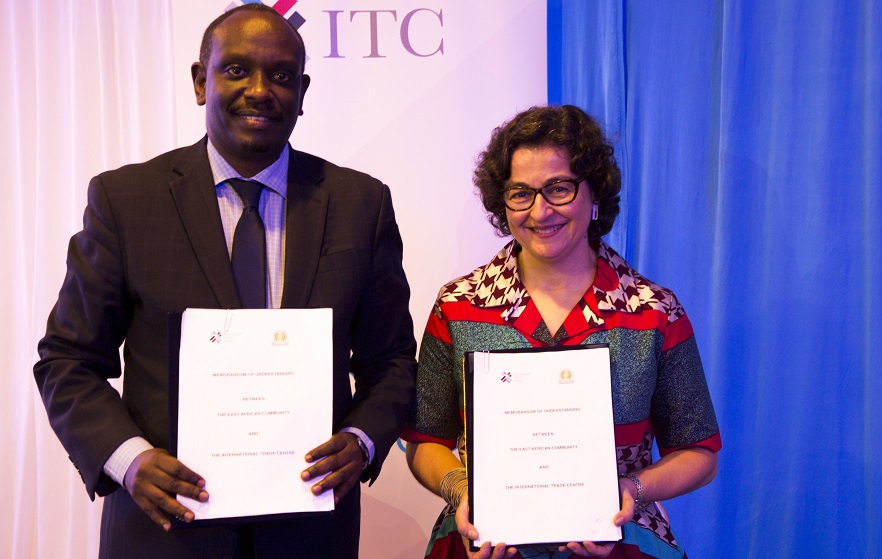
The International Trade Centre (ITC) and the East African Community (EAC) yesterday announced that the two organizations are launching a new, joint project to boost intra- African trade. The Trade and Regional Integration Project (TRIP) for EAC was announced by the EAC Secretary-General Amb. Dr.
Richard Sezibera and ITC Executive Director Arancha Gonzalez
on the margins of the World Trade Organization’s Ministerial Conference that took place in Nairobi, Kenya December 2015.
The new initiative aims to strengthen existing efforts by East African Partner States for closer
economic integration, including the East African Customs Union and the EAC Common Market.
The TRIP for EAC project also sets out to support the African Union’s Action Plan for Boosting Intra- African Trade and the recently agreed tripartite free-trade agreement among the Common Market for Eastern and Southern Africa (COMESA), the EAC and the Southern African Development Community (SADC).
Specifically the project aims to boost the competitiveness of EAC- based small and medium-sized enterprises (SMEs), enabling them to step up intra-and inter- regional trade. The project will have a strong focus on women’s economic empowerment, and will also support wider private-sector development in the EAC to spur deeper economic integration, including in agriculture, information and communication technologies (ICT), and tourism.
“Regional integration led by the private sector is a powerful vehicle for boosting growth, creating
jobs and promoting economic development,” Ms Gonzalez said. ‘Enabling the private sector and policymakers to take advantage of trade opportunities is at the heart of what ITC does. We are
looking forward to doing this in collaboration with the EAC, and to ensuring sustainable growth for East African countries and their SMEs.” Amb. Sezibera said: ‘This cooperation will contribute to improve the
global competitiveness of our region and to trigger sustainable economic growth. ‘Implementation of the five-year US$ 8.5 million TRIP for EAC project is set to begin in January 2016. The Government of Finland has pledged to provide initial funding.
ITC and the EAC will intervene at three levels to provide integrated solutions to problems of SME
competitiveness. At the enterprise level, they will work to enhance the
competitiveness of SMEs in selected sectors, with a strong focus on women entrepreneurs.
At the institutional level, they will work to strengthen trade and investment support institutions, enabling
them to better serve their SME clients, especially on export development and international marketing services.
Finally, at the trade policy level, the project will aim to enhance the business environment through improving trade facilitation and public-private dialogue to ensure that reforms correspond to business needs.
|
|
By Isaac Mwangi
Arusha, 12 December 2015 (EANA) – Apart from a few members of the re- gional
legislature, few people cared about November 30, which came and went – and
with it the opportunity for East Africans to celebrate their unity.
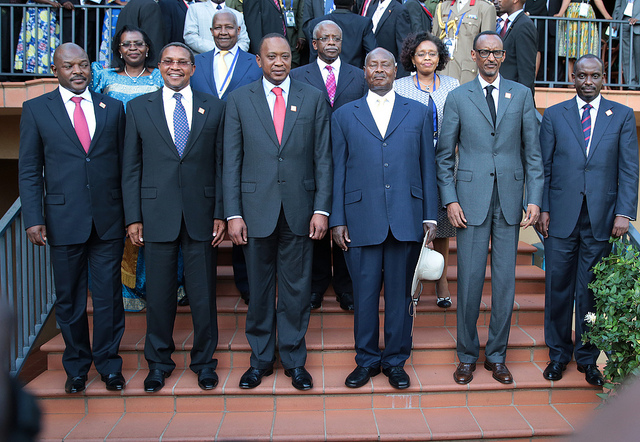
Members of the East African Legislative Assembly are said to have spent the
day holding talks with various private- sector stakeholders in Kigali,
Rwanda. But this is an occasion that ought to have attracted a lot more attention across the region, spearheaded by the East African Community
(EAC) Secretariat. The day provides the ideal opportunity for all
stakeholders to take stock of the successes and shortcomings of the integration effort.Previous surveys about the public€™s awareness of the integration process
have revealed that there is a dearth of knowledge to do with regional initiatives. This is despite the many strides that have been made toward integrating the economies of the five partner states –Kenya, Uganda, Rwanda, Burundi and Tanzania.
It is these strides that we should have been celebrating –and in the
process bringing greater public partici- pation and goodwill to the process.
More people need to be involved in craft- ing the way forward, from students
to professors and traders to artisans. Indeed, there is much to celebrate. There is both a Customs Union and a Common Market in place. The full im- plementation of the East African Monetary Union is scheduled for 2024, when the single currency regime is expected to take effect. And there are
already moves to prepare the ground for eventual political federation thereaf- ter. There is also a lot of work that has gone into harmonization of standards, laws, operating procedures, manuals and other details that affect specific sectors. This has been done with the collaboration of national ministries
and institutions. It has also taken up much commitment by EALA. Much has been achieved, but more remains to be done to harmonize all possible
sectors. But there have also been numer- ous obstacles, which have sometimes seemed to
be insurmountable. The non-tariff barri- ers (NTBs) are a never-ending
problem, perhaps the most intractable of the challenges the Community faces today. Every time the partner states agree to get rid of some NTBs, new
ones crop up to take their place. It is a matter that puts into question
the commitment of the region to operate as one Common Market.
But there are other serious areas of dis- agreement as well. The pace of integration has raised concern, to the point of near break-up as countries aligned themselves into those of the coalition of the willing€ against
those perceived to be dragging their feet. This has sometimes poisoned the political environment and hindered progress. It has also wrought confusion as countries move unevenly in the inte- gration effort.
Rwandans, Kenyans, and Ugandans can now visit each other with ease and do
not need passports to do so, yet this does not apply to Tanzanians and Burundians. While this is acceptable within the framework of the EAC
Treaty, it does not augur well for rela- tions between our sister states.
Land is yet another emotive subject. There are perceptions that this important resource may end up being monopolized by those from more ad- vanced
economies who have the capital, to the detriment of local communities. Yet,
if we are truly integrating our econo- mies, how can any country open up some
areas and refuse to do so with others? Politically, there has been a lot of good- will among our leaders, which has somewhat made it easier to conclude many of the protocols and agreements signed. But this has also come at a cost –that our leaders will shy away from criticizing each other even where the situation clearly demands it. A pertinent example is Burundi, where
President Pierre Nkurunziza’s greed for power is slowly driving the country toward genocide.
Moreover, the stifling of democracy has not raised the ire of any of our
leaders. Instead, each of them is busy entrenching their own positions,
often through blatant disregard of dem- ocratic principles and processes.
Weak national institutions are not the way to go; instead, the region
should be finding ways of strengthening national and regional institutions
that will provide checks and balances in a future federation.
These are issues that need to be debated by all East Africans. Hopefully,
those concerned will seek innovative ways of increasing awareness and raising debate, including making use of the EAC Day in future.

Women seen as a major driving force in growth of male-dominated sector