The Tanzanian aviation sector is sending a statement to its neighbors, on its plans to claim a share on the region air space.

The Tanzanian aviation sector is sending a statement to its neighbors, on its plans to claim a share on the region air space.

The FIFA World Cup 2018 can easily pass as the greatest of all editions. From the performances on the pitch, the surprises, hits and misses, Russia gave the world an experience to remember. Retirement planning, like football, if not well coordinated can be disappointing when goals set are not met.

One day you will retire. It is therefore time to understand what the reality of retirement will be for you. You won’t be going to work, you won’t have steady cash flow, no influence or at best, a reduced influence.

The significance of manufacturing to any economy in the world cannot be understated. Many economic development success stories owe a great deal to the role of the manufacturing sector. However, the story has been less than impressive in Kenya over the last few decades.
Growth trends have shown that the country’s manufacturing sector has remained stunted and it’s immense potential underutilized. This has undermined its intended impact on the economy.
According to the Kenya Association of Manufacturers (KAM), the performance of the manufacturing sector has been weak and has failed to keep up with developments in the region and globally. Its share of the GDP was the same in 2015 as it was in 1965, declining since 2010 to a low of 9.2 per cent by 2016. Kenya’s GDP stands at more than US$70 billion. The manufacturing sector therefore contributes an average of up to US$7 billion of the total GDP, an amount that cannot be overlooked.
In its efforts to revitalize the manufacturing agenda, the KAM in 2017 launched a ten-point policy agenda for industrialization. The policy offers guidance to the government on achieving economic goals stated in its manifesto by directing its efforts on the manufacturing sector.
A segment of manufacturing in Kenya that has not received deserved attention is the locally assembled motor vehicle sector. The sector plays a significant role in building the country’s economy, essentially through the transportation of goods and people, and the formulation of intricate value chains that create employment and business opportunities for thousands of Kenyans.
However, compared to other countries, vehicle assembly in Kenya still has a long way to go, to compete at global levels. Drawing comparisons with other nations that have heavily invested in local vehicle assembly, the growth opportunities are immense and the return on investments is unquestionable.
Role of Policy in driving Inclusive Growth
It is encouraging to see that the Kenyan government has prioritized the growth of manufacturing in the country through the Big Four agenda. Local motor vehicle assembly can strengthen Kenya’s manufacturing potential and help achieve tremendous growth through favorable industry regulations and policies.
Examples from other markets where the motor industry has achieved great strides continue to demonstrate that government support is a critical component of their success. New investment laws set by governments have favourably influenced the rise of the automotive industry in some countries. For instance, foreign car companies setting up shop in Morocco today benefit from a variety of incentives, including a five-year corporate tax holiday, VAT exemptions, and land purchase subsidies.
In measures to attract more investors into the motor vehicle sector, the Kenya government in early 2017 announced a reduced corporate tax rate of 15% down from 30% for the first five years of operation, for new vehicle assemblers. However, it was not made clear how this measure would apply to existing assemblers, who have already made significant investments in the business.
Currently, as per the Kenya National Bureau of Standards (KNBS), used cars make up about 80 per cent of vehicles imported in Kenya on an annual basis. With such high numbers of second-hand cars, the market for locally assembled vehicles is undermined, constraining its growth.
Ironically, we currently boast of three automotive plants in Kenya capable of assembling 30,000 units per year (on a single shift) but they’re operating at just about 33 per cent of their capacity. A policy to discourage the importation of second-hand vehicles will achieve beneficial impact on local assembly. Its gratifying to note that Kenya’s recently formulated automotive policy framework proposes to impose further age limits on second-hand vehicle imports, from eight to five years.
Local motor vehicle assembly can strengthen Kenya’s manufacturing potential and help achieve tremendous growth through favorable industry regulations and policies.
Rita Kavashe
To demonstrate the effectiveness of this bold policy move, in 2013, Nigeria passed a new tax regulation for second hand cars to discourage vehicle importation and encourage local production. The Nigerian Government introduced steep tariff rates of up to 70 per cent on imported Fully Built Units (FBU), 10 per cent on Semi-Knocked-Down Units (SKD) and 0 per cent on Completely-Knocked-Down Units (CKD).
After this bold move, PWC released a survey titled ‘Africa’s Next Automotive Hub’ that predicted by 2020, Nigeria’s impressive GDP will be the 16th largest economy in Africa and the 9th largest economy by 2050 characterised by a large consumer base with ever increasing purchasing power driving the demand for locally assembled automobiles.
Answering the Unemployment Problem
Local vehicle assembly capacity to provide opportunities for skilled and unskilled labor in the country is immense. At full capacity, a local vehicle assembly chain requires a larger number of employees, hired directly, to fully assemble the vehicles compared to the number of manpower required to import second-hand vehicles.
The indirect employment opportunities are also extended through the value chain both downstream and upstream e.g. local vehicle components suppliers and vehicle dealers. Indirect employment includes personnel working in enabling industries, such as vehicle finance and insurance, vehicle repair, vehicle service stations, vehicle maintenance, vehicle and component dealers, drivers, cleaners, which totals to about 60 to 70 per cent.
In Thailand, according to a survey of members of the Auto Parts Club and TAPMA, the industry employs more than 500,000 people. In Egypt it creates 86,000 direct and indirect jobs. In Malaysia, the automotive workforce is also anticipated to increase, with more than 29,000 new jobs expected to be created in 2018 employing more than 755,000 people.
Foreign Direct Investment
Foreign Direct Investment (FDI) is widely believed to be a catalyst that promotes economic development. As many countries compete to attract FDI, it becomes important for the policy makers in the country to understand the effect of FDI on productivity. A robust local vehicle assembly automatically attracts numerous Foreign Direct Investment in the direct or indirect support of the industry.
Through the sixth TICAD conference which took place in 2016 in Nairobi, Japan has looked at mobilizing support for Africa’s socio-economic development underscoring the spirit of “African ownership” and “international partnership”. Numerous benefits come along with FDI: Job creation, technology transfer to support industrialization, skills training for local youth, manufacture of products suited for the region as well as support for research and innovations.
The local vehicle assembly industry is capital intensive and requires long-term planning on regulatory issues. Thus, a favorable policy regime is critical to drive growth. This industry represents one of the biggest business opportunities over the coming decade that will provide employment opportunities, reduce the wage gap and consequently grow our GDP.
This growth is fundamental to the advancement and expansion of manufacturing in Kenya. Projections are that the auto industry’s flourishing period will take longer than expected. Nonetheless, it’s time the Government awakens the sleeping giant that is motor vehicle assembly sector in Kenya.
Rita Kavashe is the Chairperson, Kenya Vehicle Manufacturers Association (KVMA)

By Reuben Kimani
The new Lands CS, Faridah Karoney assumed office less than a month ago, after being sworn in on the 16th of February, 2018. Prior to the swearing in, Ms. Karoney had appeared before the National Assembly appointments committee, where she vowed to digitize lands operations and crush all land cartels.
The Ministry of Lands is one of the most challenging dockets to take up, especially because of the deep-rooted corruption and poor service delivery. In 2017, the East African Bribery Index ranked Lands as the second most corrupt sector in the country, after the police force.
Previous Cabinet Secretaries haven’t been very successful improving service delivery, and every new appointment is eyed with scepticism. But, is it possible that the chronic problems in the Ministry have remained unresolved because one the most important stakeholders, the real estate investment companies, are kept out of the reforms dialogue?
The role played by real estate companies in the sector cannot be ignored. In 2016 alone, the sector contributed 8.8% to the GDP. Real estate companies feel that this performance can be improved even further if certain issues in the Ministry of Lands were addressed. Most of the companies feel that the new appointment is a welcomed change and that the new CS is in a position to make beneficial changes in the Ministry.
Automation of key processes
The conversation on automation of land records started more than one decade ago. Real estate investors feel that it is time that this process was carried out to completion. The biggest obstacle to the implementation of reforms at Ardhi House has been the infamous land cartels. If key processes like registration were taken online, the present confusion on the ownership of land, especially in urban areas would end. Cartels who rely on the lack of reliable records to defraud innocent Kenyans would be driven out of business.
Issuance of title deeds
Title deeds are an essential economic enabler in most Kenyan households. Unfortunately, there are still millions of Kenyans who do not possess title deeds to their property. Currently, the ministry issues an average of 800,000 title deeds annually, a number which is too low compared to the number of pieces of land whose ownership is transferred annually. As a result, a large percentage have a hard time selling, transferring ownership and even using the property as collateral to access credit from lenders. The new Cabinet Secretary needs to come up with a concrete plan which details target dates by which all Kenyan landowners should have automatic access to title deeds. To real estate developers, availability of deeds will ease their transactions and build trust with their customers, which will expand the sector and bring in more revenue. If the title deed middlemen are eliminated, the cost of acquiring land will also go down considerably, which will bring in more investors.
Involvement of stakeholders in national land policy implementation
The 3rd sessional paper on Land Policy was adopted in 2009. However, the implementation of the reforms suggested in the document has been very slow. Real Estate companies feel that they need to be engaged more in the implementation of reforms since they, more than anyone else, understand the challenges of the sector. The engagement of the companies could improve access to land, resolve historical injustices in the sector, and address environmental concerns in the use of land.
The new Lands Cabinet Secretary, therefore needs to work closely with all the stakeholders in the Lands ministry to speed up reforms, which will put the country in a good position to benefit from factors such as the increased urbanisation, consumerism, infrastructure development and maturing of the market, which are driving real estate in the region.
The author is the CEO, Username Investments Limited.

By Peter Nduati
The cost of living in Kenya has seen a drastic increase in the past year that may spill over to the first quarter or half of 2018. Factors such as increased cost of oil and the rise of the US dollar have had a direct impact on the increase in the cost of living. Such factors directly affect a majority of costs including the cost of food, land, property and much more. 2017 being an election year made things harder for businesses and trade in general which directly affected the circulation of money within our economy.
More Kenyans have had to dig deeper and deeper into their pockets just to make ends meet. The government has made efforts to try cushion Kenyans from the high cost of living following the Price Control (Essential Goods) Bill signed into law by former president Mwai Kibaki in 2011 to cushion citizens from high cost of living. Last year, and perhaps closest to our hearts the Government introduced subsidized maize flour placing Kenya’s most loved meal within reach of every Kenyan. The government has also slightly reduced payroll taxes that took effect in the beginning of January. Pay-As-You-Earn (PAYE) bands will be expanded by 10 per cent as promised in last year’s budget, taxpayers monthly relief will also see an increase in a bid to yield monthly savings depending on a person’s salary.
Nairobi is the 75th most expensive city to live in the world and with this in mind every single asset and item owned and bought extremely valuable. On average Kenyans spend an estimated amount of ksh.130,000 on furnishing their households. Most Kenyans live in estates that do not have proper security. Furthermore are paying rent or a mortgage for their said home but do not consider any form of insurance to protect anything within their household leave alone the household on its own. The high cost of living has seen more home owners ignore home insurance as its seen as an extra cost in this harsh economic time but how much do you really loose in the event of an unexpected event such as a fire in your home, theft or damage of property as compared to the cost of paying for a home insurance premium?
Say you come home one day and find that your home has completely been robbed clean which is a very common scenario in many estates in Nairobi, how big of a loss will you have encored? How expensive would it actually be to replenish all you have lost? Insurance measures come into play to save you at such moments; the burden of replenishing all your stolen items will be the responsibility of your insurer instead of you as an individual.
The appropriate steps must however be followed in order to legitimately make your claim. It’s very simple to claim for your home insurance all you need to do is follow four steps. Notify your nearest police station for all losses, notify your insure of the claim and submit the relevant documents, await the insurer to process the claim and finally the claims are paid within 7 days of signing discharge voucher.
The cost of insurance is dependent on the value of your property and for home insurance its dependent on the value of items within your house that are covered within your insurance cover. The common worry is the lump sum cost of the insurance premium however what very few Kenyans are aware of is that home insurance can be broken down into monthly installments. With Monthly installment payments, customers are able to enjoy lower monthly costs that ensure protection of their valued items throughout the year.
According to the Insurance Information Institute 95per cent of homeowners in the United States of America have home insurance this is due to the high level of awareness on the importance of home insurance. 51per cent of them are under the age of 30 and take protective measures to ensure they safeguard their homes and assets within their homes. Kenya has not gotten to this level of awareness yet however it is a goal that we must work towards, the uptake of insurance will increase Kenyans are given proper knowledge on home insurance to enable them to make informed decisions.
The writer is the C.E.O of Resolution Insurance Kenya

Kenya has, in the recent years, been billed as one of the best places in the world to invest in. This can be as a result of a number of factors, including the fact that Kenya is a favored business hub for oil and gas exploration, manufacturing and transport.
Kenya ranked 92 out of 189 economies in the 2017 Ease of Doing Business report released by the World Bank.
One of the areas that has experienced tremendous growth over the past few years is the real estate sector. According to the Kenya National Bureau of Statistics, the real estate sector contributed to 8.4 per cent of Kenya’s GDP in 2016, and grew by 8.8per cent in 2016 from a 7.2 per cent growth in 2015.
This performance can be attributed to a relatively stable political environment, as well as favourable macroeconomic conditions that led to sustained GDP growth and a stable exchange rate resulting in positive development within the sector.
With a rapidly growing middle class looking for investment opportunities that will allow them to maximize their increasing disposable incomes, many have turned to real estate as an investment vehicle. The growth of real estate in the country can be largely attributed to the housing deficit currently being experienced in Kenya. With only 20,000 housing units being provided by the market against a population growth rate of 4.2 per cent annually that causes a demand of approximately 150,000 new housing units a year, it is clear that real estate will present a superb opportunity for anyone looking for an investment opportunity.
Real estate has consistently outperformed other asset classes in the last five years. It generates returns of over 25 per cent per annum, compared to an average of 12 percent per annum in the traditional asset classes, with residential units in Kenya in the last five years generating an average price appreciation of 10 per cent, with land generating an average capital appreciation of 19 per cent per year.
The robustness of the real estate sector has also been supported by Government initiatives such as digitising of the Lands Ministry, issuing of title deeds, waiving of the fees payable to the National Construction Authority, National Environment Management Authority and title searching fees as well as a 15 per cent tax cut for large-scale developers, that have created a conducive investment climate for real estate investment and lowered construction costs.
The real estate sector, however, has not been without its challenges. According to industry experts, there was a reduction in the value of building approvals in Nairobi between January and July 2017, which dropped by 33.7 billion to Sh. 149.5 billion in 2017 from Sh183.2 billion during the same period in 2016.
Sector statistics also indicated that the sector recorded rental yields of 9.6 per cent in retail, 9.2 per cent in commercial office and 5.2 per cent in residential sector, resulting to an average rental yield for the real estate market of 8.0 per cent, compared to 7.8 per cent in 2016.

Reuben Kimani, the CEO Username investment.
Despite the reduced returns in 2017, 2018 is likely to see the sector recover. Continued growth in the Kenyan real estate sector will be driven by improved macroeconomic conditions and a changing operational landscape that will see developers work towards satisfying the large housing deficit. Improving infrastructure and the growing middle class with higher purchasing power will also be key drivers in the recovery of the sector.

By Flora Mutahi
In recent years we have seen the anticipation for labour day marked by an expectation of increased minimum wage for workers across the country by the Government. This time round the workers union and the government have alluded to an increase. While on the surface, this seems like a reasonable move to reduce the poverty gap and bring down the cost of living, it is in actual sense a move that continues to erode our country’s ability to create more jobs and grow our industries. The idea that an increase each year would suffice to enable a majority of the citizenry meet their needs is a misnomer that seeks a quick fix to deeply rooted problems of our economy. It is a short-term solution that will have us playing catch up to the ever-changing dynamics of the global market without a lasting solution on how to cushion ourselves.
The fallacy is that increased minimum wage equals better quality of life for workers. But the truth of the matter is that increased minimum wage will hurt the worker and drive up the cost of living. In general the business environment, especially for labor-intensive industries has been at best, stagnating instead of thriving and at worst shutting down and relocating to other countries. Along with an unpredictable regulatory regime, these businesses have been hampered by high costs in energy, scarcity of the necessary technical skills and the high cost of labour. Therefore in cases where the latter continues to escalate, these businesses would have to make drastic decisions in order to stay afloat. This includes reducing the number of jobs in order to meet these costs and moving their major operations to cheaper labour markets, in the process exporting local jobs.
A reduction in jobs means that the rate of unemployment shoots up and the poverty gap grows wider. It also means a lower purchasing power for the consumer diluting their capacity to afford goods and services resulting in little or no savings. On the other hand there will be an increase in the cost of basic commodities and services in order for the businesses to cover their costs. Additionally, fewer workers with an increased workload will affect their general productivity and the company output. At this point many of the companies will reconsider decisions to stay or expand locally, and investors will take this as a sign to stay clear of this market. The economy will take a hit and the ones who will feel the impact more will be those already straddling the poverty line. There will be a mushrooming of informal jobs – which translates to fewer worker protections and benefits and decreased revenue for Government. Ultimately the intention to reduce the cost of living no matter how well-meaning will backfire.
What we need to do as a country is look at growing more jobs, through investment in labour-intensive industries especially, to nurture local industries and attract foreign investment. Other countries have done this quite well, good examples are Bangladesh where the minimum wage is at USD 75 and in Ethiopia where the minimum wage is USD50. A report by Focus Economics says that whilst many emerging economies have struggled over the past five years Bangladesh’s economy expanded at the fastest rate owing to investment and Government consumption. According to the World Bank Bangladesh is the 47th largest economy in the world in terms of GDP. Ethiopia has entry level salaries of USD 35-40 a month for the textile sector attractive huge investments from all over the world. At the moment Kenya only exports an approximate USD 400 million in apparels. Due to these and other policies both countries have been identified among six countries in the world that will be growth performers in 2016 -2025 by BMI research.
What this shows, is that it is possible to improve the quality of life for workers without hiking the wages and hurting the economy. Part of which are measures to increase the tax bracket and reduce the costs of necessities in the bread basket as proposed in this year’s budget. Currently, the average take home for workers is Khs.16000 per month including the overtime which is affected by minimum wage increase. These workers are already in 15% tax bracket which is why in the recently proposed budget, government has increased the tax bracket and also exempted over time and bonus for the low income earners. Ideally this would mean an approximate Khs.1150 savings per month.
But the proverbial bread basket also needs to be expanded so that we are not just talking of Maize flour and bread. We need to include the reduction of items such as milk, sugar, salt, rice, tea leaves, wheat, beans, cooking oil and Paraffin. If we could at least reduce these by 10%, workers would save approximately Khs.1400 per month as their average household food basket bill is estimate at Khs.14000/- for one family. We also need to think of social housing which lessens the rent burden for the low income earners and guarantees them housing long after they have retired from service.
Nonetheless, we need to invest in labour-intensive industries, to create more jobs ensuring broad based and inclusive growth for a majority of the poor population in this country. This will translate to an increase in purchasing power and more revenue for government to invest in social amenities that will cater for the health and well-being of the citizens of this country. NHIF and housing schemes will benefit from increased revenue for government offering better access to shelter and health care all Kenyans.
Everyone one of us is invested in increasing the quality of life for the citizens of this country but we must apply measures that are sustainable and guarantee long-term benefits for our country.

By Isaac Mwangi
The strike by doctors in Kenya revealed, first and foremost, the region’s acute weakness in human resource development for skilled professionals. But to the shock of many observers, the government doesn’t seem to have learnt any lesson and continues its grandstanding.
Soon after a return-to-work formula was signed and the strike declared officially over, top government officials headed for Dar es Salaam, where Tanzanian President John Magufuli announced that the country would second 500 doctors to work in Kenya. As would be expected, this raised a number of issues.
It was not lost on observers that Tanzania has a poorer doctor-to-patient ratio than Kenya. President Magufuli, however, explained that his government did not have the capacity to employ all its medical graduates, hence the surplus manpower that could be exported to Kenya.
And while there would ordinarily be nothing wrong with manpower exchange between countries – in fact, this should be encouraged considering the regional integration project – it was the special circumstances in which this was being done that raised queries. The most important consideration was that the country had just emerged from a prolonged strike by doctors, one in which thousands of patients had suffered neglect. The heavy toll from the strike was felt by the ordinary masses of people for whom treatment in private institutions was basically out of the question.
The firefighting measures that the government tried all appeared to backfire. One of these was recruitment of foreign doctors. Belatedly, the Jubilee administration discovered that it wasn’t so easy to just ship in doctors from the three countries their minds were toying with – Cuba, India, and Tanzania – in the middle of a strike. Having eaten humble pie, government bosses could hardly wait for the strike to be over before showing that it can really be done – and that there are doctors out there dying to come to work in Kenya.
It further dawned on government functionaries that doctors aren’t like other professionals who could be whipped into submission once their salaries were withheld. Well, armed with nothing but a stethoscope, a doctor can easily stand in any marketplace and attract scores of patients so withholding the salaries of doctors isn’t a brilliant idea, after all.
Only thing left, then, was to threaten doctors with the loss of their liberty by sending a few to jail. Unbelievably, this was done, raising such a storm locally and internationally that the government simply had to find a way out to save face.
Even when a deal was about to be struck, no less a person than the head of state appeared intent on scuttling the efforts. The health sector being a function that is devolved to counties in accordance with Kenya’s 2010 constitution, governors took the cue as well to harden their stance. Eventually, however, reason prevailed and agreement was reached between the various parties, bringing the 100-day strike to an end.
On the face of it, the move by Kenya to extend a hand to Tanzanian doctors may appear to be a move in the right direction. Free movement of labour is one of the key requirements for a functioning Common Market – in addition to the freedom of movement of capital as well as goods and services.
Moreover, mutual arrangements to benefit from the labour surpluses of other East African states ensure that private citizens get to benefit by having a wider market in which to offer their services. This has been made possible by efforts to harmonize the education sector and define equivalence between the academic qualifications of various partner states.
The tragedy, however, is when governments operate outside this integration framework and seek to score cheap political points against sections of their own citizenry. That should not be allowed to happen, and Tanzanian doctors shouldn’t allow themselves to become pawns in such a game. Governments need to be made accountable in all ways – and professionals must stand up to be counted in forcing them to treat their citizens fairly. Attempts to misuse the integration agenda for egoistic reasons or to achieve narrow political gains should be resisted by all.
By Anne Kiruku
East African News Agency
A move by Kenya to impose a ban on the use, manufacture and importation of plastic bags is a welcome one that is likely to steer the rest of the region in adopting and implementing anti-plastic legislation.
This comes in the wake of stiff resistance to the East African Community Polythene Material Control Bill, 2016, which was moved by Patricia Hajabakiga, a Member of EALA from Rwanda.
The business community has made a submission to EALA for more consultations. The reading of the Bill was pushed to May after the East African Business Community (EABC) filed a petition to the regional Assembly to delay enactment of the law.
But many see this as simply a delaying tactic, especially since the Bill has been pending since 2011. Under all circumstances, six years ought to be more than enough for conclusive consultations.
Adoption and implementation of the anti-plastic materials law should not be facing any resistance if the regional citizens were really conscious of issues to do with the cleanliness and safety of their environment. The dangers posed by polythene materials far outweigh any monetary gains and convenience of using them.
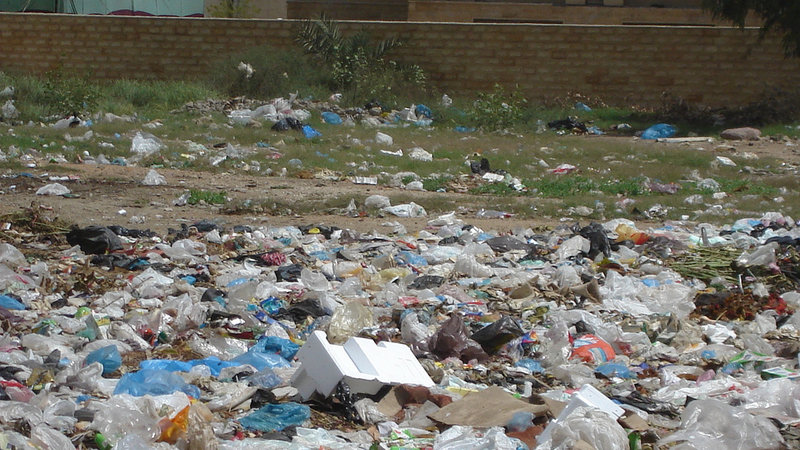
Polythene waste pollution has worsened in the recent past due to preference of the same for manufacturing packaging bags. Nearly behind every residential building, a heap of used polythene bags is dumped, leading to environmental degradation. The menace is worsened by poor waste management across the region and the ease of recycling of polythene, which is much cheaper than producing new ones.
Kenya and Uganda had opposed the adoption of the Bill, causing the East African Legislative Assembly to shelve its debate in November last year. The debate on the Bill was thereafter pushed to January this year to allow stakeholders time to deliberate on the matter.
Rwanda had adopted the Bill in 2008 and imposed a total ban of non-biodegradable polythene bags, while Tanzania has since last year been considering imposing a similar ban.
Kenya had argued that implementation of the Bill would be a threat to local industries. There are 176 companies in Kenya dealing with polythene material, employing about 10,000 people directly and contributing $14.4 million in taxes annually. The sector is estimated to have an investment of about $415 million.
Though the issues raised by the business community should not be brushed aside, the ultimate guiding principle should be the pursuit of an environmentally cleaner and safer community.
The business community is proposing the introduction of conservation levies to discourage the use of plastic as opposed to a complete ban. Such moves, however, have in the past failed to discourage popular use of polythene papers.
Indeed, polythene materials are a huge menace to the environment and people’s health that should have been completely banned a long time ago. It takes 400 years for polythene to degrade, and this fact alone should be scary enough to cause us to embrace the anti-polythene Bill.
The dangers posed by plastic bags to soil degradation, human and animal lives due to harmful emission of toxins are fast becoming a concern around the world.
Every year, an estimated 300 million plastic bags end up in the Atlantic Ocean alone, posing a huge danger to sea life, especially the mammalian variety. Deaths of wildlife from suffocation and consumption of plastic bags are increasing each year. Every bag that ends up in the woodland of a country threatens the natural progression of wildlife.
Clogging of drainage systems during heavy rains by dumped plastic bags is a menace that cities in the region have had to contend with. Degradation of agricultural soils due to accumulation of plastic bags on the land is now becoming a threat to food security as well in the region.
The business community and all other stakeholders should now be focusing on introducing possible alternatives to plastic bags. Reusable plastic bags – which are stronger and durable – are an alternative to the ones in the market today. Reusable cloth bags – which are now gaining acceptance across the world – should be introduced as well.
Incorporating plastic-bags manufacturers into the search for alternatives is key to a successful change from their current products. Creating awareness among citizens on the dangers of plastic materials is also crucial if the ban is to be successful.
Only 11 countries on the globe have imposed a ban on plastic bags, Kenya included. In Africa, only Morocco, Botswana and Rwanda have successfully implemented the ban. Other regional partner states should now join that list by rejecting plastic bags and embracing life.