The new passport represents the latest efforts to create a common market for the continent

The new passport represents the latest efforts to create a common market for the continent
By Ben Oduor
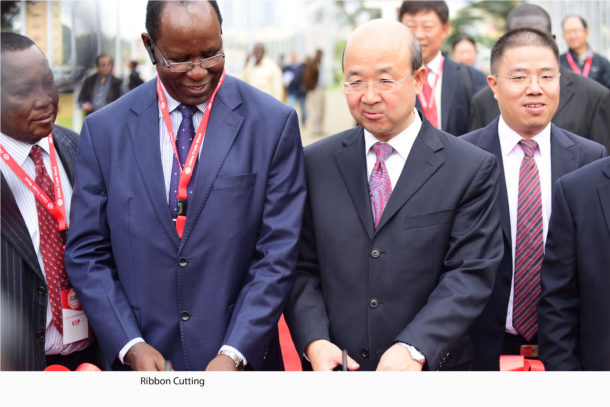
Kenya hosted, for the second year in a row, China Trade Week Expo at Kenyatta International Convention Centre (KICC), Nairobi.
The three day event, which kicked off on Wednesday, attracted over 400 Chinese companies across various industry sectors including building and construction, lighting, machinery, consumer electronics, energy, auto parts, furniture, kitchen and bathroom products, textiles, stationery and jewelry.
Speaking during the Expo, MIE Managing Director, Mr. David Wang said, “Kenya is the most developed economy in Eastern Africa and also the economic, commercial, and logistical hub of the entire region. The China-Kenya economic cooperation and trade in various fields has gained momentum over the years, and it is the very reason why we are holding the China Trade Week in Nairobi for the second time.”
Mr Wang added that the event would provide an opportunity for Kenyan entrepreneurs to grow strong business partnerships with Chinese companies.
His sentiments were echoed by Chinese ambassador to Kenya Mr. Liu Xianfa, who during the launch said the frequent bilateral meetings that Kenya and China have had over the years has deepened trade ties between them.
“This exhibition launch has yet again brought us together,” said Mr Xianfa.
On the other hand, Kenya Investment Authority General Manager Pius Rotich said the body consistently strategises to make Kenya the best place of doing business.
The Chinese trade Expo comes at a time when Kenya and China are strengthening their trade ties.
In the last decade, China has become Kenya’s largest source of Foreign Direct Investment (FDI) and second-largest trade partner. It is estimated that, in 2013, China’s cumulative direct investment in Kenya had reached US$474 million. During the same year, the bilateral trade volume between China and Kenya reached US$8.4 billion.
The event provided Chinese companies with an opportunity to meet, discuss, and develop trading and business partnerships with both Kenyan entrepreneurs and the region’s business community across various commercial sectors.
The Expo has been organized by MIE (MiddleEast International Events) Events, a leading organizer of trade fairs in Dubai and China, and is the only comprehensive China-focused trade event to be hosted in Kenya and the East African region.
Region emerging as hot bed of opportunities in continent’s real estate sector
By Jacob Otieno
Are you planning to invest in East Africa but are still not sure where to put your money? Think no more!
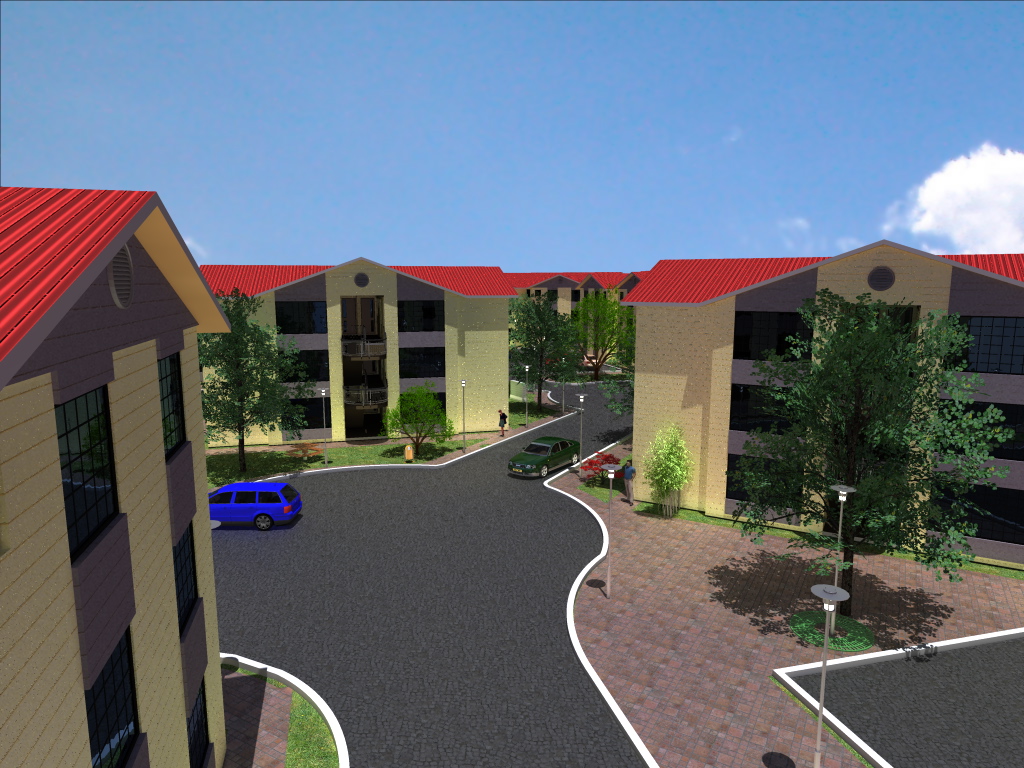
The region’s real estate sector continues to boom. Industry experts say things could get even better for developers and investors moving forward.
Urban Studies, one of the leading property research companies in Africa, shows in its 2016 report that the prospects for economic growth are high in East Africa compared to any other region in Africa, therefore making the region more attractive to property investors and developers.
The report further shows that in 2016 alone, more than Ksh 25.27 billion (US$250 million) have been invested in real estate developments in East Africa, yet there is a rising demand for residential, retail and office space in the region.
In Kenya, the growing demand for shopping center space has paved way for the development of an additional 200,000 square metres of shopping centre space in Nairobi.
The Nairobi office market currently constitutes an estimated 1.6 million square metres and continues to experience strong growth, especially in the areas of Westlands, Waiyaki Way and Upper Hills.
“The demand for office space is set to increase as Nairobi is increasingly seen as a regional business hub for the international businesses,” states the Urban Studies report.
Also of importance to not is that there is a relatively low supply of low-end residential houses compared to the middle-income and high end market, though demand remains high in both cases.
When it comes to the industrial market, the Nairobi Industrial Market (NIM) Report 2016 indicates that the city has for the most part been low key, but an increase in demand has been noticed especially along Mombasa road.
“Demand for industrial serviced plots has been on the rise in the past three years,” the NIM report indicates.
Development of the US$ 1 billion Konza Technology City as well as the planned textile city in Athi River is expected to accelerate growth in the country’s industrial market segment.
Tanzania has also been showing significant progress in the real estate sector.
A robust and steady economic growth, increasing urbanization and a greater number of foreign companies entering Tanzania has led to strong demand for better office and retail space going by the Urban Studies report.
Milimani City, which covers 19,000 square metres, remains the largest retail development in Dar es Salaam with various small shopping malls scattered across the city. The Slipway on the Peninsula is the most high-end retail offering in the city today.
The proposed developments in Tanzania, including a US$ 300 million mixed-used development to be built in Oyster Bay, is expected to go a long way in meeting soaring demand in the country’s property market.
The other East African countries are not to be left behind. For instance, Marc Du Doit, Knight Frank Head of Retail says there are currently no malls in Rwanda similar to those in cities such as Nairobi, Kenya, and Kampala, Uganda. This he argues present a great opportunity for those eying the East Africa retail market.
Contributing Factors
Economic analysts like Neville Mandimika of Rand Merchant Bank confirm that East Africa is currently the fastest growing region on the continent with its growth expected to hit 6.7 percent in 2016 from 5.6 percent and eventually accelerate growth in the region’s real estate sector.
“We have seen a distinct shift in momentum from West Africa to East Africa. This has been driven by economic uncertainties in the Western Africa markets, whereas East Africa markets have relatively strong growth prospects and currency stability,” says Anthony Lewis, Head of Capital Markets for Jones Lang.
Lewis adds that investors are also witnessing great progress in the development of domestic capital markets, infrastructure and trade through the regional integration of the East African economies.
But there are other contributing factors.
Anton Borkum, the CEO of Stanlib Fahari I-REIT, argues that the establishment of the first Income Real Estate Investment Trust (I-REIT) in East Africa will boost the region’s property market.
As for Robert Broll, Lease Consultant of Broll Property Group, East Africa has been earmarked as Africa’s next frontier for retail expansion following what is believed to be a saturation of shopping centres in South Africa and tougher economic conditions in West African countries like Nigeria and Ghana.
“A number of retailers and developers have shown commitment investing in East African markets as their growth strategy,” he argues.
However, challenges in the region still remain.
Gerhard Zeelie, Head of Real Estate Finance, Standard Bank, says scarcity of supporting infrastructure, potential oversupply of retail and office space, and the lack of debt funding are causes for concern.
“Access to cost effective, funding and understanding the dynamic nature of the regulatory environments in the sub-Saharan Africa also remain great challenges,” he adds.

Morocco is a very important platform in international trade. Not only does it link Europe, Africa, the Maghreb and the Arab world, but it also connects Asia and North America.
Morocco’s role as a gateway to a rapidly growing Africa, the increasing presence of Moroccan companies in sub-Saharan markets, and the kingdom’s political and diplomatic focus on the continent, legitimises its leading role in promoting South-South Cooperation and intra-African investments.
East African Business Times Magazine’s Boniface Kanyamwaya recently caught up with H.E.Abdelilah BENRYANE, the Moroccan Ambassador to Kenya on the sidelines of celebrations to mark the arrival of Royal Air Maroc in Nairobi at Jomo Kenyatta International Airport where he engaged him on a number of issues. Excerpts;
Q: How long do Kenya and Morocco’s diplomatic relations date back?
A: Morocco and Kenya’s diplomatic relations date back to 1965. Last year, the two countries celebrated the 50th anniversary of the establishment of diplomatic relations. The highlight of that celebration was a gala dinner hosted by the Embassy of Morocco in Nairobi to raise funds in support of First Lady Margaret Kenyatta’s Beyond Zero Campaign.
Q: What are some of the key areas of bilateral cooperation between Kenya and the Kingdom of Morocco?
A: Areas of bilateral cooperation includes education, transport, tourism and trade. The legal framework that governed bilateral relations from 1990 to 2002 covered areas such as technical and scientific cooperation and establishment of a joint bilateral commission. In 2007, several bilateral agreements were signed that covered sectors such as water management and sanitation, fisheries, protection and reciprocal promotion of investments, trade and industry, energy and mining, health, agricultural and agro-pastoral cooperation, youth and sports. The two countries have also officially signed an agreement on tourism (2009), air-transport (2011) and a memorandum of understanding between the Moroccan Centre for Export Promotion, Maroc Export, and the Kenya Chamber of Commerce and industry (2013). The remaining agreements are in the final stages of official endorsement.
Q: Kenyan students have been beneficiaries of scholarships to study in Morocco. How many are on scholarship in Morocco?
A: Since the 1990s, Morocco has granted on a yearly basis scholarships for Kenyan students and from other countries in the East African Community to pursue their studies in Moroccan universities and other academic institutions. Between 2006 and 2015, Morocco granted more than 600 scholarships to the East African region alone, making it one of the largest African student communities. The recent establishment of a direct air link between Casablanca and Nairobi opens new opportunities for Kenyan businessman and women to explore possibilities of doing business in Morocco. One major impact that such a development can achieve is to help promote tourism in Kenya and increase trade and connect the north and eastern regions of Africa. Morocco made the first step and it is now up to Kenya to follow suit.
Q: What’s the total volume of trade between the two countries?
A: Between 2008 to 2009 the Balance of trade between Morocco and Kenya was negative for Morocco. The Kingdom’s balance dropped from 6.4 million dirham in 2000 to -4.6 million dirham in 2008 and -17.6 in 2009(1 dollar = 9.7 dirham). However, in 2013 the balance skyrocketed to 325 million dirham following a deficit of 32.01 million in 2012. Indeed, Moroccan exports to Kenya decreased 94 per cent in 2012 due to a 52.8% drop in synthetic fibre textile sales. Then in 2013, exports increased exponentially, amounting to 373.3 million dirham. This was mainly due to an increase in crockery (+48,5 per cent), furniture, medico-surgical furniture, beddings and electrical appliances (+2,351%). Furthermore, Moroccan imports from Kenya decreased 3 per cent in 2013, from 49.8 million dirham in 2012 to 48.3 million dirham in 2013. This was mainly due to a decline in purchase of seed, spore, fruits, seed (-3.7 per cent, fresh and dried fruit (-55,1 per cent).
Q: What characterized Morocco in 2015?
A: In Ernst &Young’s 2015 Africa Attractiveness Index, Morocco ranks third in terms of Foreign Direct Investment (FDI). In the first half of 2015, it attracted $1.32 billion in FDI, a 20 per cent year-on-year increase. It is mainly due to the country’s ability to demonstrate economic stability throughout the years, a relatively cheap and skilled labour, geographic location, access to numerous foreign markets thanks to various free trade agreements, as well as ease of market penetration of new investors.
Q: How can Morocco’s new economic policies help solve the long standing dispute on the Sahara territory?
A: Let me first of all underline that Morocco proposed since 2007 to grant the Sahara region a large autonomy status under Moroccan sovereignty. The international communities view this proposal as a serious and credible effort from the part of Morocco,that could lead to a realistic and lasting solution for this regional conflict. Morocco has started implementing its regionalisation policy that aims primarily at making of the Sahara a hub between the Maghreb and Sub-Saharan Africa. Indeed, the Sahara accounting for 59% of the Moroccan territory, the question of its development is at the forefront of the country’s internal policies. $1 billion where invested on the Sahara from 2004 to 2011 to successfully increase education, health and poverty reduction indicators above national average, the region having been left virtually devoid of infrastructures when it was freed by the Kingdom in 1975. Moreover, a “New Development Model for the Kingdom’s Southern Provinces” was introduced in 2013, aiming at reaching the regions potential and promoting growth, to then stimulate a knowledge based economy and introduce a high value adding sector. So far, $500 million were invested in the construction of 6 ports, and $300 million in expanding the road network from 70 to 4,000 km. The implementation of these strategies is set to culminate in a doubling of the region’s GDP in the next 10 years, the creation of 120,000 new jobs.
Q: What measures are you taking to strengthen trade integration among African countries?
A: We intend to share the same values with our partner states by disseminating all over Africa the know-how and experience Morocco developed through legislative reforms, economic strategies and sector based plans launched as early as the year 2000 and which have all come to fruition at the targeted dates. The Report on Global Competitiveness released recently by the World Economic Forum confirmed Morocco as the most competitive economy in North Africa. Driven by a significant growth in non-agricultural sectors such as automotive, aeronautics and textiles, Morocco’s economic growth has seen a 5 per cent growth rate in 2015. The trade deficit decreased in the first half of 2015 to $7.8 billion from $10.2 billion in 2014. Exports increased by 6.4 per cent, totaling $11.22 billion. In 2014, the automotive sector surpassed phosphates for the first time as a major foreign exchange earner, thanks to investments in manufacturing and assembly by foreign companies such as Renault, Bombardier and Sumitomi Electric Wiring Systems.
Q:In what sectors of the economy are your investments concentrated?
A: Up till now, Morocco’s investments in Kenya have concerned mainly the banking and insurance sectors, BMCE Bank of Africa, one of Morocco’s leading banks, are the major shareholder of Bank of Africa in Kenya and in other countries of the East African Community. Saham Insurance Company has established itself recently in Nairobi and in Kigali. Several other Moroccan companies are also interested in Kenya and are mainly concerned with seafood and the agro-industry, construction, electricity and electronics; consulting and ITC; finance and services; metal and steel industry; para chemistry and plastics, pharmaceutical and textile.
Number of harmonized East Africa Standards has increased contributing to a reduction in time and cost of conformity assessment at the borders, thus helping to spur regional trade
A country without a language is a country without a soul, says ambassador
Bloc says textile sector can be brought back to life
Rules aimed at easing operations within member states
With a strong presence in west and central Africa, Binatone joins a list of a growing appliance suppliers in the region

Fear of loss of sovereignty by some member states slows progress